Help us get this right
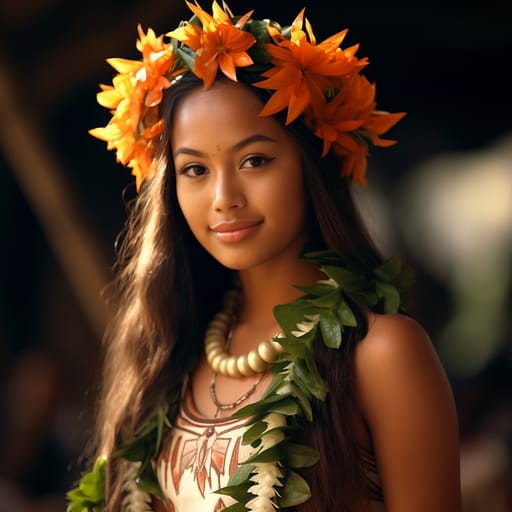
Does this portrait look right for Tahitians?
One tap. It takes a second and it is recorded.
1 says it looks right, 0 say it looks off.
Tahitians Erotic
Tahiti (France)
Austronesian / Polynesian / Tahitian
Part of the Austronesian language family · Polynesian peoples
Christianity
About Tahitians People
Tahitians are the Mā'ohi people of the Society Islands, the largest cluster in what is now French Polynesia. Their ancestors arrived by deep-water canoe from the western Polynesian heartland — Sāmoa and Tonga — sometime around the start of the second millennium, and Tahiti became one of the great staging grounds from which voyagers later reached Hawai'i, Aotearoa, and Rapa Nui. That seafaring lineage is not a museum piece on Tahiti: traditional sailing canoes, rebuilt from ethnographic memory, still cross open ocean, and the navigational vocabulary survives in song and place name even where it has gone quiet in daily speech.
The homeland is volcanic and vertical. Tahiti itself is two extinct shield volcanoes joined at a low isthmus, and most Tahitians live in a thin coastal ring while the steep, forested interior stays largely uninhabited. The Tahitian language belongs to the Eastern Polynesian branch, closely related to Māori, Hawaiian, and the Cook Islands tongues; a speaker of one can usually pick out the bones of another. French is the language of administration and schooling, and a generation of urban Tahitians around Pape'ete now grow up moving fluidly between the two, sometimes at the cost of the heritage language — a tension that fuels an ongoing revival movement, particularly through the school system and through 'ōrero, the formal art of declamation.
Christianity arrived with the London Missionary Society in the 1790s and took hold with unusual completeness; Protestantism, in particular, became woven into village structure, and Sunday choir singing — hīmene tārava, layered in dense harmony unlike anything in European hymnody — is one of the most distinctive sounds of the islands. Catholicism and several Mormon denominations are also present, the latter notably strong in the Tuamotus and among diaspora communities. Beneath the Christian surface, older practices have not entirely receded: tattooing, suppressed for most of the nineteenth century, has come back with serious craft and serious meaning, and the annual Heiva festival turns the colonial-era Bastille Day calendar into a month of competitive dance, drumming, and oratory that functions as the cultural high water mark of the year.
Politically, Tahitians sit inside the French Republic as citizens of an overseas collectivity, which leaves them with French passports, the euro, and a long-running, unresolved conversation about autonomy and the legacy of the Mururoa nuclear tests conducted on Tahitian soil between 1966 and 1996.
Related ethnic groups
Groups that share Tahitians's homeland, region, language, or religious tradition. These are likely candidates for comparative phenotype reference.
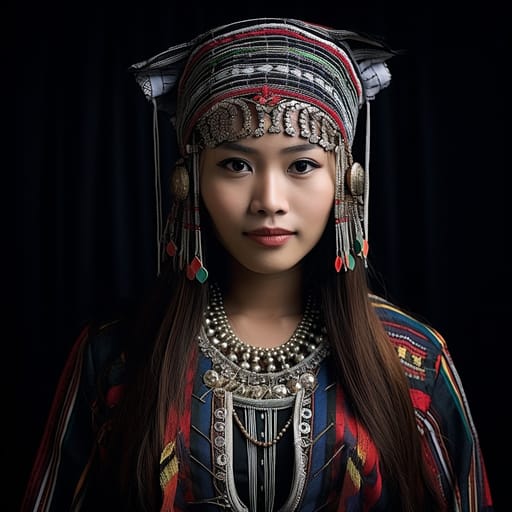
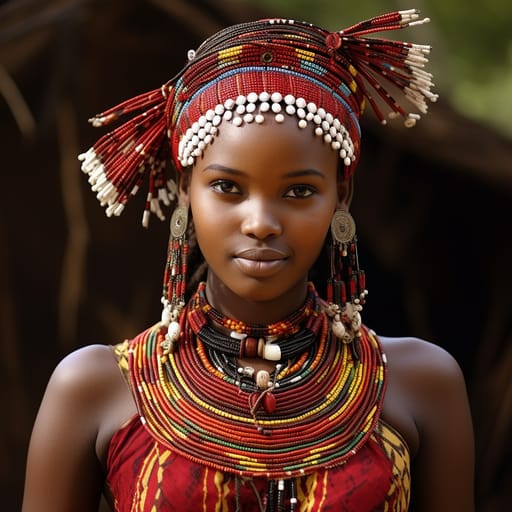
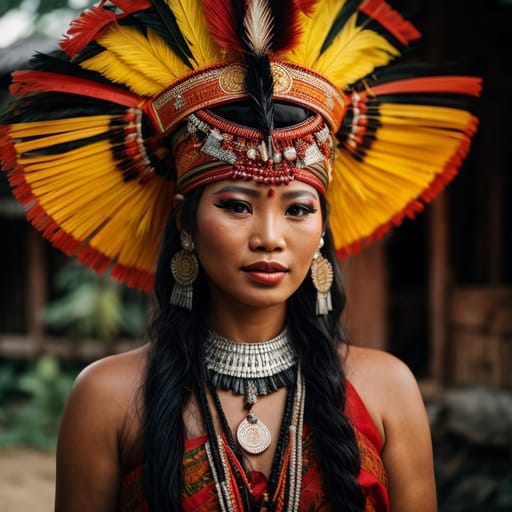
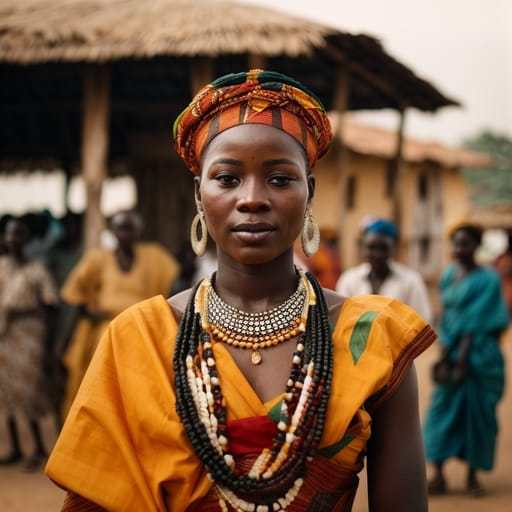
Typical Tahitians Phenotypes
Reference for AI generation: hair, eyes, skin, facial structure, build
Tahitians belong to the Eastern Polynesian phenotypic cluster, which sits at the larger end of the human stature and build range. The defining structural traits are a broad, deep-set facial frame, a relatively short and wide nasal bridge with moderately flared alae, generous lip volume on both upper and lower lips, and a heavier mandibular and zygomatic build than is typical in either East Asian or Southeast Asian populations. The overall impression is wide, sculpted, and substantial rather than fine-boned.
Hair is almost always black or very dark brown, thick in shaft diameter, and ranges from poker-straight to loose wave; tight curls are uncommon and usually signal mixed African or Melanesian ancestry. Body and facial hair are sparse to moderate. Eyes run dark brown to near-black, set under a low, often slightly heavy upper lid; a true epicanthic fold is variable — present in a minority and typically softer than the East Asian form — while the broader Polynesian "shaded" upper-lid contour is common. Skin tone covers Fitzpatrick III through V, most often landing in the IV range: a warm olive-to-bronze base with a yellow-gold undertone rather than the red undertone seen in many Native American or South Asian populations. Sun-exposed islanders deepen toward a saturated copper-brown.
Build is the most internationally recognized feature. Tahitians, like other Eastern Polynesians, are documented as one of the larger-framed populations on Earth — broad shoulders, wide hips and pelvis, thick wrists and ankles, and a high baseline of both lean mass and adipose tissue. Adult male heights commonly run 175–185 cm and women 165–175 cm, with notably greater bone breadth than European averages at the same height. Women typically carry a curved, full-hipped silhouette with a softened waist; men present a barrel-chested, thick-limbed mesomorph pattern that is visible even in non-athletes.
Sub-group variation across the Society Islands is modest. Outer-island and rural Tahitians tend to show the heaviest classic Polynesian features, while Pape'ete and the urban coast show more demi phenotypes — visible French, Hakka Chinese, or other Polynesian admixture softening the jaw, narrowing the nose, and lightening skin toward upper Fitzpatrick III.
Data depth
0/100Coverage of image-grounded phenotype observations · drives AI generation diversity
- Sample size
- 0/40· 0 images
- Image quality
- 0/30· 0% high
- Confidence
- 0/20
- Source diversity
- 0/10
- ·No image observations yet
Explore phenotype categories
Structured taxonomy with peer-reviewed scales · 22 anatomical categories
Erotic Poses & Sex Positions
From the pose catalog: 219 named positions with reference skeletons
Frequently asked questions about Tahitians people
Where is the Tahitians homeland?
The Tahitians homeland is Tahiti (France) in Polynesia.
What language do Tahitians people speak?
Tahitians people primarily speak Austronesian / Polynesian / Tahitian.
What religion do Tahitians people practice?
The predominant religion among Tahitians people is Christianity.






Make your own Tahitians images
Five a day, free, no credits to buy. The studio starts from this group's phenotype data, so you can set body type, pose and style and keep the traits accurate.
Start with Tahitians