No portrait yet
Tuamotuans Erotic
Tuamotu Archipelago, French Polynesia (France), with a large community in Papeete, Tahiti
Tuamotuan, or Pa'umotu (Austronesian, Eastern Polynesian); Tahitian (Austronesian) and French (Indo-European) widely used
Part of the Austronesian language family · Polynesian peoples
Christian: mainly Roman Catholic, with Latter Day Saint (Sanito and LDS) and Protestant congregations
Eastern Polynesian people closely related to Tahitians; dialect groups include Parata, Vahitu, Marangai, Fangatau, Napuka, Tapuhoe and Mihiroa
About Tuamotuans People
The Tuamotuans, who call themselves Pa'umotu, are defined by the ground under their feet, or rather by how little of it there is. Their homeland is the Tuamotu Archipelago in French Polynesia, the largest chain of atolls on earth: nearly eighty rings of coral and sand scattered across the ocean east and northeast of Tahiti, most rising only a few meters above the tide. Early European sailors called it the Dangerous Archipelago and steered clear of it. For the people who settled it, the lagoon was the pantry, the reef was the boundary, and the next atoll over was a canoe voyage away. They lived on coconut, pandanus, fish and shellfish, plus root crops grown in pits dug down to fresh groundwater. It was a practical, mobile life, closely bound to the sea.
Their language, Tuamotuan, is an Eastern Polynesian tongue so close to Tahitian that the two blur at the edges, and that closeness has worked against it. Tahitian became the common language of the region and French the language of school and government. Today Pa'umotu is spoken by a few thousand people, mostly older islanders. It was never one uniform speech. Dialects such as Parata, Vahitu, Marangai, Fangatau, Napuka and Tapuhoe roughly follow old regional groupings among the atolls. The Parata-speaking warriors of Anaa were long feared across the western islands.
Christianity arrived in the nineteenth century and took hold in several forms at once. Catholic parishes are the largest presence, but the Tuamotus stand out in French Polynesia for their strong Latter Day Saint communities, including the Sanito church. Church life is still a central part of village routine.
In the twentieth century the archipelago was pulled into the wider world in ways few outsiders realize. Tuamotuan men became famous breath-hold divers for mother-of-pearl shell, working lagoons like Hikueru at depths that caused a diving sickness they called taravana. From 1966 to 1996 France ran nuclear tests at Moruroa and Fangataufa, two Tuamotu atolls, and that history still shapes local politics and arguments over health. Black pearl farming took off in the 1970s and brought money back to lagoons like Manihi and Takaroa, while copra and fishing carry on elsewhere. Many Pa'umotu now live in Papeete and move back and forth between the capital and their home atolls. They stay connected through family land, food and, where it survives, the language.
Related ethnic groups
Groups that share Tuamotuans's homeland, region, language, or religious tradition. These are likely candidates for comparative phenotype reference.

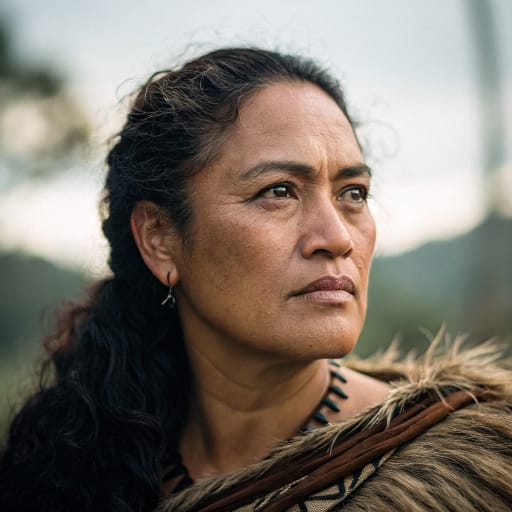
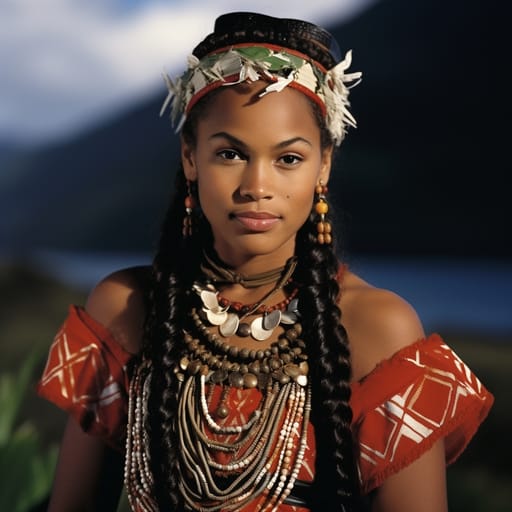
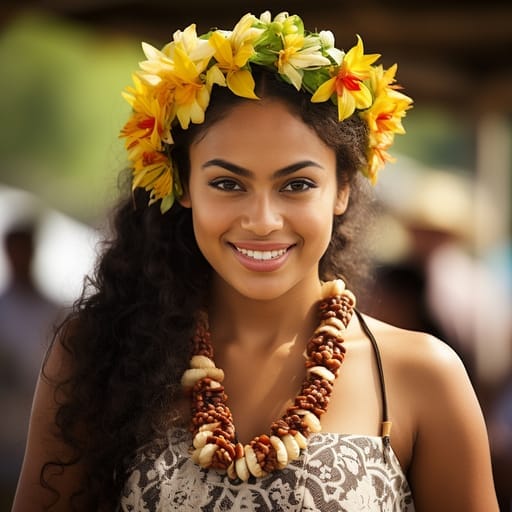

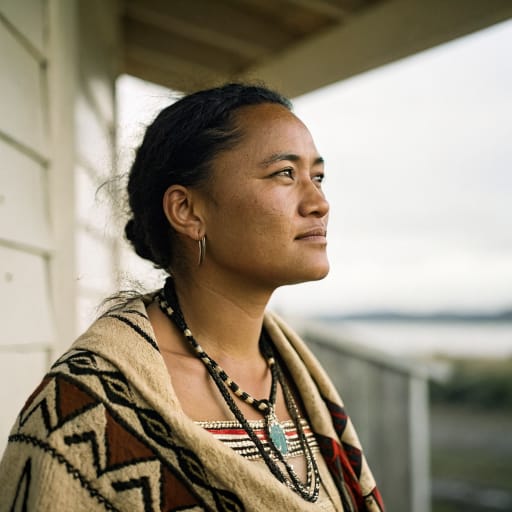
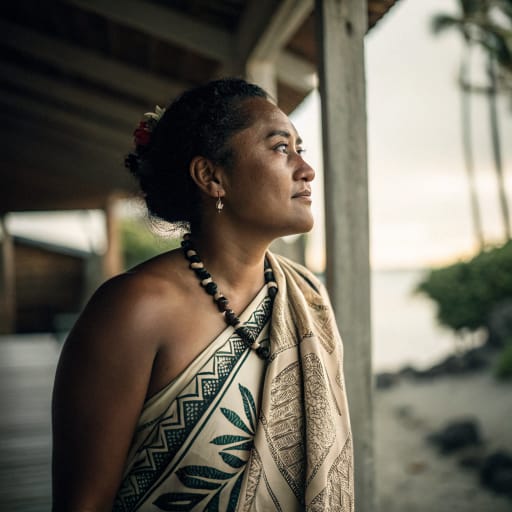
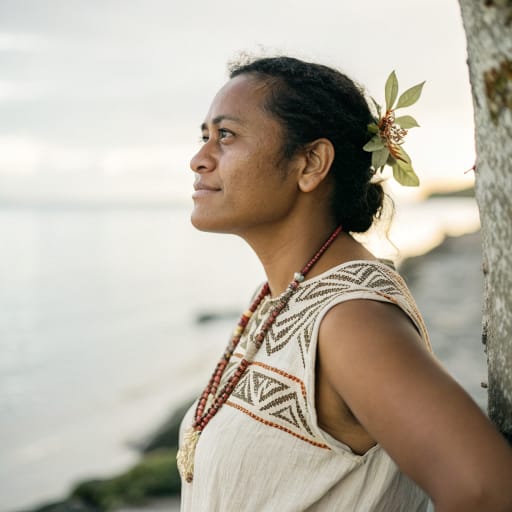
Typical Tuamotuans Phenotypes
Reference for AI generation: hair, eyes, skin, facial structure, build
Tuamotuans Body & Anatomy Reference
Anatomy by feature, Polynesian Pacific Islander phenotype
Tuamotuans Boobs & Breasts
The typical Tuamotuans bust is medium-to-large cup, full, high projection, in line with the wider Polynesian Pacific Islander pattern. Areolas usually fall in the 34-50mm range, with medium-brown to dark-brown areolar pigmentation against the tan-to-medium-brown skin tone. Compared with the smaller Southeast Asian bust, Tuamotuans breasts sit forward and are generally full and projecting, classic Polynesian build. A faithful AI render of Tuamotuans tits keeps that shape and areola size.
Tuamotuans Ass & Hips
Butt shape among Tuamotuans women: very full, high projection, the famous Polynesian curvy hip profile, over wide iliac crests, very full gluteal-femoral fat deposition. This follows Polynesian Pacific Islander ancestry and looks quite unlike the slim Southeast Asian narrow-hip profile. An accurate Tuamotuans ass in adult AI imagery keeps both the silhouette and the overall build (endomorph-to-mesomorph with larger overall frame; the classic Polynesian taller-broader-build phenotype) instead of a generic average.
Tuamotuans Vagina & Pussy
Vulvar anatomy among Tuamotuans women: medium-brown to dark-brown labial pigmentation. Pubic hair tends to be wavy-to-curly medium-coarse texture, in the usual inverted-triangle pattern. Both follow Polynesian Pacific Islander pigmentation, which is why Tuamotuans pussy renders should not fall back on a pale, sparse Western template.
Tuamotuans Dicks & Penis
The Tuamotuans cock profile, from Polynesian Pacific Islander anthropometric data: regional mean ~14cm erect; moderate-to-above-average girth; medium-brown shaft pigmentation. Pubic hair has a wavy-to-curly medium-coarse texture and forms the usual inverted-V pattern. Whether Tuamotuans men are circumcised follows religious and cultural practice rather than phenotype.
Tuamotuans Body, Curves & Build
Build and curves among Tuamotuans women follow the Polynesian Pacific Islander pattern: endomorph-to-mesomorph with larger overall frame; the classic Polynesian taller-broader-build phenotype, mean adult female BMI 28-32 (the highest regional mean globally; thrifty-gene phenotype documented). Proportions matter as much as skin tone, so Tuamotuans figures should keep their regional height and limb ratios.
Tuamotuans Skin Tone & Hair Texture
The Tuamotuans skin range is tan to medium-brown (Fitzpatrick IV-V), and hair tends to be wavy-to-curly 2B-3B, dark-brown to black. That combination marks the Polynesian Pacific Islander phenotype, and skin tone is the trait AI generators most often get wrong for Tuamotuans women.
Explore phenotype categories
Structured taxonomy with peer-reviewed scales · 22 anatomical categories
Erotic Poses & Sex Positions
From the pose catalog: 219 named positions with reference skeletons
Frequently asked questions about Tuamotuans people
Where is the Tuamotuans homeland?
The Tuamotuans homeland is Tuamotu Archipelago, French Polynesia (France), with a large community in Papeete, Tahiti in Polynesia.
What language do Tuamotuans people speak?
Tuamotuans people primarily speak Tuamotuan, or Pa'umotu (Austronesian, Eastern Polynesian); Tahitian (Austronesian) and French (Indo-European) widely used.
What religion do Tuamotuans people practice?
The predominant religion among Tuamotuans people is Christian: mainly Roman Catholic, with Latter Day Saint (Sanito and LDS) and Protestant congregations.






Make your own Tuamotuans images
Five a day, free, no credits to buy. The studio starts from this group's phenotype data, so you can set body type, pose and style and keep the traits accurate.
Start with Tuamotuans