Help us get this right
Does this portrait look right for Māori?
One tap. It takes a second and it is recorded.
2 say it looks right, 0 say it looks off.
Māori Erotic
Austronesian / Polynesian / Māori
Part of the Austronesian language family · Polynesian peoples
Christianity
Cook Islanders
About Māori People
The Māori arrived in Aotearoa — the long white cloud — sometime in the 13th or 14th century, the last major Polynesian voyaging migration and one of the last large landmasses on Earth to be reached by humans. They came from a homeland remembered as Hawaiki, navigating by stars and swells in double-hulled waka, and within a few generations they had adapted a tropical Polynesian culture to a temperate, mountainous archipelago that grew none of their old crops and offered enormous flightless birds instead. The moa were hunted out within a couple of centuries; the kūmara, brought from the tropics, became the staple it remains today.
Identity is organised through iwi (tribe) and hapū (sub-tribe), with descent traced back to a specific founding canoe. This is not ceremonial flavour — iwi affiliation determines where you stand on a marae, who speaks for you, and increasingly which Treaty settlement entity manages your fisheries quota and forestry trust. Te reo Māori belongs to the Eastern Polynesian branch, close cousin to Cook Islands Māori, Tahitian and Hawaiian; a speaker of one can usually pick out the bones of the others. The language nearly died in the 20th century under English-only schooling and was pulled back from the edge by the kōhanga reo movement of the 1980s, which built Māori-medium preschools from scratch. It is now an official language of New Zealand and audible in everyday public life in a way that would have seemed implausible in 1970.
The Treaty of Waitangi, signed with the British Crown in 1840, remains the central political document of New Zealand, and the disputes over its two language versions — what was ceded, what was guaranteed — still shape law and policy. Most Māori today identify as Christian, predominantly Anglican, Catholic, or with the Māori-led Rātana and Ringatū churches that fuse Christian theology with prophetic tradition; alongside this, concepts like tapu (sacred restriction), mana (authority, prestige) and whakapapa (genealogy) operate as live social grammar rather than folklore. The Cook Islanders, though geographically and politically distinct, share the same Eastern Polynesian root and a closely related language. Tā moko — the chiselled facial and body marking — has returned to wide visibility, worn now by judges, broadcasters and rugby players as a public claim on inheritance.
Related ethnic groups
Groups that share Māori's homeland, region, language, or religious tradition. These are likely candidates for comparative phenotype reference.
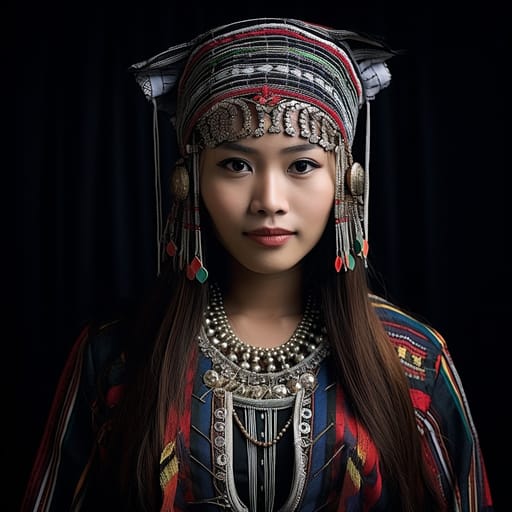
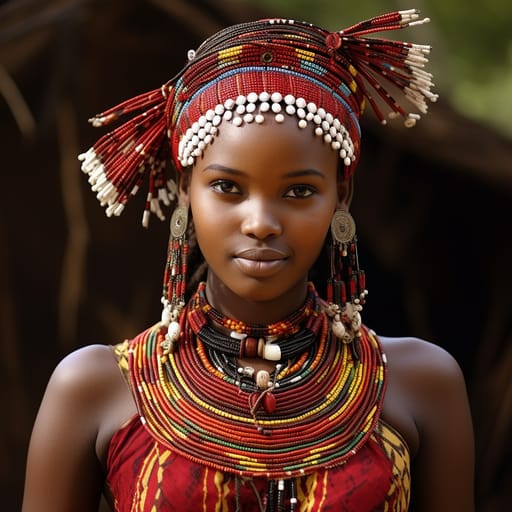
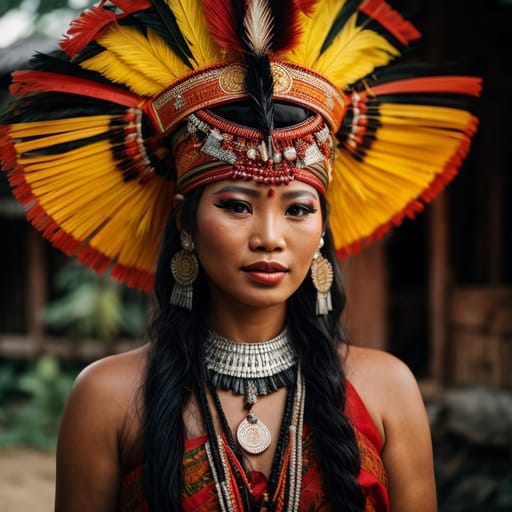
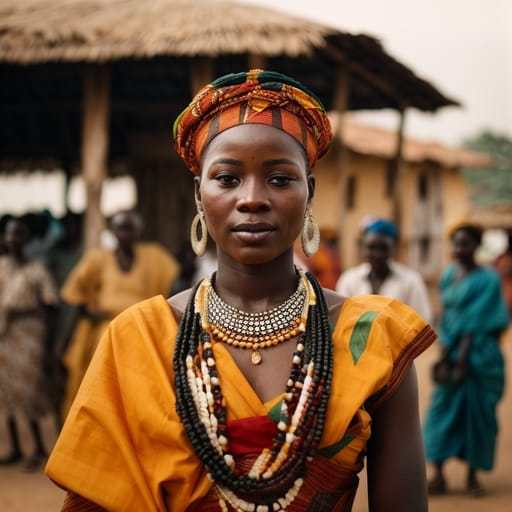
Geographic Distribution: Māori populations across 1 country
Each row is ranked by the group's share of that country's population, with the source citation drawn from published census and demographic surveys. Click through for the full per-country phenotype profile.
| Country | Share | Source |
|---|---|---|
| New Zealand | 14.9% | Stats NZ 2023 Census; Māori (~17.9% multi-response, normalized ~14.9%); Polynesian source population, Indigenous to New Zealand / Aotearoa. Genome-wide studies document Māori populations as carrying distinctive Austronesian / Polynesian source ancestry traceable to the eastward Polynesian colonization (~13th-c. CE arrival in New Zealand). The 1840 Treaty of Waitangi established the foundational political-legal relationship between Māori and the Crown |
Typical Māori Phenotypes
Reference for AI generation: hair, eyes, skin, facial structure, build
Māori phenotype reflects East Polynesian ancestry shaped by roughly 700 years of isolation in Aotearoa, with later admixture from European, other Polynesian, and Asian populations producing wider variation in modern generations than the pre-contact baseline. The structurally distinctive features are a broad mid-face, full lips, a relatively wide nasal base with a low-to-medium bridge, and a robust, often square jaw — the same craniofacial pattern recognisable across Cook Islanders and other East Polynesian groups, though Māori tend toward heavier overall build than Cook Islanders, who run leaner and slightly shorter on average.
Hair is typically very dark brown to black, thick-shafted, and ranges from straight to loosely wavy; tighter curl patterns appear but are less common than in western Polynesian groups. Greying tends to come late. Body and facial hair is moderate — heavier than in East Asian populations, lighter than in Mediterranean European ones. Eyes are almost always dark brown, occasionally hazel where there is European admixture; the eyelid is typically a clean upper fold without a true epicanthic fold, set under a moderately heavy brow ridge.
Skin tone covers Fitzpatrick III–V, most commonly a warm olive-to-light-brown with golden or coppery undertones rather than the deeper browns of western Polynesia. Mixed-ancestry Māori — a large share of the modern population — frequently sit at III–IV with the same underlying facial architecture, which is why the phenotype reads as Māori even at lighter tones. Cheekbones are broad and high-set, lips full with a defined vermilion border, and the chin tends to be strong and squared rather than tapered.
Build is notably large-framed: Māori men average around 177 cm and women around 164 cm, with broad shoulders, thick limbs, and a tendency toward muscular, dense body composition — anthropometric studies consistently record higher lean mass and bone density than European New Zealand norms. Tā moko, where present, follows the facial contours rather than masking them.
Māori Body & Anatomy Reference
Polynesian Pacific Islander phenotype: anatomy reference for AI nude generation
Māori Boobs & Breasts
Māori boobs follow the Polynesian Pacific Islander profile: medium-to-large cup, full, high projection. Areolar diameter is usually 34-50mm, and the coloring is medium-brown to dark-brown areolar pigmentation against the tan-to-medium-brown skin tone. Breast shape tracks body composition (endomorph-to-mesomorph with larger overall frame; the classic Polynesian taller-broader-build phenotype, mean adult female BMI 28-32 (the highest regional mean globally; thrifty-gene phenotype documented)), so Māori breasts tend to be full and projecting, classic Polynesian build. Expect a forward-set shape, not the smaller Southeast Asian bust.
Māori Ass & Hips
Māori ass and hip morphology presents as very full, high projection, the famous Polynesian curvy hip profile, distinctly different from the slim Southeast Asian narrow-hip profile. The Māori pelvic profile shows wide iliac crests, very full gluteal-femoral fat deposition, anchored in the Polynesian Pacific Islander skeletal pattern. Māori butt shots in adult AI imagery should render the very full, high projection, the famous Polynesian curvy hip profile silhouette with the overall build (endomorph-to-mesomorph with larger overall frame; the classic Polynesian taller-broader-build phenotype) and the fat distribution typical of the Polynesian Pacific Islander phenotype.
Māori Vagina & Pussy
Māori pussy anatomy typically shows medium-brown to dark-brown labial pigmentation. Pubic hair is usually wavy-to-curly medium-coarse texture. In AI-generated Māori nudes, labial color should blend into the tan to medium-brown skin with a gradual transition, and the hair should keep its wavy-to-curly medium-coarse texture.
Māori Dicks & Penis
Penis reference for Māori men: regional mean ~14cm erect, moderate-to-above-average girth. Coloring: medium-brown shaft pigmentation. An accurate Māori cock in AI imagery matches the surrounding tan to medium-brown skin rather than a generic porn default. Circumcision depends on religion and custom, not ancestry.
Māori Body, Curves & Build
The Māori figure is generally endomorph-to-mesomorph with larger overall frame; the classic Polynesian taller-broader-build phenotype, with mean adult female BMI 28-32 (the highest regional mean globally; thrifty-gene phenotype documented), characteristic of Polynesian Pacific Islander ancestry. AI image tools tend to flatten regional body types into a few stock shapes; here the Māori build is kept as its own reference.
Māori Skin Tone & Hair Texture
Skin: tan to medium-brown (Fitzpatrick IV-V). Hair: wavy-to-curly 2B-3B, dark-brown to black. Both are typical of Polynesian Pacific Islander ancestry. The most common mistake in AI nudes of Māori women is a body rendered lighter than the face.
Data depth
0/100Coverage of image-grounded phenotype observations · drives AI generation diversity
- Sample size
- 0/40· 0 images
- Image quality
- 0/30· 0% high
- Confidence
- 0/20
- Source diversity
- 0/10
- ·No image observations yet
Explore phenotype categories
Structured taxonomy with peer-reviewed scales · 22 anatomical categories
Notable Māori People
19 reference figures, sourced from Wikipedia
- Te Pāti Māori, Māori Party)
- Te Puni Kōkiri, Minister for Māori Development
- Te Taura Whiri i te Reo Māori, Māori Language Commission)
- Hapū, subtribes)
- Tangata whenua, "people of the land")
- Whānau, families)
- ISBN, Hill, Richard S (2009). "Maori and State Policy". In Byrnes, Giselle (ed.). T…
- Te Ara – The Encyclopedia of New Zealand, Howe, Kerry (2006). "Ideas of Māori Origins". Māori Peoples of New Zealand: N…
- King, Michael, 1996). Maori: A Photographic and Social History (2nd ed.). Auckland: Reed Pub…
- McCreanor, Tim, McIntosh, Tracey (2005). "Maori Identities: Fixed, Fluid, Forced". In Liu, Ja…
- Mead, Hirini Moko, 2003). Tikanga Māori: living by Māori values. Wellington: Huia Publishers. IS…
- Orange, Claudia, 1989). The Story of a Treaty. Wellington: Allen & Unwin. ISBN 978-0-04-641053-7.
- Sinclair, Keith, Sorrenson, M. P. K (1997). "Modern Māori: The Young Maori Party to Mana Motuh…
- Biggs, Bruce, 1994). "Does Maori have a closest relative?". In Sutton, Doug G. (ed.). The O…
- Buck, P. H., 1949). The Coming of the Māori. Christchurch: Whitcombe and Tombs.
- University of Toronto Press, Gagné, Natacha (2013). Being Māori in the City: Indigenous Everyday Life in A…
- Irwin, Geoffrey, 1992). The Prehistoric Exploration and Colonisation of the Pacific. Cambridge…
- Reed Publishing, Simmons, D. R. (1997). Ta Moko: The Art of Māori Tattoo (Rev. ed.). Auckland:…
- Auckland University Press, Sutton, Doug G., ed. (1994). The Origins of the First New Zealanders. Aucklan…
Erotic Poses & Sex Positions
From the pose catalog: 219 named positions with reference skeletons
Frequently asked questions about Māori people
Where is the Māori homeland?
The Māori homeland is New Zealand in Polynesia.
What countries do Māori people live in?
Māori populations are documented across 1 country: New Zealand.
What language do Māori people speak?
Māori people primarily speak Austronesian / Polynesian / Māori.
What religion do Māori people practice?
The predominant religion among Māori people is Christianity.






Make your own Māori images
Five a day, free, no credits to buy. The studio starts from this group's phenotype data, so you can set body type, pose and style and keep the traits accurate.
Start with Māori