No portrait yet
Torghut Erotic
Bayingolin and Hoboksar in Xinjiang, China; Khovd Province in western Mongolia; and Kalmykia in southern Russia
Oirat, in the Kalmyk-Oirat branch of Mongolic; written in Clear Script in China and Cyrillic in Russia
Tibetan Buddhism of the Gelug school, alongside older steppe practice such as ovoo cairns and fire offerings
One of the four Oirat peoples with the Dörbet, Khoshut and Choros; the Torghut and Dörbet are the two main divisions of the Kalmyks
About Torghut People
The Torghut are one of the four Oirat peoples, western Mongols whose history is mostly a history of moving. The name reads like a job description: the torghud were the day guards of the Mongol khans' household regiment, the men on watch while the court sat, and the Torghut have never been in a hurry to disown the association. What actually holds them together is narrower. A dialect of Oirat, far enough from Khalkha Mongolian to want its own orthography, which it got in 1648 when the monk Zaya Pandita cut the Clear Script so that Oirat vowels could be written without guesswork. The Gelug school of Tibetan Buddhism, taken up by Oirat nobles in the early 1600s and still the frame around births, funerals and the lunar new year. And a fondness for small distinguishing marks: the red tassel at the crown of the hat, ulan zala, was for generations the thing that told an Oirat from a Khalkha at a distance. Clear Script is still taught in Torghut schools in Xinjiang. In Kalmykia it lost to Cyrillic and survives as a specialist skill.
In the early 1600s, with pasture tight and the Choros ascendant in Dzungaria, a large body of Torghut under Kho Orluk went west. They crossed the Kazakh steppe and settled the lower Volga around 1630, and the state they built there, the Kalmyk Khanate, was the only Buddhist polity in Europe. It lasted about 140 years. By 1771 Russian settlement had closed in on the grazing and imperial demands for cavalry had worn through the last of the goodwill, so Ubashi Khan took his people home. That winter crossing is the event every Torghut community still counts from. The Volga refused to freeze, which stranded the camps on the western bank; they stayed, and their descendants are Kalmyks today. Those who went east were harried for months by raiders and hunger, and only a portion reached Qing territory. The Qianlong emperor took them in, settled them around the Yuldus basin and Hoboksar in what is now Xinjiang, and had the whole affair carved on stelae at Chengde in four languages. Torghut still herd horses on the Bayanbulak grasslands and keep camels in Hoboksar, and are counted among the Mongols of Khovd in western Mongolia. The Volga branch was deported wholesale to Siberia in 1943 and allowed home in 1957. The language has not recovered from it.
Related ethnic groups
Groups that share Torghut's homeland, region, language, or religious tradition. These are likely candidates for comparative phenotype reference.
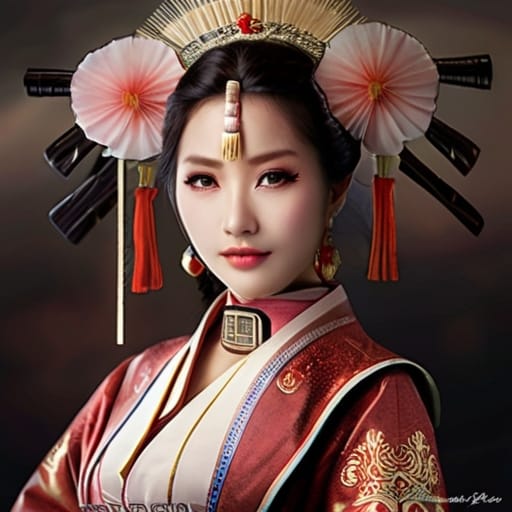
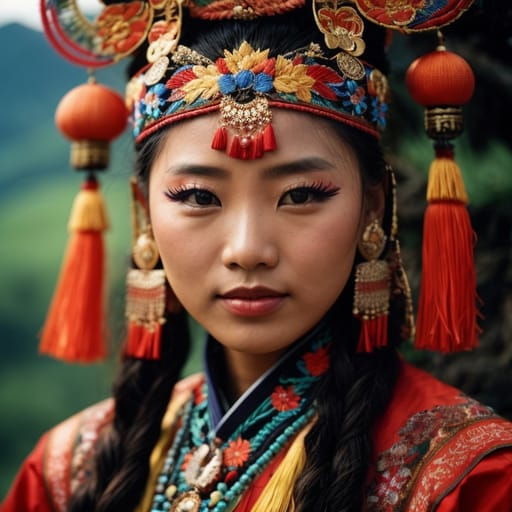
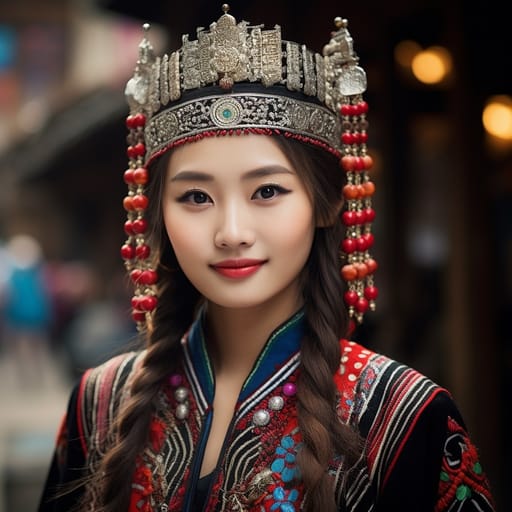
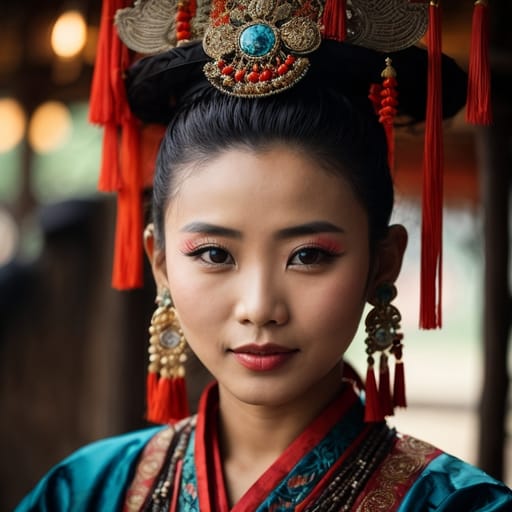
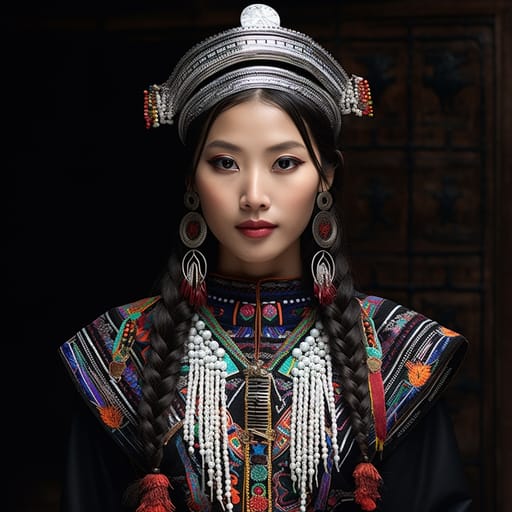
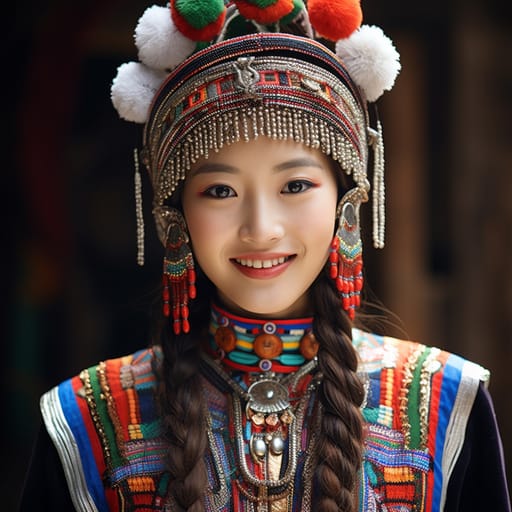
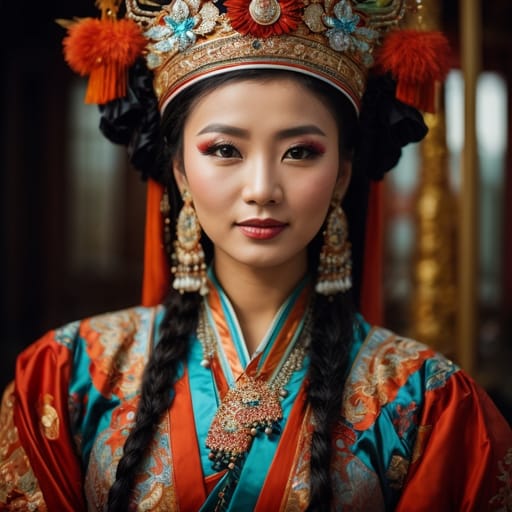
Typical Torghut Phenotypes
Reference for AI generation: hair, eyes, skin, facial structure, build
Torghut Body & Anatomy Reference
East Asian Sinitic / Mongoloid phenotype: anatomy reference for AI nude generation
Torghut Boobs & Breasts
Bust reference for Torghut women: small-to-medium cup, modest projection, which is typical of East Asian Sinitic / Mongoloid ancestry. Areolas measure about 26-36mm across, with light-pink to medium-brown pigmentation. Body type (ectomorph-to-mesomorph, lean frame) shapes the bust as well, so Torghut tits are usually firm and modestly projecting; smaller cup size than the South Asian or Western Asian average. In AI imagery, keep the forward-set shape rather than drifting toward the fuller South Asian or Levantine bust profile.
Torghut Ass & Hips
The Torghut ass is typically small-to-medium, modest projection, narrower hip profile, which sets it apart from the fuller projected glutes of the West African or Polynesian phenotype. Underneath, the pelvis shows narrower iliac crests, less gluteal-femoral fat deposition, part of the East Asian Sinitic / Mongoloid skeletal pattern. For Torghut butt pics and AI renders, match that silhouette and the overall build (ectomorph-to-mesomorph, lean frame).
Torghut Vagina & Pussy
Torghut pussy and vulvar anatomy presents light-pink to medium-brown labial pigmentation, smaller labia minora, consistent with the East Asian Sinitic / Mongoloid phenotype's pigmentation pattern. Torghut pubic hair is typically straight fine texture, sparser distribution than the South Asian norm, in the inverted-triangle pattern. For anatomically accurate Torghut pussy renders the labial coloration should match the surrounding light to medium skin tone with a continuous gradient, and the hair should keep its straight fine texture.
Torghut Dicks & Penis
Torghut dicks follow the East Asian Sinitic / Mongoloid reference data: regional mean ~11-12cm erect; moderate girth; light-brown shaft pigmentation. Shaft color should track the light to medium skin tone with a smooth change toward the glans, and Torghut pubic hair keeps its straight fine texture.
Torghut Body, Curves & Build
Torghut body type and overall build presents as ectomorph-to-mesomorph, lean frame, with mean adult female BMI 20-23: the characteristic East Asian Sinitic / Mongoloid habitus. Torghut curves and proportions should keep the regional skeletal frame (height, shoulder-to-hip ratio, limb proportions) rather than a generic mesomorph default.
Torghut Skin Tone & Hair Texture
Torghut skin sits in the light to medium (Fitzpatrick II-IV) band. Hair is typically straight 1A, fine-to-medium, predominantly black, in keeping with the East Asian Sinitic / Mongoloid phenotype. In nude renders the skin should stay one even tone from face to body, and body, pubic and head hair should match.
Explore phenotype categories
Structured taxonomy with peer-reviewed scales · 22 anatomical categories
Erotic Poses & Sex Positions
From the pose catalog: 219 named positions with reference skeletons
Frequently asked questions about Torghut people
Where is the Torghut homeland?
The Torghut homeland is Bayingolin and Hoboksar in Xinjiang, China; Khovd Province in western Mongolia; and Kalmykia in southern Russia in East Asia.
What language do Torghut people speak?
Torghut people primarily speak Oirat, in the Kalmyk-Oirat branch of Mongolic; written in Clear Script in China and Cyrillic in Russia.
What religion do Torghut people practice?
The predominant religion among Torghut people is Tibetan Buddhism of the Gelug school, alongside older steppe practice such as ovoo cairns and fire offerings.






Make your own Torghut images
Five a day, free, no credits to buy. The studio starts from this group's phenotype data, so you can set body type, pose and style and keep the traits accurate.
Start with Torghut