No portrait yet
Sumo Mohe Erotic
Upper Songhua River basin in central Jilin Province, Northeast China (Manchuria); resettled groups lived at Yingzhou (Chaoyang, Liaoning) and later in the Balhae heartland around Dunhua.
Mohe language, unattested and presumed Tungusic; Classical Chinese used for writing under Balhae
Shamanism and spirit worship; Buddhism among the Balhae elite from the 8th century
One of the seven Mohe (Malgal) tribes, alongside the Boduo, Anchegu, Funie, Haoshi, Heishui and Baishan; ancestral to the Balhae population and linked to the later Jurchens and Manchus
About Sumo Mohe People
The Sumo Mohe were the southernmost of the seven Mohe tribal groups of Manchuria, settled along the upper Songhua River in what is now Jilin Province, China, from about the sixth century to the eighth. They do not survive as a people. They became the founding core of the Balhae kingdom in 698, and after the Khitan destroyed Balhae in 926 their descendants were absorbed into the Liao state, the Jurchens, Goryeo Korea and northern China.
Their name is a place name: Sumo was the old Chinese term for the Songhua. Sui dynasty chroniclers described the Mohe in general as people who lived in dug-out pit houses entered by ladder from the top, raised pigs, grew millet and wheat, and hunted with poisoned arrows. The Sumo stood out for one reason, geography. They bordered Goguryeo, fielded several thousand fighters, and were known for raiding it. That frontier pulled them two ways. Many ended up serving Goguryeo as auxiliaries against the Sui and Tang. Others went over to China: the chief Tudiji brought more than a thousand households to submit to the Sui and was settled at Yingzhou, near modern Chaoyang in Liaoning. His son, carrying the imperial surname as Li Jinxing, rose to be a Tang general.
When Goguryeo fell in 668, the Tang moved more Sumo Mohe to Yingzhou. A Khitan revolt there in 696 gave them an opening. Two Mohe leaders, Qiqi Zhongxiang and Qisi Biyu, broke east with Goguryeo refugees in tow. Both died on the way, and Zhongxiang's son Dae Joyeong, Da Zuorong in Chinese, beat the pursuing Tang army at Tianmenling and set up a state at Dongmou Mountain near present-day Dunhua. The Tang recognized him as Prince of Bohai in 713. The kingdom lasted over two centuries and earned the Chinese label flourishing land east of the sea.
Who Dae Joyeong was remains a live argument. The Old Book of Tang calls him a separate branch of Goguryeo. The New Book of Tang calls him a Sumo Mohe who had attached himself to Goguryeo. Chinese and Korean historians still line up behind one text or the other, which makes this small river tribe a fixture of modern disputes over national history. Their language was never written down. It is presumed Tungusic, related to the speech of the later Jurchens and Manchus, while Balhae itself kept its records in Chinese characters. Their religion was shamanic, with Buddhism taking hold among the Balhae elite.
Related ethnic groups
Groups that share Sumo Mohe's homeland, region, language, or religious tradition. These are likely candidates for comparative phenotype reference.
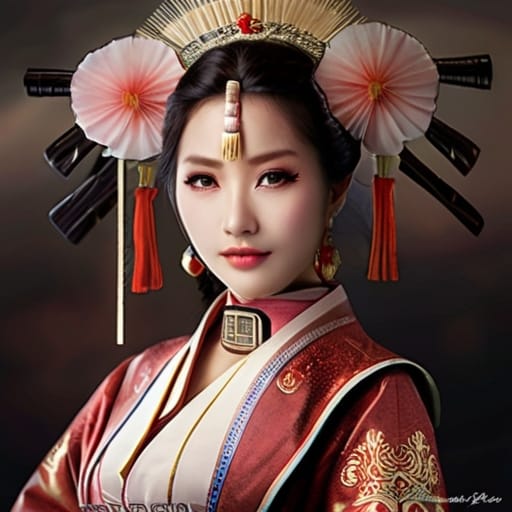
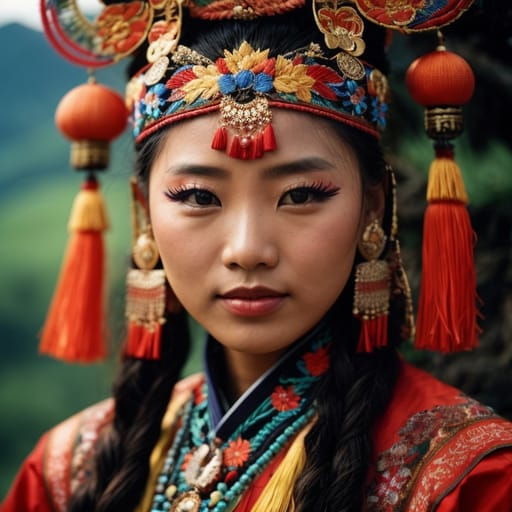
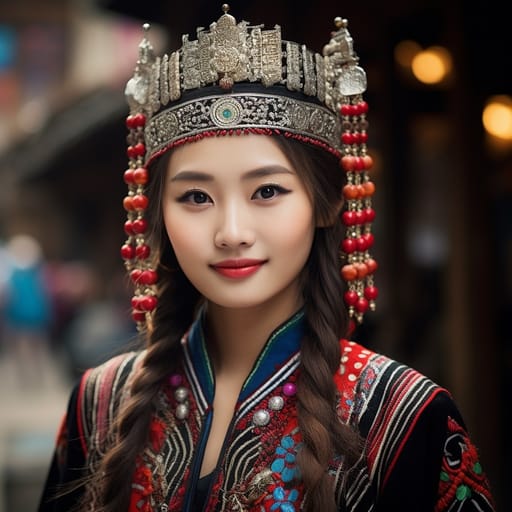
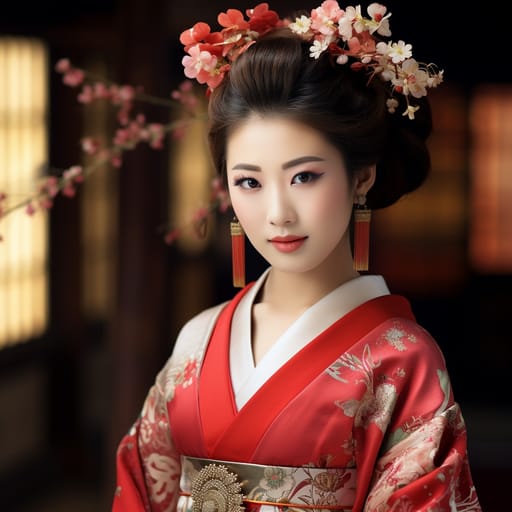
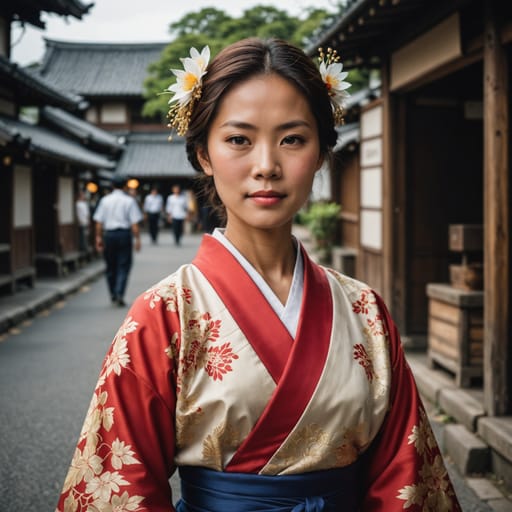
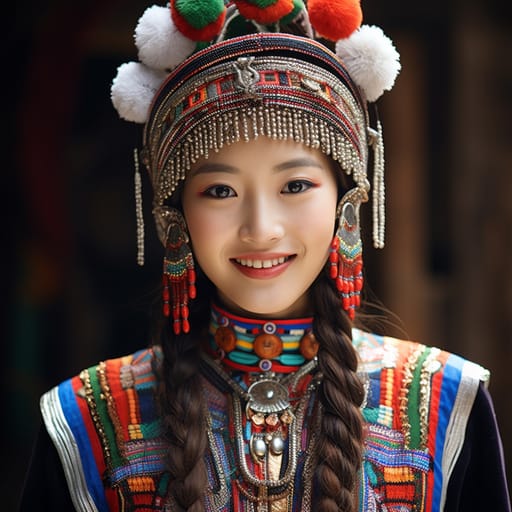
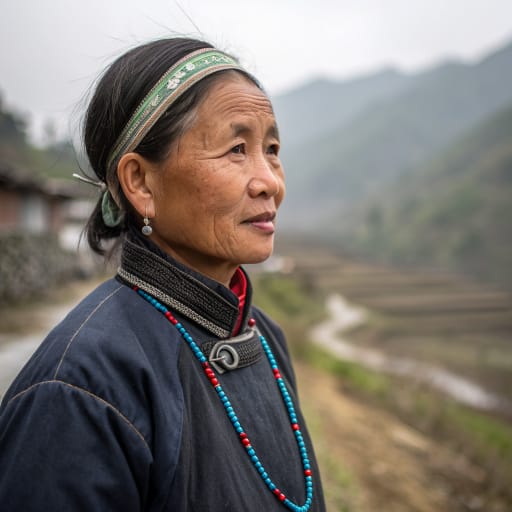
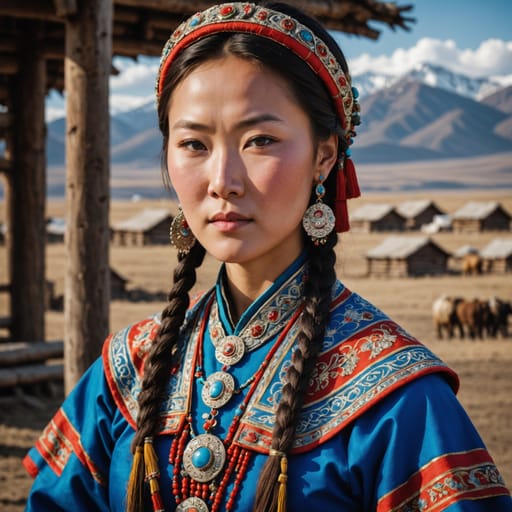
Typical Sumo Mohe Phenotypes
Reference for AI generation: hair, eyes, skin, facial structure, build
Sumo Mohe Body & Anatomy Reference
Per-feature anatomical profile for AI nude generation: East Asian Sinitic / Mongoloid phenotype
Sumo Mohe Boobs & Breasts
Bust reference for Sumo Mohe women: small-to-medium cup, modest projection, which is typical of East Asian Sinitic / Mongoloid ancestry. Areolas measure about 26-36mm across, with light-pink to medium-brown pigmentation. Body type (ectomorph-to-mesomorph, lean frame) shapes the bust as well, so Sumo Mohe tits are usually firm and modestly projecting; smaller cup size than the South Asian or Western Asian average. In AI imagery, keep the forward-set shape rather than drifting toward the fuller South Asian or Levantine bust profile.
Sumo Mohe Ass & Hips
The Sumo Mohe ass is typically small-to-medium, modest projection, narrower hip profile, which sets it apart from the fuller projected glutes of the West African or Polynesian phenotype. Underneath, the pelvis shows narrower iliac crests, less gluteal-femoral fat deposition, part of the East Asian Sinitic / Mongoloid skeletal pattern. For Sumo Mohe butt pics and AI renders, match that silhouette and the overall build (ectomorph-to-mesomorph, lean frame).
Sumo Mohe Vagina & Pussy
Sumo Mohe pussy and vulvar anatomy presents light-pink to medium-brown labial pigmentation, smaller labia minora, consistent with the East Asian Sinitic / Mongoloid phenotype's pigmentation pattern. Sumo Mohe pubic hair is typically straight fine texture, sparser distribution than the South Asian norm, in the inverted-triangle pattern. For anatomically accurate Sumo Mohe pussy renders the labial coloration should match the surrounding light to medium skin tone with a continuous gradient, and the hair should keep its straight fine texture.
Sumo Mohe Dicks & Penis
Sumo Mohe dicks follow the East Asian Sinitic / Mongoloid reference data: regional mean ~11-12cm erect; moderate girth; light-brown shaft pigmentation. Shaft color should track the light to medium skin tone with a smooth change toward the glans, and Sumo Mohe pubic hair keeps its straight fine texture.
Sumo Mohe Body, Curves & Build
Sumo Mohe body type and overall build presents as ectomorph-to-mesomorph, lean frame, with mean adult female BMI 20-23: the characteristic East Asian Sinitic / Mongoloid habitus. Sumo Mohe curves and proportions should keep the regional skeletal frame (height, shoulder-to-hip ratio, limb proportions) rather than a generic mesomorph default.
Sumo Mohe Skin Tone & Hair Texture
Sumo Mohe skin sits in the light to medium (Fitzpatrick II-IV) band. Hair is typically straight 1A, fine-to-medium, predominantly black, in keeping with the East Asian Sinitic / Mongoloid phenotype. In nude renders the skin should stay one even tone from face to body, and body, pubic and head hair should match.
Explore phenotype categories
Structured taxonomy with peer-reviewed scales · 22 anatomical categories
Erotic Poses & Sex Positions
From the pose catalog: 219 named positions with reference skeletons
Frequently asked questions about Sumo Mohe people
Where is the Sumo Mohe homeland?
The Sumo Mohe homeland is Upper Songhua River basin in central Jilin Province, Northeast China (Manchuria); resettled groups lived at Yingzhou (Chaoyang, Liaoning) and later in the Balhae heartland around Dunhua. in East Asia.
What language do Sumo Mohe people speak?
Sumo Mohe people primarily speak Mohe language, unattested and presumed Tungusic; Classical Chinese used for writing under Balhae.
What religion do Sumo Mohe people practice?
The predominant religion among Sumo Mohe people is Shamanism and spirit worship; Buddhism among the Balhae elite from the 8th century.






Make your own Sumo Mohe images
Five a day, free, no credits to buy. The studio starts from this group's phenotype data, so you can set body type, pose and style and keep the traits accurate.
Start with Sumo Mohe