No portrait yet
Rufiji Erotic
Lower Rufiji River valley and delta, in the Rufiji and Kibiti districts of Pwani Region, Tanzania
Kirufiji (Bantu, Niger-Congo); Swahili (Bantu, Niger-Congo) widely spoken
Predominantly Sunni Islam
Coastal Bantu people of southeastern Tanzania; linguistically closest to the Ndengereko, Matumbi and Ngindo
About Rufiji People
The Rufiji take their name from the river, and the river has always set the terms. The Rufiji is Tanzania's largest river. It drains much of the country's south before it breaks up into a broad delta on the Indian Ocean coast below Dar es Salaam. The Warufiji live along its lower valley and out into that delta, in what are now the Rufiji and Kibiti districts of Pwani Region. For generations, being Rufiji has meant reading the flood: when the water will spread over the plain, where it will leave good silt for rice and maize, and when to head for higher ground.
Their language, Kirufiji, is a Bantu tongue closely related to those of their neighbors, the Ndengereko, Matumbi and Ngindo. Swahili runs through daily life, though. It is the language of the market, the mosque, the school and the radio, and it keeps gaining ground at home. The pull toward Swahili is old. The delta sits on the Swahili coast, within sailing distance of Mafia Island and Kilwa, and its mangrove poles, grain and fish moved along dhow routes to Zanzibar and Arabia long before colonial rule. Islam came in along the same routes and is the faith of the great majority. Friday prayers, Ramadan and Qur'an school shape the week and the year, and the white kanzu comes out for Eid.
Flood, war and resettlement
The valley has lived through more upheaval than its quiet reputation suggests. In 1905 the Maji Maji war against German rule broke out in the Matumbi Hills south of the river. It was inspired by the prophet Kinjikitile Ngwale, whose sacred water was supposed to turn German bullets to water. Rufiji communities were pulled into the fighting and into the famine that followed German scorched-earth reprisals. A decade later, the German cruiser Königsberg hid in the delta's creeks while British warships hunted it. After independence, a severe flood in 1968 led the government to move floodplain families into planned villages on higher ground, an early step in Tanzania's ujamaa villagization.
The newest change comes from upstream. The Julius Nyerere Hydropower Station at Stiegler's Gorge now controls a river that used to flood on its own schedule, and people downstream are waiting to see what a tamer Rufiji means for their fields, fish and mangroves. Most Rufiji still farm and fish. Towns such as Ikwiriri, Kibiti and Utete connect them to the coastal highway and to Dar es Salaam, where many go for work.
Related ethnic groups
Groups that share Rufiji's homeland, region, language, or religious tradition. These are likely candidates for comparative phenotype reference.
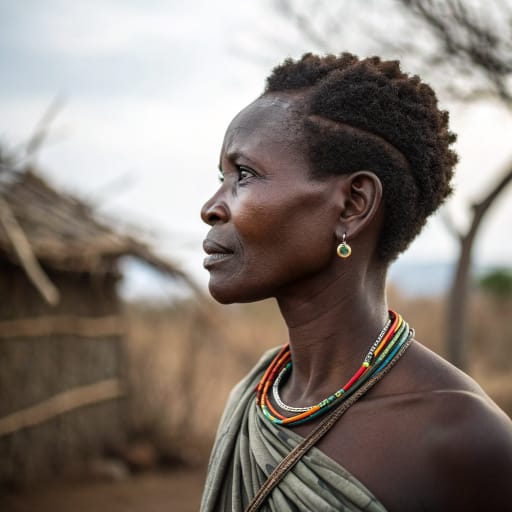
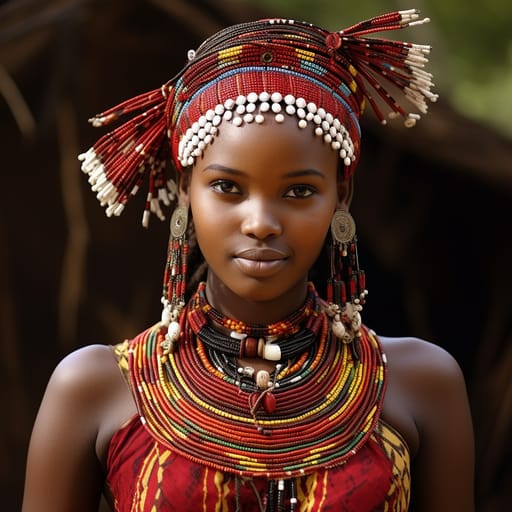
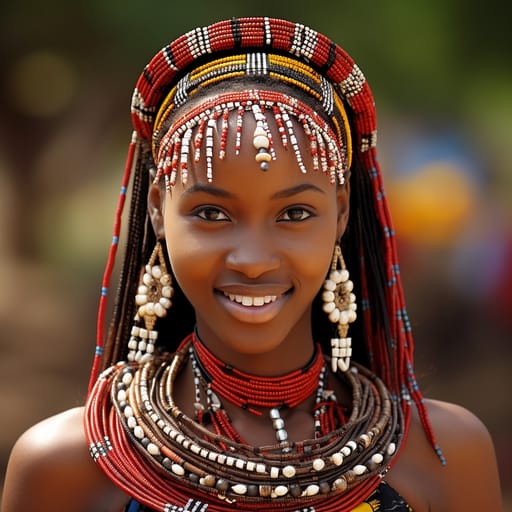
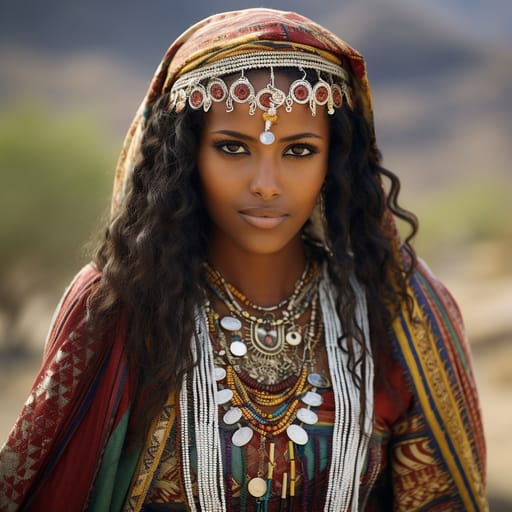
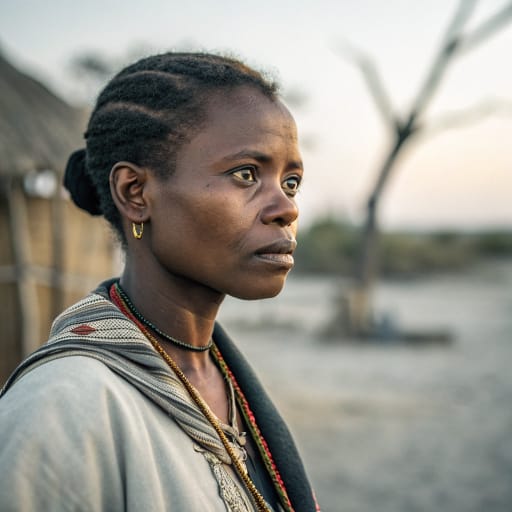
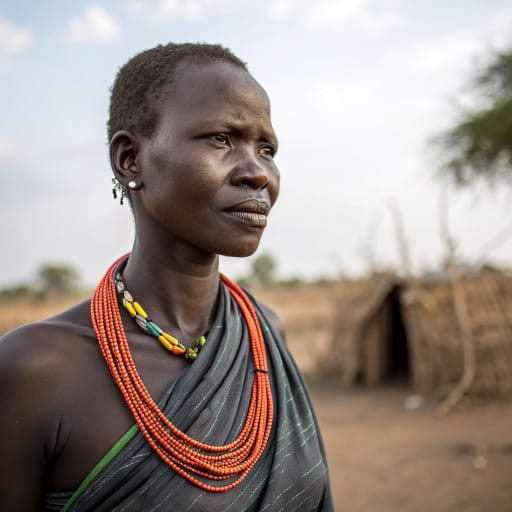
Typical Rufiji Phenotypes
Reference for AI generation: hair, eyes, skin, facial structure, build
Rufiji Body & Anatomy Reference
Cushitic / Nilo-Cushitic East African phenotype: anatomy reference for AI nude generation
Rufiji Boobs & Breasts
Bust reference for Rufiji women: small-to-medium-cup, high-set, conical, which is typical of Cushitic / Nilo-Cushitic East African ancestry. Areolas measure about 28-38mm across, with moderate-to-high pigmentation. Body type (lean ectomorph-to-mesomorph) shapes the bust as well, so Rufiji tits are usually firmer and less projecting than the African-American or West African norm. In AI imagery, keep the forward-set shape rather than drifting toward the lateral spread of the West African phenotype.
Rufiji Ass & Hips
The Rufiji ass is typically small-to-medium, high-set, rounded, which sets it apart from the wide-set heavy-projection West African or African-American norm. Underneath, the pelvis shows narrow-to-medium iliac crests, longer torso-to-leg ratio, part of the Cushitic / Nilo-Cushitic East African skeletal pattern. For Rufiji butt pics and AI renders, match that silhouette and the overall build (lean ectomorph-to-mesomorph).
Rufiji Vagina & Pussy
Rufiji pussy and vulvar anatomy presents brown-to-deep-brown labial pigmentation, narrow-to-medium labia minora projection, consistent with the Cushitic / Nilo-Cushitic East African phenotype's pigmentation pattern. Rufiji pubic hair is typically tightly-coiled coarse texture, densely distributed, in the inverted-triangle pattern. For anatomically accurate Rufiji pussy renders the labial coloration should match the surrounding brown to deep brown skin tone with a continuous gradient, and the hair should keep its tightly-coiled coarse texture.
Rufiji Dicks & Penis
Rufiji dicks follow the Cushitic / Nilo-Cushitic East African reference data: regional mean ~13.5cm erect; moderate girth, ~12cm circumference; deeper-pigmented than the West African norm. Shaft color should track the brown to deep brown skin tone with a smooth change toward the glans, and Rufiji pubic hair keeps its tightly-coiled coarse texture.
Rufiji Body, Curves & Build
Rufiji body type and overall build presents as lean ectomorph-to-mesomorph, with mean adult female BMI 19-22: the characteristic Cushitic / Nilo-Cushitic East African habitus. Rufiji curves and proportions should keep the regional skeletal frame (height, shoulder-to-hip ratio, limb proportions) rather than a generic mesomorph default.
Rufiji Skin Tone & Hair Texture
Rufiji skin sits in the brown to deep brown (Fitzpatrick V-VI) band. Hair is typically tight 4A-4C coil, often worn natural or in braided/twisted protective styles, in keeping with the Cushitic / Nilo-Cushitic East African phenotype. In nude renders the skin should stay one even tone from face to body, and body, pubic and head hair should match.
Explore phenotype categories
Structured taxonomy with peer-reviewed scales · 22 anatomical categories
Erotic Poses & Sex Positions
From the pose catalog: 219 named positions with reference skeletons
Frequently asked questions about Rufiji people
Where is the Rufiji homeland?
The Rufiji homeland is Lower Rufiji River valley and delta, in the Rufiji and Kibiti districts of Pwani Region, Tanzania in Eastern Africa.
What language do Rufiji people speak?
Rufiji people primarily speak Kirufiji (Bantu, Niger-Congo); Swahili (Bantu, Niger-Congo) widely spoken.
What religion do Rufiji people practice?
The predominant religion among Rufiji people is Predominantly Sunni Islam.






Make your own Rufiji images
Five a day, free, no credits to buy. The studio starts from this group's phenotype data, so you can set body type, pose and style and keep the traits accurate.
Start with Rufiji