No portrait yet
Rockaway Erotic
South shore of western Long Island around Jamaica Bay and the Rockaway peninsula, in present-day Queens and Nassau County, New York, United States.
Munsee, the northern Lenape language (Eastern Algonquian branch of the Algic family).
Traditional Lenape religion: a creator, a world of spirit beings approached through dreams and visions, and seasonal ceremonies.
A Munsee-speaking band of the Lenape (Delaware), closely tied to the Canarsee and Massapequa. Older sources list them among the so-called thirteen tribes of Long Island, or Metoac.
About Rockaway People
The Rockaway were a Munsee-speaking Lenape band who lived on the south shore of western Long Island, in what is now Queens and Nassau County, New York, until the late seventeenth century, when land sales, epidemic disease and colonial pressure ended their life as a separate community; survivors joined neighboring Native groups or moved west with other Lenape, whose descendants live today mainly in Oklahoma, Wisconsin and Ontario. Their name comes from their main settlement, which the Dutch wrote down as Rechquaakie or Reckouwacky and which is usually read as "sandy place." It fits. Their country was barrier beach, salt marsh and the shallow waters of Jamaica Bay.
That shoreline shaped nearly everything about them. The Rockaway fished, gathered oysters and clams in great quantity, hunted the marshes, and grew corn, beans and squash on better ground inland, toward present-day Hempstead. Like other coastal peoples of Long Island, they worked quahog and whelk shell into wampum, the purple and white beads that served as diplomatic currency across the Northeast and that Dutch and English traders soon learned to exploit. Their language was Munsee, the northern Lenape tongue of the Eastern Algonquian family. It tied them more closely to the Canarsee of Brooklyn and the peoples of the lower Hudson than to the Montaukett and Shinnecock of the island's east end, whose speech belonged with southern New England.
Older histories list the Rockaway among the "thirteen tribes" of Long Island, sometimes bundled together as the Metoac. Both notions are nineteenth-century inventions. What colonists actually met were kin-based villages named for places, linked by marriage and shifting alliance, under sachems who led by persuasion rather than command. The Rockaway enter the written record mostly at moments of crisis. In 1643, during Kieft's War, the Dutch colonist David de Vries traveled to Rechquaakie to negotiate peace and described a settlement of about thirty houses and a few hundred people. Four decades later the ground itself was gone. In 1685 Tackapausha, a sachem who spoke for several western Long Island bands, signed over the Rockaway peninsula to an Englishman, John Palmer, who resold it to Richard Cornell two years later.
What remains is mostly a name. Far Rockaway, Rockaway Beach, East Rockaway and the peninsula itself carry it, said every day by New Yorkers who mostly have no idea it is a Munsee word. The shell heaps that once lined the bay are largely built over. The people did not vanish so much as disperse, and the Lenape nations of today regard western Long Island as part of their ancestral homeland.
Related ethnic groups
Groups that share Rockaway's homeland, region, language, or religious tradition. These are likely candidates for comparative phenotype reference.
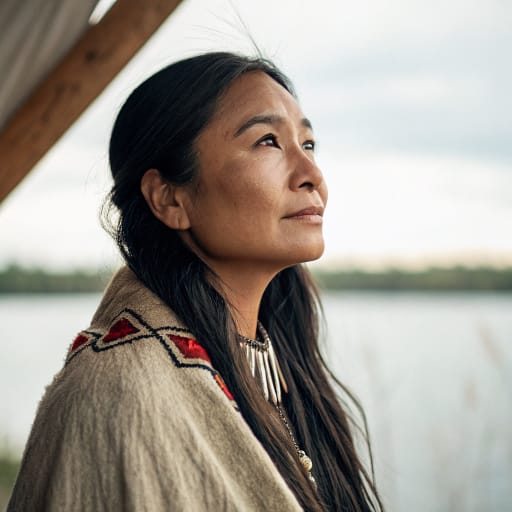
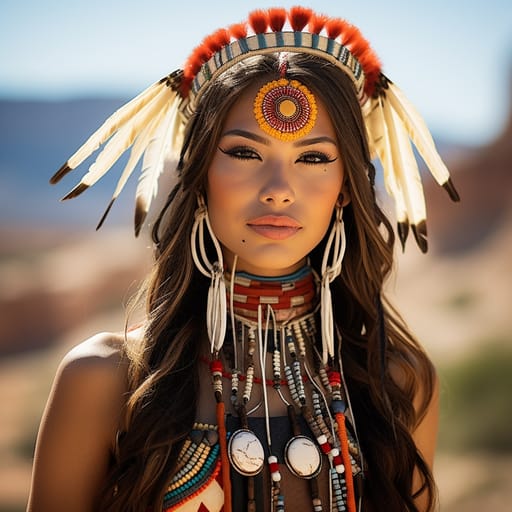
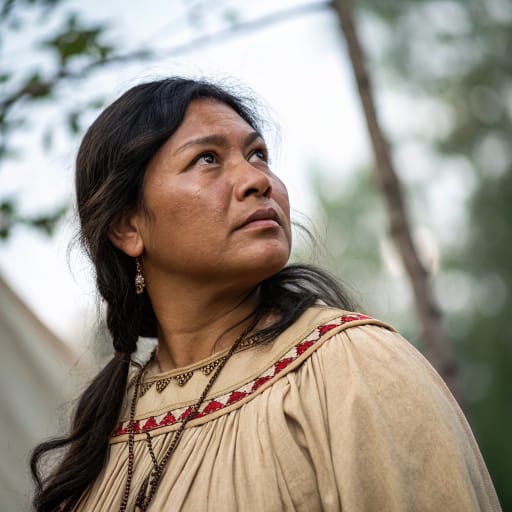
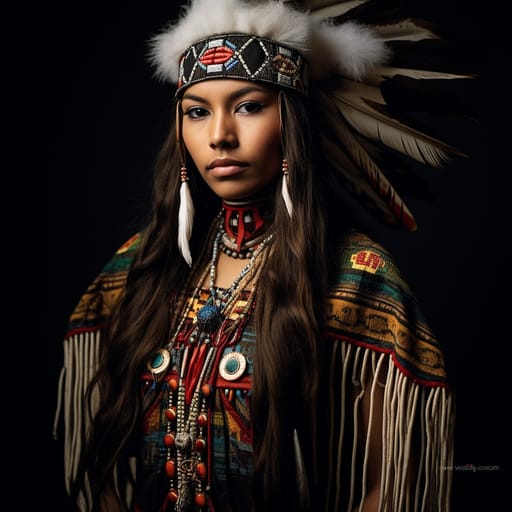
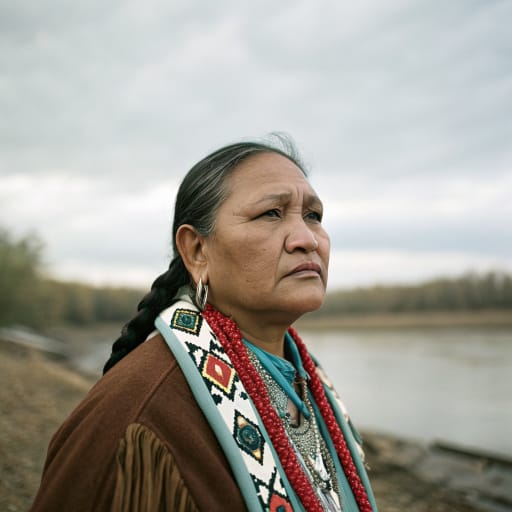
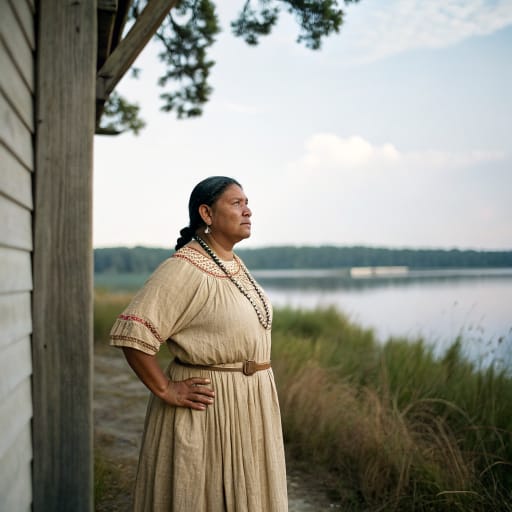
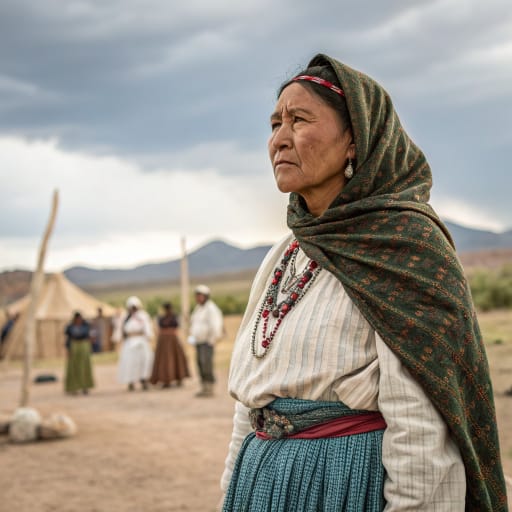
Typical Rockaway Phenotypes
Reference for AI generation: hair, eyes, skin, facial structure, build
Rockaway Body & Anatomy Reference
Per-feature anatomical profile for AI nude generation: Indigenous Northern American / Algonquian-Iroquoian phenotype
Rockaway Boobs & Breasts
The typical Rockaway bust is medium cup, moderate projection, in line with the wider Indigenous Northern American / Algonquian-Iroquoian pattern. Areolas usually fall in the 30-44mm range, with medium-brown areolar pigmentation against the copper-to-medium-brown skin tone. Compared with the smaller East Asian bust, Rockaway breasts sit forward and are generally full and moderate projection. A faithful AI render of Rockaway tits keeps that shape and areola size.
Rockaway Ass & Hips
Butt shape among Rockaway women: medium, moderate-to-full projection, over medium iliac crests. This follows Indigenous Northern American / Algonquian-Iroquoian ancestry and looks quite unlike the slim East Asian narrow-hip profile. An accurate Rockaway ass in adult AI imagery keeps both the silhouette and the overall build (mesomorph, broader frame in northern Indigenous populations) instead of a generic average.
Rockaway Vagina & Pussy
Vulvar anatomy among Rockaway women: medium-brown labial pigmentation. Pubic hair tends to be straight medium-coarse texture, in the usual inverted-triangle pattern. Both follow Indigenous Northern American / Algonquian-Iroquoian pigmentation, which is why Rockaway pussy renders should not fall back on a pale, sparse Western template.
Rockaway Dicks & Penis
The Rockaway cock profile, from Indigenous Northern American / Algonquian-Iroquoian anthropometric data: regional mean ~13cm erect; moderate girth; medium-brown shaft pigmentation. Pubic hair has a straight medium-coarse texture and forms the usual inverted-V pattern. Whether Rockaway men are circumcised follows religious and cultural practice rather than phenotype.
Rockaway Body, Curves & Build
Build and curves among Rockaway women follow the Indigenous Northern American / Algonquian-Iroquoian pattern: mesomorph, broader frame in northern Indigenous populations, mean adult female BMI 25-28. Proportions matter as much as skin tone, so Rockaway figures should keep their regional height and limb ratios.
Rockaway Skin Tone & Hair Texture
The Rockaway skin range is copper to medium-brown (Fitzpatrick III-V), and hair tends to be straight 1A, dark-brown to black, often thick and dense. That combination marks the Indigenous Northern American / Algonquian-Iroquoian phenotype, and skin tone is the trait AI generators most often get wrong for Rockaway women.
Explore phenotype categories
Structured taxonomy with peer-reviewed scales · 22 anatomical categories
Erotic Poses & Sex Positions
From the pose catalog: 219 named positions with reference skeletons
Frequently asked questions about Rockaway people
Where is the Rockaway homeland?
The Rockaway homeland is South shore of western Long Island around Jamaica Bay and the Rockaway peninsula, in present-day Queens and Nassau County, New York, United States. in North America.
What language do Rockaway people speak?
Rockaway people primarily speak Munsee, the northern Lenape language (Eastern Algonquian branch of the Algic family)..
What religion do Rockaway people practice?
The predominant religion among Rockaway people is Traditional Lenape religion: a creator, a world of spirit beings approached through dreams and visions, and seasonal ceremonies..






Make your own Rockaway images
Five a day, free, no credits to buy. The studio starts from this group's phenotype data, so you can set body type, pose and style and keep the traits accurate.
Start with Rockaway