Help us get this right
Does this portrait look right for Agua Dulce?
Nobody has judged this one yet. You would be the first.
Agua Dulce Erotic
The middle St. Johns River valley in northeast Florida, around Lake George and the river country to its north, United States (historically Spanish Florida)
Agua Dulce, or Agua Fresca, dialect of Timucua (language isolate)
Traditional Timucua religion; Franciscan Catholicism under the Spanish missions
One of the Timucua-speaking peoples of northern Florida, grouped with the eastern Timucua alongside the coastal Mocama
About Agua Dulce People
The Agua Dulce were a Timucua-speaking people of the middle St. Johns River in northeast Florida. They lived around Lake George and the river country north of it until disease, mission upheaval and slave raids broke them apart in the 1600s and early 1700s. No community today traces an unbroken line back to them. Their name is Spanish for fresh water. It set these river and lake towns apart from the Mocama, the Timucua speakers of the Atlantic coast, whose own name meant the sea.
Their world was water. The St. Johns runs north, slow and wide, through swamp and hardwood hammock. The people on its banks ate fish, turtles, deer and huge quantities of freshwater snails, and the shell heaps they left still stand in places. Archaeologists group their ancestors under the St. Johns culture, known for a soft, chalky pottery made from clay full of freshwater sponge spicules. At Mount Royal, just north of Lake George, a large sand burial mound held hammered copper ornaments. The copper carried the imagery of the Mississippian world far to the north and west, a sign that these river towns were anything but isolated.
Their language, Timucua, is an isolate with no proven relatives, unlike the Muskogean tongue of the Apalachee to the west. The Franciscan friar Francisco Pareja, working in Spanish Florida in the early 1600s, named Agua Fresca among the Timucua dialects he knew, and that is how the dialect's name survives at all. Before the friars arrived, French and Spanish writers glimpsed Timucua priests and healers at work, along with a ceremonial black drink brewed from yaupon holly. Franciscan missions soon stood among the freshwater towns. Baptism, the church calendar and forced labor for St. Augustine reshaped ordinary life.
The first hard turn came in the 1560s, when the French built Fort Caroline near the river's mouth. Their accounts describe a powerful inland chief they called Outina. Many historians place his towns in or near this freshwater country, though the exact map is still argued. The French joined his war against the Potano, then ran short of food, seized him and held him for corn. Spain wiped out the French colony in 1565 and stayed. Epidemics hollowed out the towns over the next century, and English-backed Creek and Yamasee raids in the early 1700s scattered what remained. Timucua survivors from across the region gathered in shrinking settlements near St. Augustine, and the last handful left for Cuba with the Spanish in 1763. What endures is in the ground and the archives: the shell heaps, the mounds and a dialect name in a friar's list.
Related ethnic groups
Groups that share Agua Dulce's homeland, region, language, or religious tradition. These are likely candidates for comparative phenotype reference.
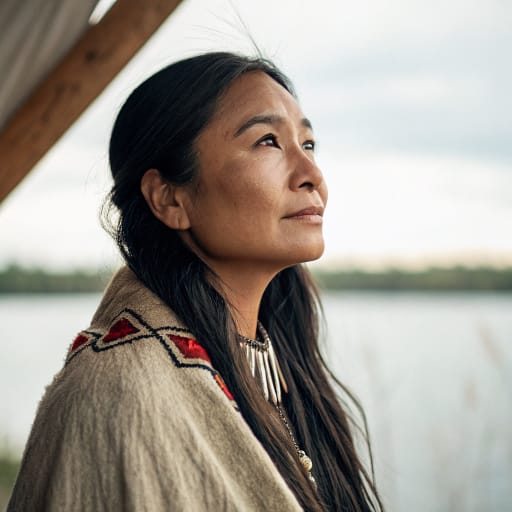
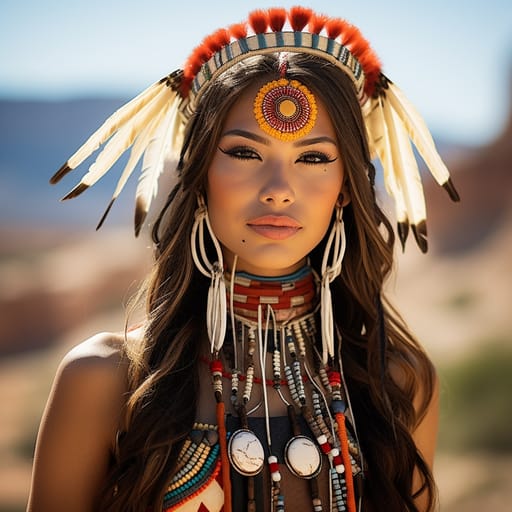
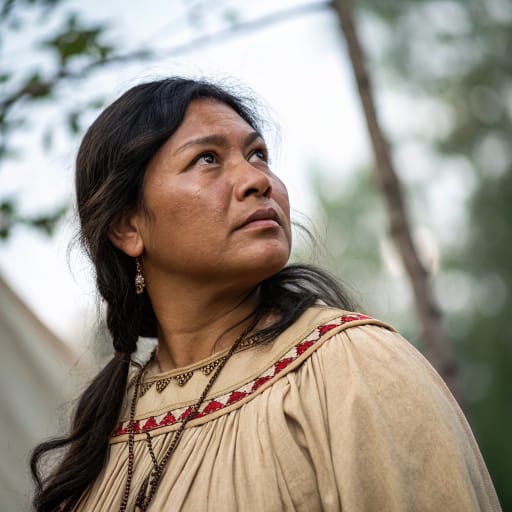
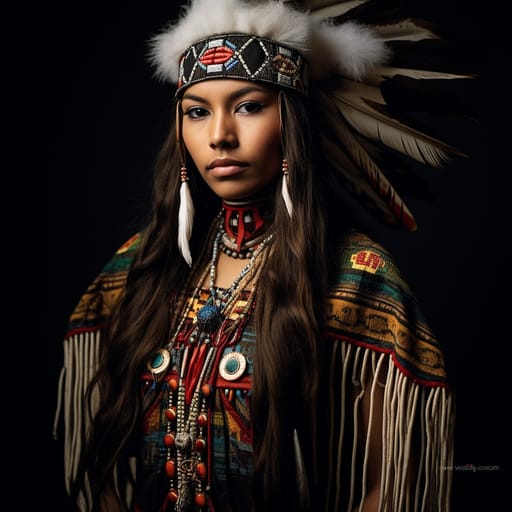
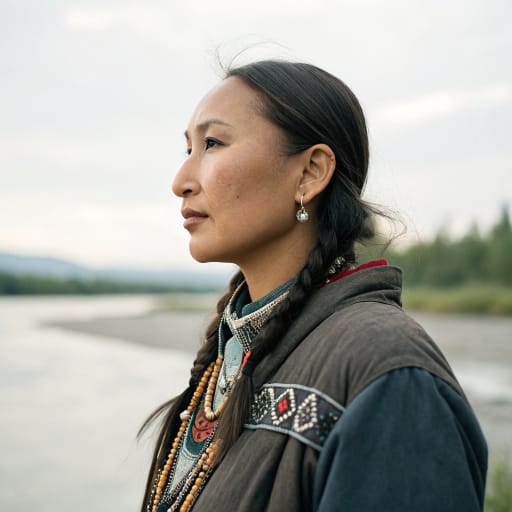
Typical Agua Dulce Phenotypes
Reference for AI generation: hair, eyes, skin, facial structure, build
Agua Dulce Body & Anatomy Reference
Indigenous Northern American / Algonquian-Iroquoian phenotype: anatomy reference for AI nude generation
Agua Dulce Boobs & Breasts
The typical Agua Dulce bust is medium cup, moderate projection, in line with the wider Indigenous Northern American / Algonquian-Iroquoian pattern. Areolas usually fall in the 30-44mm range, with medium-brown areolar pigmentation against the copper-to-medium-brown skin tone. Compared with the smaller East Asian bust, Agua Dulce breasts sit forward and are generally full and moderate projection. A faithful AI render of Agua Dulce tits keeps that shape and areola size.
Agua Dulce Ass & Hips
Butt shape among Agua Dulce women: medium, moderate-to-full projection, over medium iliac crests. This follows Indigenous Northern American / Algonquian-Iroquoian ancestry and looks quite unlike the slim East Asian narrow-hip profile. An accurate Agua Dulce ass in adult AI imagery keeps both the silhouette and the overall build (mesomorph, broader frame in northern Indigenous populations) instead of a generic average.
Agua Dulce Vagina & Pussy
Vulvar anatomy among Agua Dulce women: medium-brown labial pigmentation. Pubic hair tends to be straight medium-coarse texture, in the usual inverted-triangle pattern. Both follow Indigenous Northern American / Algonquian-Iroquoian pigmentation, which is why Agua Dulce pussy renders should not fall back on a pale, sparse Western template.
Agua Dulce Dicks & Penis
The Agua Dulce cock profile, from Indigenous Northern American / Algonquian-Iroquoian anthropometric data: regional mean ~13cm erect; moderate girth; medium-brown shaft pigmentation. Pubic hair has a straight medium-coarse texture and forms the usual inverted-V pattern. Whether Agua Dulce men are circumcised follows religious and cultural practice rather than phenotype.
Agua Dulce Body, Curves & Build
Build and curves among Agua Dulce women follow the Indigenous Northern American / Algonquian-Iroquoian pattern: mesomorph, broader frame in northern Indigenous populations, mean adult female BMI 25-28. Proportions matter as much as skin tone, so Agua Dulce figures should keep their regional height and limb ratios.
Agua Dulce Skin Tone & Hair Texture
The Agua Dulce skin range is copper to medium-brown (Fitzpatrick III-V), and hair tends to be straight 1A, dark-brown to black, often thick and dense. That combination marks the Indigenous Northern American / Algonquian-Iroquoian phenotype, and skin tone is the trait AI generators most often get wrong for Agua Dulce women.
Explore phenotype categories
Structured taxonomy with peer-reviewed scales · 22 anatomical categories
Erotic Poses & Sex Positions
From the pose catalog: 219 named positions with reference skeletons
Frequently asked questions about Agua Dulce people
Where is the Agua Dulce homeland?
The Agua Dulce homeland is The middle St. Johns River valley in northeast Florida, around Lake George and the river country to its north, United States (historically Spanish Florida) in North America.
What language do Agua Dulce people speak?
Agua Dulce people primarily speak Agua Dulce, or Agua Fresca, dialect of Timucua (language isolate).
What religion do Agua Dulce people practice?
The predominant religion among Agua Dulce people is Traditional Timucua religion; Franciscan Catholicism under the Spanish missions.






Make your own Agua Dulce images
Five a day, free, no credits to buy. The studio starts from this group's phenotype data, so you can set body type, pose and style and keep the traits accurate.
Start with Agua Dulce