Help us get this right
Does this portrait look right for Ahwahnechee?
Nobody has judged this one yet. You would be the first.
Ahwahnechee Erotic
Yosemite Valley (Ahwahnee) and the surrounding upper Merced River country in the central Sierra Nevada, California, United States
Southern Sierra Miwok (Utian, Miwokan branch); some also spoke Mono (Uto-Aztecan, Numic branch)
Traditional Miwok religion centered on roundhouse dances and seasonal ceremonies, practiced today alongside Christianity
A band of Southern Sierra Miwok with close marriage ties to the Mono Lake Paiute (Kutzadika'a); descendants belong to the Southern Sierra Miwuk Nation and neighboring Miwok and Paiute communities
About Ahwahnechee People
The Ahwahnechee are the people of Yosemite Valley, and they took their name from it: Ahwahnee, usually glossed as something like "gaping mouth," the old name for the deep granite valley on the Merced River where their villages stood among black oaks. What set them apart from other Miwok was less language than position. They spoke Southern Sierra Miwok, but the valley sat on a trade route over the crest of the Sierra Nevada, and families married across it. Many had Mono Lake Paiute relatives, and some also spoke Mono, a Uto-Aztecan language with no relation to Miwok. Acorns, baskets and shell beads went east over the passes, while obsidian, pinyon nuts and fly pupae gathered at Mono Lake came back.
Daily life turned on the acorn. Women pounded black oak acorns in bedrock mortars, leached out the bitter tannins with water and cooked the meal into mush with hot stones dropped into baskets. Their grinding holes still pock the granite around the valley floor. Families lived in conical houses of incense cedar bark and kept the harvest in raised granaries. Ceremony centered on the roundhouse, where dances and seasonal gatherings drew guests from neighboring bands.
Outsiders mostly know the story from its violent turn. In March 1851 the Mariposa Battalion, a volunteer militia raised during the Mariposa War, entered the valley to force the band onto a reservation. The band's leader, Tenaya, told the volunteers that a deadly sickness had once emptied the valley, and that he, raised among his mother's Paiute people, had gathered a new band to resettle it. The expedition gave the valley its English name: Yosemite most likely comes from a Miwok word meaning "those who kill," which other Miwok called the valley's people, and not "grizzly bear," as one volunteer claimed. Tenaya's youngest son was shot and the band was taken to a reservation on the Fresno River. After miners were killed in the valley in 1852 and soldiers came, Tenaya fled across the mountains. He was killed in a dispute with the Mono Paiute in 1853.
The Ahwahnechee did not end with him. Survivors joined Miwok and Paiute communities, and some came back to work in the tourist economy that grew up around the park, where Yosemite weavers became known for fine baskets sold to visitors. An Indian village lasted on the valley floor until the National Park Service removed its last residents in 1969. Many descendants are organized through the Southern Sierra Miwuk Nation, which has long pressed for federal recognition. They have also worked with the park to restore Wahhoga, the last village site, as a place for ceremony.
Related ethnic groups
Groups that share Ahwahnechee's homeland, region, language, or religious tradition. These are likely candidates for comparative phenotype reference.
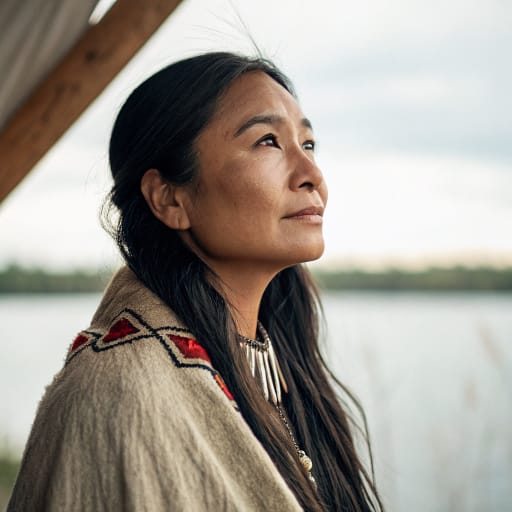
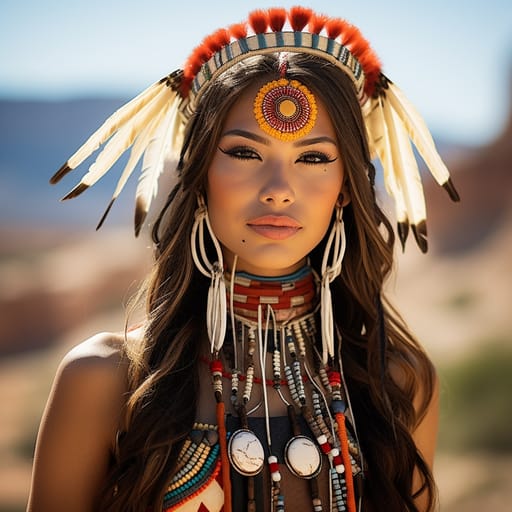
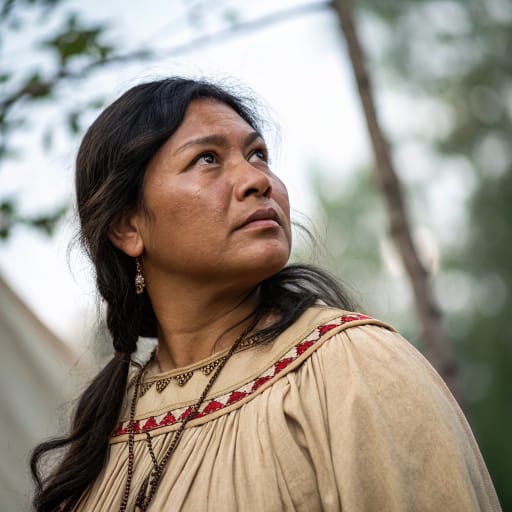
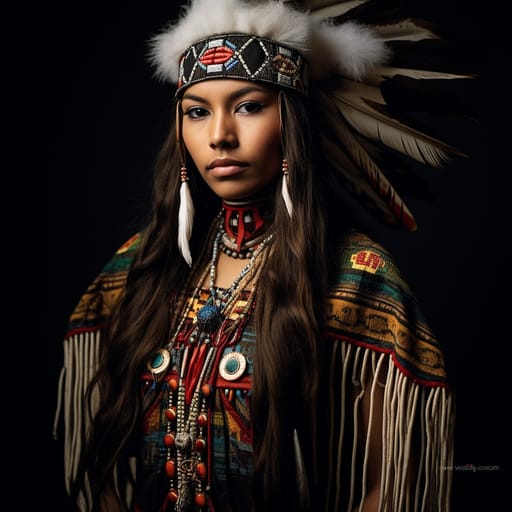
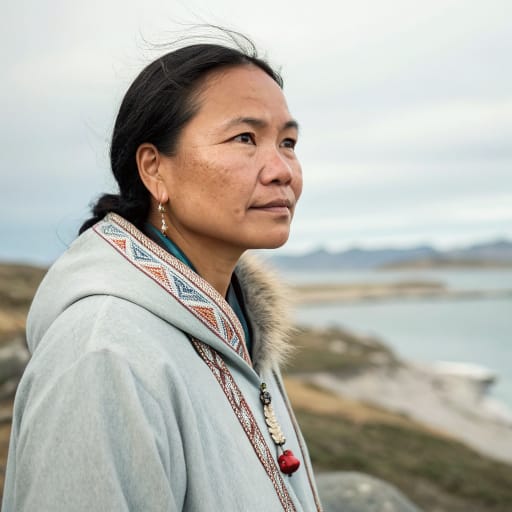
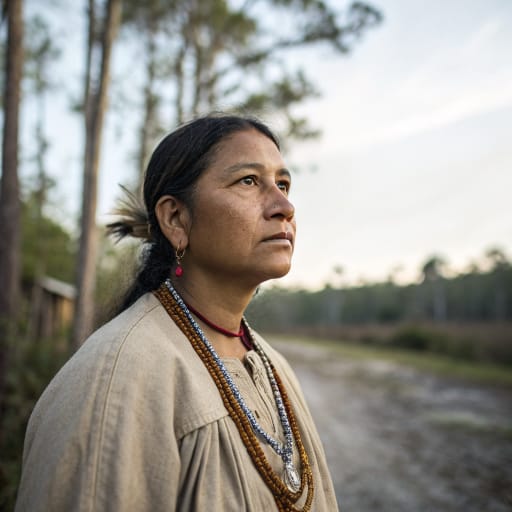
Typical Ahwahnechee Phenotypes
Reference for AI generation: hair, eyes, skin, facial structure, build
Ahwahnechee Body & Anatomy Reference
Indigenous Northern American / Algonquian-Iroquoian phenotype: anatomy reference for AI nude generation
Ahwahnechee Boobs & Breasts
Bust reference for Ahwahnechee women: medium cup, moderate projection, which is typical of Indigenous Northern American / Algonquian-Iroquoian ancestry. Areolas measure about 30-44mm across, with medium-brown pigmentation. Body type (mesomorph, broader frame in northern Indigenous populations) shapes the bust as well, so Ahwahnechee tits are usually full and moderate projection. In AI imagery, keep the forward-set shape rather than drifting toward the smaller East Asian bust.
Ahwahnechee Ass & Hips
The Ahwahnechee ass is typically medium, moderate-to-full projection, which sets it apart from the slim East Asian narrow-hip profile. Underneath, the pelvis shows medium iliac crests, part of the Indigenous Northern American / Algonquian-Iroquoian skeletal pattern. For Ahwahnechee butt pics and AI renders, match that silhouette and the overall build (mesomorph, broader frame in northern Indigenous populations).
Ahwahnechee Vagina & Pussy
Ahwahnechee pussy and vulvar anatomy presents medium-brown labial pigmentation, consistent with the Indigenous Northern American / Algonquian-Iroquoian phenotype's pigmentation pattern. Ahwahnechee pubic hair is typically straight medium-coarse texture, in the inverted-triangle pattern. For anatomically accurate Ahwahnechee pussy renders the labial coloration should match the surrounding copper to medium-brown skin tone with a continuous gradient, and the hair should keep its straight medium-coarse texture.
Ahwahnechee Dicks & Penis
Ahwahnechee dicks follow the Indigenous Northern American / Algonquian-Iroquoian reference data: regional mean ~13cm erect; moderate girth; medium-brown shaft pigmentation. Shaft color should track the copper to medium-brown skin tone with a smooth change toward the glans, and Ahwahnechee pubic hair keeps its straight medium-coarse texture.
Ahwahnechee Body, Curves & Build
Ahwahnechee body type and overall build presents as mesomorph, broader frame in northern Indigenous populations, with mean adult female BMI 25-28: the characteristic Indigenous Northern American / Algonquian-Iroquoian habitus. Ahwahnechee curves and proportions should keep the regional skeletal frame (height, shoulder-to-hip ratio, limb proportions) rather than a generic mesomorph default.
Ahwahnechee Skin Tone & Hair Texture
Ahwahnechee skin sits in the copper to medium-brown (Fitzpatrick III-V) band. Hair is typically straight 1A, dark-brown to black, often thick and dense, in keeping with the Indigenous Northern American / Algonquian-Iroquoian phenotype. In nude renders the skin should stay one even tone from face to body, and body, pubic and head hair should match.
Explore phenotype categories
Structured taxonomy with peer-reviewed scales · 22 anatomical categories
Erotic Poses & Sex Positions
From the pose catalog: 219 named positions with reference skeletons
Frequently asked questions about Ahwahnechee people
Where is the Ahwahnechee homeland?
The Ahwahnechee homeland is Yosemite Valley (Ahwahnee) and the surrounding upper Merced River country in the central Sierra Nevada, California, United States in North America.
What language do Ahwahnechee people speak?
Ahwahnechee people primarily speak Southern Sierra Miwok (Utian, Miwokan branch); some also spoke Mono (Uto-Aztecan, Numic branch).
What religion do Ahwahnechee people practice?
The predominant religion among Ahwahnechee people is Traditional Miwok religion centered on roundhouse dances and seasonal ceremonies, practiced today alongside Christianity.






Make your own Ahwahnechee images
Five a day, free, no credits to buy. The studio starts from this group's phenotype data, so you can set body type, pose and style and keep the traits accurate.
Start with Ahwahnechee