Help us get this right
Does this portrait look right for Greenlandic Inuit?
One tap. It takes a second and it is recorded.
2 say it looks right, 4 say it looks off.
Greenlandic Inuit Erotic
Greenland (Kalaallit Nunaat), a self-governing territory in the Kingdom of Denmark, mainly along the west coast, with smaller populations in the east and far northwest and a sizable community in Denmark
Greenlandic (Eskimo-Aleut, Inuit branch): West Greenlandic (Kalaallisut) is the official standard, with East Greenlandic (Tunumiisut) and Inuktun in the far north; Danish is widely used as a second language
Evangelical Lutheran Christianity, mostly through the Church of Denmark's diocese in Greenland; older beliefs about shamans and the Mother of the Sea survive in stories and art
Kalaallit (West Greenlanders), Tunumiit (East Greenlanders), Inughuit (Polar Inuit of the Qaanaaq area); part of the wider Inuit peoples stretching from Alaska to Greenland
About Greenlandic Inuit People
Greenlandic Inuit call themselves Kalaallit and their island Kalaallit Nunaat, the land of the Greenlanders. Almost every other Arctic Indigenous people is a minority governed from somewhere else. Greenlandic Inuit are not: they make up close to nine in ten of Greenland's residents, and the self-government in Nuuk is theirs. Home is a thin strip of coast between the ice sheet and the sea, mostly on the west side. People live in towns such as Nuuk, Sisimiut and Ilulissat and in settlements with no road to anywhere else, reached by boat, by helicopter or, in the north, by dog sled. A sizable community also lives in Denmark.
Their ancestors are the Thule people, who crossed from Arctic Canada in the 1200s and for a time shared the island with Norse farmers in the south. Three branches took shape. West Greenlanders, the Kalaallit proper, bore the full weight of colonial rule after the Lutheran missionary Hans Egede arrived in 1721. The Tunumiit of the east coast had no lasting European contact until the 1880s. The Inughuit of the far northwest are among the northernmost people on earth. They met a British expedition in 1818, and in the 1860s they took in migrants from Baffin Island who brought back the kayak and the bow, both lost during their isolation. Each branch speaks its own variety of Greenlandic, an Eskimo-Aleut language that stacks suffixes onto a root until one long word carries a full English sentence. The western standard has been the sole official language since 2009, though Danish remains common, especially in Nuuk.
Most Greenlandic Inuit belong to the Lutheran church, and confirmation is still one of the big family days, but the older world lingers. People still tell stories of the angakkoq, the shaman, and of the Mother of the Sea, who holds back the sea animals when taboos are broken. The tupilaq was once a secret avenging creature made from bone, skin and sinew. Today it is carved from tooth and antler for collectors. The twentieth century hit hard. Greenland became a Danish county in 1953, small settlements were closed, and families moved into concrete apartment blocks. The Inughuit were moved to make room for the American air base at Thule. In the 1960s and 1970s, a campaign fitted thousands of women and girls with contraceptive coils, many without consent. Home rule followed in 1979. Daily life now mixes wage jobs and smartphones with hunting seal, narwhal and musk ox. Almost any occasion, from a birthday to a child's first school day, calls for a kaffemik, an open house where guests come and go in waves for coffee and cake.
Related ethnic groups
Groups that share Greenlandic Inuit's homeland, region, language, or religious tradition. These are likely candidates for comparative phenotype reference.
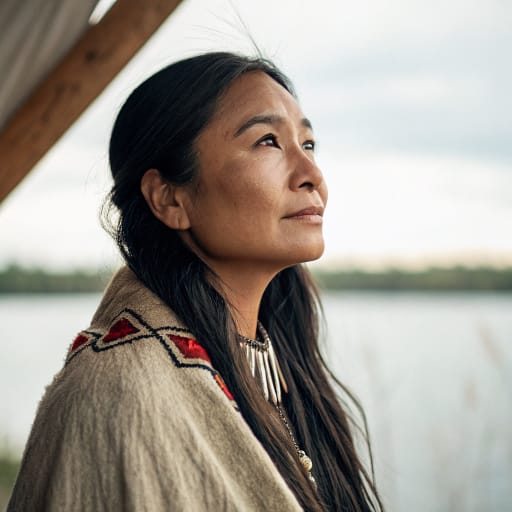
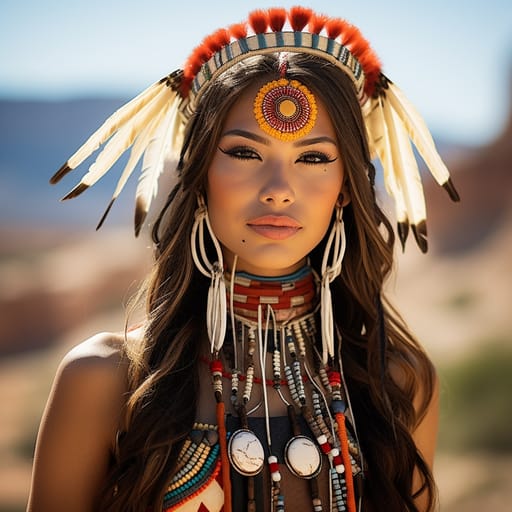
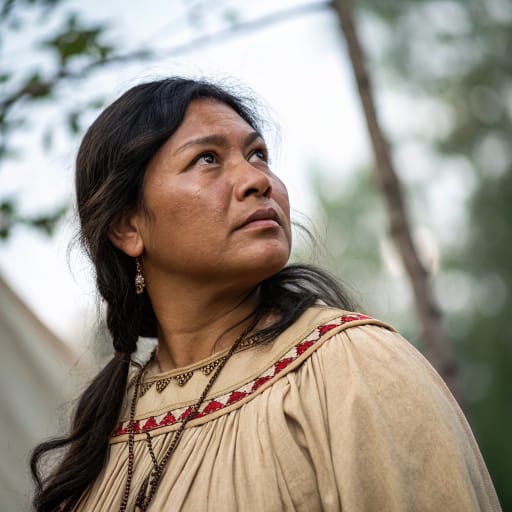
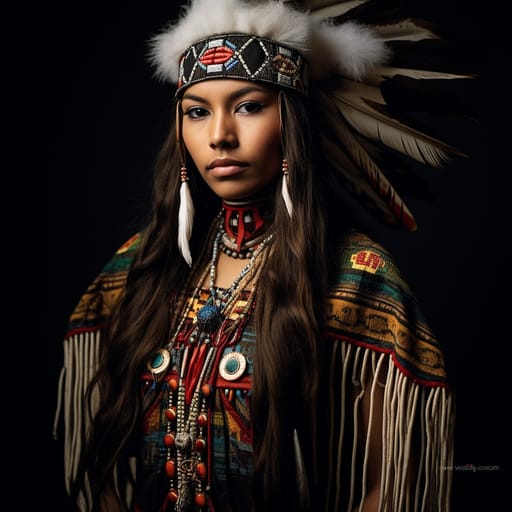
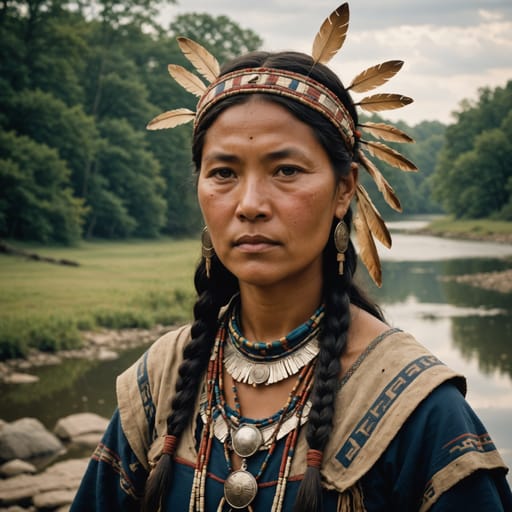
Typical Greenlandic Inuit Phenotypes
Reference for AI generation: hair, eyes, skin, facial structure, build
Greenlandic Inuit Body & Anatomy Reference
Per-feature anatomical profile for AI nude generation: Indigenous Northern American / Algonquian-Iroquoian phenotype
Greenlandic Inuit Boobs & Breasts
The typical Greenlandic Inuit bust is medium cup, moderate projection, in line with the wider Indigenous Northern American / Algonquian-Iroquoian pattern. Areolas usually fall in the 30-44mm range, with medium-brown areolar pigmentation against the copper-to-medium-brown skin tone. Compared with the smaller East Asian bust, Greenlandic Inuit breasts sit forward and are generally full and moderate projection. A faithful AI render of Greenlandic Inuit tits keeps that shape and areola size.
Greenlandic Inuit Ass & Hips
Butt shape among Greenlandic Inuit women: medium, moderate-to-full projection, over medium iliac crests. This follows Indigenous Northern American / Algonquian-Iroquoian ancestry and looks quite unlike the slim East Asian narrow-hip profile. An accurate Greenlandic Inuit ass in adult AI imagery keeps both the silhouette and the overall build (mesomorph, broader frame in northern Indigenous populations) instead of a generic average.
Greenlandic Inuit Vagina & Pussy
Vulvar anatomy among Greenlandic Inuit women: medium-brown labial pigmentation. Pubic hair tends to be straight medium-coarse texture, in the usual inverted-triangle pattern. Both follow Indigenous Northern American / Algonquian-Iroquoian pigmentation, which is why Greenlandic Inuit pussy renders should not fall back on a pale, sparse Western template.
Greenlandic Inuit Dicks & Penis
The Greenlandic Inuit cock profile, from Indigenous Northern American / Algonquian-Iroquoian anthropometric data: regional mean ~13cm erect; moderate girth; medium-brown shaft pigmentation. Pubic hair has a straight medium-coarse texture and forms the usual inverted-V pattern. Whether Greenlandic Inuit men are circumcised follows religious and cultural practice rather than phenotype.
Greenlandic Inuit Body, Curves & Build
Build and curves among Greenlandic Inuit women follow the Indigenous Northern American / Algonquian-Iroquoian pattern: mesomorph, broader frame in northern Indigenous populations, mean adult female BMI 25-28. Proportions matter as much as skin tone, so Greenlandic Inuit figures should keep their regional height and limb ratios.
Greenlandic Inuit Skin Tone & Hair Texture
The Greenlandic Inuit skin range is copper to medium-brown (Fitzpatrick III-V), and hair tends to be straight 1A, dark-brown to black, often thick and dense. That combination marks the Indigenous Northern American / Algonquian-Iroquoian phenotype, and skin tone is the trait AI generators most often get wrong for Greenlandic Inuit women.
Explore phenotype categories
Structured taxonomy with peer-reviewed scales · 22 anatomical categories
Erotic Poses & Sex Positions
From the pose catalog: 219 named positions with reference skeletons
Frequently asked questions about Greenlandic Inuit people
Where is the Greenlandic Inuit homeland?
The Greenlandic Inuit homeland is Greenland (Kalaallit Nunaat), a self-governing territory in the Kingdom of Denmark, mainly along the west coast, with smaller populations in the east and far northwest and a sizable community in Denmark in North America.
What language do Greenlandic Inuit people speak?
Greenlandic Inuit people primarily speak Greenlandic (Eskimo-Aleut, Inuit branch): West Greenlandic (Kalaallisut) is the official standard, with East Greenlandic (Tunumiisut) and Inuktun in the far north; Danish is widely used as a second language.
What religion do Greenlandic Inuit people practice?
The predominant religion among Greenlandic Inuit people is Evangelical Lutheran Christianity, mostly through the Church of Denmark's diocese in Greenland; older beliefs about shamans and the Mother of the Sea survive in stories and art.






Make your own Greenlandic Inuit images
Five a day, free, no credits to buy. The studio starts from this group's phenotype data, so you can set body type, pose and style and keep the traits accurate.
Start with Greenlandic Inuit