Help us get this right
Does this portrait look right for Ahtna?
Nobody has judged this one yet. You would be the first.
Ahtna Erotic
Copper River basin, south-central Alaska, United States
Ahtna (Northern Athabaskan, Na-Dene), four dialects: Lower, Central, Western, Upper; English
Mostly Christian, with traditional Athabaskan beliefs and the memorial potlatch still practiced
Northern Athabaskan (Dene); four regional groups: Lower, Central, Western and Upper Ahtna; eight ANCSA villages under Ahtna, Incorporated
About Ahtna People
The Ahtna are the people of the Copper River, and the river is the first thing to understand about them. Their word for it, Atna', became their name, and their homeland, Atna' Nene', is the basin it drains between the Wrangell, Chugach and Alaska ranges of south-central Alaska. They are Dene, northern Athabaskans, closest in language to the Dena'ina of Cook Inlet to the west. To the north are the Upper Tanana and Tanacross peoples, and downriver, past the canyon, the Eyak and Tlingit of the coast, trading partners for generations.
Copper is the second thing. The Ahtna hammered native copper nuggets from the Chitina drainage and the Wrangell foothills into knives, points and ornaments, and they controlled the trade in it down to the coast. The town of Chitina takes its name from Ahtna Tsedi Na', meaning copper river. That control had teeth: a Russian party under Ruf Serebrennikov was killed in Ahtna country in 1848, and the interior stayed closed until Lieutenant Henry Allen came upriver in 1885, fed and guided by leaders including Nicolai of Taral. Within a generation the deposits Ahtna chiefs had pointed out became the Kennecott mines, with a railway through the valley from 1911 to 1938. The Ahtna saw very little of that money.
The language has four dialects, Lower, Central, Western and Upper, and it is in real trouble. Fluent speakers number in the dozens, nearly all elders, though James Kari's dictionary and village classes keep it teachable. Society is matrilineal, with clans grouped into two sides that still govern marriage and, above all, the potlatch. The memorial potlatch remains the heart of ceremonial life: the opposite side handles a death and is repaid in blankets, rifles and food. The traditional leader, the kaskae, held rank through generosity as much as wealth. Most Ahtna today are Christian, but respect for animals, and for salmon in particular, is not treated as a relic.
Subsistence still sets the calendar. Fish wheels turn on the Copper near Copper Center and Gulkana every summer for sockeye and king salmon, and the Nelchina caribou herd and moose fill the fall. Katie John, an elder from Mentasta, spent decades in federal court defending the right to fish at the old Batzulnetas camp, and the case that carries her name secured subsistence priority on Alaska's navigable waters. Under the 1971 Alaska Native Claims Settlement Act the eight villages, Cantwell, Chistochina, Chitina, Copper Center, Gakona, Gulkana, Mentasta and Tazlina, organized as Ahtna, Incorporated, based in Glennallen, which holds well over a million acres. About 1,400 people identify as Ahtna, many of them in Anchorage now, but the river is still where they go home.
Related ethnic groups
Groups that share Ahtna's homeland, region, language, or religious tradition. These are likely candidates for comparative phenotype reference.
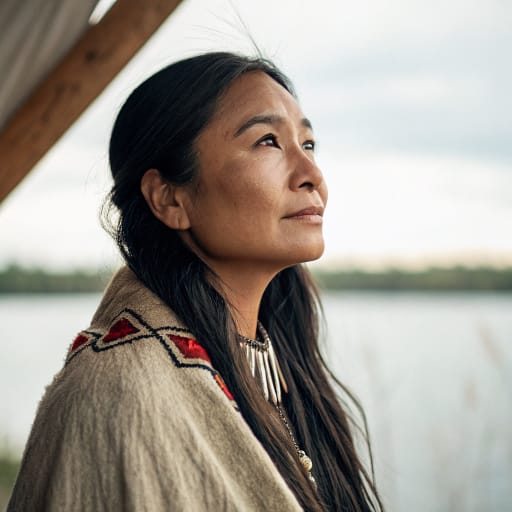
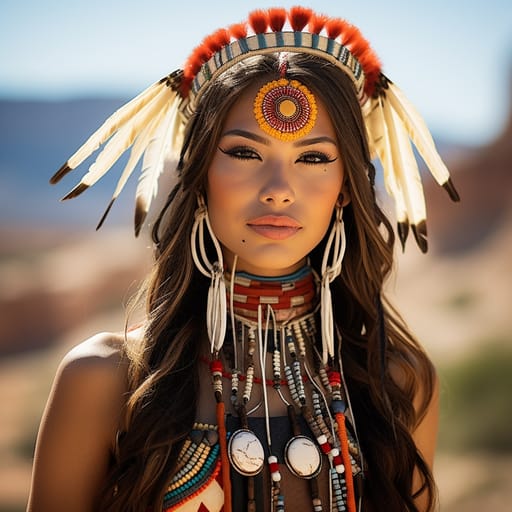
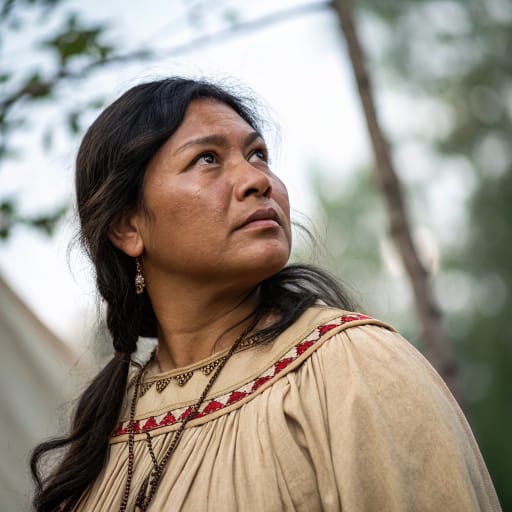
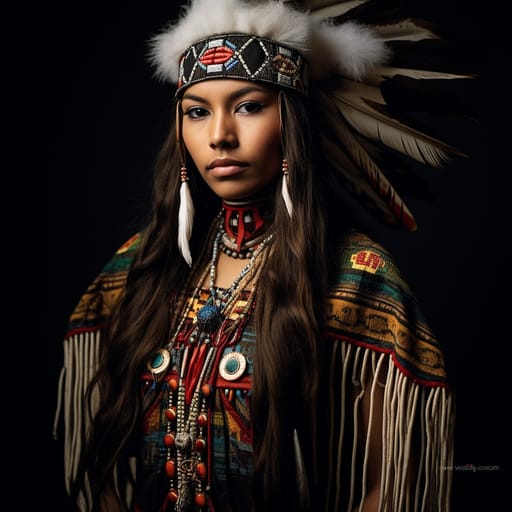
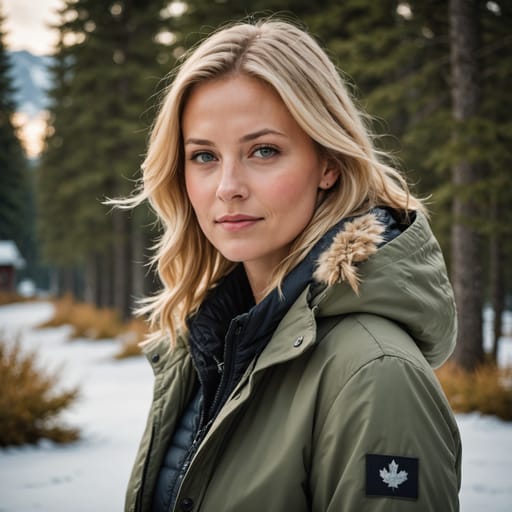

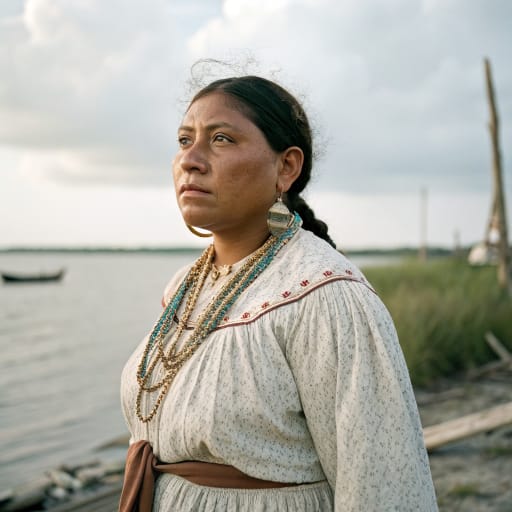
Typical Ahtna Phenotypes
Reference for AI generation: hair, eyes, skin, facial structure, build
Ahtna Body & Anatomy Reference
Per-feature anatomical profile for AI nude generation: Indigenous Northern American / Algonquian-Iroquoian phenotype
Ahtna Boobs & Breasts
Ahtna boobs follow the Indigenous Northern American / Algonquian-Iroquoian profile: medium cup, moderate projection. Areolar diameter is usually 30-44mm, and the coloring is medium-brown areolar pigmentation against the copper-to-medium-brown skin tone. Breast shape tracks body composition (mesomorph, broader frame in northern Indigenous populations, mean adult female BMI 25-28), so Ahtna breasts tend to be full and moderate projection. Expect a forward-set shape, not the smaller East Asian bust.
Ahtna Ass & Hips
Ahtna ass and hip morphology presents as medium, moderate-to-full projection, distinctly different from the slim East Asian narrow-hip profile. The Ahtna pelvic profile shows medium iliac crests, anchored in the Indigenous Northern American / Algonquian-Iroquoian skeletal pattern. Ahtna butt shots in adult AI imagery should render the medium, moderate-to-full projection silhouette with the overall build (mesomorph, broader frame in northern Indigenous populations) and the fat distribution typical of the Indigenous Northern American / Algonquian-Iroquoian phenotype.
Ahtna Vagina & Pussy
Ahtna pussy anatomy typically shows medium-brown labial pigmentation. Pubic hair is usually straight medium-coarse texture. In AI-generated Ahtna nudes, labial color should blend into the copper to medium-brown skin with a gradual transition, and the hair should keep its straight medium-coarse texture.
Ahtna Dicks & Penis
Penis reference for Ahtna men: regional mean ~13cm erect, moderate girth. Coloring: medium-brown shaft pigmentation. An accurate Ahtna cock in AI imagery matches the surrounding copper to medium-brown skin rather than a generic porn default. Circumcision depends on religion and custom, not ancestry.
Ahtna Body, Curves & Build
The Ahtna figure is generally mesomorph, broader frame in northern Indigenous populations, with mean adult female BMI 25-28, characteristic of Indigenous Northern American / Algonquian-Iroquoian ancestry. AI image tools tend to flatten regional body types into a few stock shapes; here the Ahtna build is kept as its own reference.
Ahtna Skin Tone & Hair Texture
Skin: copper to medium-brown (Fitzpatrick III-V). Hair: straight 1A, dark-brown to black, often thick and dense. Both are typical of Indigenous Northern American / Algonquian-Iroquoian ancestry. The most common mistake in AI nudes of Ahtna women is a body rendered lighter than the face.
Explore phenotype categories
Structured taxonomy with peer-reviewed scales · 22 anatomical categories
Erotic Poses & Sex Positions
From the pose catalog: 219 named positions with reference skeletons
Frequently asked questions about Ahtna people
Where is the Ahtna homeland?
The Ahtna homeland is Copper River basin, south-central Alaska, United States in North America.
What language do Ahtna people speak?
Ahtna people primarily speak Ahtna (Northern Athabaskan, Na-Dene), four dialects: Lower, Central, Western, Upper; English.
What religion do Ahtna people practice?
The predominant religion among Ahtna people is Mostly Christian, with traditional Athabaskan beliefs and the memorial potlatch still practiced.






Make your own Ahtna images
Five a day, free, no credits to buy. The studio starts from this group's phenotype data, so you can set body type, pose and style and keep the traits accurate.
Start with Ahtna