Help us get this right
Does this portrait look right for Abenaki?
One tap. It takes a second and it is recorded.
1 says it looks right, 0 say it looks off.
Abenaki Erotic
Northern New England and southern Quebec: Vermont, New Hampshire and western Maine in the United States, and the reserves of Odanak and Wôlinak on the south shore of the St. Lawrence in Canada
Western Abenaki and Eastern Abenaki (Eastern Algonquian, Algic family); English and French in daily use
Roman Catholic since the 17th-century French missions, alongside traditional Wabanaki spirituality
Wabanaki Confederacy; Eastern Abenaki (Kennebec, Androscoggin, Pigwacket) and Western Abenaki (Sokoki, Cowasuck, Missisquoi); Odanak and Wôlinak First Nations in Quebec; four Vermont state-recognized bands
About Abenaki People
The Abenaki are the people of Ndakinna, "our land," the stretch of the Northeast that runs from Lake Champlain and the upper Connecticut River across the Green and White Mountains to the rivers of western Maine, and north to the south shore of the St. Lawrence in Quebec. They are Wabanaki, people of the dawn land, one of the nations of the Wabanaki Confederacy with the Penobscot, Passamaquoddy, Wolastoqiyik and Mi'kmaq, and the name Abenaki carries the same meaning: the people from where the sun comes up. Their languages sit in the Eastern Algonquian branch of the Algic family. Eastern Abenaki, once spoken along the Kennebec and Androscoggin and including the Penobscot dialect, has no fluent native speakers left. Western Abenaki, the language of the Vermont and Quebec communities, survives with a handful of speakers and a stubborn revival built on Chief Joseph Laurent's 1884 phrasebook from Odanak and on online classes that now reach students across the diaspora.
The colonial wars gave Abenaki history its shape. Caught between New France and New England, most bands sided with the French, and as raids and reprisals made the river villages untenable, families withdrew north to the Jesuit missions on the Saint-François and Bécancour rivers, which became the reserves of Odanak and Wôlinak. Rogers' Rangers burned Odanak in 1759 and the community rebuilt on the same ground. Those who stayed in Vermont and New Hampshire did so quietly, often blending into French Canadian neighborhoods, and paid for it in the twentieth century when Vermont's eugenics movement, which pushed a sterilization law through in 1931, counted families of Abenaki descent among its targets. That history is why Vermont's recognition of four Abenaki bands in 2011 and 2012 mattered so much, and why the question of who is Abenaki is still argued, not least by Odanak itself.
Catholicism came with the missions and stayed. Odanak has had a mission church since the early 1700s, and many families are practicing Catholics who also keep older ways. The transformer Gluskabe shot arrows into ash trees and drew the first people out of them, and the ash tree is still the raw material of the splint baskets Abenaki women have woven and sold since the 1800s, which is why the emerald ash borer is treated as a cultural emergency rather than a forestry problem. The documentary filmmaker Alanis Obomsawin of Odanak is the best-known Abenaki figure of the past half century.
Related ethnic groups
Groups that share Abenaki's homeland, region, language, or religious tradition. These are likely candidates for comparative phenotype reference.
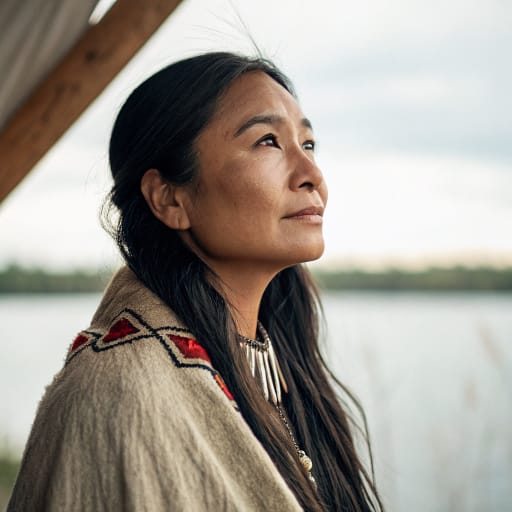
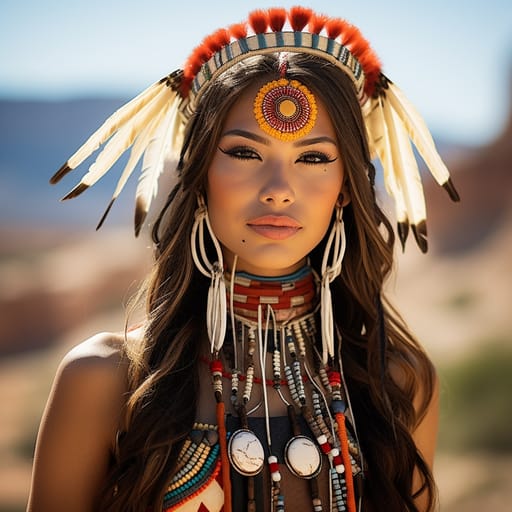
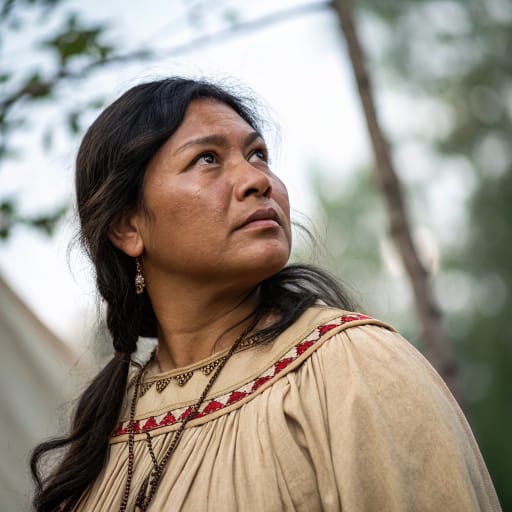
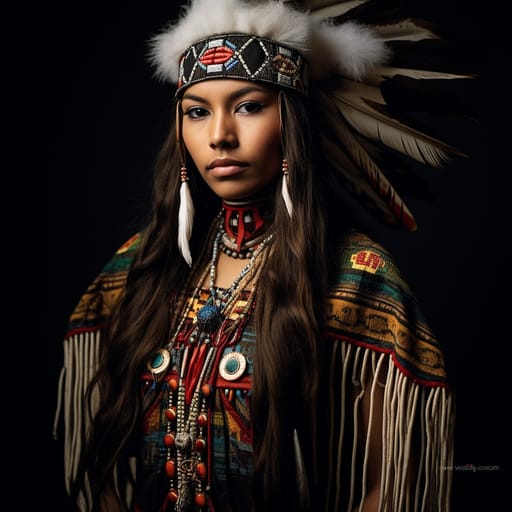
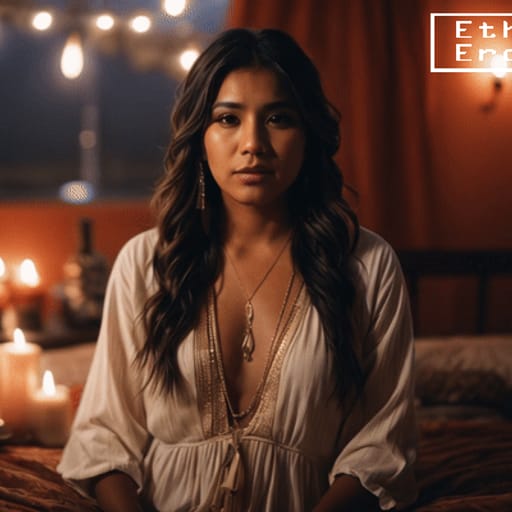
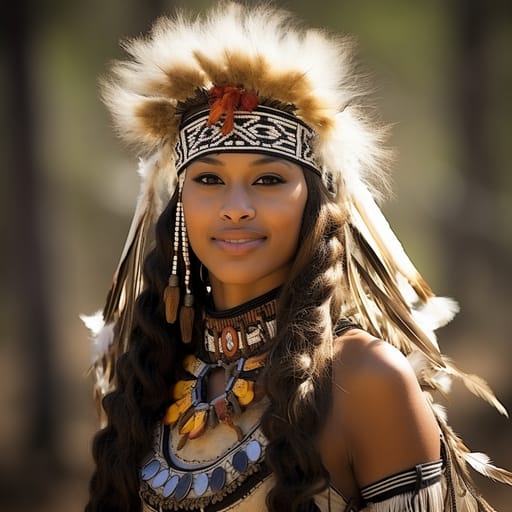
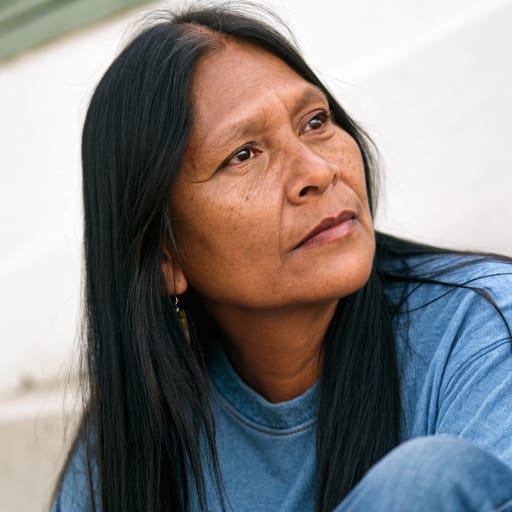
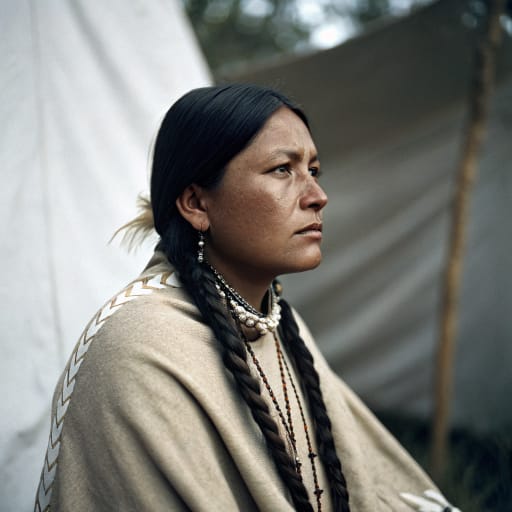
Typical Abenaki Phenotypes
Reference for AI generation: hair, eyes, skin, facial structure, build
Abenaki Body & Anatomy Reference
Per-feature anatomical profile for AI nude generation: Indigenous Northern American / Algonquian-Iroquoian phenotype
Abenaki Boobs & Breasts
Bust reference for Abenaki women: medium cup, moderate projection, which is typical of Indigenous Northern American / Algonquian-Iroquoian ancestry. Areolas measure about 30-44mm across, with medium-brown pigmentation. Body type (mesomorph, broader frame in northern Indigenous populations) shapes the bust as well, so Abenaki tits are usually full and moderate projection. In AI imagery, keep the forward-set shape rather than drifting toward the smaller East Asian bust.
Abenaki Ass & Hips
The Abenaki ass is typically medium, moderate-to-full projection, which sets it apart from the slim East Asian narrow-hip profile. Underneath, the pelvis shows medium iliac crests, part of the Indigenous Northern American / Algonquian-Iroquoian skeletal pattern. For Abenaki butt pics and AI renders, match that silhouette and the overall build (mesomorph, broader frame in northern Indigenous populations).
Abenaki Vagina & Pussy
Abenaki pussy and vulvar anatomy presents medium-brown labial pigmentation, consistent with the Indigenous Northern American / Algonquian-Iroquoian phenotype's pigmentation pattern. Abenaki pubic hair is typically straight medium-coarse texture, in the inverted-triangle pattern. For anatomically accurate Abenaki pussy renders the labial coloration should match the surrounding copper to medium-brown skin tone with a continuous gradient, and the hair should keep its straight medium-coarse texture.
Abenaki Dicks & Penis
Abenaki dicks follow the Indigenous Northern American / Algonquian-Iroquoian reference data: regional mean ~13cm erect; moderate girth; medium-brown shaft pigmentation. Shaft color should track the copper to medium-brown skin tone with a smooth change toward the glans, and Abenaki pubic hair keeps its straight medium-coarse texture.
Abenaki Body, Curves & Build
Abenaki body type and overall build presents as mesomorph, broader frame in northern Indigenous populations, with mean adult female BMI 25-28: the characteristic Indigenous Northern American / Algonquian-Iroquoian habitus. Abenaki curves and proportions should keep the regional skeletal frame (height, shoulder-to-hip ratio, limb proportions) rather than a generic mesomorph default.
Abenaki Skin Tone & Hair Texture
Abenaki skin sits in the copper to medium-brown (Fitzpatrick III-V) band. Hair is typically straight 1A, dark-brown to black, often thick and dense, in keeping with the Indigenous Northern American / Algonquian-Iroquoian phenotype. In nude renders the skin should stay one even tone from face to body, and body, pubic and head hair should match.
Explore phenotype categories
Structured taxonomy with peer-reviewed scales · 22 anatomical categories
Erotic Poses & Sex Positions
From the pose catalog: 219 named positions with reference skeletons
Frequently asked questions about Abenaki people
Where is the Abenaki homeland?
The Abenaki homeland is Northern New England and southern Quebec: Vermont, New Hampshire and western Maine in the United States, and the reserves of Odanak and Wôlinak on the south shore of the St. Lawrence in Canada in North America.
What language do Abenaki people speak?
Abenaki people primarily speak Western Abenaki and Eastern Abenaki (Eastern Algonquian, Algic family); English and French in daily use.
What religion do Abenaki people practice?
The predominant religion among Abenaki people is Roman Catholic since the 17th-century French missions, alongside traditional Wabanaki spirituality.






Make your own Abenaki images
Five a day, free, no credits to buy. The studio starts from this group's phenotype data, so you can set body type, pose and style and keep the traits accurate.
Start with Abenaki