Help us get this right
Does this portrait look right for Ahantchuyuk?
Nobody has judged this one yet. You would be the first.
Ahantchuyuk Erotic
Pudding River drainage and French Prairie, northern Willamette Valley, Oregon, United States
Central Kalapuya, Ahantchuyuk dialect (Kalapuyan); Chinook Jargon later common at Grand Ronde
Traditional Kalapuyan beliefs built around guardian spirit quests and shamanic healing; Christian influence followed after removal to Grand Ronde
A band of the Kalapuya speaking Central Kalapuya; descendants are part of the Confederated Tribes of the Grand Ronde Community of Oregon
About Ahantchuyuk People
The Ahantchuyuk were a Kalapuyan people who lived along the Pudding River in Oregon's northern Willamette Valley until the mid-nineteenth century, when epidemic disease, settlement and treaty removal ended their independent life there. Their descendants belong today to the Confederated Tribes of the Grand Ronde Community of Oregon. English-language records often call them the Pudding River Indians. They were one of many small, independent bands that together made up the Kalapuya, who held nearly the whole Willamette basin without ever forming a single political unit.
Their country sat in a crowded neighborhood. The Chinookan-speaking Clackamas controlled river traffic around Willamette Falls to the north, and the Molala held the Cascade foothills to the east. Other Kalapuyan bands lived to the south and west, among them the Santiam and the Yamhill, and their speech was related. Ahantchuyuk is classed as a dialect of Central Kalapuya, one of three languages in the small Kalapuyan family. Some linguists place that family within a proposed Penutian stock.
The open grassland that settlers later named French Prairie was partly the Ahantchuyuk's own work. Like other Kalapuyans, they burned the valley floor in late summer. The fires cleared brush, drove deer and readied tarweed seed for harvest. Camas bulbs, dug in spring and baked in earth ovens, were a staple, along with acorns and wapato. Spiritual life turned on the guardian spirit: young people went alone into the hills to fast for a personal power, and those who gained strong spirits could become healers.
The collapse came quickly. Retired French-Canadian employees of the Hudson's Bay Company began farming the prairie around 1830. In the early 1830s an epidemic of intermittent fever, probably malaria, killed a large share of the Native people of the Willamette and lower Columbia. American settlers came next, and in 1843 settlers meeting at Champoeg, on the Willamette at the prairie's edge, voted to form a provisional government. In 1855 the surviving Kalapuyan bands gave up the valley under the Willamette Valley Treaty, and early in 1856 they were removed to Grand Ronde in the foothills of the Coast Range.
At Grand Ronde the Ahantchuyuk joined other Kalapuyans, Molalas, Chinookans, Umpquas and Rogue River peoples in one reservation community, where Chinook Jargon became a shared everyday language. Congress ended federal recognition of the tribe in 1954, and it was restored in 1983. The band's name now survives mostly in ethnographic records, while its descendants carry the history forward as Grand Ronde citizens.
Related ethnic groups
Groups that share Ahantchuyuk's homeland, region, language, or religious tradition. These are likely candidates for comparative phenotype reference.
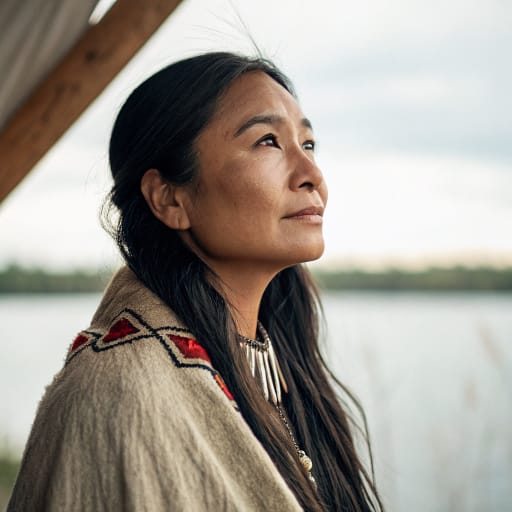
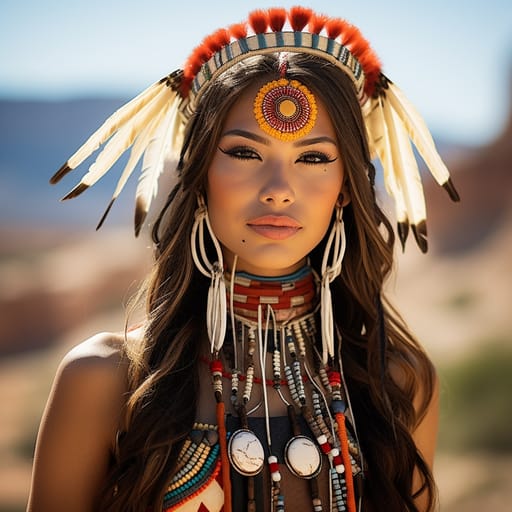
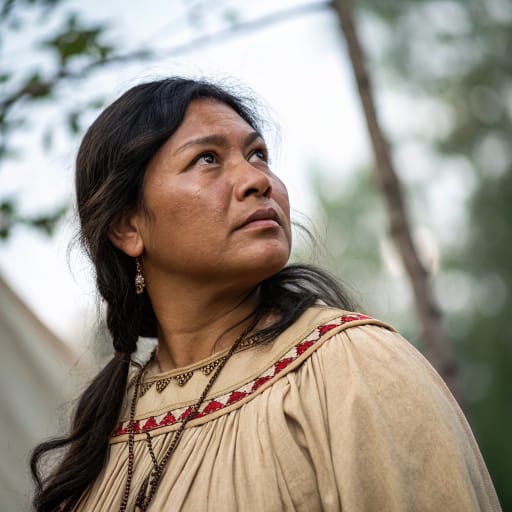
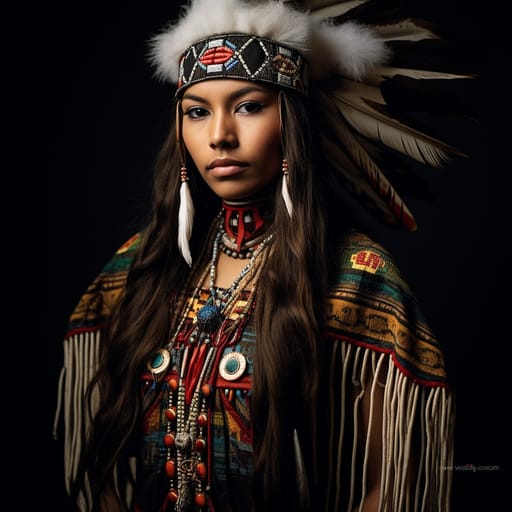
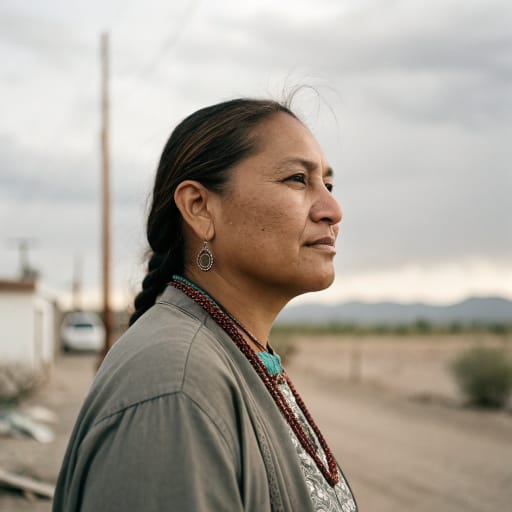
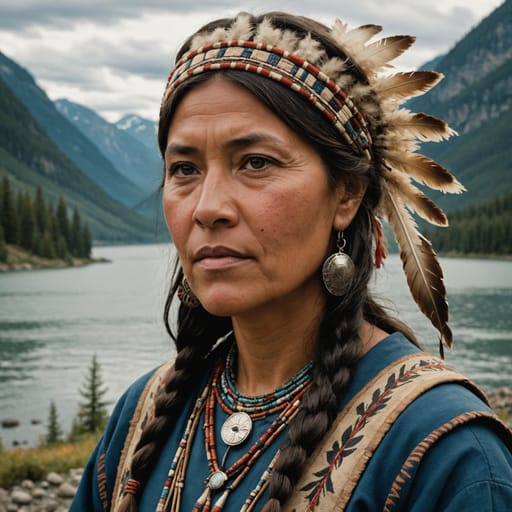
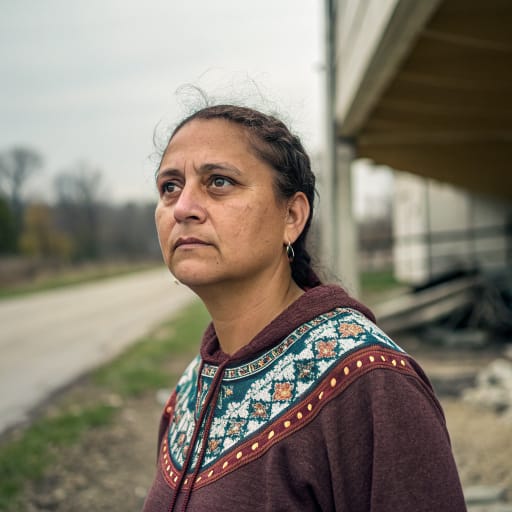
Typical Ahantchuyuk Phenotypes
Reference for AI generation: hair, eyes, skin, facial structure, build
Ahantchuyuk Body & Anatomy Reference
Anatomy by feature, Indigenous Northern American / Algonquian-Iroquoian phenotype
Ahantchuyuk Boobs & Breasts
Bust reference for Ahantchuyuk women: medium cup, moderate projection, which is typical of Indigenous Northern American / Algonquian-Iroquoian ancestry. Areolas measure about 30-44mm across, with medium-brown pigmentation. Body type (mesomorph, broader frame in northern Indigenous populations) shapes the bust as well, so Ahantchuyuk tits are usually full and moderate projection. In AI imagery, keep the forward-set shape rather than drifting toward the smaller East Asian bust.
Ahantchuyuk Ass & Hips
The Ahantchuyuk ass is typically medium, moderate-to-full projection, which sets it apart from the slim East Asian narrow-hip profile. Underneath, the pelvis shows medium iliac crests, part of the Indigenous Northern American / Algonquian-Iroquoian skeletal pattern. For Ahantchuyuk butt pics and AI renders, match that silhouette and the overall build (mesomorph, broader frame in northern Indigenous populations).
Ahantchuyuk Vagina & Pussy
Ahantchuyuk pussy and vulvar anatomy presents medium-brown labial pigmentation, consistent with the Indigenous Northern American / Algonquian-Iroquoian phenotype's pigmentation pattern. Ahantchuyuk pubic hair is typically straight medium-coarse texture, in the inverted-triangle pattern. For anatomically accurate Ahantchuyuk pussy renders the labial coloration should match the surrounding copper to medium-brown skin tone with a continuous gradient, and the hair should keep its straight medium-coarse texture.
Ahantchuyuk Dicks & Penis
Ahantchuyuk dicks follow the Indigenous Northern American / Algonquian-Iroquoian reference data: regional mean ~13cm erect; moderate girth; medium-brown shaft pigmentation. Shaft color should track the copper to medium-brown skin tone with a smooth change toward the glans, and Ahantchuyuk pubic hair keeps its straight medium-coarse texture.
Ahantchuyuk Body, Curves & Build
Ahantchuyuk body type and overall build presents as mesomorph, broader frame in northern Indigenous populations, with mean adult female BMI 25-28: the characteristic Indigenous Northern American / Algonquian-Iroquoian habitus. Ahantchuyuk curves and proportions should keep the regional skeletal frame (height, shoulder-to-hip ratio, limb proportions) rather than a generic mesomorph default.
Ahantchuyuk Skin Tone & Hair Texture
Ahantchuyuk skin sits in the copper to medium-brown (Fitzpatrick III-V) band. Hair is typically straight 1A, dark-brown to black, often thick and dense, in keeping with the Indigenous Northern American / Algonquian-Iroquoian phenotype. In nude renders the skin should stay one even tone from face to body, and body, pubic and head hair should match.
Explore phenotype categories
Structured taxonomy with peer-reviewed scales · 22 anatomical categories
Erotic Poses & Sex Positions
From the pose catalog: 219 named positions with reference skeletons
Frequently asked questions about Ahantchuyuk people
Where is the Ahantchuyuk homeland?
The Ahantchuyuk homeland is Pudding River drainage and French Prairie, northern Willamette Valley, Oregon, United States in North America.
What language do Ahantchuyuk people speak?
Ahantchuyuk people primarily speak Central Kalapuya, Ahantchuyuk dialect (Kalapuyan); Chinook Jargon later common at Grand Ronde.
What religion do Ahantchuyuk people practice?
The predominant religion among Ahantchuyuk people is Traditional Kalapuyan beliefs built around guardian spirit quests and shamanic healing; Christian influence followed after removal to Grand Ronde.






Make your own Ahantchuyuk images
Five a day, free, no credits to buy. The studio starts from this group's phenotype data, so you can set body type, pose and style and keep the traits accurate.
Start with Ahantchuyuk