Help us get this right
Does this portrait look right for Miami?
Nobody has judged this one yet. You would be the first.
Miami Erotic
Upper Wabash and Maumee river valleys in present-day Indiana, western Ohio and southwest Michigan, US; removed to Kansas in 1846 and later to Oklahoma, with a community remaining in Indiana.
Miami-Illinois (Algonquian), without fluent speakers since the 1960s and now being revived; English
Mostly Christian (Catholic and Protestant), alongside traditional practices such as winter-only storytelling and seasonal games.
Historically included the Wea and Piankashaw, who later joined the Peoria; today the federally recognized Miami Tribe of Oklahoma and the Miami Nation of Indiana.
About Miami People
The Miami call themselves Myaamia. What holds them together as a people today is less a single territory than a shared name, a shared history of being pried off their land, and a stubborn effort to get their language back. Their towns once lined the upper Wabash and Maumee rivers in what is now Indiana and western Ohio, reaching into southwest Michigan. The center was Kiihkayonki, better known in English as Kekionga, at the head of the Maumee where Fort Wayne now stands, a short portage from the Wabash. Whoever controlled that portage controlled a route between the Great Lakes and the Mississippi, which made the Miami worth courting and worth fighting.
Their language, Miami-Illinois, is Algonquian and was shared with the Peoria and other Illinois peoples to the west. The Wea and Piankashaw of the lower Wabash spoke it too. They were long counted as Miami divisions before they joined the Peoria in Kansas. The Potawatomi, Shawnee and Delaware nearby spoke related but separate Algonquian languages. The last fluent speakers of Miami-Illinois died in the 1960s. Since then the Miami Tribe of Oklahoma, working with Miami University in Oxford, Ohio, has rebuilt the language from missionary dictionaries and nineteenth-century word lists, and some families now raise their children speaking it.
The late eighteenth century was their loudest moment. Under the war leader Little Turtle, Miami fighters and their allies routed Josiah Harmar's expedition in 1790 and destroyed Arthur St. Clair's army in 1791, one of the worst defeats the US Army has ever suffered at Native hands. Fallen Timbers in 1794 and the Treaty of Greenville a year later reversed that, and a long run of land cessions followed. In 1846 the government put Miami families on canal boats and sent them west to Kansas, and most were later moved again to Indian Territory. Families exempted by treaty stayed in Indiana. That split still shapes the people: the Miami Tribe of Oklahoma is federally recognized, while the Indiana Miami lost recognition in 1897 and have not won it back.
Christianity, both Catholic and Protestant, has been part of Miami life for generations, and for many families it sits alongside older practice. Traditional stories are told only in winter, once snow is on the ground. Winter is also the season for the moccasin game, a contest of hiding and guessing played to singing and drumming. Miami ribbonwork, silk ribbon cut and layered into sharp geometric appliqué, is among the most admired in the Great Lakes region and still shows up on skirts, shirts and blankets at tribal gatherings.
Related ethnic groups
Groups that share Miami's homeland, region, language, or religious tradition. These are likely candidates for comparative phenotype reference.

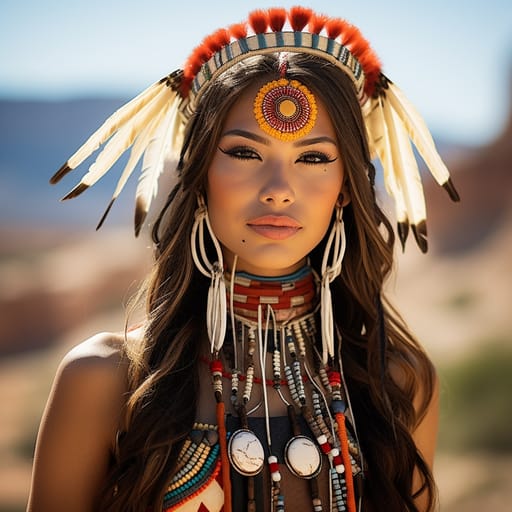
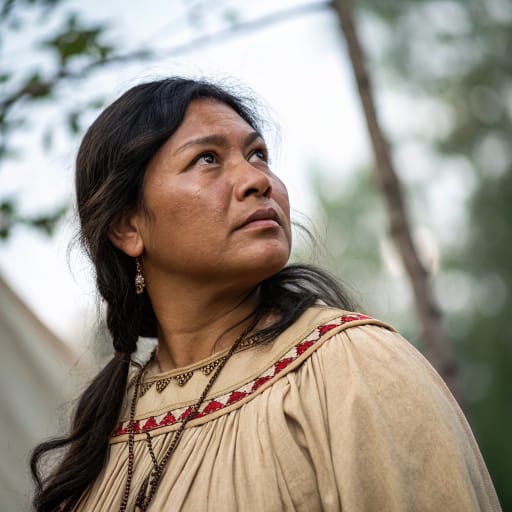
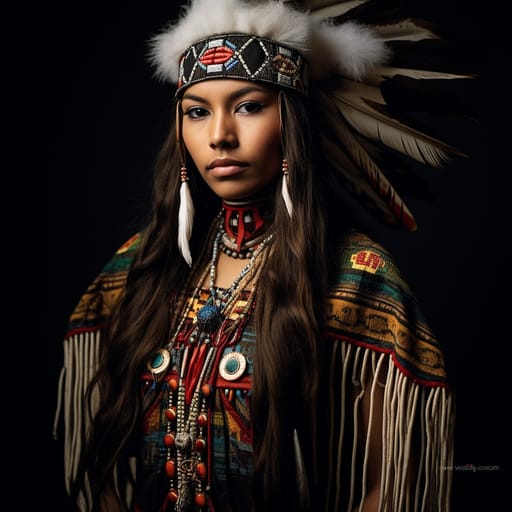
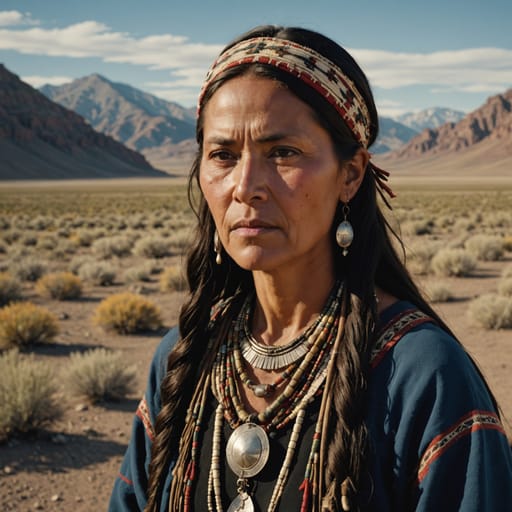
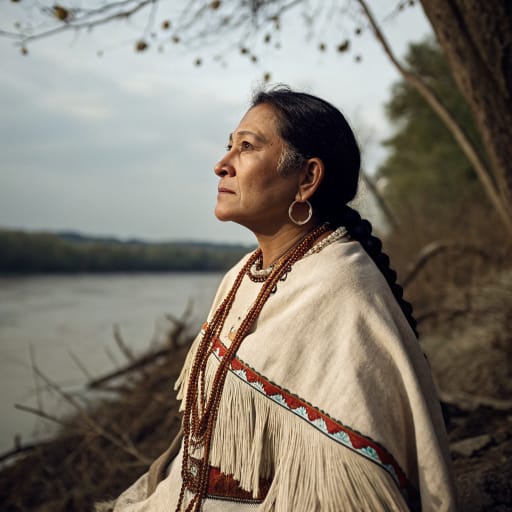

Typical Miami Phenotypes
Reference for AI generation: hair, eyes, skin, facial structure, build
Miami Body & Anatomy Reference
Per-feature anatomical profile for AI nude generation: Indigenous Northern American / Algonquian-Iroquoian phenotype
Miami Boobs & Breasts
Bust reference for Miami women: medium cup, moderate projection, which is typical of Indigenous Northern American / Algonquian-Iroquoian ancestry. Areolas measure about 30-44mm across, with medium-brown pigmentation. Body type (mesomorph, broader frame in northern Indigenous populations) shapes the bust as well, so Miami tits are usually full and moderate projection. In AI imagery, keep the forward-set shape rather than drifting toward the smaller East Asian bust.
Miami Ass & Hips
The Miami ass is typically medium, moderate-to-full projection, which sets it apart from the slim East Asian narrow-hip profile. Underneath, the pelvis shows medium iliac crests, part of the Indigenous Northern American / Algonquian-Iroquoian skeletal pattern. For Miami butt pics and AI renders, match that silhouette and the overall build (mesomorph, broader frame in northern Indigenous populations).
Miami Vagina & Pussy
Miami pussy and vulvar anatomy presents medium-brown labial pigmentation, consistent with the Indigenous Northern American / Algonquian-Iroquoian phenotype's pigmentation pattern. Miami pubic hair is typically straight medium-coarse texture, in the inverted-triangle pattern. For anatomically accurate Miami pussy renders the labial coloration should match the surrounding copper to medium-brown skin tone with a continuous gradient, and the hair should keep its straight medium-coarse texture.
Miami Dicks & Penis
Miami dicks follow the Indigenous Northern American / Algonquian-Iroquoian reference data: regional mean ~13cm erect; moderate girth; medium-brown shaft pigmentation. Shaft color should track the copper to medium-brown skin tone with a smooth change toward the glans, and Miami pubic hair keeps its straight medium-coarse texture.
Miami Body, Curves & Build
Miami body type and overall build presents as mesomorph, broader frame in northern Indigenous populations, with mean adult female BMI 25-28: the characteristic Indigenous Northern American / Algonquian-Iroquoian habitus. Miami curves and proportions should keep the regional skeletal frame (height, shoulder-to-hip ratio, limb proportions) rather than a generic mesomorph default.
Miami Skin Tone & Hair Texture
Miami skin sits in the copper to medium-brown (Fitzpatrick III-V) band. Hair is typically straight 1A, dark-brown to black, often thick and dense, in keeping with the Indigenous Northern American / Algonquian-Iroquoian phenotype. In nude renders the skin should stay one even tone from face to body, and body, pubic and head hair should match.
Explore phenotype categories
Structured taxonomy with peer-reviewed scales · 22 anatomical categories
Erotic Poses & Sex Positions
From the pose catalog: 219 named positions with reference skeletons
Frequently asked questions about Miami people
Where is the Miami homeland?
The Miami homeland is Upper Wabash and Maumee river valleys in present-day Indiana, western Ohio and southwest Michigan, US; removed to Kansas in 1846 and later to Oklahoma, with a community remaining in Indiana. in North America.
What language do Miami people speak?
Miami people primarily speak Miami-Illinois (Algonquian), without fluent speakers since the 1960s and now being revived; English.
What religion do Miami people practice?
The predominant religion among Miami people is Mostly Christian (Catholic and Protestant), alongside traditional practices such as winter-only storytelling and seasonal games..






Make your own Miami images
Five a day, free, no credits to buy. The studio starts from this group's phenotype data, so you can set body type, pose and style and keep the traits accurate.
Start with Miami