Help us get this right
Does this portrait look right for Accomac?
Nobody has judged this one yet. You would be the first.
Accomac Erotic
Southern tip of Virginia's Eastern Shore on the Delmarva Peninsula, in present-day Northampton County, Virginia, United States.
An Eastern Algonquian dialect close to Powhatan, also called Virginia Algonquian (Algic family); extinct and barely recorded.
Traditional Chesapeake Algonquian religion led by priests; Gingaskin descendants adopted Christianity.
Eastern Shore Algonquians, loosely tributary to the Powhatan paramount chiefdom; closely tied to the neighboring Occohannock; known from the 1640s as the Gingaskin.
About Accomac People
The Accomac were an Algonquian-speaking people who lived at the southern tip of Virginia's Eastern Shore, in what is now Northampton County, from before English contact in 1608 until their reservation was broken up in the early nineteenth century; their descendants, long known as the Gingaskin, merged into the peninsula's free communities of color and still live there. Their name is usually glossed as "the other side place," and that is how everyone saw them: the people across the Chesapeake. A dozen or more miles of open water kept them at arm's length from the Powhatan paramount chiefdom. They paid tribute and spoke what John Smith recognized as Powhatan's language, but they ran their own affairs.
They lived on a narrow strip of sandy land with water on both sides: corn, beans and squash in the fields, fish, oysters, clams and crabs from the creeks and marshes. The Eastern Shore also supplied shells for roanoke, the disk beads that served as wealth and tribute around the Chesapeake, which gave a small people more weight than their numbers suggest. Smith counted about eighty fighting men in 1608 and was told of a recent sickness that had killed many more. He called their leader the most handsome and courteous native ruler he had met.
A leader of that generation enters English records as the Laughing King, named Esmy Shichans and often identified with the name Debedeavon. He chose accommodation early and kept to it. He gave land to the interpreter Thomas Savage, sold corn to a hungry Jamestown, and in 1621 warned the colonists that Opechancanough was after a poisonous plant that grew on the Eastern Shore to use against them. When the assault of 1622 fell on the western settlements, the Accomac stayed out. Loyalty bought little. English planters poured onto the peninsula for the same reason the Accomac valued it: good land, safe from mainland wars.
By the 1640s the survivors were confined to a reservation of about 650 acres, and the colony began calling them the Gingaskin. They held that ground for more than a century and a half, farming, fishing, and marrying free Black neighbors, which white officials then cited as proof that they were no longer Indians. In 1813 Virginia's legislature ordered the land divided into individual lots, decades before allotment became national policy, and after the panic that followed Nat Turner's revolt in 1831 nearly all of it was sold to whites. The name survives in Accomack County and the town of Accomac, both north of where the Accomac lived.
Related ethnic groups
Groups that share Accomac's homeland, region, language, or religious tradition. These are likely candidates for comparative phenotype reference.
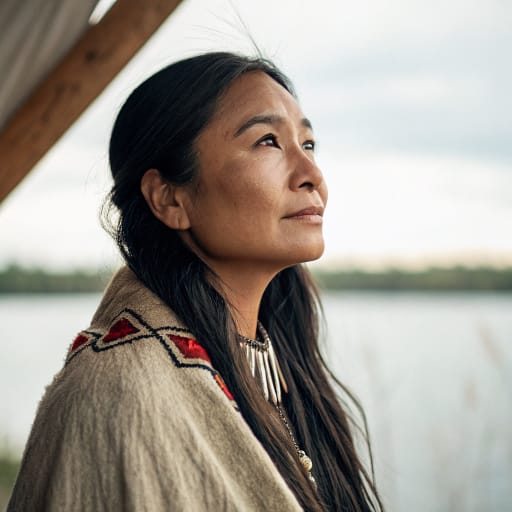
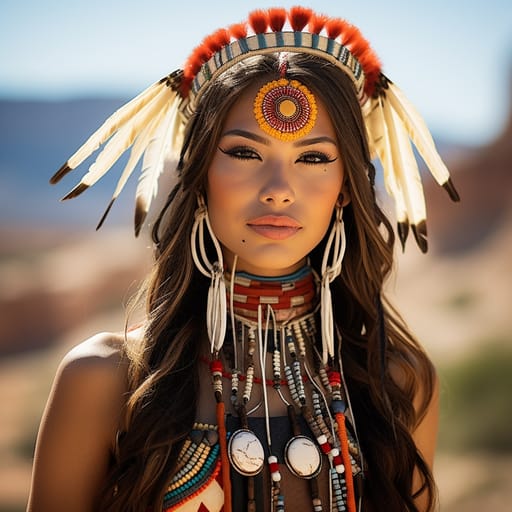
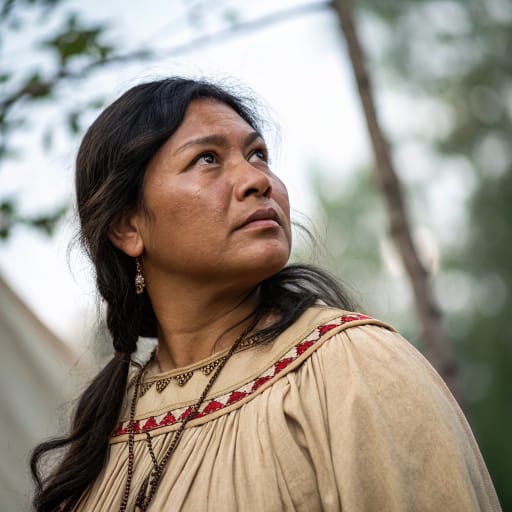
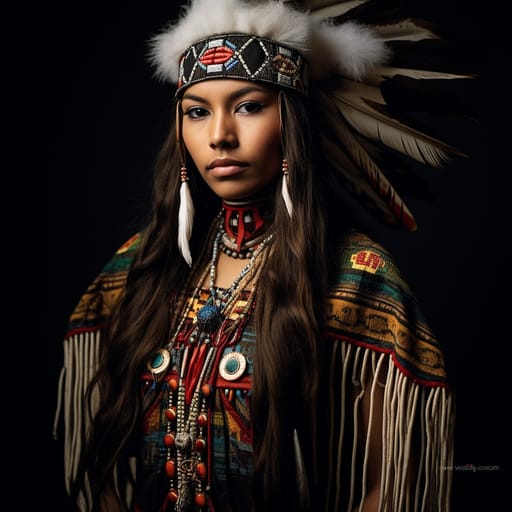

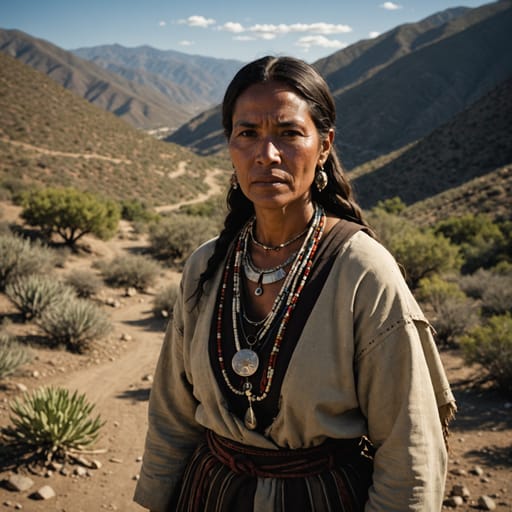
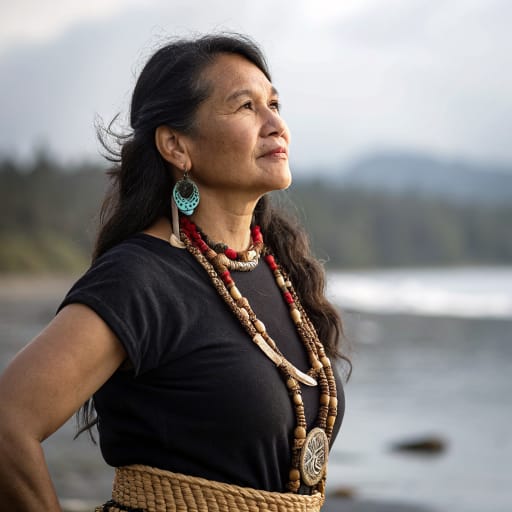
Typical Accomac Phenotypes
Reference for AI generation: hair, eyes, skin, facial structure, build
Accomac Body & Anatomy Reference
Indigenous Northern American / Algonquian-Iroquoian phenotype: anatomy reference for AI nude generation
Accomac Boobs & Breasts
The typical Accomac bust is medium cup, moderate projection, in line with the wider Indigenous Northern American / Algonquian-Iroquoian pattern. Areolas usually fall in the 30-44mm range, with medium-brown areolar pigmentation against the copper-to-medium-brown skin tone. Compared with the smaller East Asian bust, Accomac breasts sit forward and are generally full and moderate projection. A faithful AI render of Accomac tits keeps that shape and areola size.
Accomac Ass & Hips
Butt shape among Accomac women: medium, moderate-to-full projection, over medium iliac crests. This follows Indigenous Northern American / Algonquian-Iroquoian ancestry and looks quite unlike the slim East Asian narrow-hip profile. An accurate Accomac ass in adult AI imagery keeps both the silhouette and the overall build (mesomorph, broader frame in northern Indigenous populations) instead of a generic average.
Accomac Vagina & Pussy
Vulvar anatomy among Accomac women: medium-brown labial pigmentation. Pubic hair tends to be straight medium-coarse texture, in the usual inverted-triangle pattern. Both follow Indigenous Northern American / Algonquian-Iroquoian pigmentation, which is why Accomac pussy renders should not fall back on a pale, sparse Western template.
Accomac Dicks & Penis
The Accomac cock profile, from Indigenous Northern American / Algonquian-Iroquoian anthropometric data: regional mean ~13cm erect; moderate girth; medium-brown shaft pigmentation. Pubic hair has a straight medium-coarse texture and forms the usual inverted-V pattern. Whether Accomac men are circumcised follows religious and cultural practice rather than phenotype.
Accomac Body, Curves & Build
Build and curves among Accomac women follow the Indigenous Northern American / Algonquian-Iroquoian pattern: mesomorph, broader frame in northern Indigenous populations, mean adult female BMI 25-28. Proportions matter as much as skin tone, so Accomac figures should keep their regional height and limb ratios.
Accomac Skin Tone & Hair Texture
The Accomac skin range is copper to medium-brown (Fitzpatrick III-V), and hair tends to be straight 1A, dark-brown to black, often thick and dense. That combination marks the Indigenous Northern American / Algonquian-Iroquoian phenotype, and skin tone is the trait AI generators most often get wrong for Accomac women.
Explore phenotype categories
Structured taxonomy with peer-reviewed scales · 22 anatomical categories
Erotic Poses & Sex Positions
From the pose catalog: 219 named positions with reference skeletons
Frequently asked questions about Accomac people
Where is the Accomac homeland?
The Accomac homeland is Southern tip of Virginia's Eastern Shore on the Delmarva Peninsula, in present-day Northampton County, Virginia, United States. in North America.
What language do Accomac people speak?
Accomac people primarily speak An Eastern Algonquian dialect close to Powhatan, also called Virginia Algonquian (Algic family); extinct and barely recorded..
What religion do Accomac people practice?
The predominant religion among Accomac people is Traditional Chesapeake Algonquian religion led by priests; Gingaskin descendants adopted Christianity..






Make your own Accomac images
Five a day, free, no credits to buy. The studio starts from this group's phenotype data, so you can set body type, pose and style and keep the traits accurate.
Start with Accomac