No portrait yet
Quileute Erotic
La Push and the lower Quillayute River, Pacific coast of the Olympic Peninsula, Washington State, United States.
Quileute (Chimakuan), now dormant and under revival; English in daily use
Christianity alongside continuing traditional ceremonial and song practice
Chimakuan-speaking peoples; closely tied to the Hoh River people, who speak the same language and are separately recognized. Some Quileute are enrolled in the Quinault Indian Nation.
About Quileute People
The Quileute live at La Push, where the Quillayute River empties into the Pacific on the wet outer edge of Washington's Olympic Peninsula. It is not a gentle coast: sea stacks standing offshore, whole trees piled as driftwood after the winter storms, rain for most of the year. The Quileute worked that water harder than most of their neighbors did. They were whalers and sealers, putting out in cedar canoes after gray whales and fur seals, and the crews who did it trained and purified for the work rather than simply signing on for it. Their own account of themselves starts with wolves: the transformer K'wati came to the river mouth and made the first Quileute out of the wolves he found there. Older Quileute society was sorted into societies defined by what a person did, whalers and elk hunters, fishermen, weather workers, healers, warriors, each holding its own songs. Songs and dances on this coast are property. They belong to particular families, and they are not performed on request.
The language draws the sharpest line between the Quileute and everyone around them. Quileute belongs to the Chimakuan family, which had exactly two members: Quileute itself and Chemakum, recorded from its last speakers in the 1890s and gone within two generations. Chimakuan is related to no other family anywhere. The Makah to the north speak a Wakashan language, the Quinault to the south a Salishan one, so the Quileute have shared a coastline, a diet and a ceremonial world for centuries with peoples whose speech has nothing in common with their own. Quileute is also one of the very few languages ever documented with no nasal consonants at all: no m, no n. The last fluent first-language speakers died in the 1990s, and teaching now works from archival recordings and classes in the tribal school. The written history is short and rough. The Quileute were brought into the 1855 Treaty of Olympia through the Quinault and came out of it with a reservation of about one square mile. In 1889 a settler burned La Push while most of the men were away working the hop harvest inland, and masks, regalia and canoes went with it. The 1974 Boldt decision restored treaty fishing rights the state had spent decades ignoring. In 2012 Congress finally moved higher ground from Olympic National Park to the tribe, because the school and the elder housing sat on a beach in a tsunami zone with nowhere to climb. And since 2005 the Quileute have been known to most outsiders as the werewolves of the Twilight novels, a use of their wolf tradition that nobody asked them about, and one they have answered by telling their own version, at volume, to the tourists who show up looking for the other one.
Related ethnic groups
Groups that share Quileute's homeland, region, language, or religious tradition. These are likely candidates for comparative phenotype reference.
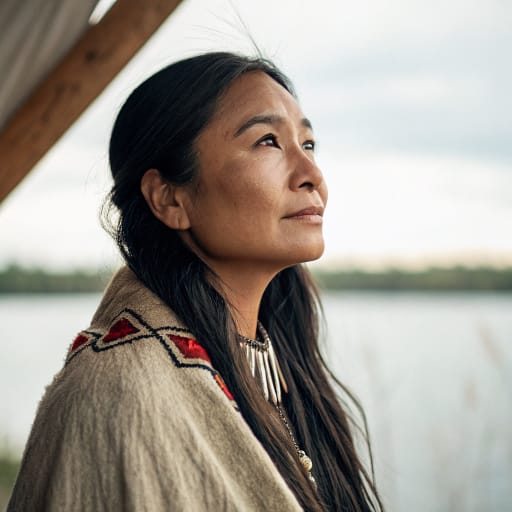
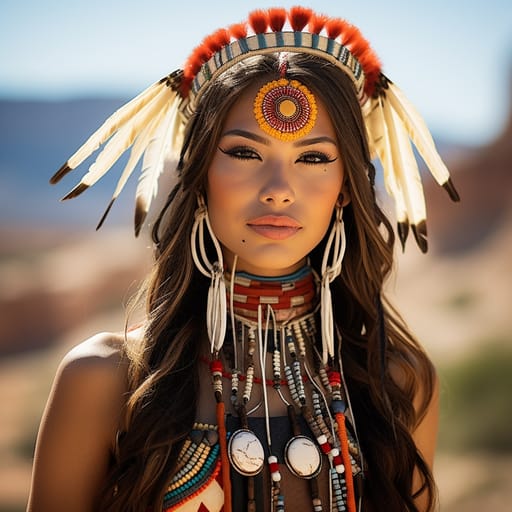
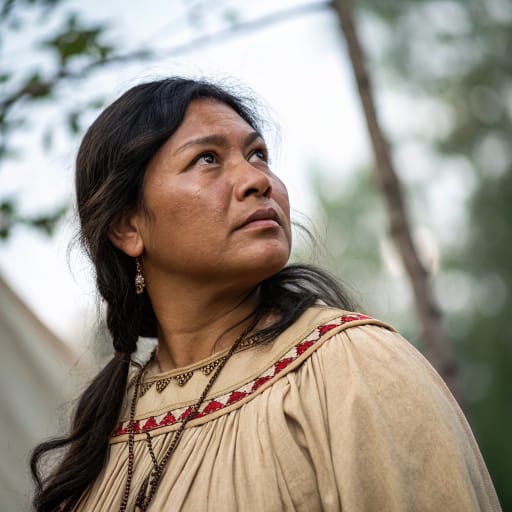
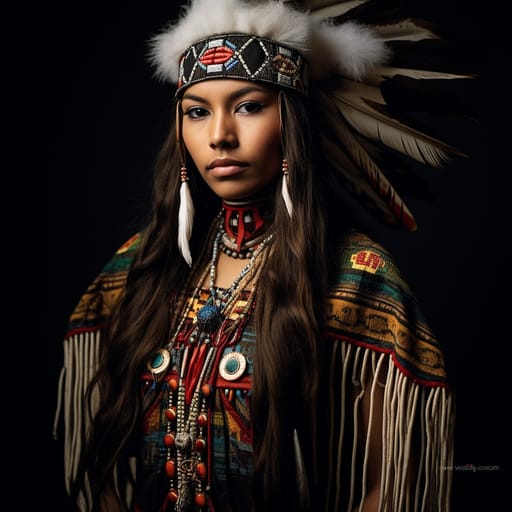
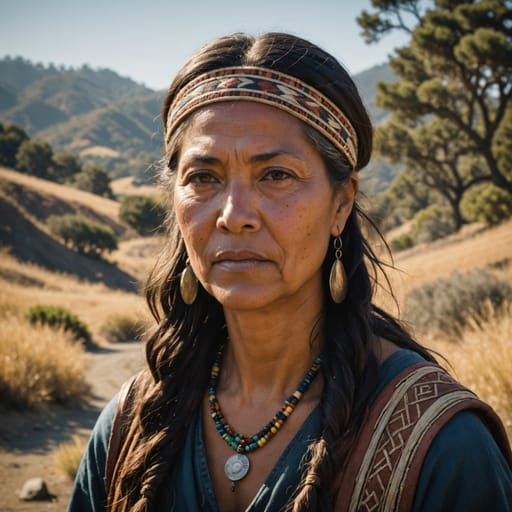
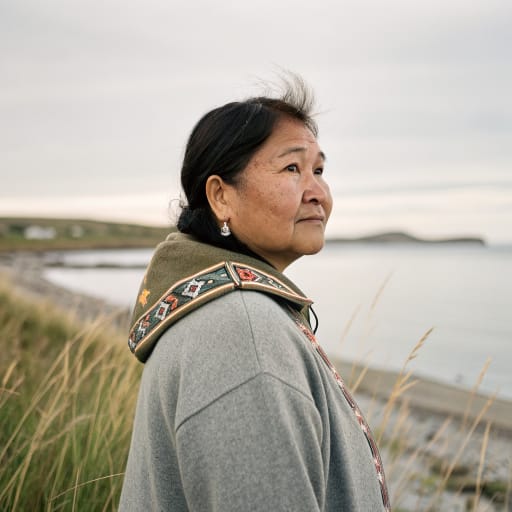
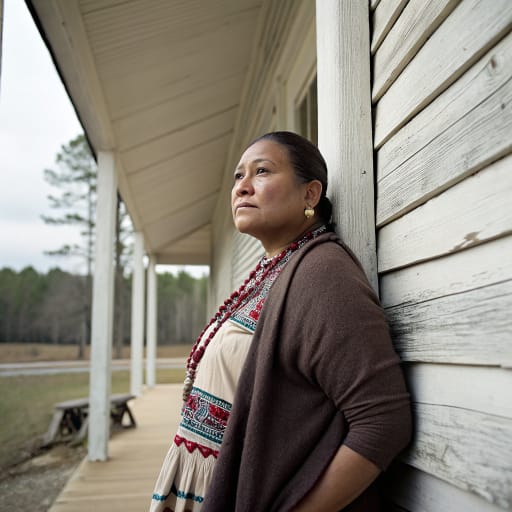
Typical Quileute Phenotypes
Reference for AI generation: hair, eyes, skin, facial structure, build
Quileute Body & Anatomy Reference
Anatomy by feature, Indigenous Northern American / Algonquian-Iroquoian phenotype
Quileute Boobs & Breasts
Quileute tits and boobs run medium cup, moderate projection, the classic Indigenous Northern American / Algonquian-Iroquoian bust profile. Quileute nipples and areolas show medium-brown areolar pigmentation against the copper-to-medium-brown skin tone, with areolar diameter typically in the 30-44mm range and forward-set positioning rather than the smaller East Asian bust. Quileute breasts trend full and moderate projection, a function of the mesomorph, broader frame in northern Indigenous populations body habitus and the mean adult female BMI 25-28. For anatomically accurate AI-generated Quileute nudes the render preserves the medium cup, moderate projection shape, 30-44mm areolas with medium-brown pigmentation, and the torso proportions of the Indigenous Northern American / Algonquian-Iroquoian phenotype.
Quileute Ass & Hips
Quileute hips and butt usually read as medium, moderate-to-full projection. The skeletal base is medium iliac crests, the Indigenous Northern American / Algonquian-Iroquoian pattern. Set against the slim East Asian narrow-hip profile, the difference is easy to see, and the hip-to-waist ratio is often what identifies Quileute women in photos.
Quileute Vagina & Pussy
Expect medium-brown labial pigmentation on Quileute women, in keeping with Indigenous Northern American / Algonquian-Iroquoian ancestry. The pubic hair is straight medium-coarse texture. Coloring should run evenly from the copper to medium-brown skin of the thighs to the labia, and Quileute nude imagery should keep the hair's straight medium-coarse texture.
Quileute Dicks & Penis
Quileute dick and penile anatomy in adult AI generation should anchor on the regional reference data: regional mean ~13cm erect, moderate girth, and medium-brown shaft pigmentation. The Quileute cock profile reflects the Indigenous Northern American / Algonquian-Iroquoian population's anthropometric measurements. The shaft pigmentation should track the surrounding copper to medium-brown skin tone, and the pubic hair should keep its straight medium-coarse texture in the typical inverted-V escutcheon.
Quileute Body, Curves & Build
Quileute body type: mesomorph, broader frame in northern Indigenous populations, with mean adult female BMI 25-28. This is the typical Indigenous Northern American / Algonquian-Iroquoian build. Height range, shoulder-to-hip ratio and fat distribution all follow from it, which is what an accurate Quileute nude body should show.
Quileute Skin Tone & Hair Texture
Quileute skin tone falls in the copper to medium-brown (Fitzpatrick III-V) band, the surface signal most often miscalibrated by generic AI nude generators. Quileute hair texture is typically straight 1A, dark-brown to black, often thick and dense, characteristic of the Indigenous Northern American / Algonquian-Iroquoian phenotype. In Quileute nude renders the skin should hold that band consistently across the body.
Explore phenotype categories
Structured taxonomy with peer-reviewed scales · 22 anatomical categories
Erotic Poses & Sex Positions
From the pose catalog: 219 named positions with reference skeletons
Frequently asked questions about Quileute people
Where is the Quileute homeland?
The Quileute homeland is La Push and the lower Quillayute River, Pacific coast of the Olympic Peninsula, Washington State, United States. in North America.
What language do Quileute people speak?
Quileute people primarily speak Quileute (Chimakuan), now dormant and under revival; English in daily use.
What religion do Quileute people practice?
The predominant religion among Quileute people is Christianity alongside continuing traditional ceremonial and song practice.






Make your own Quileute images
Five a day, free, no credits to buy. The studio starts from this group's phenotype data, so you can set body type, pose and style and keep the traits accurate.
Start with Quileute