Help us get this right
Does this portrait look right for Haida?
One tap. It takes a second and it is recorded.
1 says it looks right, 1 says it looks off.
Haida Erotic
Haida Gwaii, British Columbia, Canada (and Prince of Wales Island, Alaska)
Haida (language isolate)
Traditional Haida spirituality; Christianity
Kaigani (Alaska Haida); Raven and Eagle moieties
About Haida People
Haida are an Indigenous nation of the Pacific Northwest Coast whose homeland is Haida Gwaii (formerly the Queen Charlotte Islands) off the northern coast of British Columbia, Canada, together with a southern community, the Kaigani, on Prince of Wales Island in southeast Alaska. They speak Haida, a language isolate with distinct northern and southern varieties, now the subject of intensive revitalization work. The Haida number in the low thousands. Nineteenth-century epidemics, above all smallpox, drastically reduced their population, and most Canadian Haida today live in the villages of Skidegate and Old Massett on Haida Gwaii.
Society and subsistence
Haida society is matrilineal and divided into two moieties, Raven and Eagle, each subdivided into named lineages that hold rights to crests, names, songs, and territories. Livelihood traditionally centered on a rich marine environment: salmon, halibut, and other fish, along with shellfish, sea mammals, seabird eggs, and berries. Western red cedar supplied enormous dugout canoes, plank houses, bentwood boxes, and woven clothing. Wealth and rank were validated at the potlatch, a ceremonial feast at which hosts distributed goods and affirmed hereditary titles. The Haida were also known as formidable seafarers and traders who ranged widely along the coast.
Appearance and adornment
Haida visual culture is defined by formline art, the disciplined system of ovoids and U-forms used to depict crest beings on totem poles, house fronts, canoes, and regalia. Ceremonial dress includes the button blanket, a dark wool robe bordered in red and outlined with mother-of-pearl buttons forming a family crest, worn with woven spruce-root or cedar-bark hats. Chilkat-style woven robes and carved wooden frontlets appear at dances. Historically, people of high rank wore tattooed crests, and women of rank wore labrets in the lower lip. Argillite, a soft black slate found only on Haida Gwaii, is carved into fine sculpture. Everyday dress today is modern, with regalia reserved for ceremony and the potlatch.
Related ethnic groups
Groups that share Haida's homeland, region, language, or religious tradition. These are likely candidates for comparative phenotype reference.
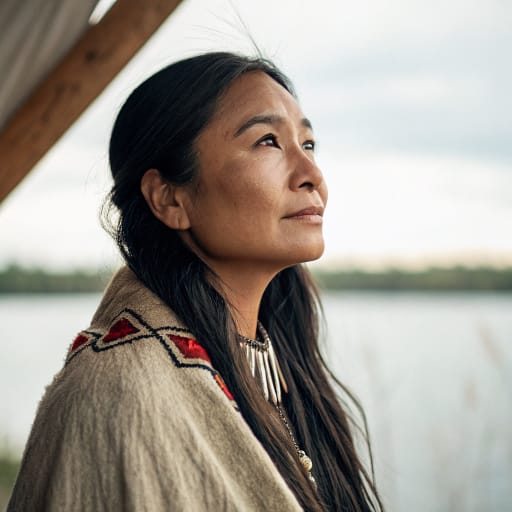
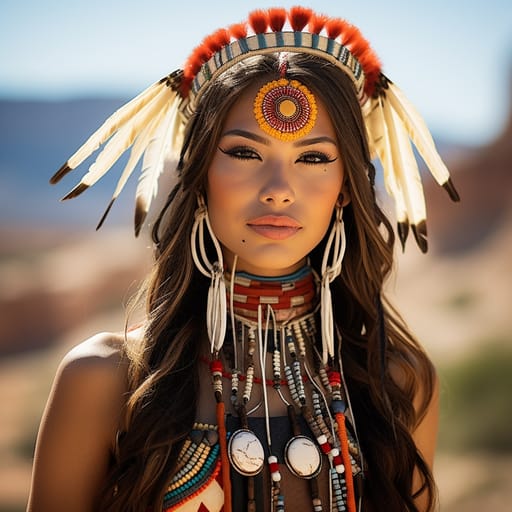
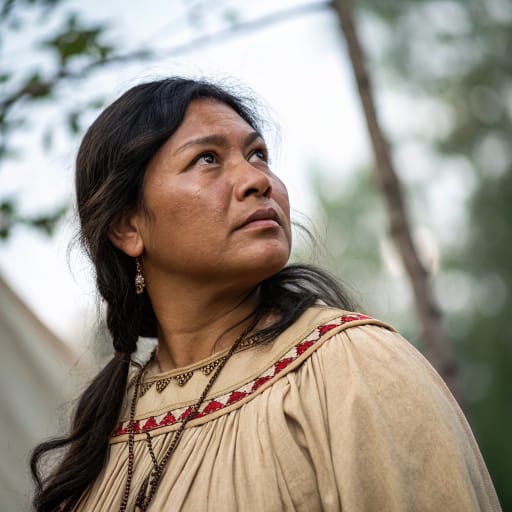
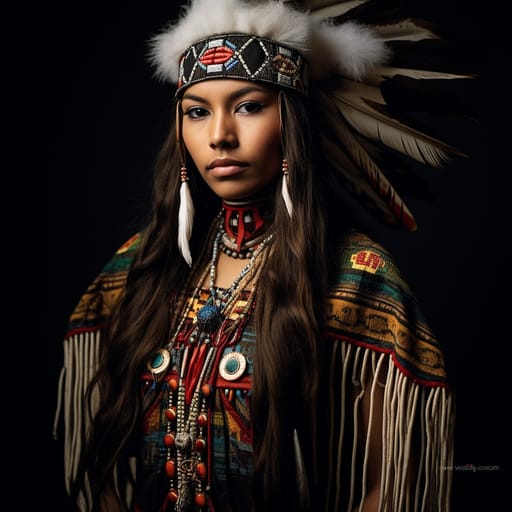

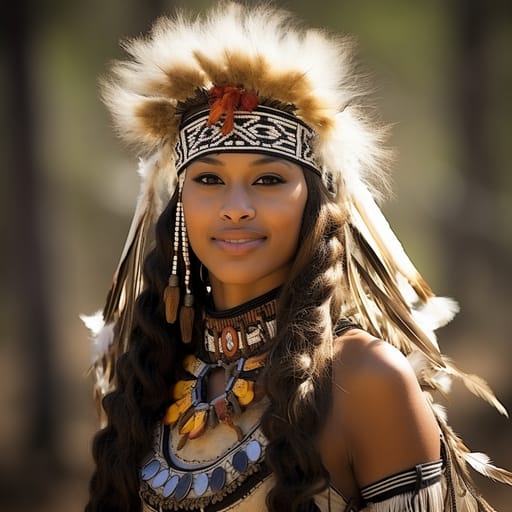
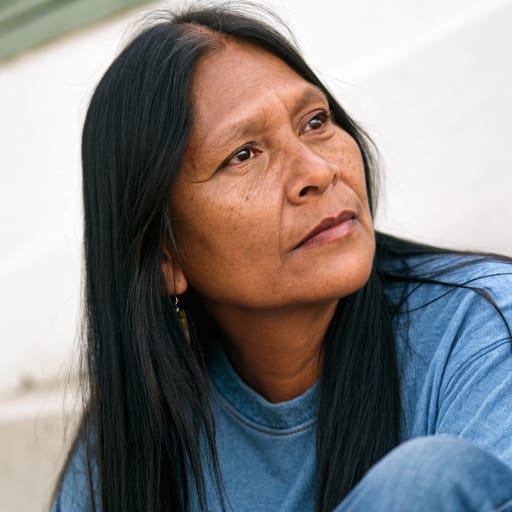
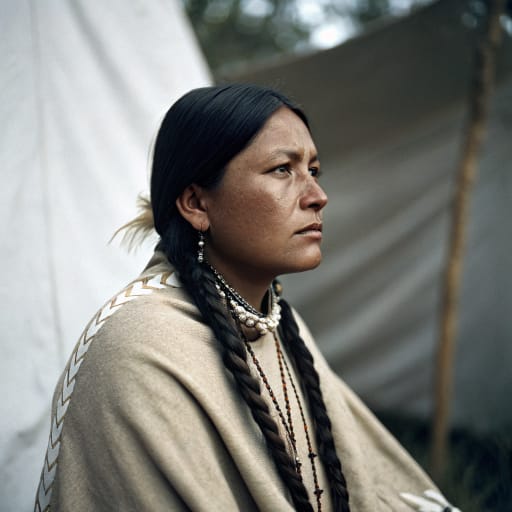
Typical Haida Phenotypes
Reference for AI generation: hair, eyes, skin, facial structure, build
Haida Body & Anatomy Reference
Per-feature anatomical profile for AI nude generation: Indigenous Northern American / Algonquian-Iroquoian phenotype
Haida Boobs & Breasts
The typical Haida bust is medium cup, moderate projection, in line with the wider Indigenous Northern American / Algonquian-Iroquoian pattern. Areolas usually fall in the 30-44mm range, with medium-brown areolar pigmentation against the copper-to-medium-brown skin tone. Compared with the smaller East Asian bust, Haida breasts sit forward and are generally full and moderate projection. A faithful AI render of Haida tits keeps that shape and areola size.
Haida Ass & Hips
Butt shape among Haida women: medium, moderate-to-full projection, over medium iliac crests. This follows Indigenous Northern American / Algonquian-Iroquoian ancestry and looks quite unlike the slim East Asian narrow-hip profile. An accurate Haida ass in adult AI imagery keeps both the silhouette and the overall build (mesomorph, broader frame in northern Indigenous populations) instead of a generic average.
Haida Vagina & Pussy
Vulvar anatomy among Haida women: medium-brown labial pigmentation. Pubic hair tends to be straight medium-coarse texture, in the usual inverted-triangle pattern. Both follow Indigenous Northern American / Algonquian-Iroquoian pigmentation, which is why Haida pussy renders should not fall back on a pale, sparse Western template.
Haida Dicks & Penis
The Haida cock profile, from Indigenous Northern American / Algonquian-Iroquoian anthropometric data: regional mean ~13cm erect; moderate girth; medium-brown shaft pigmentation. Pubic hair has a straight medium-coarse texture and forms the usual inverted-V pattern. Whether Haida men are circumcised follows religious and cultural practice rather than phenotype.
Haida Body, Curves & Build
Build and curves among Haida women follow the Indigenous Northern American / Algonquian-Iroquoian pattern: mesomorph, broader frame in northern Indigenous populations, mean adult female BMI 25-28. Proportions matter as much as skin tone, so Haida figures should keep their regional height and limb ratios.
Haida Skin Tone & Hair Texture
The Haida skin range is copper to medium-brown (Fitzpatrick III-V), and hair tends to be straight 1A, dark-brown to black, often thick and dense. That combination marks the Indigenous Northern American / Algonquian-Iroquoian phenotype, and skin tone is the trait AI generators most often get wrong for Haida women.
Explore phenotype categories
Structured taxonomy with peer-reviewed scales · 22 anatomical categories
Notable Haida People
21 reference figures, sourced from Wikipedia
- Primrose Adams, artist
- Delores Churchill, artist, basketweaver
- Marcia Crosby, art historian
- Cumshewa, 18th century chief
- Florence Davidson, artist and memoirist
- Reg Davidson, carver
- Robert Davidson, carver
- Tamara Davidson, politician, MLA for North Coast-Haida Gwaii
- Freda Diesing, carver
- Charles Edenshaw, carver, jeweler and painter
- Gidansda Guujaaw, artist and politician, former President of the Council of the Haida Nation
- Dorothy Grant, artist, fashion designer
- Jim Hart, hereditary chief of Stasstas Eagle Clan, artist
- Koyah, chief
- Bill Reid, carver, sculptor and jeweler
- Jay Simeon, artist
- Skaay, historian and storytelling expert
- Evelyn Vanderhoop, weaver
- Terri-Lynn Williams-Davidson, lawyer and artist
- Michael Nicoll Yahgulanaas, artist
- Don Yeomans, artist
Erotic Poses & Sex Positions
From the pose catalog: 219 named positions with reference skeletons
Frequently asked questions about Haida people
Where is the Haida homeland?
The Haida homeland is Haida Gwaii, British Columbia, Canada (and Prince of Wales Island, Alaska) in North America.
What language do Haida people speak?
Haida people primarily speak Haida (language isolate).
What religion do Haida people practice?
The predominant religion among Haida people is Traditional Haida spirituality; Christianity.






Make your own Haida images
Five a day, free, no credits to buy. The studio starts from this group's phenotype data, so you can set body type, pose and style and keep the traits accurate.
Start with Haida