Help us get this right
Does this portrait look right for Missisquoi?
Nobody has judged this one yet. You would be the first.
Missisquoi Erotic
The Missisquoi River and Missisquoi Bay at the north end of Lake Champlain, around Swanton, Vermont (United States), with kin at Odanak, Quebec (Canada).
Western Abenaki (Algonquian, Eastern Algonquian branch), now being revived; English in daily use, with French historically.
Largely Roman Catholic since French Jesuit missions of the 1700s, alongside a revival of traditional Abenaki ceremony.
A Western Abenaki (Alnôbak) band within the Wabanaki peoples, closely tied to the Sokoki and to Odanak. Organized today as the Abenaki Nation of Missisquoi (St. Francis/Sokoki Band).
About Missisquoi People
The Missisquoi take their name from the river and bay at the northern end of Lake Champlain. A Western Abenaki village stood there, near what is now Swanton, Vermont. The name is usually translated as "place of flint." This was a meeting place as much as a home. Families fished the spring runs, planted corn on the river flats and moved with the seasons between the lakeshore and hunting grounds inland. It also became a refuge. In the late 1600s and 1700s, English colonists pushed north and drove people out of the Connecticut River valley and places farther south. Many of them joined the community at Missisquoi or the one at Odanak on the St. Francis River in Quebec, and family ties still link the two places.
Their language is Western Abenaki, part of the Eastern Algonquian family. It is closely related to the Abenaki languages of Maine and completely unrelated to Mohawk, spoken west of the lake. Today it is a language being brought back, kept alive by dictionaries, recordings and classes rather than learned at home. French Jesuit missions made most Missisquoi Catholic, and their alliance with France shaped their politics. In the 1720s, during Grey Lock's War, raids on the Massachusetts frontier were launched from the Missisquoi country. The older spiritual beliefs never went away. Odzihozo, the transformer who shaped Lake Champlain, is said to rest as a rock in the lake near Burlington, and Abenaki people still treat the spot as sacred.
After the American Revolution, the settlers who took the land treated the Abenaki as a people who had vanished. Many families stayed anyway. They lived along the river and the lake as fishermen, basket makers and laborers, and often let neighbors take them for French Canadians. They had good reason to be careful. In the 1920s and 1930s the Vermont Eugenics Survey targeted poor families and families of mixed ancestry, Abenaki among them, and a 1931 law allowed sterilization. The state legislature formally apologized in 2021. The modern struggles are about rights and recognition. In 1987 Abenaki fishermen held a fish-in on the Missisquoi River, fishing without state licenses in protest. The case ended in a 1992 Vermont Supreme Court ruling that their aboriginal rights had been extinguished by "the increasing weight of history." A petition for federal recognition was denied in 2007. Vermont recognized the Abenaki Nation of Missisquoi in 2012, but the Abenaki at Odanak have publicly challenged the Vermont bands' claims of Abenaki descent, and that dispute remains open.
Related ethnic groups
Groups that share Missisquoi's homeland, region, language, or religious tradition. These are likely candidates for comparative phenotype reference.
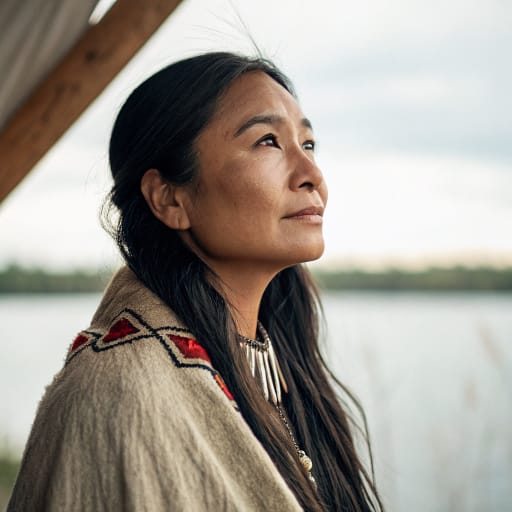
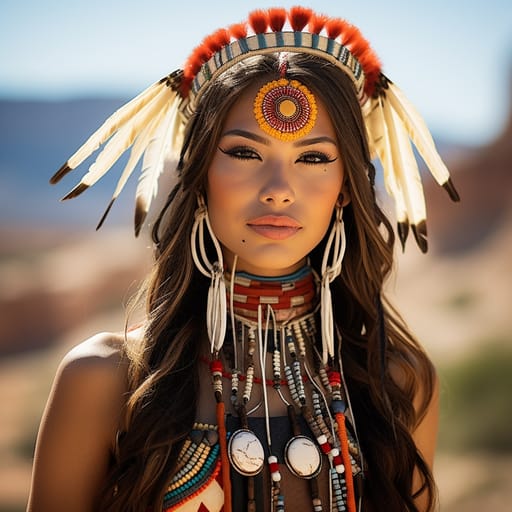
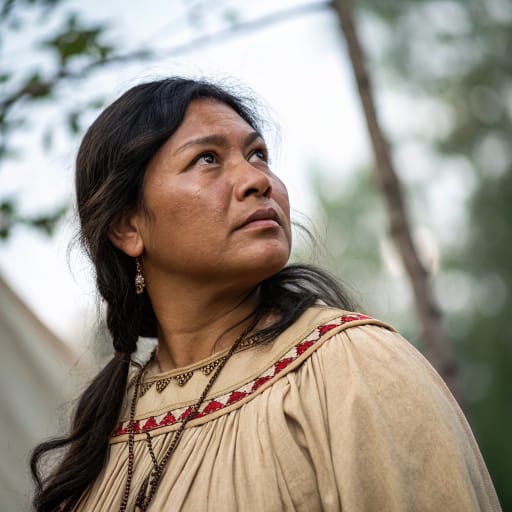
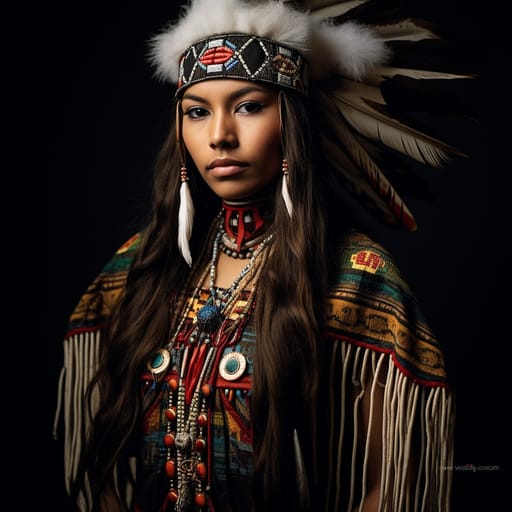
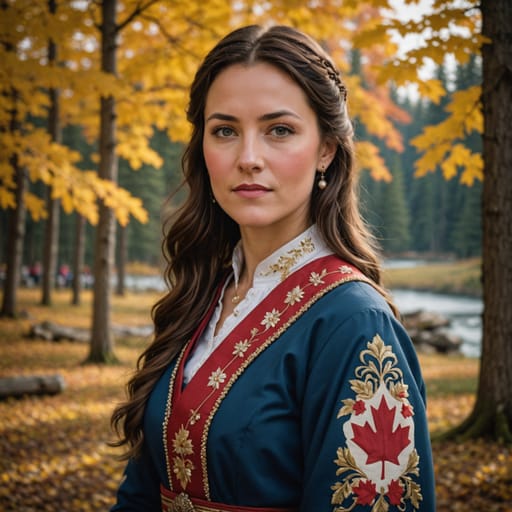
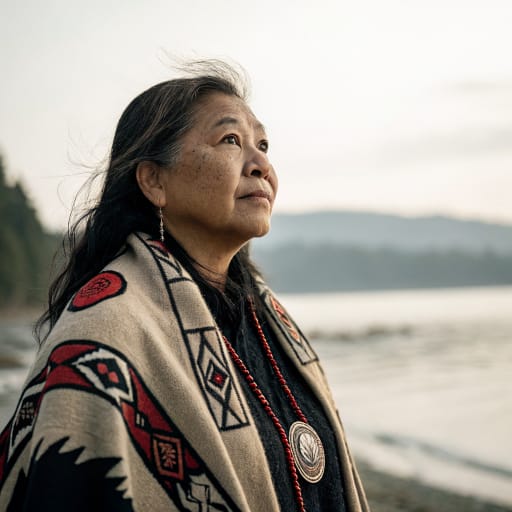
Typical Missisquoi Phenotypes
Reference for AI generation: hair, eyes, skin, facial structure, build
Missisquoi Body & Anatomy Reference
Indigenous Northern American / Algonquian-Iroquoian phenotype: anatomy reference for AI nude generation
Missisquoi Boobs & Breasts
Missisquoi tits and boobs run medium cup, moderate projection, the classic Indigenous Northern American / Algonquian-Iroquoian bust profile. Missisquoi nipples and areolas show medium-brown areolar pigmentation against the copper-to-medium-brown skin tone, with areolar diameter typically in the 30-44mm range and forward-set positioning rather than the smaller East Asian bust. Missisquoi breasts trend full and moderate projection, a function of the mesomorph, broader frame in northern Indigenous populations body habitus and the mean adult female BMI 25-28. For anatomically accurate AI-generated Missisquoi nudes the render preserves the medium cup, moderate projection shape, 30-44mm areolas with medium-brown pigmentation, and the torso proportions of the Indigenous Northern American / Algonquian-Iroquoian phenotype.
Missisquoi Ass & Hips
Missisquoi hips and butt usually read as medium, moderate-to-full projection. The skeletal base is medium iliac crests, the Indigenous Northern American / Algonquian-Iroquoian pattern. Set against the slim East Asian narrow-hip profile, the difference is easy to see, and the hip-to-waist ratio is often what identifies Missisquoi women in photos.
Missisquoi Vagina & Pussy
Expect medium-brown labial pigmentation on Missisquoi women, in keeping with Indigenous Northern American / Algonquian-Iroquoian ancestry. The pubic hair is straight medium-coarse texture. Coloring should run evenly from the copper to medium-brown skin of the thighs to the labia, and Missisquoi nude imagery should keep the hair's straight medium-coarse texture.
Missisquoi Dicks & Penis
Missisquoi dick and penile anatomy in adult AI generation should anchor on the regional reference data: regional mean ~13cm erect, moderate girth, and medium-brown shaft pigmentation. The Missisquoi cock profile reflects the Indigenous Northern American / Algonquian-Iroquoian population's anthropometric measurements. The shaft pigmentation should track the surrounding copper to medium-brown skin tone, and the pubic hair should keep its straight medium-coarse texture in the typical inverted-V escutcheon.
Missisquoi Body, Curves & Build
Missisquoi body type: mesomorph, broader frame in northern Indigenous populations, with mean adult female BMI 25-28. This is the typical Indigenous Northern American / Algonquian-Iroquoian build. Height range, shoulder-to-hip ratio and fat distribution all follow from it, which is what an accurate Missisquoi nude body should show.
Missisquoi Skin Tone & Hair Texture
Missisquoi skin tone falls in the copper to medium-brown (Fitzpatrick III-V) band, the surface signal most often miscalibrated by generic AI nude generators. Missisquoi hair texture is typically straight 1A, dark-brown to black, often thick and dense, characteristic of the Indigenous Northern American / Algonquian-Iroquoian phenotype. In Missisquoi nude renders the skin should hold that band consistently across the body.
Explore phenotype categories
Structured taxonomy with peer-reviewed scales · 22 anatomical categories
Erotic Poses & Sex Positions
From the pose catalog: 219 named positions with reference skeletons
Frequently asked questions about Missisquoi people
Where is the Missisquoi homeland?
The Missisquoi homeland is The Missisquoi River and Missisquoi Bay at the north end of Lake Champlain, around Swanton, Vermont (United States), with kin at Odanak, Quebec (Canada). in North America.
What language do Missisquoi people speak?
Missisquoi people primarily speak Western Abenaki (Algonquian, Eastern Algonquian branch), now being revived; English in daily use, with French historically..
What religion do Missisquoi people practice?
The predominant religion among Missisquoi people is Largely Roman Catholic since French Jesuit missions of the 1700s, alongside a revival of traditional Abenaki ceremony..






Make your own Missisquoi images
Five a day, free, no credits to buy. The studio starts from this group's phenotype data, so you can set body type, pose and style and keep the traits accurate.
Start with Missisquoi