Help us get this right
Does this portrait look right for Goshute?
Nobody has judged this one yet. You would be the first.
Goshute Erotic
The Great Salt Lake Desert and adjoining valleys of western Utah and eastern Nevada, including Deep Creek Valley near Ibapah and Skull Valley in Tooele County
Shoshoni, a western dialect (Central Numic, Uto-Aztecan); English in daily use
Traditional Numic belief and ceremony alongside Christianity, with a significant Latter-day Saint presence
Western Shoshone; today the Confederated Tribes of the Goshute Reservation and the Skull Valley Band of Goshute Indians
About Goshute People
The Goshute made a living where almost nobody else believed one was possible: the salt flats, dry lake beds and sagebrush valleys west of the Great Salt Lake, along the line where Utah meets Nevada. Their country takes in seven or eight inches of rain in a good year, and that single fact organized everything. Families moved on a seasonal circuit keyed to when particular plants ripened in particular places, and the knowledge behind it was encyclopedic: which seeds, roots and berries came in when, when the pinyon nuts were ready in the Deep Creek and Stansbury ranges, where to stage a communal rabbit drive that funneled jackrabbits into long nets strung across the brush. Insects were harvested too, which struck passing Americans as evidence of degradation and was in fact an excellent return on labor. They speak Shoshoni, a Central Numic language of the Uto-Aztecan family, usually classed as a western dialect, which puts them in the same speech community as other Shoshone and, further out, Comanche. Their Ute neighbors to the east speak a related but separate Southern Numic tongue. Kusiutta is the name they use for themselves.
Mormon settlement after 1847 took the springs and the grass, the two things the Goshute could not spare, and the Overland Stage and Pony Express ran their traffic straight through the middle of it. Conflict, hunger and epidemic disease followed, along with a treaty signed in Tooele Valley in 1863. What is striking afterward is the refusal to leave: pressed for decades to relocate to Fort Hall or the Uintah Valley, they stayed, and reservations were finally set aside in the 1910s at Deep Creek near Ibapah and in Skull Valley. Two federally recognized tribes carry the name today, together numbering a few hundred enrolled members. Skull Valley in particular shows what the twentieth century does to small nations holding land nobody else wanted until they did: the band's reservation now sits inside a ring of a chemical weapons proving ground, a magnesium plant and a hazardous waste facility. In the late 1990s a consortium of utilities proposed storing spent nuclear fuel there, and the fight over it split the band for years before federal agencies killed the project. Mark Twain wrote a famously contemptuous page about the Goshute in Roughing It, and it is worth reading only as a record of how badly a visitor can misjudge people whose competence is invisible to him.
Related ethnic groups
Groups that share Goshute's homeland, region, language, or religious tradition. These are likely candidates for comparative phenotype reference.
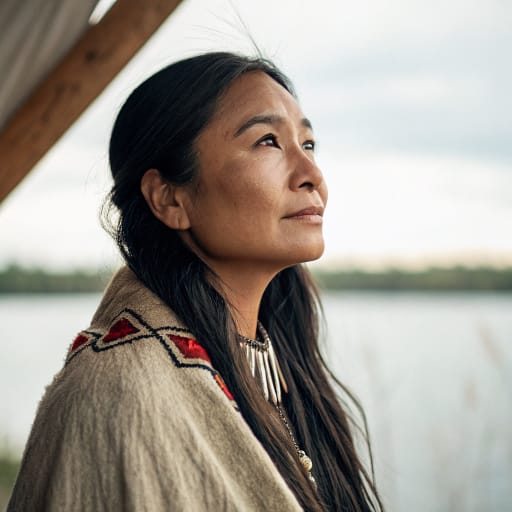
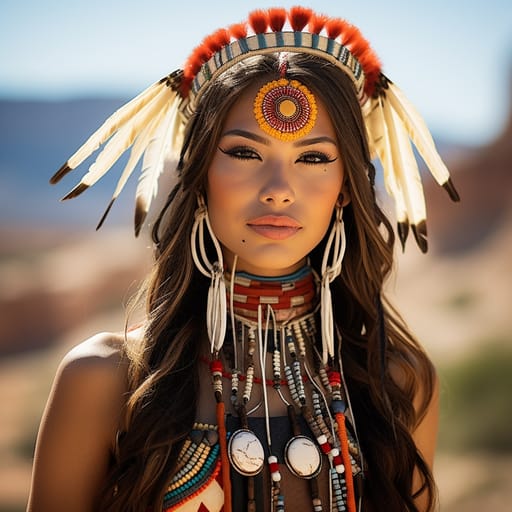
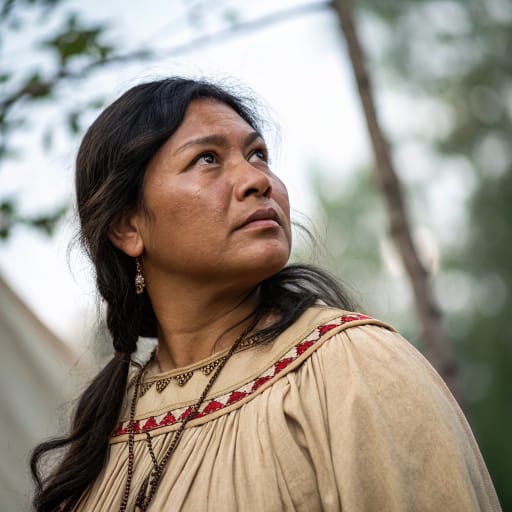
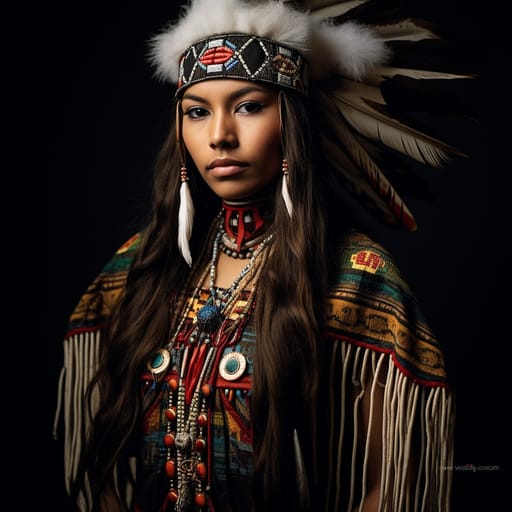

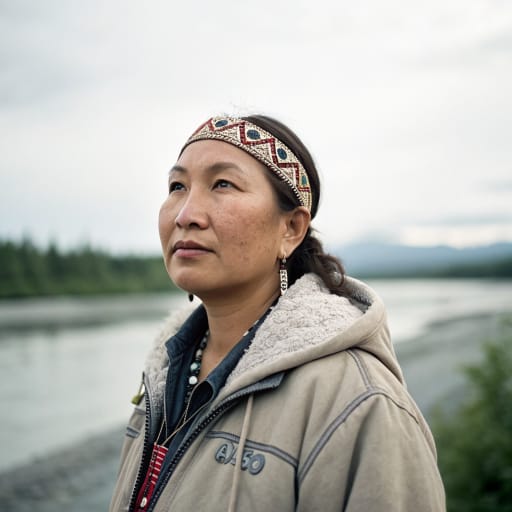
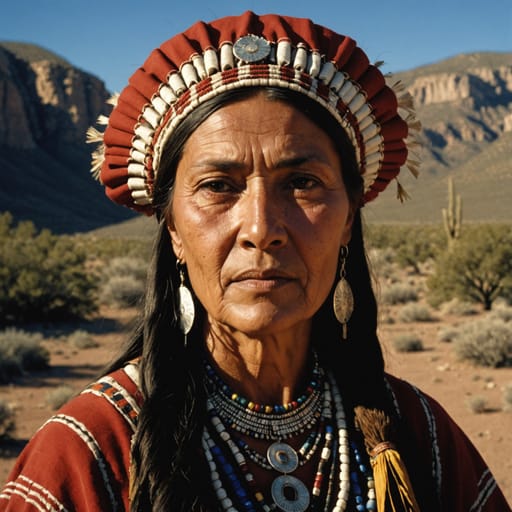
Typical Goshute Phenotypes
Reference for AI generation: hair, eyes, skin, facial structure, build
Goshute Body & Anatomy Reference
Per-feature anatomical profile for AI nude generation: Indigenous Northern American / Algonquian-Iroquoian phenotype
Goshute Boobs & Breasts
Bust reference for Goshute women: medium cup, moderate projection, which is typical of Indigenous Northern American / Algonquian-Iroquoian ancestry. Areolas measure about 30-44mm across, with medium-brown pigmentation. Body type (mesomorph, broader frame in northern Indigenous populations) shapes the bust as well, so Goshute tits are usually full and moderate projection. In AI imagery, keep the forward-set shape rather than drifting toward the smaller East Asian bust.
Goshute Ass & Hips
The Goshute ass is typically medium, moderate-to-full projection, which sets it apart from the slim East Asian narrow-hip profile. Underneath, the pelvis shows medium iliac crests, part of the Indigenous Northern American / Algonquian-Iroquoian skeletal pattern. For Goshute butt pics and AI renders, match that silhouette and the overall build (mesomorph, broader frame in northern Indigenous populations).
Goshute Vagina & Pussy
Goshute pussy and vulvar anatomy presents medium-brown labial pigmentation, consistent with the Indigenous Northern American / Algonquian-Iroquoian phenotype's pigmentation pattern. Goshute pubic hair is typically straight medium-coarse texture, in the inverted-triangle pattern. For anatomically accurate Goshute pussy renders the labial coloration should match the surrounding copper to medium-brown skin tone with a continuous gradient, and the hair should keep its straight medium-coarse texture.
Goshute Dicks & Penis
Goshute dicks follow the Indigenous Northern American / Algonquian-Iroquoian reference data: regional mean ~13cm erect; moderate girth; medium-brown shaft pigmentation. Shaft color should track the copper to medium-brown skin tone with a smooth change toward the glans, and Goshute pubic hair keeps its straight medium-coarse texture.
Goshute Body, Curves & Build
Goshute body type and overall build presents as mesomorph, broader frame in northern Indigenous populations, with mean adult female BMI 25-28: the characteristic Indigenous Northern American / Algonquian-Iroquoian habitus. Goshute curves and proportions should keep the regional skeletal frame (height, shoulder-to-hip ratio, limb proportions) rather than a generic mesomorph default.
Goshute Skin Tone & Hair Texture
Goshute skin sits in the copper to medium-brown (Fitzpatrick III-V) band. Hair is typically straight 1A, dark-brown to black, often thick and dense, in keeping with the Indigenous Northern American / Algonquian-Iroquoian phenotype. In nude renders the skin should stay one even tone from face to body, and body, pubic and head hair should match.
Explore phenotype categories
Structured taxonomy with peer-reviewed scales · 22 anatomical categories
Erotic Poses & Sex Positions
From the pose catalog: 219 named positions with reference skeletons
Frequently asked questions about Goshute people
Where is the Goshute homeland?
The Goshute homeland is The Great Salt Lake Desert and adjoining valleys of western Utah and eastern Nevada, including Deep Creek Valley near Ibapah and Skull Valley in Tooele County in North America.
What language do Goshute people speak?
Goshute people primarily speak Shoshoni, a western dialect (Central Numic, Uto-Aztecan); English in daily use.
What religion do Goshute people practice?
The predominant religion among Goshute people is Traditional Numic belief and ceremony alongside Christianity, with a significant Latter-day Saint presence.






Make your own Goshute images
Five a day, free, no credits to buy. The studio starts from this group's phenotype data, so you can set body type, pose and style and keep the traits accurate.
Start with Goshute