No portrait yet
Squamish Erotic
Howe Sound, the Squamish River valley and Burrard Inlet in southwestern British Columbia, Canada, including North Vancouver, West Vancouver and parts of Vancouver
Squamish, Sḵwx̱wú7mesh sníchim (Salishan, Coast Salish branch); English
Christianity, especially Roman Catholicism, alongside Coast Salish longhouse spirituality and winter ceremonies
Coast Salish; the Squamish Nation formed in 1923 from sixteen amalgamated village communities and has close ties to the Musqueam and Tsleil-Waututh
About Squamish People
The Squamish call themselves Sḵwx̱wú7mesh, and the numeral in that word is the first thing outsiders trip over. It marks a glottal stop, part of a spelling system built for sounds English letters were never meant to carry. Their territory runs from the shores of Burrard Inlet, where Vancouver now stands, north through Howe Sound and up the Squamish River valley into the mountains toward Whistler. A major city sits on top of old village sites, and that shapes much of Squamish life today. The language, Sḵwx̱wú7mesh sníchim, is Coast Salish. It is related to the Halkomelem of the neighboring Musqueam and Tsleil-Waututh and to Sechelt across the sound, but it is distinct from both. First-language speakers are now very few, and its future depends on classes and programs that aim to raise new ones. People here built cedar plank houses, fished salmon on the rivers, gathered shellfish along the shore and traveled by dugout canoe. Smallpox reached the coast before most settlers did and hit hard. Catholic missionaries came next, and the faith took hold. St. Paul's Church, built in 1884 on the North Vancouver reserve, still stands, near where a residential school ran for decades. Today Catholic practice and winter longhouse ceremonies exist side by side in the community.
Land has been the central fight for more than a century. In 1906 Chief Joe Capilano traveled to London with other chiefs to press land rights before King Edward VII. In 1923 sixteen Squamish communities joined into a single nation. Reserve land at Kitsilano, taken out of Squamish hands in 1913, was partly won back in court decades later. The nation is now building Sen̓áḵw, a dense rental housing development, on that ground beside the Burrard Bridge. Together with the Musqueam and Tsleil-Waututh, it has also acquired former federal land inside Vancouver. Some older customs have outlasted the pressure too. At naming ceremonies and memorials, guests are called up as witnesses and paid to remember what they saw. The record lives in people rather than on paper, and ancestral names are passed down this way. Weavers have brought back the Salish wool blanket, a craft that once used mountain goat wool and the hair of a woolly dog that no longer exists. And Mount Garibaldi figures in a flood story in which people survived by tying their canoes to its peak.
Related ethnic groups
Groups that share Squamish's homeland, region, language, or religious tradition. These are likely candidates for comparative phenotype reference.
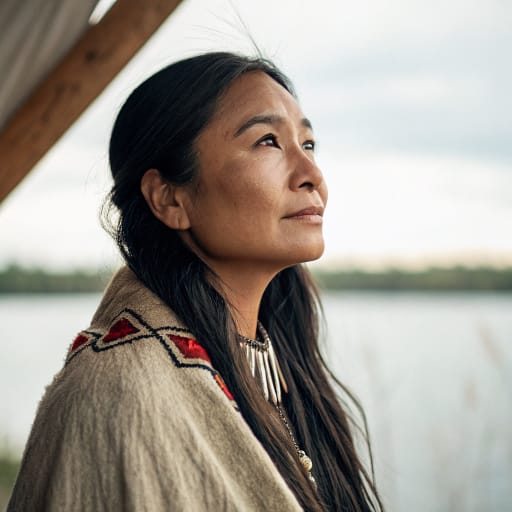
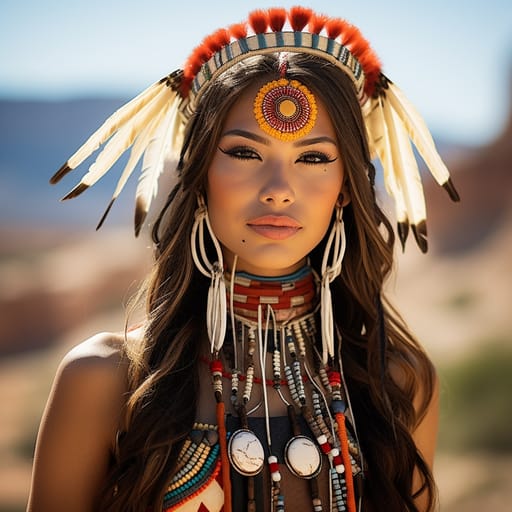
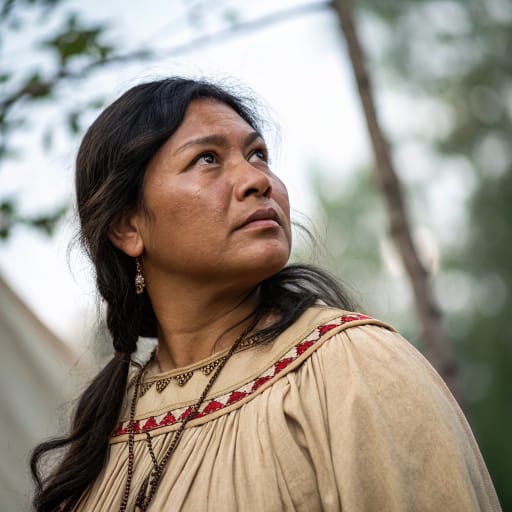
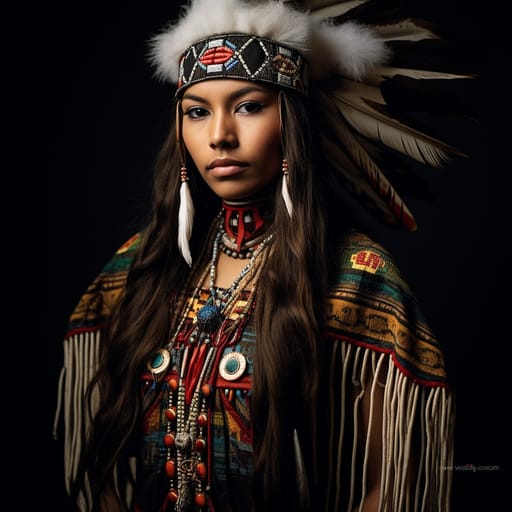
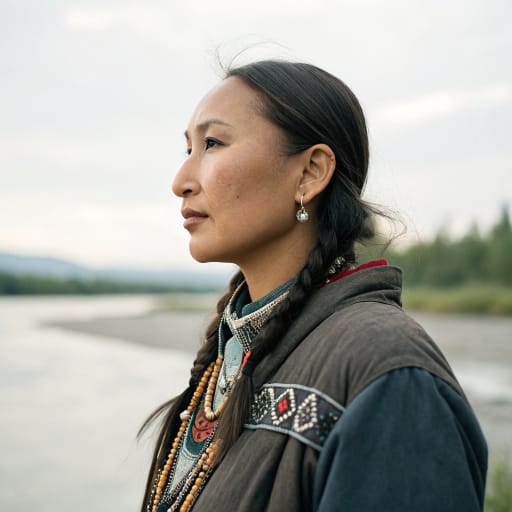
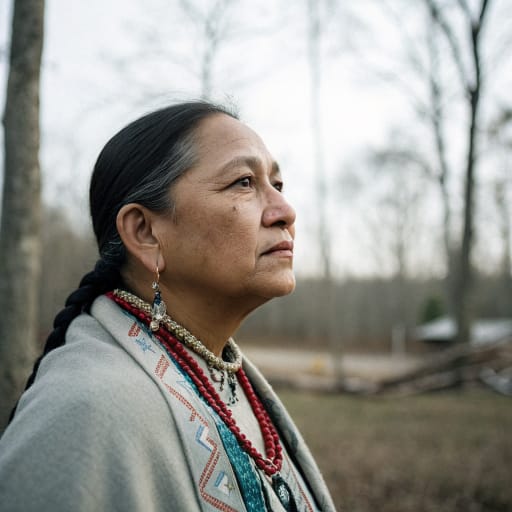
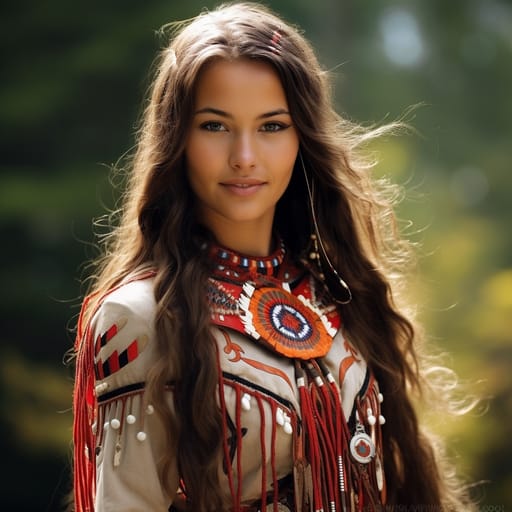
Typical Squamish Phenotypes
Reference for AI generation: hair, eyes, skin, facial structure, build
Squamish Body & Anatomy Reference
Anatomy by feature, Indigenous Northern American / Algonquian-Iroquoian phenotype
Squamish Boobs & Breasts
The typical Squamish bust is medium cup, moderate projection, in line with the wider Indigenous Northern American / Algonquian-Iroquoian pattern. Areolas usually fall in the 30-44mm range, with medium-brown areolar pigmentation against the copper-to-medium-brown skin tone. Compared with the smaller East Asian bust, Squamish breasts sit forward and are generally full and moderate projection. A faithful AI render of Squamish tits keeps that shape and areola size.
Squamish Ass & Hips
Butt shape among Squamish women: medium, moderate-to-full projection, over medium iliac crests. This follows Indigenous Northern American / Algonquian-Iroquoian ancestry and looks quite unlike the slim East Asian narrow-hip profile. An accurate Squamish ass in adult AI imagery keeps both the silhouette and the overall build (mesomorph, broader frame in northern Indigenous populations) instead of a generic average.
Squamish Vagina & Pussy
Vulvar anatomy among Squamish women: medium-brown labial pigmentation. Pubic hair tends to be straight medium-coarse texture, in the usual inverted-triangle pattern. Both follow Indigenous Northern American / Algonquian-Iroquoian pigmentation, which is why Squamish pussy renders should not fall back on a pale, sparse Western template.
Squamish Dicks & Penis
The Squamish cock profile, from Indigenous Northern American / Algonquian-Iroquoian anthropometric data: regional mean ~13cm erect; moderate girth; medium-brown shaft pigmentation. Pubic hair has a straight medium-coarse texture and forms the usual inverted-V pattern. Whether Squamish men are circumcised follows religious and cultural practice rather than phenotype.
Squamish Body, Curves & Build
Build and curves among Squamish women follow the Indigenous Northern American / Algonquian-Iroquoian pattern: mesomorph, broader frame in northern Indigenous populations, mean adult female BMI 25-28. Proportions matter as much as skin tone, so Squamish figures should keep their regional height and limb ratios.
Squamish Skin Tone & Hair Texture
The Squamish skin range is copper to medium-brown (Fitzpatrick III-V), and hair tends to be straight 1A, dark-brown to black, often thick and dense. That combination marks the Indigenous Northern American / Algonquian-Iroquoian phenotype, and skin tone is the trait AI generators most often get wrong for Squamish women.
Explore phenotype categories
Structured taxonomy with peer-reviewed scales · 22 anatomical categories
Erotic Poses & Sex Positions
From the pose catalog: 219 named positions with reference skeletons
Frequently asked questions about Squamish people
Where is the Squamish homeland?
The Squamish homeland is Howe Sound, the Squamish River valley and Burrard Inlet in southwestern British Columbia, Canada, including North Vancouver, West Vancouver and parts of Vancouver in North America.
What language do Squamish people speak?
Squamish people primarily speak Squamish, Sḵwx̱wú7mesh sníchim (Salishan, Coast Salish branch); English.
What religion do Squamish people practice?
The predominant religion among Squamish people is Christianity, especially Roman Catholicism, alongside Coast Salish longhouse spirituality and winter ceremonies.






Make your own Squamish images
Five a day, free, no credits to buy. The studio starts from this group's phenotype data, so you can set body type, pose and style and keep the traits accurate.
Start with Squamish