Help us get this right
Does this portrait look right for Tanana Athabaskans?
One tap. It takes a second and it is recorded.
1 says it looks right, 0 say it looks off.
Tanana Athabaskans Erotic
Tanana River basin in east-central Interior Alaska, United States, with Upper Tanana communities extending into western Yukon, Canada
Lower Tanana, Tanacross and Upper Tanana (Athabaskan, Na-Dene); English now predominant
Christianity, largely Episcopal, practiced alongside the potlatch and other traditional observances
Lower Tanana (Minto, Nenana), Middle Tanana (Salcha, Goodpaster), Tanacross (Tanacross, Healy Lake, Dot Lake) and Upper Tanana (Tetlin, Northway, Beaver Creek); part of the Northern Athabaskan (Dene) peoples
About Tanana Athabaskans People
The Tanana Athabaskans take their name and their shape from a river. The Tanana begins where the Chisana and Nabesna rivers meet near the Canadian border, then runs northwest for several hundred miles through spruce, muskeg and braided gravel bars before emptying into the Yukon. The people of its basin shared a way of life keyed to its seasons, and their villages still stand there: Minto and Nenana on the lower river; Tanacross, Dot Lake and Healy Lake farther up; Tetlin and Northway near the headwaters; and Upper Tanana relatives across the border at Beaver Creek, Yukon. Fairbanks sits on their land as well. The usual way to divide them is by language. Lower Tanana, Tanacross and Upper Tanana are separate Athabaskan languages of the Na-Dene family that shade into one another along the river, with Koyukon downstream, Gwich'in and Han to the north, and Ahtna across the Alaska Range to the south. A Middle Tanana variety was once spoken around Salcha and the Goodpaster River. Fluent speakers are now few and mostly elders, and English runs daily life, though documentation and teaching work continue.
The old economy followed the calendar: salmon and whitefish in summer, moose and caribou in fall, trapping through the winter, muskrat on the Minto Flats in spring. Upper river bands built long caribou fences fitted with snares. Society ran through matrilineal clans grouped into two halves, and that structure still matters most at death. Traditionally the opposite half tends the body and the grave, and often a year or more later the bereaved family repays them at a memorial potlatch: days of feasting, songs composed for the person who died, and gifts of blankets, rifles and beadwork. In Tanacross and the upper villages it remains the central public event. The outside world arrived quickly. The 1902 gold strike that created Fairbanks filled the lower valley with miners and steamboats. In 1915 chiefs from the lower and middle river met Judge James Wickersham in Fairbanks and declined reservations, saying they wanted to keep living off their own country; that meeting is the root of today's Tanana Chiefs Conference, the tribal consortium for Interior Alaska. The railroad bridged the Tanana at Nenana in 1923, and in 1942 the Alaska Highway brought construction camps and new disease to the upper river. Episcopal missions opened churches and schools along the way, and most families are Christian today while still honoring potlatch obligations.
Related ethnic groups
Groups that share Tanana Athabaskans's homeland, region, language, or religious tradition. These are likely candidates for comparative phenotype reference.

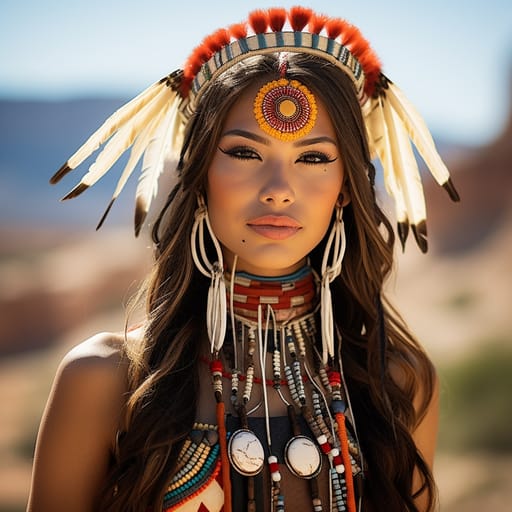
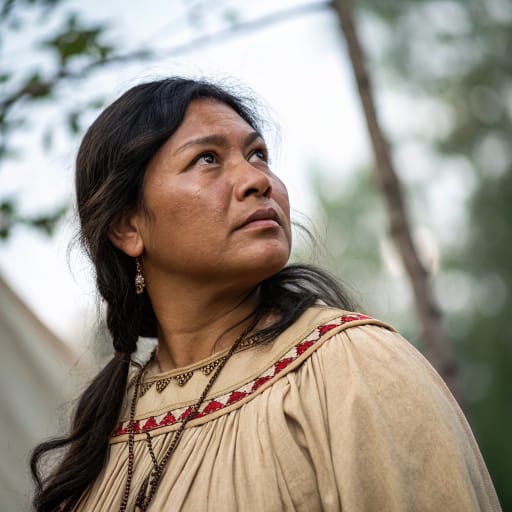
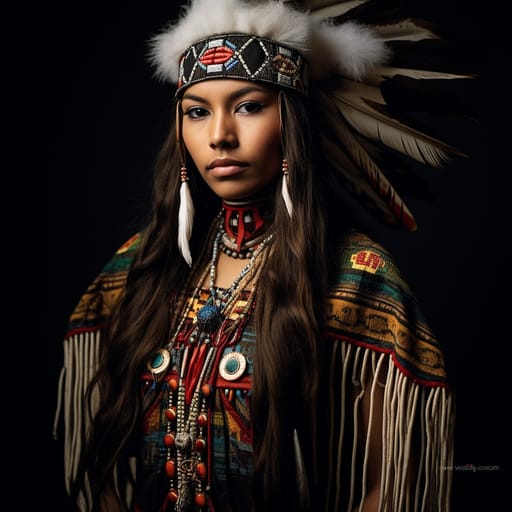
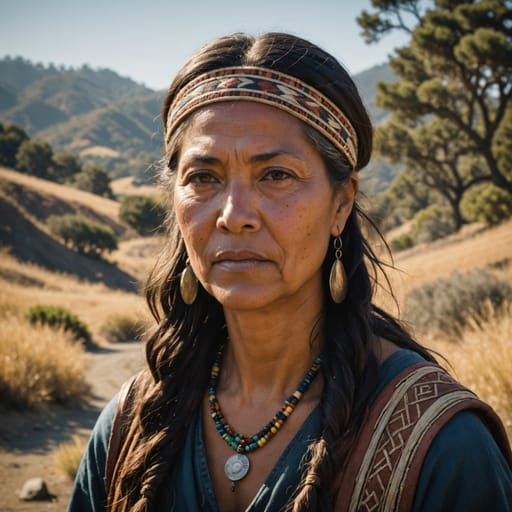
Typical Tanana Athabaskans Phenotypes
Reference for AI generation: hair, eyes, skin, facial structure, build
Tanana Athabaskans Body & Anatomy Reference
Anatomy by feature, Indigenous Northern American / Algonquian-Iroquoian phenotype
Tanana Athabaskans Boobs & Breasts
Tanana Athabaskans boobs follow the Indigenous Northern American / Algonquian-Iroquoian profile: medium cup, moderate projection. Areolar diameter is usually 30-44mm, and the coloring is medium-brown areolar pigmentation against the copper-to-medium-brown skin tone. Breast shape tracks body composition (mesomorph, broader frame in northern Indigenous populations, mean adult female BMI 25-28), so Tanana Athabaskans breasts tend to be full and moderate projection. Expect a forward-set shape, not the smaller East Asian bust.
Tanana Athabaskans Ass & Hips
Tanana Athabaskans ass and hip morphology presents as medium, moderate-to-full projection, distinctly different from the slim East Asian narrow-hip profile. The Tanana Athabaskans pelvic profile shows medium iliac crests, anchored in the Indigenous Northern American / Algonquian-Iroquoian skeletal pattern. Tanana Athabaskans butt shots in adult AI imagery should render the medium, moderate-to-full projection silhouette with the overall build (mesomorph, broader frame in northern Indigenous populations) and the fat distribution typical of the Indigenous Northern American / Algonquian-Iroquoian phenotype.
Tanana Athabaskans Vagina & Pussy
Tanana Athabaskans pussy anatomy typically shows medium-brown labial pigmentation. Pubic hair is usually straight medium-coarse texture. In AI-generated Tanana Athabaskans nudes, labial color should blend into the copper to medium-brown skin with a gradual transition, and the hair should keep its straight medium-coarse texture.
Tanana Athabaskans Dicks & Penis
Penis reference for Tanana Athabaskans men: regional mean ~13cm erect, moderate girth. Coloring: medium-brown shaft pigmentation. An accurate Tanana Athabaskans cock in AI imagery matches the surrounding copper to medium-brown skin rather than a generic porn default. Circumcision depends on religion and custom, not ancestry.
Tanana Athabaskans Body, Curves & Build
The Tanana Athabaskans figure is generally mesomorph, broader frame in northern Indigenous populations, with mean adult female BMI 25-28, characteristic of Indigenous Northern American / Algonquian-Iroquoian ancestry. AI image tools tend to flatten regional body types into a few stock shapes; here the Tanana Athabaskans build is kept as its own reference.
Tanana Athabaskans Skin Tone & Hair Texture
Skin: copper to medium-brown (Fitzpatrick III-V). Hair: straight 1A, dark-brown to black, often thick and dense. Both are typical of Indigenous Northern American / Algonquian-Iroquoian ancestry. The most common mistake in AI nudes of Tanana Athabaskans women is a body rendered lighter than the face.
Explore phenotype categories
Structured taxonomy with peer-reviewed scales · 22 anatomical categories
Erotic Poses & Sex Positions
From the pose catalog: 219 named positions with reference skeletons
Frequently asked questions about Tanana Athabaskans people
Where is the Tanana Athabaskans homeland?
The Tanana Athabaskans homeland is Tanana River basin in east-central Interior Alaska, United States, with Upper Tanana communities extending into western Yukon, Canada in North America.
What language do Tanana Athabaskans people speak?
Tanana Athabaskans people primarily speak Lower Tanana, Tanacross and Upper Tanana (Athabaskan, Na-Dene); English now predominant.
What religion do Tanana Athabaskans people practice?
The predominant religion among Tanana Athabaskans people is Christianity, largely Episcopal, practiced alongside the potlatch and other traditional observances.






Make your own Tanana Athabaskans images
Five a day, free, no credits to buy. The studio starts from this group's phenotype data, so you can set body type, pose and style and keep the traits accurate.
Start with Tanana Athabaskans