No portrait yet
Tsetsaut Erotic
Portland Canal area and the surrounding coastal mountains on the border of northwestern British Columbia, Canada, and southeastern Alaska, United States
Tsetsaut, now extinct (Northern Athabaskan, Na-Dene)
Traditional Indigenous beliefs, poorly documented; survivors lived within Nisga'a society
Northern Athabaskan peoples; survivors absorbed into the Nisga'a
About Tsetsaut People
The Tsetsaut were a small Athabaskan-speaking people who held the steep country around Portland Canal, on what is now the border between northwestern British Columbia and southeastern Alaska. By the late nineteenth century war, disease and falling numbers had ended them as an independent people, and their last survivors were absorbed into neighboring Nisga'a communities. Tsetsaut was not their own name for themselves. It comes from the Nisga'a and means roughly "people of the interior," and it shows how the coast saw them: people from inland, from the mountains, living at the edge of a larger coastal world.
That edge defined them. Their language belonged to the Northern Athabaskan branch of the Na-Dene family, the group of languages that runs across interior Alaska and northwestern Canada. That made them relatives, at a long remove, of the Dene peoples far to the north and east, and linguistic strangers to the Tsimshianic-speaking Nisga'a beside them. Linguists still debate exactly which Athabaskan languages it was closest to, mostly because so little of it was ever written down. The land itself was hard: fjords, glaciers, snowfields and narrow river valleys where getting by meant moving often and hunting, not settling in large permanent villages on the salmon rivers below.
By the time outsiders took an interest, the Tsetsaut were nearly gone. Accounts describe heavy losses from fighting with neighboring peoples and from introduced epidemics. The survivors came to live among the Nisga'a near the mouth of the Nass River. In the 1890s the anthropologist Franz Boas worked with a few of them at Kincolith, now Gingolx, and recorded vocabulary, grammar notes and oral traditions. That small body of material, later published with the linguist Pliny Earle Goddard, is most of what survives in writing. The language fell silent in the first half of the twentieth century.
Today the Tsetsaut live on through descent and memory, not as a community. Their descendants are part of Nisga'a families, and the history of Tsetsaut occupation still comes up when the Nations of the region talk about the Portland Canal country. The field notes are enough to prove that a distinct Athabaskan people once lived in these mountains, but far too thin to rebuild much of how they lived.
Related ethnic groups
Groups that share Tsetsaut's homeland, region, language, or religious tradition. These are likely candidates for comparative phenotype reference.
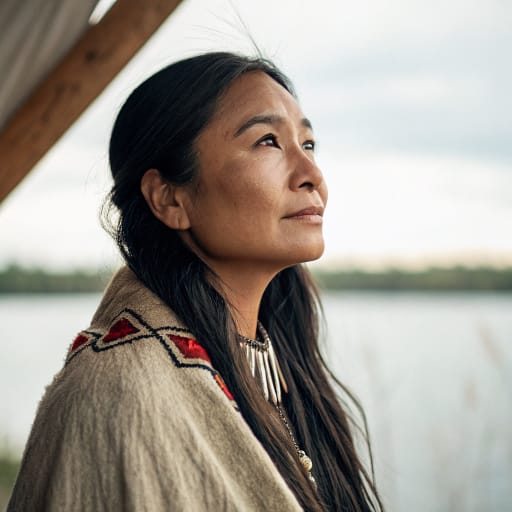
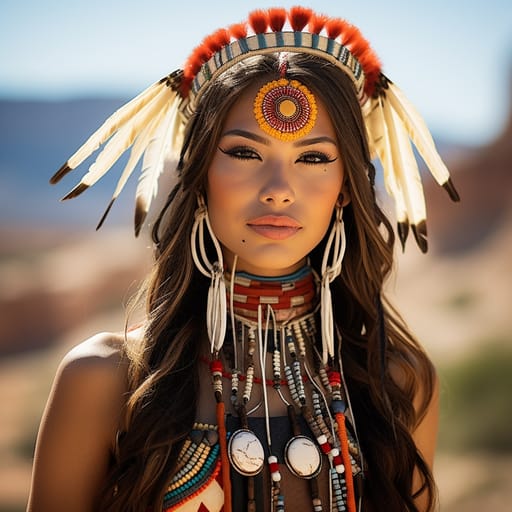
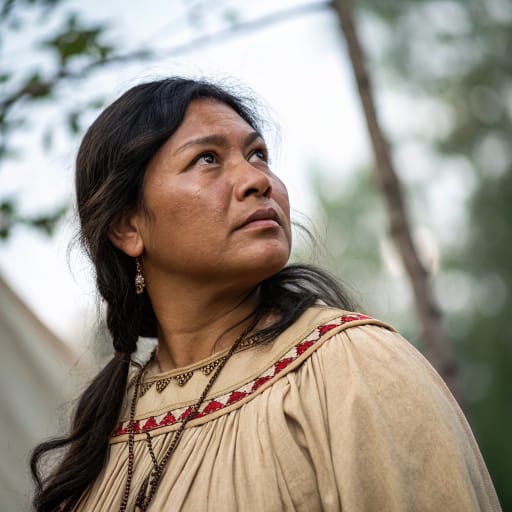
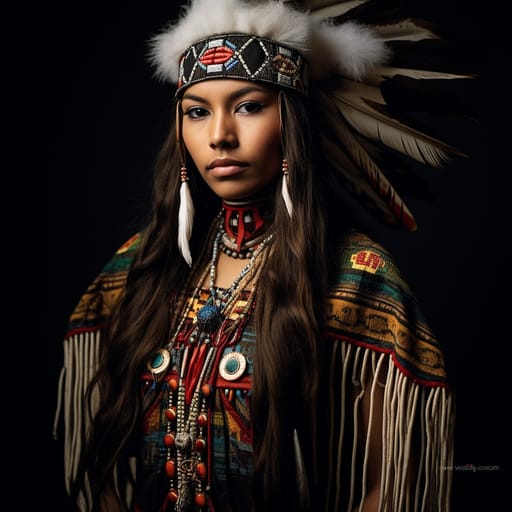

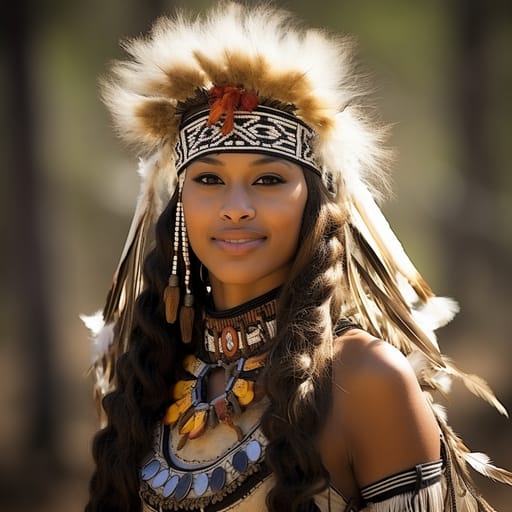
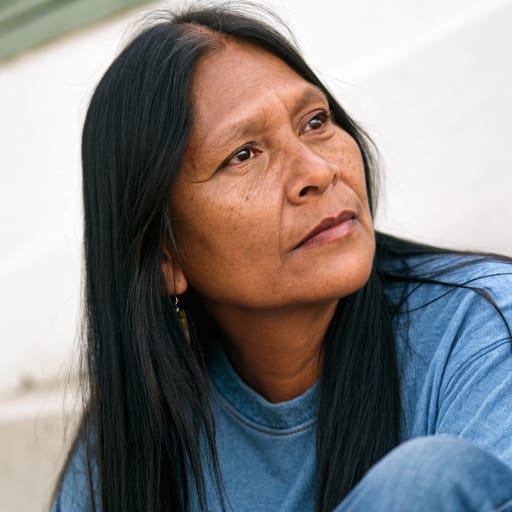
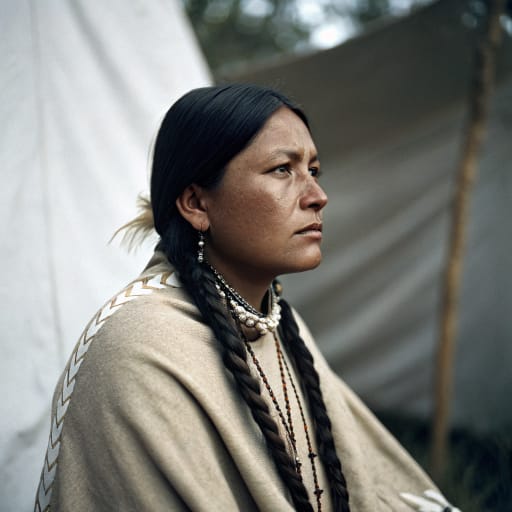
Typical Tsetsaut Phenotypes
Reference for AI generation: hair, eyes, skin, facial structure, build
Tsetsaut Body & Anatomy Reference
Indigenous Northern American / Algonquian-Iroquoian phenotype: anatomy reference for AI nude generation
Tsetsaut Boobs & Breasts
Bust reference for Tsetsaut women: medium cup, moderate projection, which is typical of Indigenous Northern American / Algonquian-Iroquoian ancestry. Areolas measure about 30-44mm across, with medium-brown pigmentation. Body type (mesomorph, broader frame in northern Indigenous populations) shapes the bust as well, so Tsetsaut tits are usually full and moderate projection. In AI imagery, keep the forward-set shape rather than drifting toward the smaller East Asian bust.
Tsetsaut Ass & Hips
The Tsetsaut ass is typically medium, moderate-to-full projection, which sets it apart from the slim East Asian narrow-hip profile. Underneath, the pelvis shows medium iliac crests, part of the Indigenous Northern American / Algonquian-Iroquoian skeletal pattern. For Tsetsaut butt pics and AI renders, match that silhouette and the overall build (mesomorph, broader frame in northern Indigenous populations).
Tsetsaut Vagina & Pussy
Tsetsaut pussy and vulvar anatomy presents medium-brown labial pigmentation, consistent with the Indigenous Northern American / Algonquian-Iroquoian phenotype's pigmentation pattern. Tsetsaut pubic hair is typically straight medium-coarse texture, in the inverted-triangle pattern. For anatomically accurate Tsetsaut pussy renders the labial coloration should match the surrounding copper to medium-brown skin tone with a continuous gradient, and the hair should keep its straight medium-coarse texture.
Tsetsaut Dicks & Penis
Tsetsaut dicks follow the Indigenous Northern American / Algonquian-Iroquoian reference data: regional mean ~13cm erect; moderate girth; medium-brown shaft pigmentation. Shaft color should track the copper to medium-brown skin tone with a smooth change toward the glans, and Tsetsaut pubic hair keeps its straight medium-coarse texture.
Tsetsaut Body, Curves & Build
Tsetsaut body type and overall build presents as mesomorph, broader frame in northern Indigenous populations, with mean adult female BMI 25-28: the characteristic Indigenous Northern American / Algonquian-Iroquoian habitus. Tsetsaut curves and proportions should keep the regional skeletal frame (height, shoulder-to-hip ratio, limb proportions) rather than a generic mesomorph default.
Tsetsaut Skin Tone & Hair Texture
Tsetsaut skin sits in the copper to medium-brown (Fitzpatrick III-V) band. Hair is typically straight 1A, dark-brown to black, often thick and dense, in keeping with the Indigenous Northern American / Algonquian-Iroquoian phenotype. In nude renders the skin should stay one even tone from face to body, and body, pubic and head hair should match.
Explore phenotype categories
Structured taxonomy with peer-reviewed scales · 22 anatomical categories
Erotic Poses & Sex Positions
From the pose catalog: 219 named positions with reference skeletons
Frequently asked questions about Tsetsaut people
Where is the Tsetsaut homeland?
The Tsetsaut homeland is Portland Canal area and the surrounding coastal mountains on the border of northwestern British Columbia, Canada, and southeastern Alaska, United States in North America.
What language do Tsetsaut people speak?
Tsetsaut people primarily speak Tsetsaut, now extinct (Northern Athabaskan, Na-Dene).
What religion do Tsetsaut people practice?
The predominant religion among Tsetsaut people is Traditional Indigenous beliefs, poorly documented; survivors lived within Nisga'a society.






Make your own Tsetsaut images
Five a day, free, no credits to buy. The studio starts from this group's phenotype data, so you can set body type, pose and style and keep the traits accurate.
Start with Tsetsaut