No portrait yet
Sans Arc Erotic
Northern Great Plains between the Missouri River and the Black Hills; today mainly the Cheyenne River Indian Reservation, South Dakota, United States
Lakota (Siouan), alongside English
Lakota ceremonial religion, frequently practiced alongside Episcopal and Roman Catholic Christianity
One of the seven bands of the Lakota, the western division of the Sioux; enrolled today with the Minneconjou, Two Kettles and Sihasapa in the Cheyenne River Sioux Tribe
About Sans Arc People
The Sans Arc are one of the seven bands of the Lakota, and the only one most readers know by a French phrase. Their own name is Itazipco, also written Itazipcola, and it means without bows. Traders on the upper Missouri translated it word for word, and the translation outlived the original in print. Accounts of where the name came from differ, and nobody should pretend otherwise. Their country is the northern Plains between the Missouri River and the Black Hills, along the Grand, Moreau and Cheyenne rivers, in what is now South Dakota. They speak Lakota, the western dialect of the Sioux language and part of the Siouan family, close enough to the Dakota dialects that speakers can follow one another and different enough that everyone notices. Band membership among the Lakota was never administrative. It ran through families, camp circles and the tiospaye, the extended kin group that decided who camped with whom, and it still tracks families more honestly than it tracks enrollment rolls.
Horses arrived in the eighteenth century and turned a people already moving west out of the woodlands into buffalo hunters with reach. The Sans Arc were party to the Fort Laramie treaties of 1851 and 1868, and they were in the camp on the Little Bighorn in 1876, by which point the treaties had already failed. Spotted Eagle led the band's holdouts and was among the last to come in. Afterward most Sans Arc families were assigned to the Cheyenne River agency, where they remain: the Cheyenne River Sioux Tribe is built from four bands, Minneconjou, Sans Arc, Two Kettles and Sihasapa, sharing one government. The federal ban on the Sun Dance in 1883 pushed the ceremony out of sight rather than out of practice; it was kept quietly for decades and was not clearly protected in law until 1978. Episcopal and Catholic missions took hold on the reservation, and plenty of families keep both, a Sunday service and a sweat lodge, without treating that as a contradiction. The hardest modern blow was not a battle. In the 1950s the Oahe Dam flooded the Missouri bottomlands, taking the timber, the shelter, the winter grazing and the best ground on the reservation, and pushing whole communities up onto open prairie. What holds is the language work, the ceremonies, and the winter counts, the painted year by year calendars in which a band remembered itself one image at a time.
Related ethnic groups
Groups that share Sans Arc's homeland, region, language, or religious tradition. These are likely candidates for comparative phenotype reference.
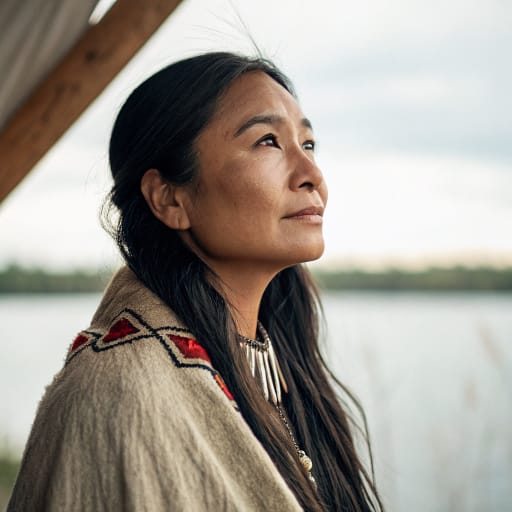
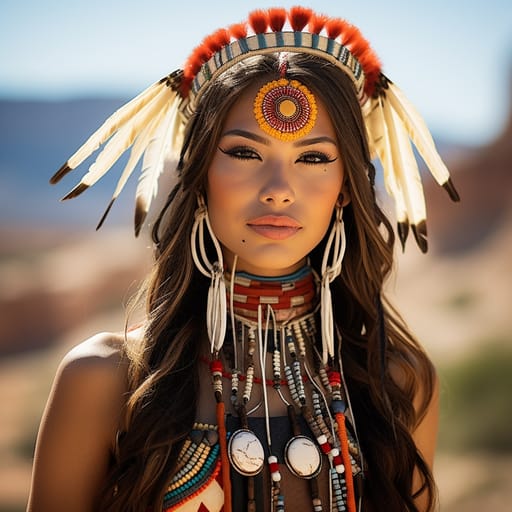
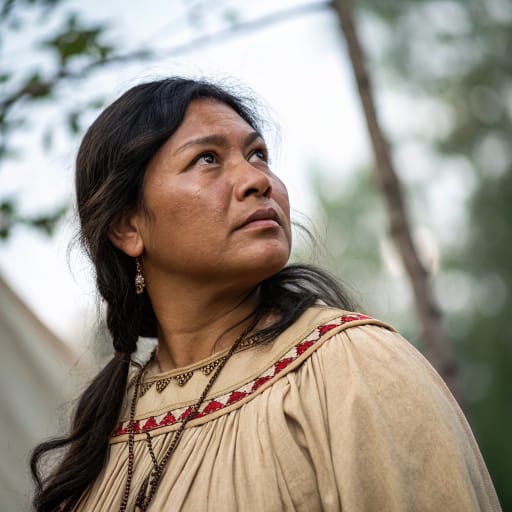
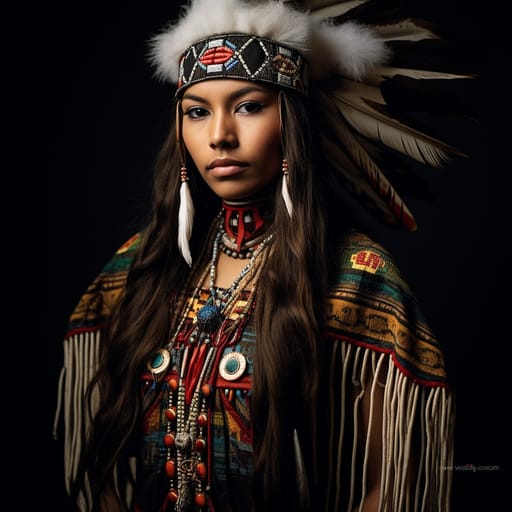
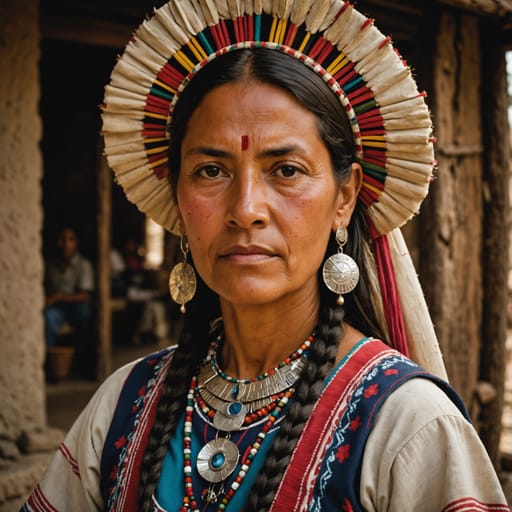
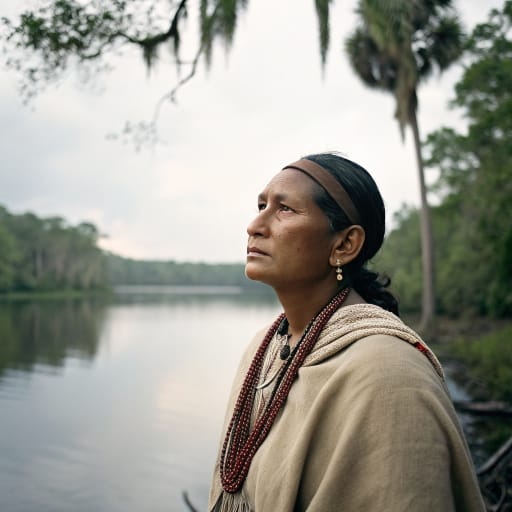
Typical Sans Arc Phenotypes
Reference for AI generation: hair, eyes, skin, facial structure, build
Sans Arc Body & Anatomy Reference
Per-feature anatomical profile for AI nude generation: Indigenous Northern American / Algonquian-Iroquoian phenotype
Sans Arc Boobs & Breasts
The typical Sans Arc bust is medium cup, moderate projection, in line with the wider Indigenous Northern American / Algonquian-Iroquoian pattern. Areolas usually fall in the 30-44mm range, with medium-brown areolar pigmentation against the copper-to-medium-brown skin tone. Compared with the smaller East Asian bust, Sans Arc breasts sit forward and are generally full and moderate projection. A faithful AI render of Sans Arc tits keeps that shape and areola size.
Sans Arc Ass & Hips
Butt shape among Sans Arc women: medium, moderate-to-full projection, over medium iliac crests. This follows Indigenous Northern American / Algonquian-Iroquoian ancestry and looks quite unlike the slim East Asian narrow-hip profile. An accurate Sans Arc ass in adult AI imagery keeps both the silhouette and the overall build (mesomorph, broader frame in northern Indigenous populations) instead of a generic average.
Sans Arc Vagina & Pussy
Vulvar anatomy among Sans Arc women: medium-brown labial pigmentation. Pubic hair tends to be straight medium-coarse texture, in the usual inverted-triangle pattern. Both follow Indigenous Northern American / Algonquian-Iroquoian pigmentation, which is why Sans Arc pussy renders should not fall back on a pale, sparse Western template.
Sans Arc Dicks & Penis
The Sans Arc cock profile, from Indigenous Northern American / Algonquian-Iroquoian anthropometric data: regional mean ~13cm erect; moderate girth; medium-brown shaft pigmentation. Pubic hair has a straight medium-coarse texture and forms the usual inverted-V pattern. Whether Sans Arc men are circumcised follows religious and cultural practice rather than phenotype.
Sans Arc Body, Curves & Build
Build and curves among Sans Arc women follow the Indigenous Northern American / Algonquian-Iroquoian pattern: mesomorph, broader frame in northern Indigenous populations, mean adult female BMI 25-28. Proportions matter as much as skin tone, so Sans Arc figures should keep their regional height and limb ratios.
Sans Arc Skin Tone & Hair Texture
The Sans Arc skin range is copper to medium-brown (Fitzpatrick III-V), and hair tends to be straight 1A, dark-brown to black, often thick and dense. That combination marks the Indigenous Northern American / Algonquian-Iroquoian phenotype, and skin tone is the trait AI generators most often get wrong for Sans Arc women.
Explore phenotype categories
Structured taxonomy with peer-reviewed scales · 22 anatomical categories
Erotic Poses & Sex Positions
From the pose catalog: 219 named positions with reference skeletons
Frequently asked questions about Sans Arc people
Where is the Sans Arc homeland?
The Sans Arc homeland is Northern Great Plains between the Missouri River and the Black Hills; today mainly the Cheyenne River Indian Reservation, South Dakota, United States in North America.
What language do Sans Arc people speak?
Sans Arc people primarily speak Lakota (Siouan), alongside English.
What religion do Sans Arc people practice?
The predominant religion among Sans Arc people is Lakota ceremonial religion, frequently practiced alongside Episcopal and Roman Catholic Christianity.






Make your own Sans Arc images
Five a day, free, no credits to buy. The studio starts from this group's phenotype data, so you can set body type, pose and style and keep the traits accurate.
Start with Sans Arc