No portrait yet
Patuxent Erotic
Lower Patuxent River valley on the western shore of Chesapeake Bay, in present-day Calvert, St. Mary's and neighboring counties of southern Maryland, United States.
An essentially unrecorded Eastern Algonquian dialect, close to Piscataway (Conoy) and Nanticoke (Algic family, Algonquian branch); extinct.
Indigenous Chesapeake Algonquian religion with a creator and lesser spirits tended by priests; some conversion to Catholicism under Jesuit missions in the 1640s.
Chesapeake Algonquians; towns of Pawtuxunt, Acquintanacksuak and Mattapanient; loosely allied with the Piscataway (Conoy) paramount chiefdom; descendants among the Piscataway of Maryland.
About Patuxent People
The Patuxent were an Algonquian-speaking people of the western shore of Chesapeake Bay, living along the river that still carries their name in what is now southern Maryland, from before English contact until the late 1600s, when land loss and forced consolidation folded them into their neighbors. They did not vanish so much as merge: their descendants are counted among the Piscataway communities of Maryland today.
What put them on the early colonial map was a cluster of towns on the lower Patuxent River. John Smith sailed up it in 1608 and recorded three, Pawtuxunt, Acquintanacksuak and Mattapanient, reckoning about two hundred fighting men among them. He noted that they lived closer together than other bay peoples and called them the most civil hosts of his voyage. Each town answered to a werowance, a hereditary chief, and the group sat at the edge of the Piscataway paramount chiefdom on the Potomac, tied to it by language, kinship and alliance, though not clearly subject to it. Their speech belonged to the Eastern Algonquian branch, close to Piscataway and Nanticoke, and almost none of it was written down.
Life ran on the estuary's calendar. Women farmed corn, beans and squash in fields cleared by burning, men hunted deer and fished, and everyone worked the oyster bars and the spring fish runs. Houses were longhouses of bent saplings covered in bark or woven mats, and towns shifted as the soil tired. Religion centered on a creator and on lesser spirits that needed placating, with priests and healers holding real authority alongside the chiefs.
When Maryland's colonists arrived in 1634, the Patuxent chose accommodation. Their werowance Maquacomen gave the Jesuits land at Mattapany for a mission storehouse, and priests lived and preached along the river in the years that followed, winning some converts. Goodwill bought little. Tobacco planters spread up the river within a generation, free-ranging hogs and cattle wrecked unfenced cornfields, and disease thinned the towns. In 1651 the colony set aside a tract near the head of the Wicomico River for the Patuxent and several neighboring groups, a reservation in everything but name. After that the records mention them less and less, and by the century's end the survivors had been absorbed into the Choptico and Piscataway.
The name outlasted the polity. It is attached to a river, a naval air station, a federal wildlife refuge and a state park, which means most Marylanders say Patuxent regularly without knowing it once meant a people. The Piscataway tribes that Maryland formally recognized in 2012 carry that ancestry forward.
Related ethnic groups
Groups that share Patuxent's homeland, region, language, or religious tradition. These are likely candidates for comparative phenotype reference.
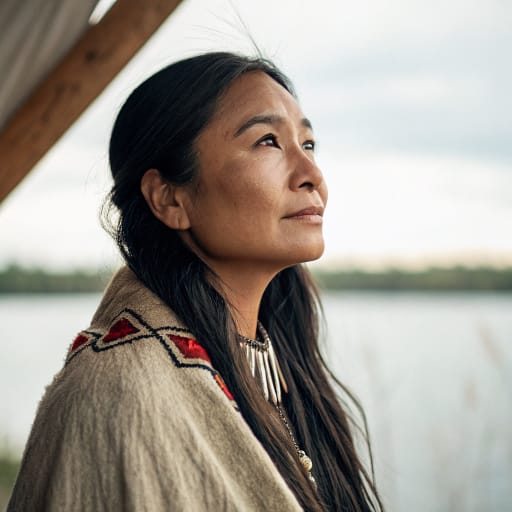
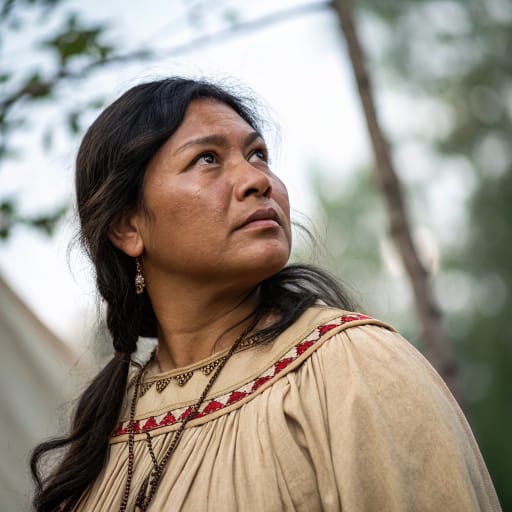
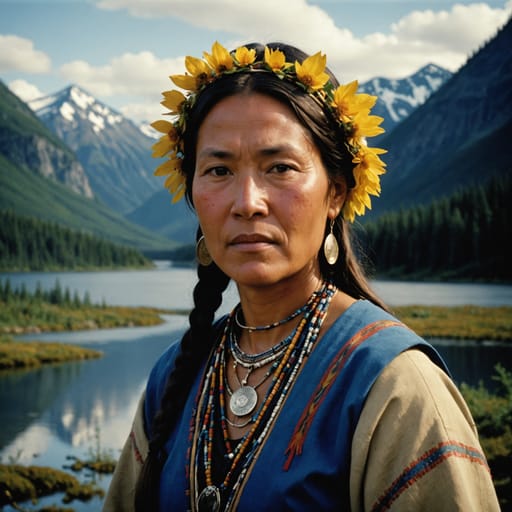
Typical Patuxent Phenotypes
Reference for AI generation: hair, eyes, skin, facial structure, build
Patuxent Body & Anatomy Reference
Per-feature anatomical profile for AI nude generation: Indigenous Northern American / Algonquian-Iroquoian phenotype
Patuxent Boobs & Breasts
Bust reference for Patuxent women: medium cup, moderate projection, which is typical of Indigenous Northern American / Algonquian-Iroquoian ancestry. Areolas measure about 30-44mm across, with medium-brown pigmentation. Body type (mesomorph, broader frame in northern Indigenous populations) shapes the bust as well, so Patuxent tits are usually full and moderate projection. In AI imagery, keep the forward-set shape rather than drifting toward the smaller East Asian bust.
Patuxent Ass & Hips
The Patuxent ass is typically medium, moderate-to-full projection, which sets it apart from the slim East Asian narrow-hip profile. Underneath, the pelvis shows medium iliac crests, part of the Indigenous Northern American / Algonquian-Iroquoian skeletal pattern. For Patuxent butt pics and AI renders, match that silhouette and the overall build (mesomorph, broader frame in northern Indigenous populations).
Patuxent Vagina & Pussy
Patuxent pussy and vulvar anatomy presents medium-brown labial pigmentation, consistent with the Indigenous Northern American / Algonquian-Iroquoian phenotype's pigmentation pattern. Patuxent pubic hair is typically straight medium-coarse texture, in the inverted-triangle pattern. For anatomically accurate Patuxent pussy renders the labial coloration should match the surrounding copper to medium-brown skin tone with a continuous gradient, and the hair should keep its straight medium-coarse texture.
Patuxent Dicks & Penis
Patuxent dicks follow the Indigenous Northern American / Algonquian-Iroquoian reference data: regional mean ~13cm erect; moderate girth; medium-brown shaft pigmentation. Shaft color should track the copper to medium-brown skin tone with a smooth change toward the glans, and Patuxent pubic hair keeps its straight medium-coarse texture.
Patuxent Body, Curves & Build
Patuxent body type and overall build presents as mesomorph, broader frame in northern Indigenous populations, with mean adult female BMI 25-28: the characteristic Indigenous Northern American / Algonquian-Iroquoian habitus. Patuxent curves and proportions should keep the regional skeletal frame (height, shoulder-to-hip ratio, limb proportions) rather than a generic mesomorph default.
Patuxent Skin Tone & Hair Texture
Patuxent skin sits in the copper to medium-brown (Fitzpatrick III-V) band. Hair is typically straight 1A, dark-brown to black, often thick and dense, in keeping with the Indigenous Northern American / Algonquian-Iroquoian phenotype. In nude renders the skin should stay one even tone from face to body, and body, pubic and head hair should match.
Explore phenotype categories
Structured taxonomy with peer-reviewed scales · 22 anatomical categories
Erotic Poses & Sex Positions
From the pose catalog: 219 named positions with reference skeletons
Frequently asked questions about Patuxent people
Where is the Patuxent homeland?
The Patuxent homeland is Lower Patuxent River valley on the western shore of Chesapeake Bay, in present-day Calvert, St. Mary's and neighboring counties of southern Maryland, United States. in North America.
What language do Patuxent people speak?
Patuxent people primarily speak An essentially unrecorded Eastern Algonquian dialect, close to Piscataway (Conoy) and Nanticoke (Algic family, Algonquian branch); extinct..
What religion do Patuxent people practice?
The predominant religion among Patuxent people is Indigenous Chesapeake Algonquian religion with a creator and lesser spirits tended by priests; some conversion to Catholicism under Jesuit missions in the 1640s..






Make your own Patuxent images
Five a day, free, no credits to buy. The studio starts from this group's phenotype data, so you can set body type, pose and style and keep the traits accurate.
Start with Patuxent