Help us get this right
Does this portrait look right for Kaska?
Nobody has judged this one yet. You would be the first.
Kaska Erotic
The upper Liard River basin and the Cassiar Mountains, spanning northern British Columbia and southeastern Yukon, Canada. Main communities include Watson Lake, Upper Liard, Ross River, Lower Post, Good Hope Lake and Fireside.
Kaska (Northern Athabaskan, Na-Dene family), a tonal language forming a dialect continuum with Tahltan and Tagish. English is dominant today.
Roman Catholic, by way of the mission era, alongside continuing Dene practice: memorial potlatch obligations, dream knowledge and hunting protocol.
Northern Athabaskan (Dene). Divided into the matrilineal Crow and Wolf moieties, with regional groupings named for watersheds. Present-day nations include Liard First Nation, Ross River Dena Council, Daylu Dena Council and Dease River First Nation.
About Kaska People
The Kaska call themselves Dena, which just means the people, and the oldest answer to who is Kaska is not a map but a question: Crow or Wolf. Descent runs through the mother, everyone belongs to one of two moieties, and the two owe each other work. Your own side does not bury you or feed the guests at your funeral. The opposite side does that, and is paid for it at the memorial potlatch. Their country is the upper Liard River and the streams that feed it, the Dease, the Frances, the Kechika, spilling across what is now the border between northern British Columbia and southeastern Yukon: spruce, pine, muskeg, and the Cassiar Mountains standing behind all of it. This is moose country before it is anything else, and it is genuinely cold, with Watson Lake and Ross River posting some of the lowest winter temperatures in Canada. The language, Kaska, is Northern Athabaskan and tonal, so close to Tahltan and Tagish that linguists often treat the three as dialects of one language. Kaska's own dialects are named for watersheds rather than for towns, which tells you how families were identified before permanent settlement: by the country they used. Fluent speakers now number in the low hundreds and skew elderly, and immersion teaching is among the most serious undertakings the Kaska nations run.
Outside pressure arrived late here and then all at once. Hudson's Bay Company posts pushed up the Liard in the 1820s and 1840s and mostly failed, a couple abandoned after their own traders starved. Prospectors came with the Cassiar gold rush of the 1870s, then left. What stuck was the Alaska Highway, bulldozed through in 1942, which dropped a road, a town, wage work and an epidemic into the middle of the seasonal round inside of a year. The residential school at Lower Post ran from 1951 to 1975. The Daylu Dena Council had the building demolished in 2021. Catholicism arrived with the missions and now sits alongside older obligations, dream knowledge and hunting protocol, rather than having replaced them. Legally, almost nothing here is settled. The Yukon Kaska never signed a final agreement under the territory's umbrella treaty process, and Ross River Dena Council won a court ruling that the territorial government must consult before mineral claims are staked in their territory. They also live beside the Faro mine, among the largest abandoned mine cleanups in Canada. On the British Columbia side the Kaska Dena have proposed Dene K'eh Kusan, an Indigenous protected and conserved area covering a large block of their homeland, on the straightforward argument that nobody else has been there longer.
Related ethnic groups
Groups that share Kaska's homeland, region, language, or religious tradition. These are likely candidates for comparative phenotype reference.
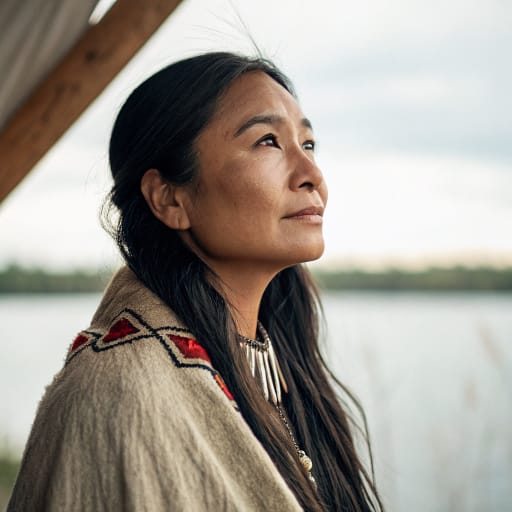
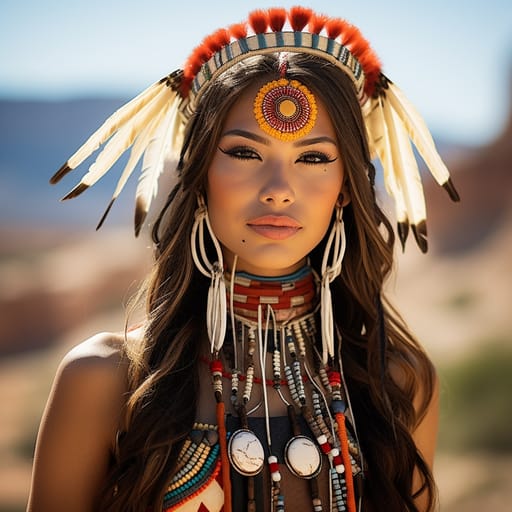
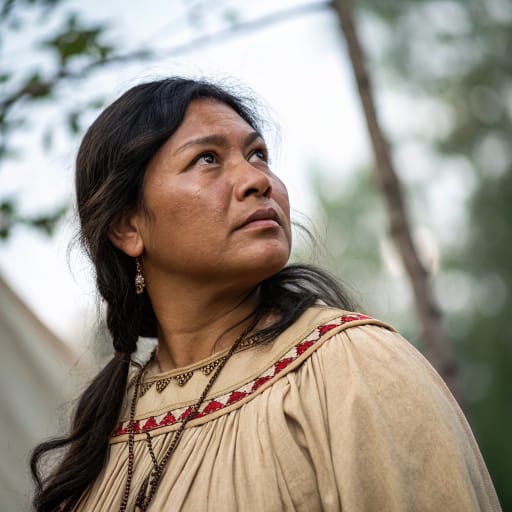
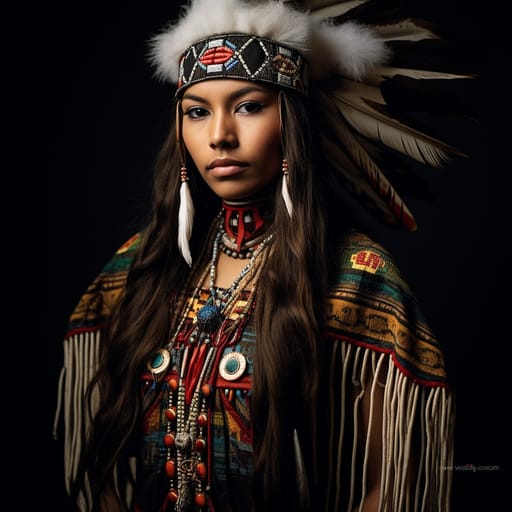
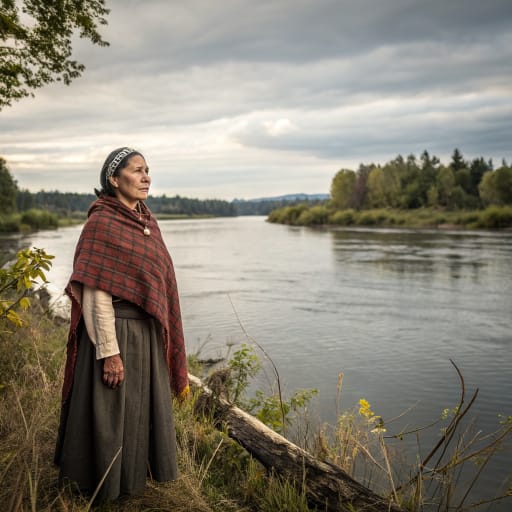
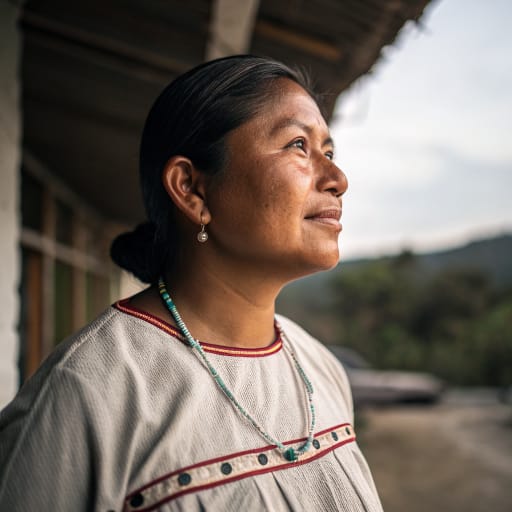
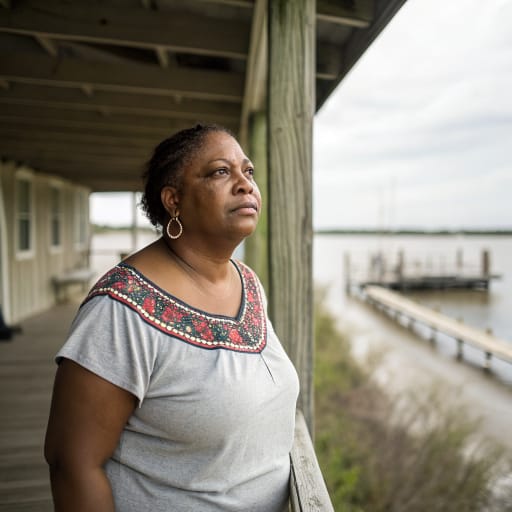
Typical Kaska Phenotypes
Reference for AI generation: hair, eyes, skin, facial structure, build
Kaska Body & Anatomy Reference
Indigenous Northern American / Algonquian-Iroquoian phenotype: anatomy reference for AI nude generation
Kaska Boobs & Breasts
The typical Kaska bust is medium cup, moderate projection, in line with the wider Indigenous Northern American / Algonquian-Iroquoian pattern. Areolas usually fall in the 30-44mm range, with medium-brown areolar pigmentation against the copper-to-medium-brown skin tone. Compared with the smaller East Asian bust, Kaska breasts sit forward and are generally full and moderate projection. A faithful AI render of Kaska tits keeps that shape and areola size.
Kaska Ass & Hips
Butt shape among Kaska women: medium, moderate-to-full projection, over medium iliac crests. This follows Indigenous Northern American / Algonquian-Iroquoian ancestry and looks quite unlike the slim East Asian narrow-hip profile. An accurate Kaska ass in adult AI imagery keeps both the silhouette and the overall build (mesomorph, broader frame in northern Indigenous populations) instead of a generic average.
Kaska Vagina & Pussy
Vulvar anatomy among Kaska women: medium-brown labial pigmentation. Pubic hair tends to be straight medium-coarse texture, in the usual inverted-triangle pattern. Both follow Indigenous Northern American / Algonquian-Iroquoian pigmentation, which is why Kaska pussy renders should not fall back on a pale, sparse Western template.
Kaska Dicks & Penis
The Kaska cock profile, from Indigenous Northern American / Algonquian-Iroquoian anthropometric data: regional mean ~13cm erect; moderate girth; medium-brown shaft pigmentation. Pubic hair has a straight medium-coarse texture and forms the usual inverted-V pattern. Whether Kaska men are circumcised follows religious and cultural practice rather than phenotype.
Kaska Body, Curves & Build
Build and curves among Kaska women follow the Indigenous Northern American / Algonquian-Iroquoian pattern: mesomorph, broader frame in northern Indigenous populations, mean adult female BMI 25-28. Proportions matter as much as skin tone, so Kaska figures should keep their regional height and limb ratios.
Kaska Skin Tone & Hair Texture
The Kaska skin range is copper to medium-brown (Fitzpatrick III-V), and hair tends to be straight 1A, dark-brown to black, often thick and dense. That combination marks the Indigenous Northern American / Algonquian-Iroquoian phenotype, and skin tone is the trait AI generators most often get wrong for Kaska women.
Explore phenotype categories
Structured taxonomy with peer-reviewed scales · 22 anatomical categories
Erotic Poses & Sex Positions
From the pose catalog: 219 named positions with reference skeletons
Frequently asked questions about Kaska people
Where is the Kaska homeland?
The Kaska homeland is The upper Liard River basin and the Cassiar Mountains, spanning northern British Columbia and southeastern Yukon, Canada. Main communities include Watson Lake, Upper Liard, Ross River, Lower Post, Good Hope Lake and Fireside. in North America.
What language do Kaska people speak?
Kaska people primarily speak Kaska (Northern Athabaskan, Na-Dene family), a tonal language forming a dialect continuum with Tahltan and Tagish. English is dominant today..
What religion do Kaska people practice?
The predominant religion among Kaska people is Roman Catholic, by way of the mission era, alongside continuing Dene practice: memorial potlatch obligations, dream knowledge and hunting protocol..






Make your own Kaska images
Five a day, free, no credits to buy. The studio starts from this group's phenotype data, so you can set body type, pose and style and keep the traits accurate.
Start with Kaska