Help us get this right
Does this portrait look right for Cathlacomatup?
Nobody has judged this one yet. You would be the first.
Cathlacomatup Erotic
South side of Sauvie Island (Wapato Island) along the Multnomah Channel, near the mouth of the Willamette River, northwestern Oregon, United States.
A Multnomah variety of Upper Chinookan (Chinookan family), no longer spoken.
Indigenous Chinookan religion: guardian spirit powers sought in youth, shamanic healing, and seasonal rites such as the first salmon observance.
One of the Multnomah or Wappato villages of the Portland Basin, alongside the Multnomah proper, Cathlanaquiah, Cathlacumup and Clannahminamun; part of the Upper Chinookan branch of the Chinookan peoples.
About Cathlacomatup People
The Cathlacomatup were a small Chinookan people who lived in the early 1800s along the Multnomah Channel on the south side of Sauvie Island, where the Willamette meets the Columbia in what is now northwestern Oregon. They did not survive as a distinct community past the epidemics of the 1830s. Survivors were absorbed into neighboring villages, and their descendants are most likely found today among the Chinookan families of the Confederated Tribes of Grand Ronde and other Native nations of the lower Columbia.
Nearly everything written about them comes from one source. Lewis and Clark, passing through in 1805 and 1806, listed them among the Wappato Indians, a string of closely related villages in the Portland Basin, and put their number at 170. The name is the explorers' spelling of a Chinookan word. Its opening element, the same one heard in Cathlamet and Cathlapotle, means roughly the people of, so the name pointed to a place, not a nation. That is the honest scale of the thing: a village community, tied by marriage, trade and speech to the Multnomah proper and the other settlements on the island, speaking a variety of Upper Chinookan related to but distinct from the Chinook spoken at the river mouth.
The island explains how they lived. Sauvie Island was long known as Wapato Island, for the starchy tuber that grows in its shallow lakes and sloughs. Women harvested it by wading in up to the chest or neck, working the bulbs loose with their toes and tossing them into a small canoe as they floated up. Wapato was food and it was also trade goods, carried downriver to the coast and upriver toward the Cascades, and it gave these villages a standing out of proportion to their size. Salmon, sturgeon and smelt filled out the year. Houses were long cedar plank buildings shared by related families. As among other Chinookans, freeborn infants had their foreheads shaped on the cradleboard, and the sloped brow marked a person of standing, as opposed to a slave.
The end came fast. Beginning in 1830, a disease the fur traders called fever and ague, most likely malaria, swept the lower Columbia and killed the great majority of the people in the Portland Basin within a few summers. By the middle of that decade visitors found the island's villages empty. The Cathlacomatup do not reappear under their own name in the later record. What remains is a line in an expedition ledger, a channel that still carries the Multnomah name, and the wapato that still grows in the island's shallows.
Related ethnic groups
Groups that share Cathlacomatup's homeland, region, language, or religious tradition. These are likely candidates for comparative phenotype reference.
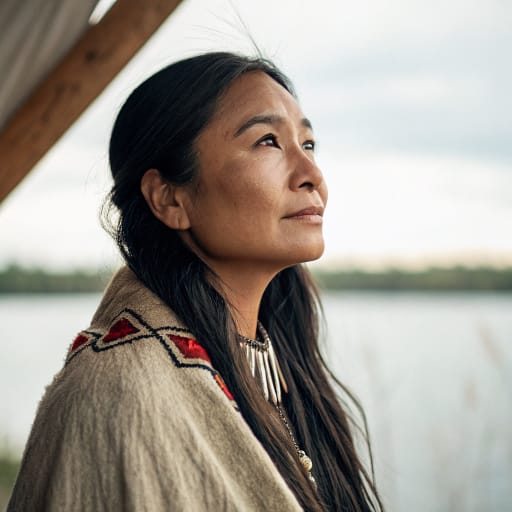
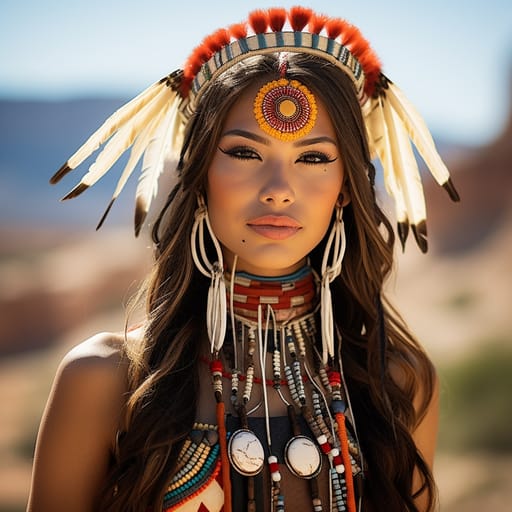
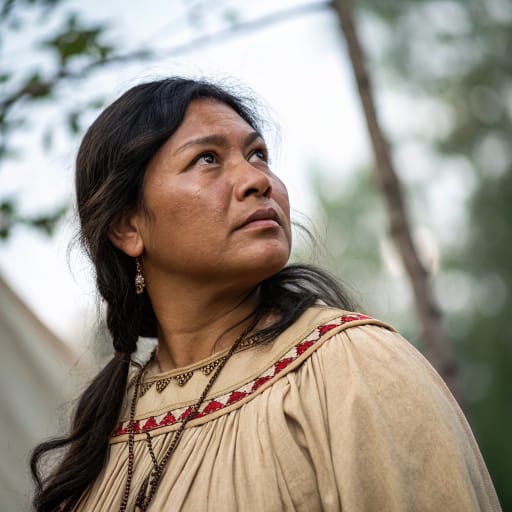
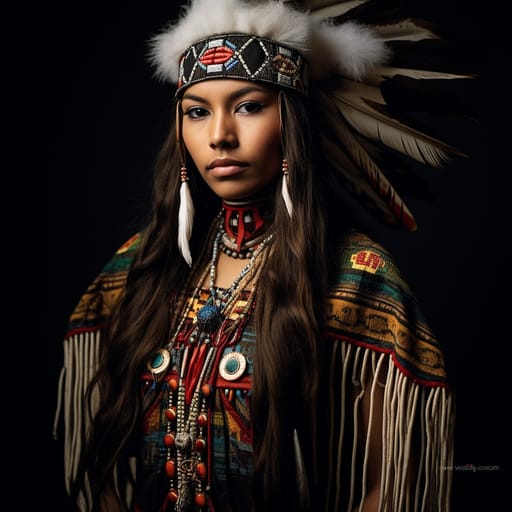
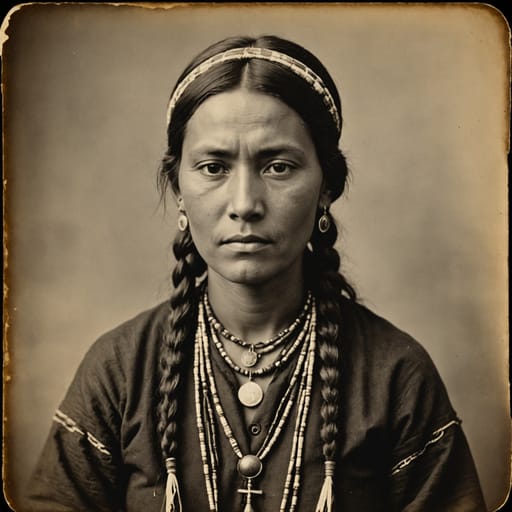
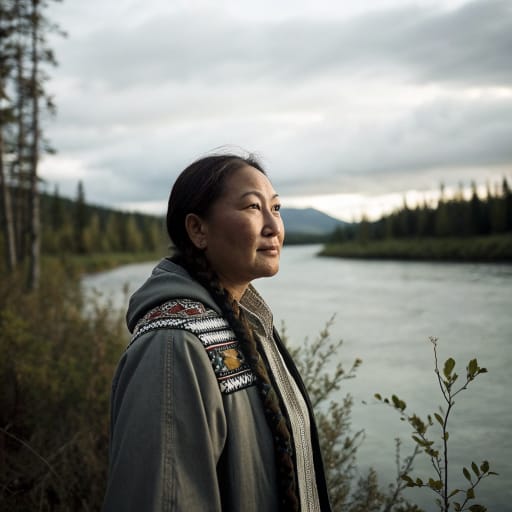
Typical Cathlacomatup Phenotypes
Reference for AI generation: hair, eyes, skin, facial structure, build
Cathlacomatup Body & Anatomy Reference
Indigenous Northern American / Algonquian-Iroquoian phenotype: anatomy reference for AI nude generation
Cathlacomatup Boobs & Breasts
Cathlacomatup tits and boobs run medium cup, moderate projection, the classic Indigenous Northern American / Algonquian-Iroquoian bust profile. Cathlacomatup nipples and areolas show medium-brown areolar pigmentation against the copper-to-medium-brown skin tone, with areolar diameter typically in the 30-44mm range and forward-set positioning rather than the smaller East Asian bust. Cathlacomatup breasts trend full and moderate projection, a function of the mesomorph, broader frame in northern Indigenous populations body habitus and the mean adult female BMI 25-28. For anatomically accurate AI-generated Cathlacomatup nudes the render preserves the medium cup, moderate projection shape, 30-44mm areolas with medium-brown pigmentation, and the torso proportions of the Indigenous Northern American / Algonquian-Iroquoian phenotype.
Cathlacomatup Ass & Hips
Cathlacomatup hips and butt usually read as medium, moderate-to-full projection. The skeletal base is medium iliac crests, the Indigenous Northern American / Algonquian-Iroquoian pattern. Set against the slim East Asian narrow-hip profile, the difference is easy to see, and the hip-to-waist ratio is often what identifies Cathlacomatup women in photos.
Cathlacomatup Vagina & Pussy
Expect medium-brown labial pigmentation on Cathlacomatup women, in keeping with Indigenous Northern American / Algonquian-Iroquoian ancestry. The pubic hair is straight medium-coarse texture. Coloring should run evenly from the copper to medium-brown skin of the thighs to the labia, and Cathlacomatup nude imagery should keep the hair's straight medium-coarse texture.
Cathlacomatup Dicks & Penis
Cathlacomatup dick and penile anatomy in adult AI generation should anchor on the regional reference data: regional mean ~13cm erect, moderate girth, and medium-brown shaft pigmentation. The Cathlacomatup cock profile reflects the Indigenous Northern American / Algonquian-Iroquoian population's anthropometric measurements. The shaft pigmentation should track the surrounding copper to medium-brown skin tone, and the pubic hair should keep its straight medium-coarse texture in the typical inverted-V escutcheon.
Cathlacomatup Body, Curves & Build
Cathlacomatup body type: mesomorph, broader frame in northern Indigenous populations, with mean adult female BMI 25-28. This is the typical Indigenous Northern American / Algonquian-Iroquoian build. Height range, shoulder-to-hip ratio and fat distribution all follow from it, which is what an accurate Cathlacomatup nude body should show.
Cathlacomatup Skin Tone & Hair Texture
Cathlacomatup skin tone falls in the copper to medium-brown (Fitzpatrick III-V) band, the surface signal most often miscalibrated by generic AI nude generators. Cathlacomatup hair texture is typically straight 1A, dark-brown to black, often thick and dense, characteristic of the Indigenous Northern American / Algonquian-Iroquoian phenotype. In Cathlacomatup nude renders the skin should hold that band consistently across the body.
Explore phenotype categories
Structured taxonomy with peer-reviewed scales · 22 anatomical categories
Erotic Poses & Sex Positions
From the pose catalog: 219 named positions with reference skeletons
Frequently asked questions about Cathlacomatup people
Where is the Cathlacomatup homeland?
The Cathlacomatup homeland is South side of Sauvie Island (Wapato Island) along the Multnomah Channel, near the mouth of the Willamette River, northwestern Oregon, United States. in North America.
What language do Cathlacomatup people speak?
Cathlacomatup people primarily speak A Multnomah variety of Upper Chinookan (Chinookan family), no longer spoken..
What religion do Cathlacomatup people practice?
The predominant religion among Cathlacomatup people is Indigenous Chinookan religion: guardian spirit powers sought in youth, shamanic healing, and seasonal rites such as the first salmon observance..






Make your own Cathlacomatup images
Five a day, free, no credits to buy. The studio starts from this group's phenotype data, so you can set body type, pose and style and keep the traits accurate.
Start with Cathlacomatup