Help us get this right
Does this portrait look right for Wahpekute?
Nobody has judged this one yet. You would be the first.
Wahpekute Erotic
Southern Minnesota, historically the Cannon River valley and the upper Des Moines River country; after 1862 removal, mainly northeastern Nebraska, eastern South Dakota and Minnesota (United States)
Dakota, Santee-Sisseton dialect (Siouan); English
Christianity, especially Presbyterian and Episcopal, alongside traditional Dakota religion
One of the four Santee (Eastern Dakota) bands with the Mdewakanton, Sisseton and Wahpeton, part of the Oceti Sakowin (Seven Council Fires); historically grouped with the Mdewakanton as the Lower Sioux
About Wahpekute People
The Wahpekute are one of the four Eastern Dakota bands, historically the smallest, and their name says where they lived: Waȟpékute, the shooters among the leaves. Relatives to the west worked open prairie. The Wahpekute held the wooded river country of southern Minnesota, around the Cannon River and out toward the headwaters of the Des Moines, living in bark houses in summer villages and hide lodges on the winter hunt. With the Mdewakanton, Sisseton and Wahpeton they make up the Santee, or Isáŋyathi. All four belong to the Oceti Sakowin, the Seven Council Fires, which also include the Yankton, Yanktonai and Lakota.
Their language is Dakota, a Siouan language close enough to Lakota that speakers can follow each other. It has nothing in common with the Algonquian speech of the Ojibwe, their longtime rivals to the north. Ojibwe pressure had pushed Dakota bands south out of the Mille Lacs region by the mid-1700s, so by the time American traders arrived the Wahpekute were settled in the south. The trading post that grew into the town of Faribault stood beside one of their villages. Today Dakota is being taught again in community programs in Minnesota and Nebraska.
The nineteenth century hit them hard and fast. In the 1851 Treaty of Mendota, the Wahpekute and Mdewakanton gave up most of southern Minnesota in exchange for a narrow reservation on the Minnesota River, and afterward they were known together as the Lower Sioux. A breakaway Wahpekute band under Inkpaduta, living apart from the treaty villages, carried out the 1857 killings at Spirit Lake in Iowa. Inkpaduta was still fighting nearly twenty years later at the Little Bighorn. After the Dakota War of 1862, the United States expelled the Eastern Dakota from Minnesota. The Wahpekute were held at Crow Creek in Dakota Territory, then resettled with Mdewakanton relatives on the Santee reservation in northeastern Nebraska.
There is no separate Wahpekute tribe today. Their descendants belong to the Santee Sioux Nation in Nebraska, the Flandreau Santee Sioux Tribe in South Dakota and the Dakota communities of Minnesota, and many have Mdewakanton ancestry as well. Presbyterian and Episcopal missions brought Christianity, and many families practice it alongside Dakota ceremony rather than in place of it. Naming ceremonies and memorial feasts are still held, and Dakota kinship terms still come with real obligations. Every December, riders travel hundreds of miles on horseback to Mankato to remember the 38 Dakota men hanged there in 1862.
Related ethnic groups
Groups that share Wahpekute's homeland, region, language, or religious tradition. These are likely candidates for comparative phenotype reference.
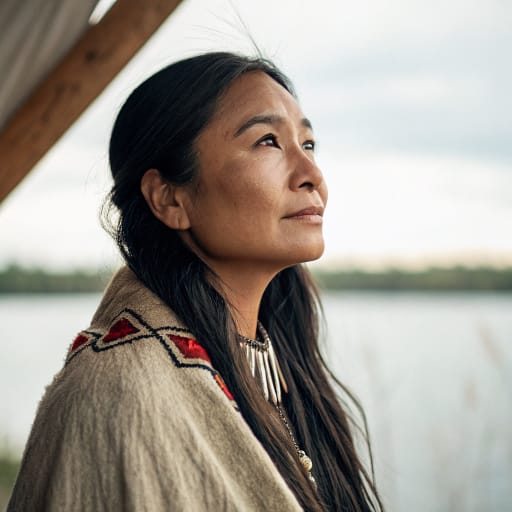
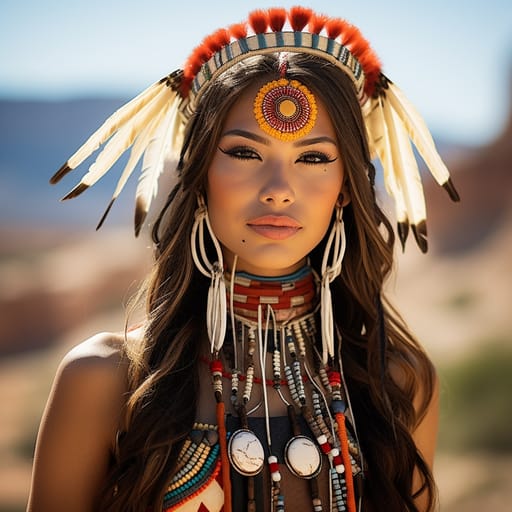
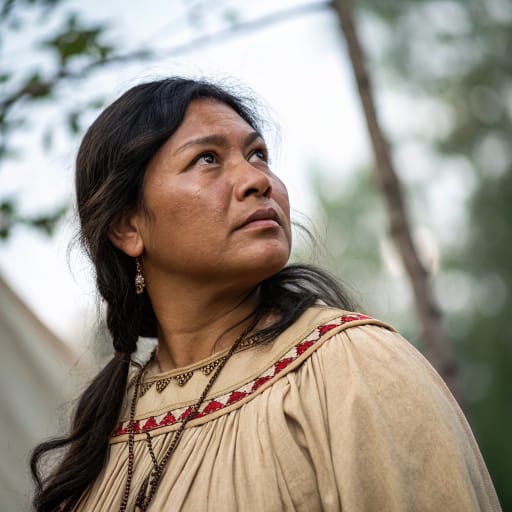
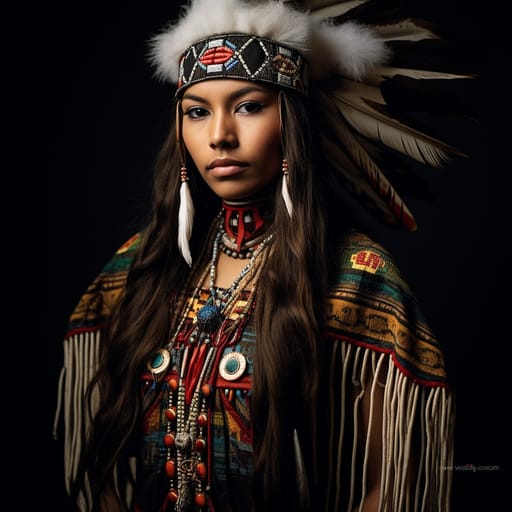
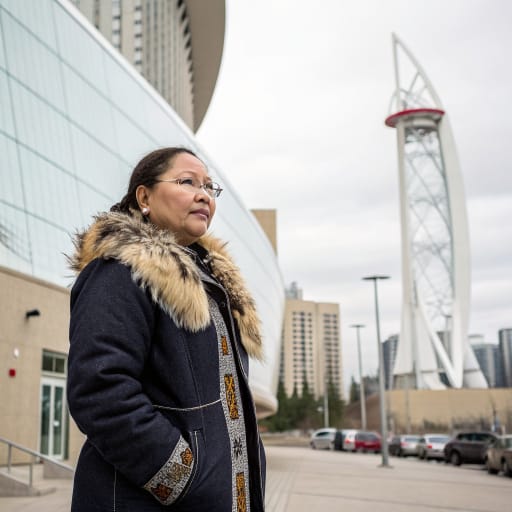
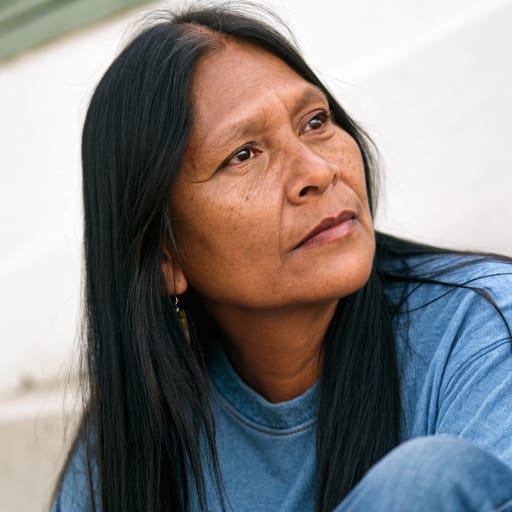
Typical Wahpekute Phenotypes
Reference for AI generation: hair, eyes, skin, facial structure, build
Wahpekute Body & Anatomy Reference
Per-feature anatomical profile for AI nude generation: Indigenous Northern American / Algonquian-Iroquoian phenotype
Wahpekute Boobs & Breasts
Wahpekute tits and boobs run medium cup, moderate projection, the classic Indigenous Northern American / Algonquian-Iroquoian bust profile. Wahpekute nipples and areolas show medium-brown areolar pigmentation against the copper-to-medium-brown skin tone, with areolar diameter typically in the 30-44mm range and forward-set positioning rather than the smaller East Asian bust. Wahpekute breasts trend full and moderate projection, a function of the mesomorph, broader frame in northern Indigenous populations body habitus and the mean adult female BMI 25-28. For anatomically accurate AI-generated Wahpekute nudes the render preserves the medium cup, moderate projection shape, 30-44mm areolas with medium-brown pigmentation, and the torso proportions of the Indigenous Northern American / Algonquian-Iroquoian phenotype.
Wahpekute Ass & Hips
Wahpekute hips and butt usually read as medium, moderate-to-full projection. The skeletal base is medium iliac crests, the Indigenous Northern American / Algonquian-Iroquoian pattern. Set against the slim East Asian narrow-hip profile, the difference is easy to see, and the hip-to-waist ratio is often what identifies Wahpekute women in photos.
Wahpekute Vagina & Pussy
Expect medium-brown labial pigmentation on Wahpekute women, in keeping with Indigenous Northern American / Algonquian-Iroquoian ancestry. The pubic hair is straight medium-coarse texture. Coloring should run evenly from the copper to medium-brown skin of the thighs to the labia, and Wahpekute nude imagery should keep the hair's straight medium-coarse texture.
Wahpekute Dicks & Penis
Wahpekute dick and penile anatomy in adult AI generation should anchor on the regional reference data: regional mean ~13cm erect, moderate girth, and medium-brown shaft pigmentation. The Wahpekute cock profile reflects the Indigenous Northern American / Algonquian-Iroquoian population's anthropometric measurements. The shaft pigmentation should track the surrounding copper to medium-brown skin tone, and the pubic hair should keep its straight medium-coarse texture in the typical inverted-V escutcheon.
Wahpekute Body, Curves & Build
Wahpekute body type: mesomorph, broader frame in northern Indigenous populations, with mean adult female BMI 25-28. This is the typical Indigenous Northern American / Algonquian-Iroquoian build. Height range, shoulder-to-hip ratio and fat distribution all follow from it, which is what an accurate Wahpekute nude body should show.
Wahpekute Skin Tone & Hair Texture
Wahpekute skin tone falls in the copper to medium-brown (Fitzpatrick III-V) band, the surface signal most often miscalibrated by generic AI nude generators. Wahpekute hair texture is typically straight 1A, dark-brown to black, often thick and dense, characteristic of the Indigenous Northern American / Algonquian-Iroquoian phenotype. In Wahpekute nude renders the skin should hold that band consistently across the body.
Explore phenotype categories
Structured taxonomy with peer-reviewed scales · 22 anatomical categories
Erotic Poses & Sex Positions
From the pose catalog: 219 named positions with reference skeletons
Frequently asked questions about Wahpekute people
Where is the Wahpekute homeland?
The Wahpekute homeland is Southern Minnesota, historically the Cannon River valley and the upper Des Moines River country; after 1862 removal, mainly northeastern Nebraska, eastern South Dakota and Minnesota (United States) in North America.
What language do Wahpekute people speak?
Wahpekute people primarily speak Dakota, Santee-Sisseton dialect (Siouan); English.
What religion do Wahpekute people practice?
The predominant religion among Wahpekute people is Christianity, especially Presbyterian and Episcopal, alongside traditional Dakota religion.






Make your own Wahpekute images
Five a day, free, no credits to buy. The studio starts from this group's phenotype data, so you can set body type, pose and style and keep the traits accurate.
Start with Wahpekute