Help us get this right
Does this portrait look right for Franco-Ténois?
Nobody has judged this one yet. You would be the first.
Franco-Ténois Erotic
Northwest Territories, Canada, chiefly Yellowknife, with smaller communities in Hay River, Fort Smith and Inuvik.
French (Romance, Indo-European), in Quebec, Acadian and international varieties; nearly all also speak English.
Historically Roman Catholic, shaped by the Oblate missions; today largely secular, with a mix of faiths among newer immigrants.
Part of the Canadian francophonie outside Quebec, alongside the Franco-Yukonnais and Franco-Nunavois; members include Quebecers, Acadians, Franco-Ontarians, Métis descendants and francophone immigrants.
About Franco-Ténois People
The Franco-Ténois are the French speakers of Canada's Northwest Territories, and the name says as much: Ténois is built from T.N.-O., the French initials of the territory. They are a community defined by language rather than descent. A little over a thousand residents claim French as their mother tongue, about three percent of the territory, and several times that number can hold a conversation in it. Most live in Yellowknife, with smaller clusters in Hay River, Fort Smith and Inuvik.
French arrived in the North before English had much of a foothold. French Canadian and Métis voyageurs paddled the fur brigades of the North West Company, and Laurent Leroux set up the post that became Fort Resolution on Great Slave Lake in 1786. In the nineteenth century the Oblate missionaries and the Grey Nuns followed, building missions and schools along the Mackenzie. Métis families like the Beaulieus carried French into Dene country through marriage and trade, and the map still holds the evidence in names such as Fort Providence and Fort Liard. French even had official standing in the old North-West Territories from 1877 until the territorial assembly stripped it in 1892.
The modern community is a different thing, and mostly a recent one. It is made up of Quebecers, Acadians, Franco-Ontarians and, increasingly, immigrants from francophone Africa and Europe who came north for government, mining or teaching jobs. Many stay a few years and leave, so the community is constantly re-recruiting itself, and its institutions do the work that kinship does elsewhere. The Fédération franco-ténoise, founded in 1978, is the political voice. The newspaper L'Aquilon has been publishing since 1986, Radio Taïga broadcasts from Yellowknife, and two French-first schools, École Allain St-Cyr in Yellowknife and École Boréale in Hay River, run under their own francophone school board.
Much of that was won in court. The territory's Official Languages Act of 1984 put French alongside English, and later nine Indigenous languages, but services lagged badly enough that the federation sued the government and won in 2006. Fights over school space and admissions have gone as far as the Supreme Court of Canada. The Catholicism of the mission era has thinned into the general secularism of urban Canada. What holds people together now is the practical business of living in French north of the sixtieth parallel: a school, a newspaper, a radio signal, and a flag from 1992 that sets a fleur-de-lis beside a snowflake and a polar bear.
Related ethnic groups
Groups that share Franco-Ténois's homeland, region, language, or religious tradition. These are likely candidates for comparative phenotype reference.
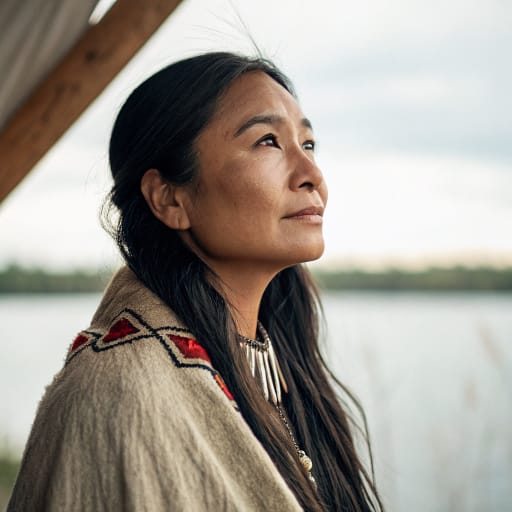
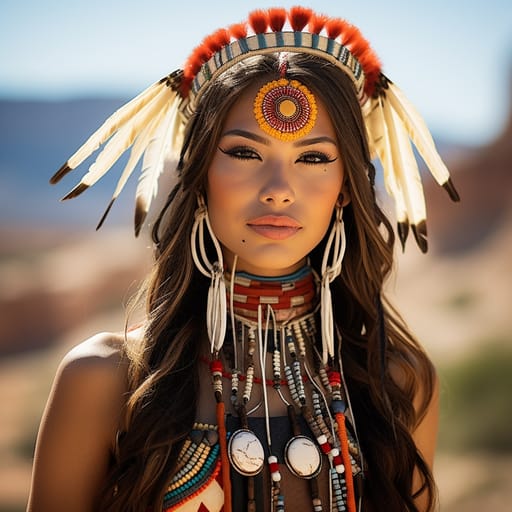
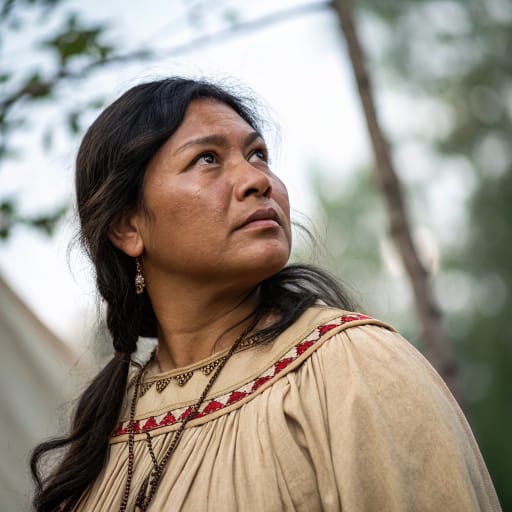
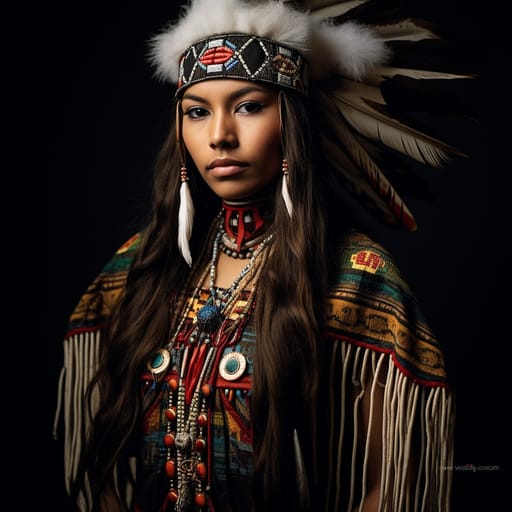
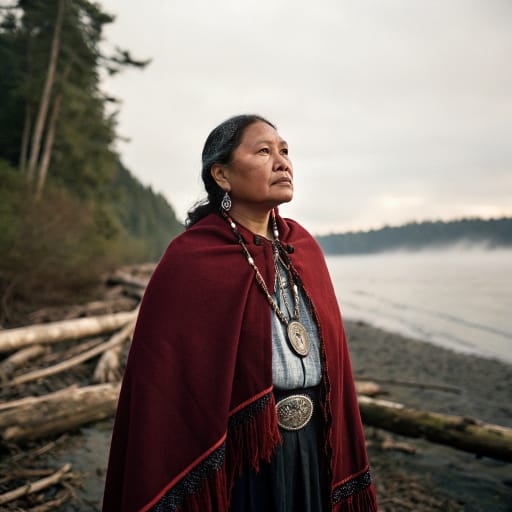
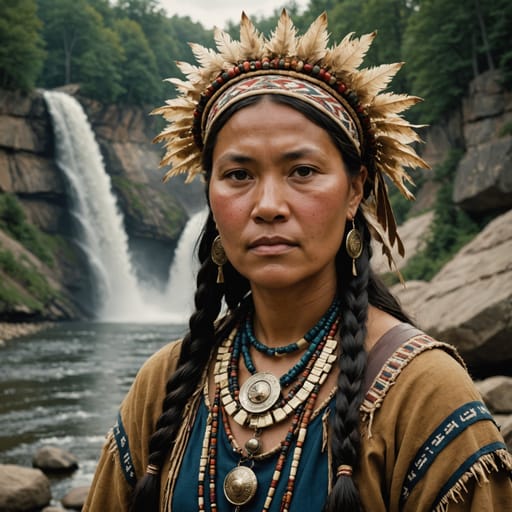
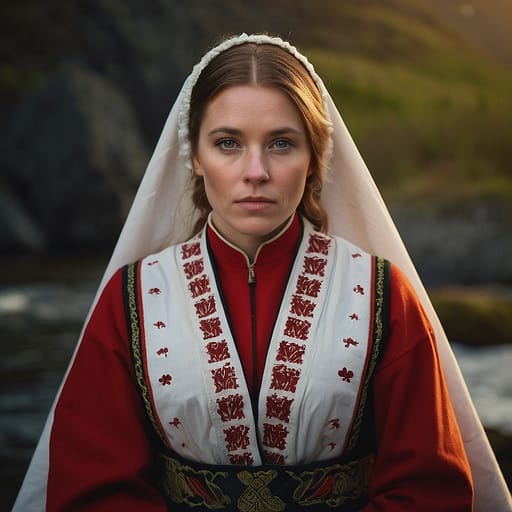
Typical Franco-Ténois Phenotypes
Reference for AI generation: hair, eyes, skin, facial structure, build
Franco-Ténois Body & Anatomy Reference
Anatomy by feature, Indigenous Northern American / Algonquian-Iroquoian phenotype
Franco-Ténois Boobs & Breasts
Franco-Ténois tits and boobs run medium cup, moderate projection, the classic Indigenous Northern American / Algonquian-Iroquoian bust profile. Franco-Ténois nipples and areolas show medium-brown areolar pigmentation against the copper-to-medium-brown skin tone, with areolar diameter typically in the 30-44mm range and forward-set positioning rather than the smaller East Asian bust. Franco-Ténois breasts trend full and moderate projection, a function of the mesomorph, broader frame in northern Indigenous populations body habitus and the mean adult female BMI 25-28. For anatomically accurate AI-generated Franco-Ténois nudes the render preserves the medium cup, moderate projection shape, 30-44mm areolas with medium-brown pigmentation, and the torso proportions of the Indigenous Northern American / Algonquian-Iroquoian phenotype.
Franco-Ténois Ass & Hips
Franco-Ténois hips and butt usually read as medium, moderate-to-full projection. The skeletal base is medium iliac crests, the Indigenous Northern American / Algonquian-Iroquoian pattern. Set against the slim East Asian narrow-hip profile, the difference is easy to see, and the hip-to-waist ratio is often what identifies Franco-Ténois women in photos.
Franco-Ténois Vagina & Pussy
Expect medium-brown labial pigmentation on Franco-Ténois women, in keeping with Indigenous Northern American / Algonquian-Iroquoian ancestry. The pubic hair is straight medium-coarse texture. Coloring should run evenly from the copper to medium-brown skin of the thighs to the labia, and Franco-Ténois nude imagery should keep the hair's straight medium-coarse texture.
Franco-Ténois Dicks & Penis
Franco-Ténois dick and penile anatomy in adult AI generation should anchor on the regional reference data: regional mean ~13cm erect, moderate girth, and medium-brown shaft pigmentation. The Franco-Ténois cock profile reflects the Indigenous Northern American / Algonquian-Iroquoian population's anthropometric measurements. The shaft pigmentation should track the surrounding copper to medium-brown skin tone, and the pubic hair should keep its straight medium-coarse texture in the typical inverted-V escutcheon.
Franco-Ténois Body, Curves & Build
Franco-Ténois body type: mesomorph, broader frame in northern Indigenous populations, with mean adult female BMI 25-28. This is the typical Indigenous Northern American / Algonquian-Iroquoian build. Height range, shoulder-to-hip ratio and fat distribution all follow from it, which is what an accurate Franco-Ténois nude body should show.
Franco-Ténois Skin Tone & Hair Texture
Franco-Ténois skin tone falls in the copper to medium-brown (Fitzpatrick III-V) band, the surface signal most often miscalibrated by generic AI nude generators. Franco-Ténois hair texture is typically straight 1A, dark-brown to black, often thick and dense, characteristic of the Indigenous Northern American / Algonquian-Iroquoian phenotype. In Franco-Ténois nude renders the skin should hold that band consistently across the body.
Explore phenotype categories
Structured taxonomy with peer-reviewed scales · 22 anatomical categories
Erotic Poses & Sex Positions
From the pose catalog: 219 named positions with reference skeletons
Frequently asked questions about Franco-Ténois people
Where is the Franco-Ténois homeland?
The Franco-Ténois homeland is Northwest Territories, Canada, chiefly Yellowknife, with smaller communities in Hay River, Fort Smith and Inuvik. in North America.
What language do Franco-Ténois people speak?
Franco-Ténois people primarily speak French (Romance, Indo-European), in Quebec, Acadian and international varieties; nearly all also speak English..
What religion do Franco-Ténois people practice?
The predominant religion among Franco-Ténois people is Historically Roman Catholic, shaped by the Oblate missions; today largely secular, with a mix of faiths among newer immigrants..






Make your own Franco-Ténois images
Five a day, free, no credits to buy. The studio starts from this group's phenotype data, so you can set body type, pose and style and keep the traits accurate.
Start with Franco-Ténois