Help us get this right
Does this portrait look right for Chimakum?
Nobody has judged this one yet. You would be the first.
Chimakum Erotic
Quimper Peninsula and nearby shores between Discovery Bay and Hood Canal, northeastern Olympic Peninsula, Washington, United States
Chimakum (Chimakuan), extinct since the first half of the 20th century; its only known relative is Quileute
Traditional Northwest Coast spiritual beliefs, poorly recorded for the Chimakum specifically
Chimakuan-speaking people related to the Quileute; survivors joined the S'Klallam and Skokomish (Twana)
About Chimakum People
The Chimakum were a small Native American people. Until the middle of the nineteenth century they held the northeastern corner of Washington's Olympic Peninsula. Then war, disease and American settlement broke them apart, and the survivors joined the S'Klallam and Skokomish, where their descendants live today. What set them apart was their language more than their numbers. Their neighbors all spoke Salishan languages. The Chimakum language had only one known relative, Quileute, which is spoken far to the west on the Pacific side of the Olympic Mountains. Those two languages make up the whole Chimakuan family, and no other language in the region is closely related to either one.
Chimakum country was the Quimper Peninsula and the shores around it, a stretch of bays, creeks and timber between Discovery Bay and the mouth of Hood Canal. Like their neighbors, they lived on salmon, shellfish and what the sea provided. Those neighbors remembered them as hard fighters who did not give up ground easily. The Quileute tell a story that explains how two related peoples ended up so far apart. Long ago a great flood swept away some of their ancestors and set them down on the other side of the mountains, and those people became the Chimakum. It is oral tradition, not a written record, but it shows that both peoples knew they were connected.
The end came quickly. Epidemics cut the population, and in the late 1840s a raid led by the Suquamish, with Seattle among its leaders, destroyed what fighting strength the Chimakum had left. American settlers founded Port Townsend in their old country in 1851. In 1855 the remaining Chimakum signed the Treaty of Point No Point along with the S'Klallam and Skokomish. In the years that followed, the surviving families married into and settled among those larger neighbors.
The language outlived the people as a group. When Franz Boas recorded words from it around 1890, only a few elderly people still knew it, and it fell silent in the first half of the twentieth century. What survives is a thin set of word lists and grammar notes. Linguists value it as one of only two sources on the Chimakuan family. The name also survives in the landscape: Chimacum Creek and the farming community of Chimacum sit in the middle of the old territory.
Related ethnic groups
Groups that share Chimakum's homeland, region, language, or religious tradition. These are likely candidates for comparative phenotype reference.
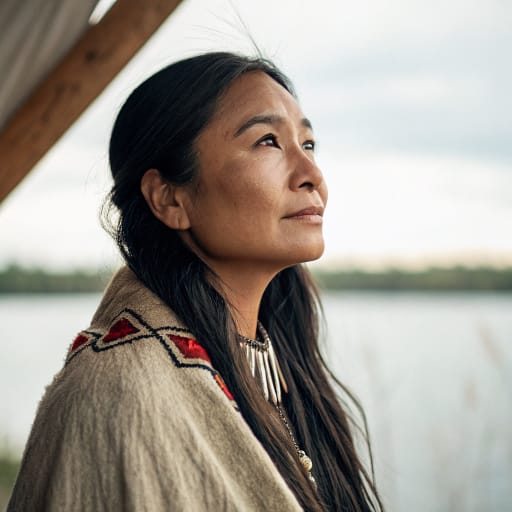
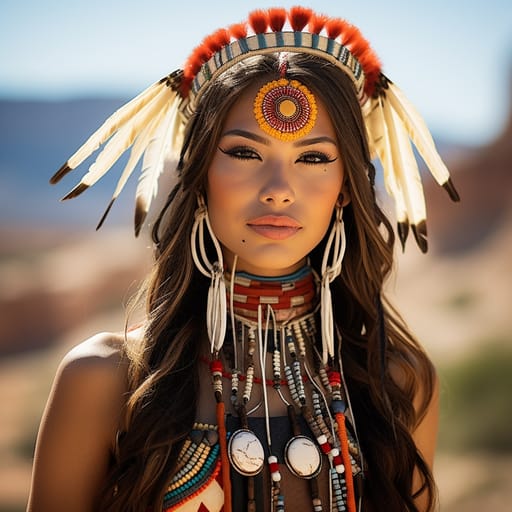
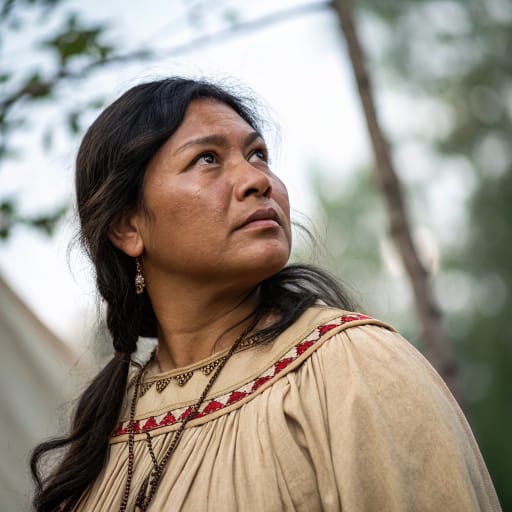
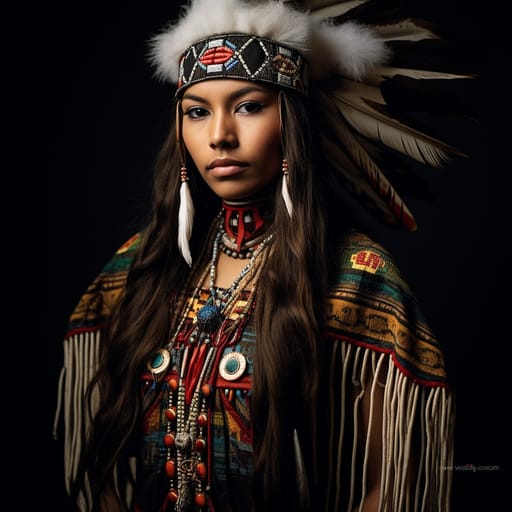
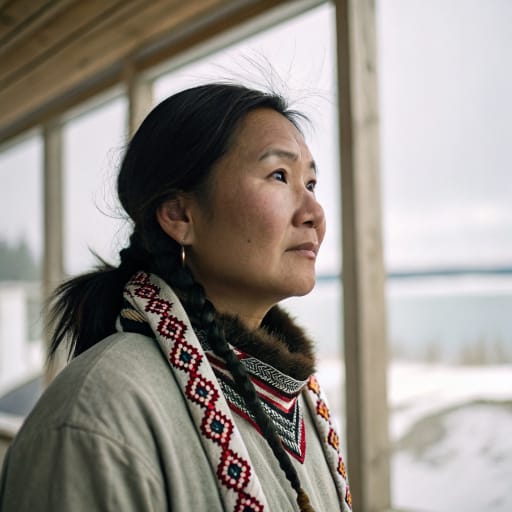
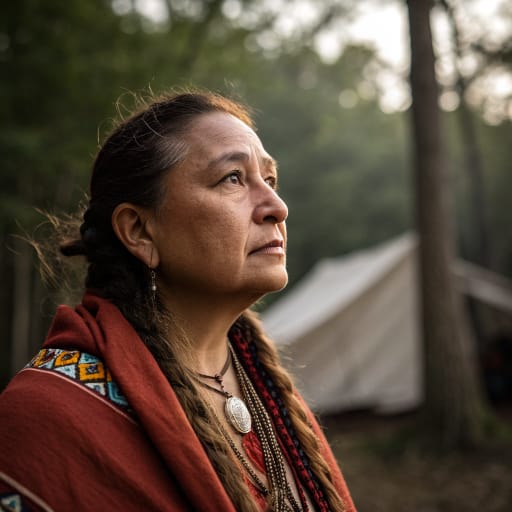

Typical Chimakum Phenotypes
Reference for AI generation: hair, eyes, skin, facial structure, build
Chimakum Body & Anatomy Reference
Indigenous Northern American / Algonquian-Iroquoian phenotype: anatomy reference for AI nude generation
Chimakum Boobs & Breasts
The typical Chimakum bust is medium cup, moderate projection, in line with the wider Indigenous Northern American / Algonquian-Iroquoian pattern. Areolas usually fall in the 30-44mm range, with medium-brown areolar pigmentation against the copper-to-medium-brown skin tone. Compared with the smaller East Asian bust, Chimakum breasts sit forward and are generally full and moderate projection. A faithful AI render of Chimakum tits keeps that shape and areola size.
Chimakum Ass & Hips
Butt shape among Chimakum women: medium, moderate-to-full projection, over medium iliac crests. This follows Indigenous Northern American / Algonquian-Iroquoian ancestry and looks quite unlike the slim East Asian narrow-hip profile. An accurate Chimakum ass in adult AI imagery keeps both the silhouette and the overall build (mesomorph, broader frame in northern Indigenous populations) instead of a generic average.
Chimakum Vagina & Pussy
Vulvar anatomy among Chimakum women: medium-brown labial pigmentation. Pubic hair tends to be straight medium-coarse texture, in the usual inverted-triangle pattern. Both follow Indigenous Northern American / Algonquian-Iroquoian pigmentation, which is why Chimakum pussy renders should not fall back on a pale, sparse Western template.
Chimakum Dicks & Penis
The Chimakum cock profile, from Indigenous Northern American / Algonquian-Iroquoian anthropometric data: regional mean ~13cm erect; moderate girth; medium-brown shaft pigmentation. Pubic hair has a straight medium-coarse texture and forms the usual inverted-V pattern. Whether Chimakum men are circumcised follows religious and cultural practice rather than phenotype.
Chimakum Body, Curves & Build
Build and curves among Chimakum women follow the Indigenous Northern American / Algonquian-Iroquoian pattern: mesomorph, broader frame in northern Indigenous populations, mean adult female BMI 25-28. Proportions matter as much as skin tone, so Chimakum figures should keep their regional height and limb ratios.
Chimakum Skin Tone & Hair Texture
The Chimakum skin range is copper to medium-brown (Fitzpatrick III-V), and hair tends to be straight 1A, dark-brown to black, often thick and dense. That combination marks the Indigenous Northern American / Algonquian-Iroquoian phenotype, and skin tone is the trait AI generators most often get wrong for Chimakum women.
Explore phenotype categories
Structured taxonomy with peer-reviewed scales · 22 anatomical categories
Erotic Poses & Sex Positions
From the pose catalog: 219 named positions with reference skeletons
Frequently asked questions about Chimakum people
Where is the Chimakum homeland?
The Chimakum homeland is Quimper Peninsula and nearby shores between Discovery Bay and Hood Canal, northeastern Olympic Peninsula, Washington, United States in North America.
What language do Chimakum people speak?
Chimakum people primarily speak Chimakum (Chimakuan), extinct since the first half of the 20th century; its only known relative is Quileute.
What religion do Chimakum people practice?
The predominant religion among Chimakum people is Traditional Northwest Coast spiritual beliefs, poorly recorded for the Chimakum specifically.






Make your own Chimakum images
Five a day, free, no credits to buy. The studio starts from this group's phenotype data, so you can set body type, pose and style and keep the traits accurate.
Start with Chimakum