No portrait yet
Lenape Erotic
Historically Lenapehoking, the Delaware River valley and lower Hudson: New Jersey, eastern Pennsylvania, southeastern New York, and northern Delaware, United States. Today mainly in Oklahoma and Wisconsin, United States, and southwestern Ontario, Canada.
Munsee and Unami, the two Delaware languages (Algonquian, Eastern Algonquian branch). Unami has had no first-language speakers since 2002 and Munsee only a few elders, both under active revival. English is the everyday language.
Predominantly Christian (Baptist, Methodist, Moravian and other Protestant denominations), alongside revived traditional ceremony centered on the Creator and the Big House tradition, and some Native American Church participation.
Munsee (northern) and Unami (southern) divisions, sometimes with Unalachtigo counted as a third. Three matrilineal clans: Wolf, Turtle, Turkey. Present-day nations: Delaware Tribe of Indians and Delaware Nation (Oklahoma), Stockbridge-Munsee Community (Wi
About Lenape People
The Lenape are the people whose name for themselves is usually translated as the original people, and whose homeland, Lenapehoking, lies under what is now New York City, Philadelphia, and nearly all of New Jersey. That geography shaped everything: they were the first nation the Dutch, Swedes, and English met on that coast, the sellers in the Manhattan transaction of 1626, and the people William Penn treated with at Shackamaxon. Other Algonquian nations called them grandfather, a mark of seniority in council that still carries weight. Yet most Lenape today live nowhere near the Delaware River. Their nations sit in Bartlesville and Anadarko in Oklahoma, at Bowler in Wisconsin, and along the Thames River in southwestern Ontario, end points of a westward push that began with the fraudulent Walking Purchase of 1737 and ran through the Ohio country, Indiana, Missouri, and Kansas.
Two languages, Munsee in the north and Unami in the south, mark the historic division inside the nation. Both are Eastern Algonquian, close cousins of Mahican, and both are in intensive revival. Unami lost its last first-language speaker in 2002. Munsee holds on with a few elderly speakers at Moraviantown, and both are taught through community classes and an online talking dictionary. Descent runs through the mother, and everyone belongs to one of three clans, Wolf, Turtle, or Turkey, which once governed marriage, hospitality, and seating in council. Traditional religion centered on a Creator and on the Big House, a twelve-night autumn thanksgiving held in a purpose-built longhouse with carved faces on the center post. The last full ceremony took place in Oklahoma in 1924. Mesingw, the masked keeper of the game animals, remains a living figure, and his half-red, half-black face still appears on tribal emblems and regalia. Christianity runs deep among the Lenape, a legacy of the Moravian missions of the eighteenth century, which makes the massacre of ninety-six pacifist converts at Gnadenhutten in 1782 all the more bitter: the militia killed people who had already accepted the church. The Delaware were also the first Native nation to sign a treaty with the United States, at Fort Pitt in 1778, a document that floated a Delaware state with a seat in Congress and then went nowhere. Their modern politics is a quieter version of that argument over standing. The Delaware Tribe of Indians spent decades getting its federal recognition untangled from the Cherokee Nation, while state-recognized communities in New Jersey, such as the Nanticoke Lenni-Lenape and the Ramapough, keep a presence in the old homeland that Washington does not yet formally see.
Related ethnic groups
Groups that share Lenape's homeland, region, language, or religious tradition. These are likely candidates for comparative phenotype reference.
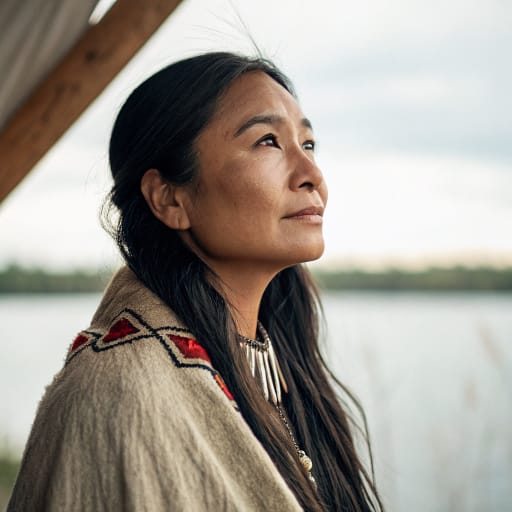
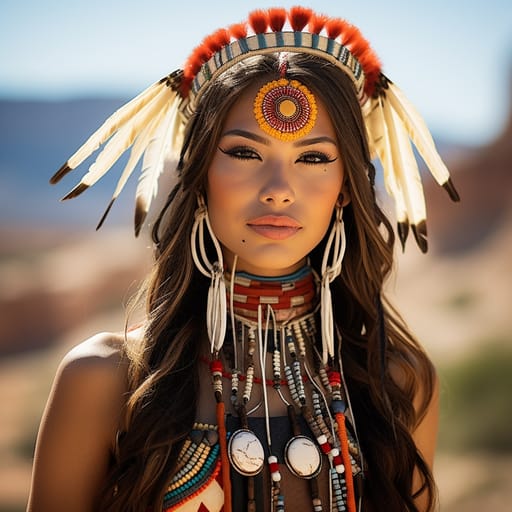
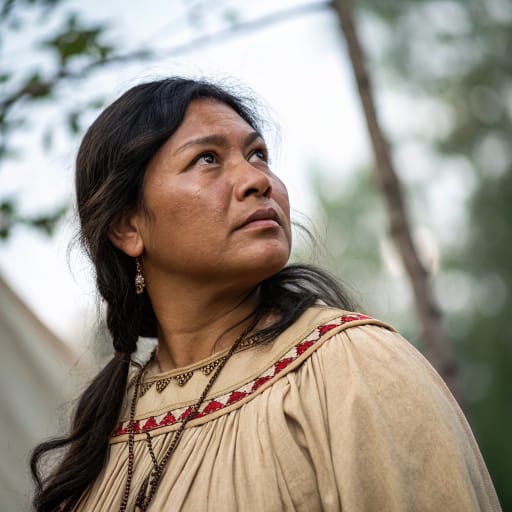
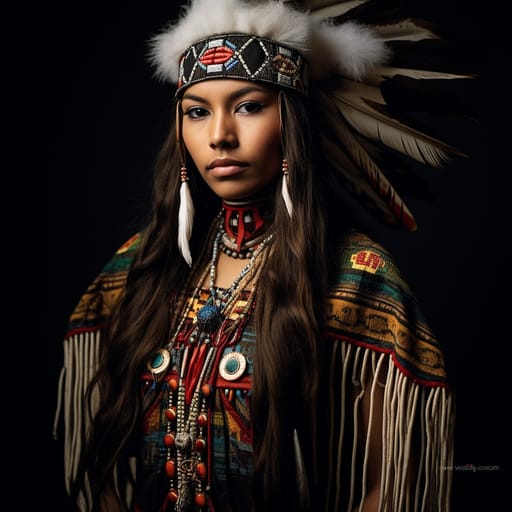
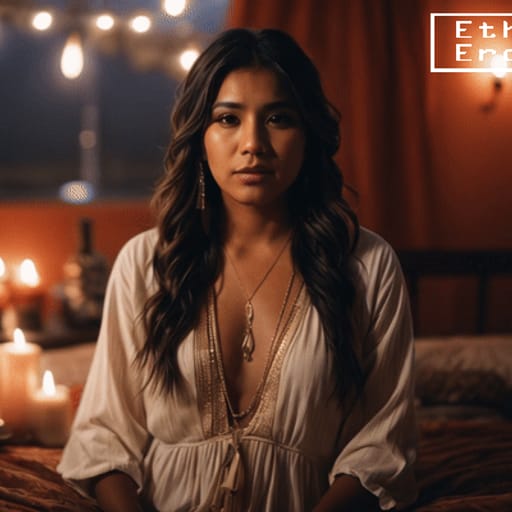
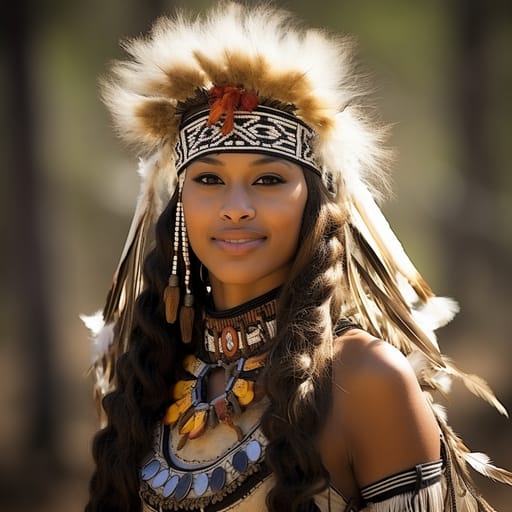
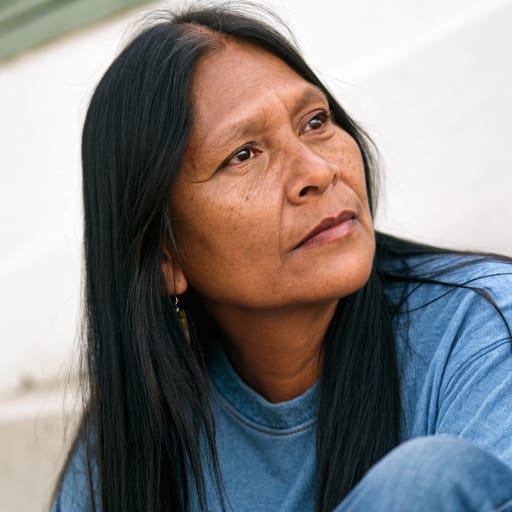
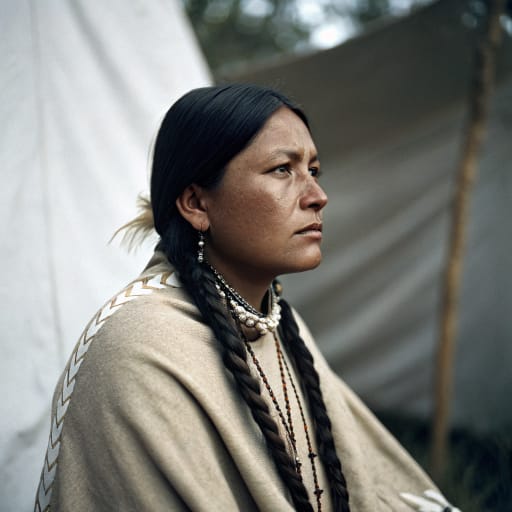
Typical Lenape Phenotypes
Reference for AI generation: hair, eyes, skin, facial structure, build
Lenape Body & Anatomy Reference
Anatomy by feature, Indigenous Northern American / Algonquian-Iroquoian phenotype
Lenape Boobs & Breasts
Bust reference for Lenape women: medium cup, moderate projection, which is typical of Indigenous Northern American / Algonquian-Iroquoian ancestry. Areolas measure about 30-44mm across, with medium-brown pigmentation. Body type (mesomorph, broader frame in northern Indigenous populations) shapes the bust as well, so Lenape tits are usually full and moderate projection. In AI imagery, keep the forward-set shape rather than drifting toward the smaller East Asian bust.
Lenape Ass & Hips
The Lenape ass is typically medium, moderate-to-full projection, which sets it apart from the slim East Asian narrow-hip profile. Underneath, the pelvis shows medium iliac crests, part of the Indigenous Northern American / Algonquian-Iroquoian skeletal pattern. For Lenape butt pics and AI renders, match that silhouette and the overall build (mesomorph, broader frame in northern Indigenous populations).
Lenape Vagina & Pussy
Lenape pussy and vulvar anatomy presents medium-brown labial pigmentation, consistent with the Indigenous Northern American / Algonquian-Iroquoian phenotype's pigmentation pattern. Lenape pubic hair is typically straight medium-coarse texture, in the inverted-triangle pattern. For anatomically accurate Lenape pussy renders the labial coloration should match the surrounding copper to medium-brown skin tone with a continuous gradient, and the hair should keep its straight medium-coarse texture.
Lenape Dicks & Penis
Lenape dicks follow the Indigenous Northern American / Algonquian-Iroquoian reference data: regional mean ~13cm erect; moderate girth; medium-brown shaft pigmentation. Shaft color should track the copper to medium-brown skin tone with a smooth change toward the glans, and Lenape pubic hair keeps its straight medium-coarse texture.
Lenape Body, Curves & Build
Lenape body type and overall build presents as mesomorph, broader frame in northern Indigenous populations, with mean adult female BMI 25-28: the characteristic Indigenous Northern American / Algonquian-Iroquoian habitus. Lenape curves and proportions should keep the regional skeletal frame (height, shoulder-to-hip ratio, limb proportions) rather than a generic mesomorph default.
Lenape Skin Tone & Hair Texture
Lenape skin sits in the copper to medium-brown (Fitzpatrick III-V) band. Hair is typically straight 1A, dark-brown to black, often thick and dense, in keeping with the Indigenous Northern American / Algonquian-Iroquoian phenotype. In nude renders the skin should stay one even tone from face to body, and body, pubic and head hair should match.
Explore phenotype categories
Structured taxonomy with peer-reviewed scales · 22 anatomical categories
Erotic Poses & Sex Positions
From the pose catalog: 219 named positions with reference skeletons
Frequently asked questions about Lenape people
Where is the Lenape homeland?
The Lenape homeland is Historically Lenapehoking, the Delaware River valley and lower Hudson: New Jersey, eastern Pennsylvania, southeastern New York, and northern Delaware, United States. Today mainly in Oklahoma and Wisconsin, United States, and southwestern Ontario, Canada. in North America.
What language do Lenape people speak?
Lenape people primarily speak Munsee and Unami, the two Delaware languages (Algonquian, Eastern Algonquian branch). Unami has had no first-language speakers since 2002 and Munsee only a few elders, both under active revival. English is the everyday language..
What religion do Lenape people practice?
The predominant religion among Lenape people is Predominantly Christian (Baptist, Methodist, Moravian and other Protestant denominations), alongside revived traditional ceremony centered on the Creator and the Big House tradition, and some Native American Church participation..






Make your own Lenape images
Five a day, free, no credits to buy. The studio starts from this group's phenotype data, so you can set body type, pose and style and keep the traits accurate.
Start with Lenape