No portrait yet
Potano Erotic
North-central Florida, United States, in and around present-day Alachua County, Gainesville and Paynes Prairie
Potano dialect of Timucua (language isolate)
Indigenous Timucua religion; Roman Catholicism through Franciscan missions from the early 1600s
One of the Timucua-speaking chiefdoms of Florida, usually grouped with the inland western Timucua; longtime rivals of the neighboring Utina
About Potano People
The Potano were a Timucua-speaking people of north-central Florida. For centuries before Europeans arrived, they held the country around present-day Gainesville and Alachua County. Disease, war and slave raids wore them down through the 1600s and early 1700s, the survivors merged into the mission population at St. Augustine, and no separate Potano community outlasted Spanish Florida. Their land and their politics set them apart from other Timucua speakers. Their country was the lake and prairie belt of the interior: sinkholes, wet savannas and open grassland around what is now Paynes Prairie. They held it as a chiefdom with its own leading chief, its own dialect and its own enemies.
Archaeologists link them to the Alachua tradition, a farming culture known for pottery pressed with corncobs before firing. They grew maize and hunted and gathered around the lakes. They spoke a dialect of Timucua, a language with no proven relatives. The Franciscan friar Francisco Pareja listed Potano by name among the dialects he recorded in the early 1600s. That put them inside a wide language world that ran across northern Florida and into southeastern Georgia. Speaking the same language did not make them allies, though: their neighbors the Utina were long-running rivals.
Europeans reached them early, and the results were bad. Hernando de Soto's army marched through Potano towns in 1539. In the 1560s, French soldiers from Fort Caroline lent their guns to the Utina chief for a raid on the Potano. The raid later appeared in engravings based on Jacques Le Moyne's accounts of the colony. Spanish soldiers from St. Augustine fought the Potano in the late sixteenth century. In the first decade of the 1600s, Franciscan friars founded missions among them, San Francisco de Potano the best known. Epidemics swept through the mission towns over the following decades. By the mid-1600s the Spanish had put a cattle ranch, La Chua, on the prairie, and its name survives in Alachua County. Raids by English Carolina and its Creek allies in the early 1700s destroyed the missions, and survivors fled toward St. Augustine. When Spain gave up Florida in 1763, the last Christian Timucua sailed with the Spanish to Cuba.
What the Potano left behind is mostly in the ground and in the written record. Mission sites, village middens and the prairie itself hold what remains. Later in the eighteenth century, Seminoles moved into the emptied Alachua country and settled land the Potano had farmed for generations.
Related ethnic groups
Groups that share Potano's homeland, region, language, or religious tradition. These are likely candidates for comparative phenotype reference.


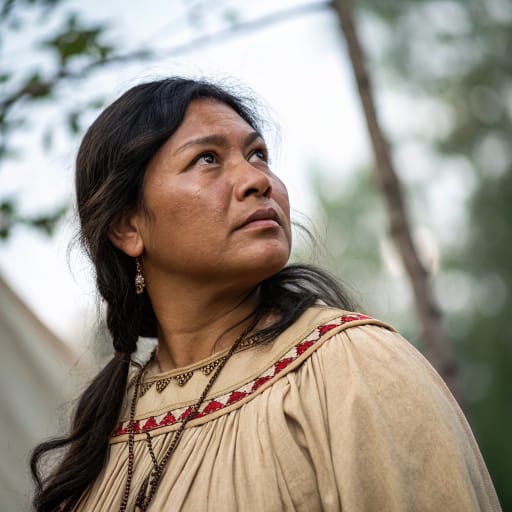
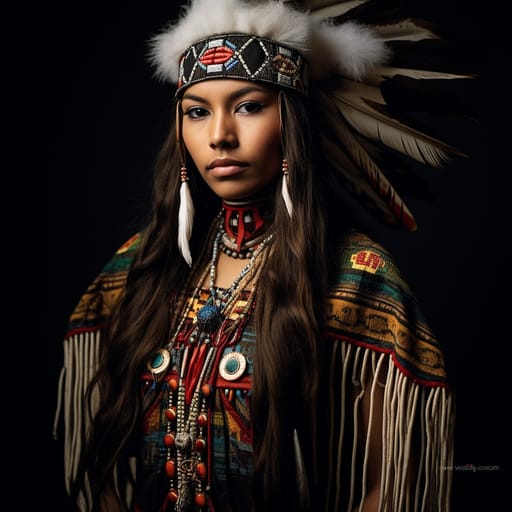




Typical Potano Phenotypes
Reference for AI generation: hair, eyes, skin, facial structure, build
Potano Body & Anatomy Reference
Anatomy by feature, Indigenous Northern American / Algonquian-Iroquoian phenotype
Potano Boobs & Breasts
Bust reference for Potano women: medium cup, moderate projection, which is typical of Indigenous Northern American / Algonquian-Iroquoian ancestry. Areolas measure about 30-44mm across, with medium-brown pigmentation. Body type (mesomorph, broader frame in northern Indigenous populations) shapes the bust as well, so Potano tits are usually full and moderate projection. In AI imagery, keep the forward-set shape rather than drifting toward the smaller East Asian bust.
Potano Ass & Hips
The Potano ass is typically medium, moderate-to-full projection, which sets it apart from the slim East Asian narrow-hip profile. Underneath, the pelvis shows medium iliac crests, part of the Indigenous Northern American / Algonquian-Iroquoian skeletal pattern. For Potano butt pics and AI renders, match that silhouette and the overall build (mesomorph, broader frame in northern Indigenous populations).
Potano Vagina & Pussy
Potano pussy and vulvar anatomy presents medium-brown labial pigmentation, consistent with the Indigenous Northern American / Algonquian-Iroquoian phenotype's pigmentation pattern. Potano pubic hair is typically straight medium-coarse texture, in the inverted-triangle pattern. For anatomically accurate Potano pussy renders the labial coloration should match the surrounding copper to medium-brown skin tone with a continuous gradient, and the hair should keep its straight medium-coarse texture.
Potano Dicks & Penis
Potano dicks follow the Indigenous Northern American / Algonquian-Iroquoian reference data: regional mean ~13cm erect; moderate girth; medium-brown shaft pigmentation. Shaft color should track the copper to medium-brown skin tone with a smooth change toward the glans, and Potano pubic hair keeps its straight medium-coarse texture.
Potano Body, Curves & Build
Potano body type and overall build presents as mesomorph, broader frame in northern Indigenous populations, with mean adult female BMI 25-28: the characteristic Indigenous Northern American / Algonquian-Iroquoian habitus. Potano curves and proportions should keep the regional skeletal frame (height, shoulder-to-hip ratio, limb proportions) rather than a generic mesomorph default.
Potano Skin Tone & Hair Texture
Potano skin sits in the copper to medium-brown (Fitzpatrick III-V) band. Hair is typically straight 1A, dark-brown to black, often thick and dense, in keeping with the Indigenous Northern American / Algonquian-Iroquoian phenotype. In nude renders the skin should stay one even tone from face to body, and body, pubic and head hair should match.
Explore phenotype categories
Structured taxonomy with peer-reviewed scales · 22 anatomical categories
Erotic Poses & Sex Positions
From the pose catalog: 219 named positions with reference skeletons
Frequently asked questions about Potano people
Where is the Potano homeland?
The Potano homeland is North-central Florida, United States, in and around present-day Alachua County, Gainesville and Paynes Prairie in North America.
What language do Potano people speak?
Potano people primarily speak Potano dialect of Timucua (language isolate).
What religion do Potano people practice?
The predominant religion among Potano people is Indigenous Timucua religion; Roman Catholicism through Franciscan missions from the early 1600s.






Make your own Potano images
Five a day, free, no credits to buy. The studio starts from this group's phenotype data, so you can set body type, pose and style and keep the traits accurate.
Start with Potano