No portrait yet
Iñupiat Erotic
Northern and northwestern Alaska, United States: the Seward Peninsula and Bering Strait islands, Kotzebue Sound and the Kobuk and Noatak rivers, the Arctic coast from Point Hope to the Canadian border, and the inland Brooks Range.
Iñupiaq (Eskaleut, Inuit branch), in North Slope, Malimiutun, Qawiaraq, and Bering Strait dialects; English is now dominant in daily use
Predominantly Christian (Presbyterian, Friends, Episcopal, Catholic, Lutheran, Covenant by region), with traditional beliefs about animal spirits surviving in whaling ritual and hunting ethics
Inuit; coastal Taġiuġmiut and inland Nunamiut; regional groupings on the North Slope, in the Northwest Arctic (Malimiut), and around the Bering Strait including King Island and Diomede
About Iñupiat People
The Iñupiat are the Inuit of Alaska's far north, and the name they use for themselves means real people. Their villages line the most exposed coast in the United States, from Norton Sound and the Bering Strait up the Chukchi Sea to Utqiaġvik at the top of the continent, then east along the Beaufort Sea toward Canada. A smaller inland group, the Nunamiut of Anaktuvuk Pass, lives in the Brooks Range and built its life on caribou rather than the sea. What binds coast and interior is language, kinship, and above all the bowhead whale, which coastal crews have hunted from skin boats for well over a thousand years and still hunt under a quota they negotiated for themselves.
Iñupiaq belongs to the Inuit branch of the Eskaleut family, one end of a dialect chain that runs across Arctic Canada to Greenland. An elder from Point Hope can, with effort, follow a speaker from Nunavut. The Yupik languages to the south are relatives but not mutually intelligible. Fluent speakers are now mostly older adults, and school districts on the North Slope and in the Northwest Arctic run immersion classrooms to reverse that. Christianity came with missionaries in the 1890s, parceled out by denomination: the North Slope became largely Presbyterian, the Kotzebue region Quaker, Point Hope Episcopalian. Older beliefs about animals folded into the hunt rather than vanishing. A whale is still understood to give itself to a crew that has behaved properly, and a captain's wife still has ritual duties the day one is landed.
The last century moved fast. Commercial whalers gutted the bowhead population, epidemics emptied villages, and in 1958 the federal government proposed detonating nuclear bombs to carve a harbor near Point Hope, a plan the villagers helped kill. The 1971 land claims settlement created regional corporations with real money, and the North Slope Borough, formed in 1972, taxed the Prudhoe Bay oil fields to build schools, clinics, and running water where none existed. When the International Whaling Commission moved to ban bowhead hunting in 1977, the whaling captains organized, went to the table, and won the subsistence quota that still governs the hunt. Nalukataq, the June festival where the season's whale is shared and people are tossed skyward from a hide blanket, remains the fixed point of the year. Kivgiq, the Messenger Feast, was revived in 1988 after decades of silence. Women's chin tattoos, three vertical lines called tavluġun, are being worn again by a generation that grew up seeing them only in old photographs. Meanwhile Kivalina and Shishmaref lose ground to the sea with each autumn storm, and relocation is no longer hypothetical.
Related ethnic groups
Groups that share Iñupiat's homeland, region, language, or religious tradition. These are likely candidates for comparative phenotype reference.
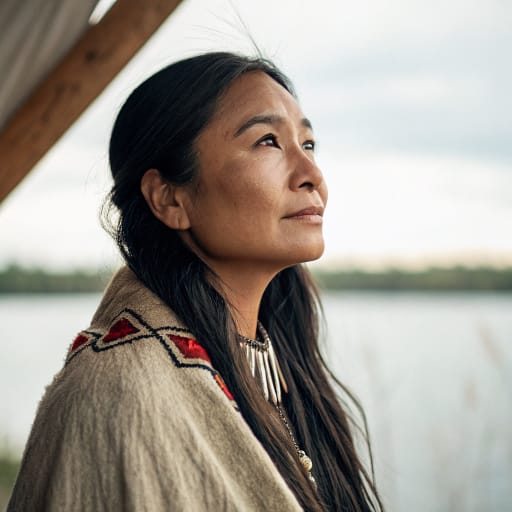
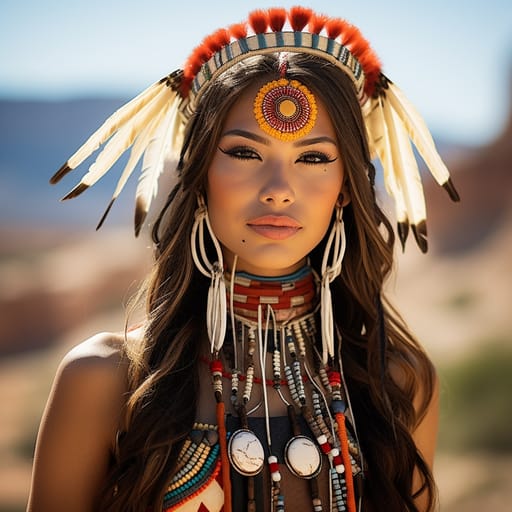
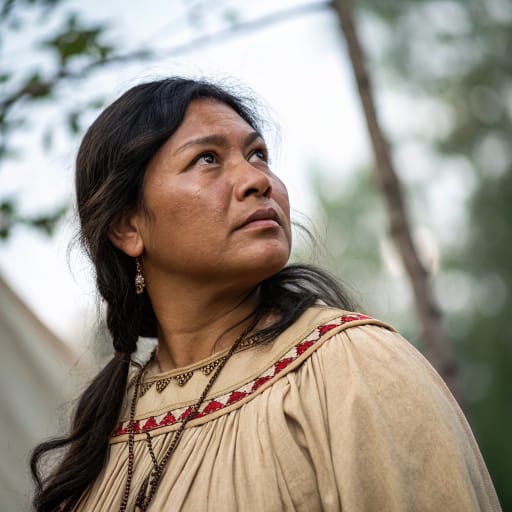
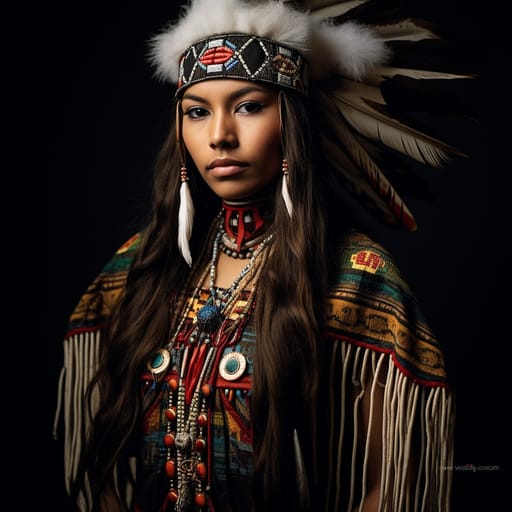
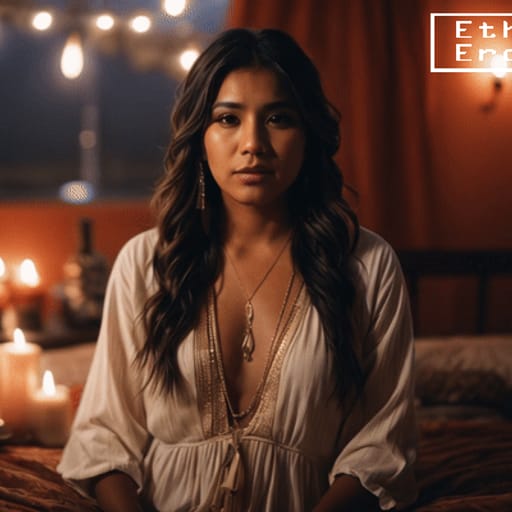
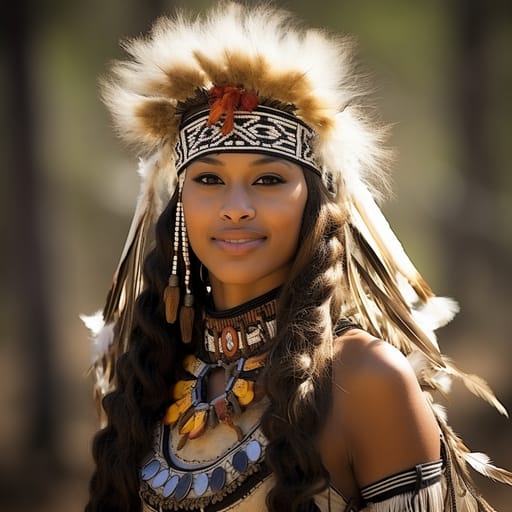
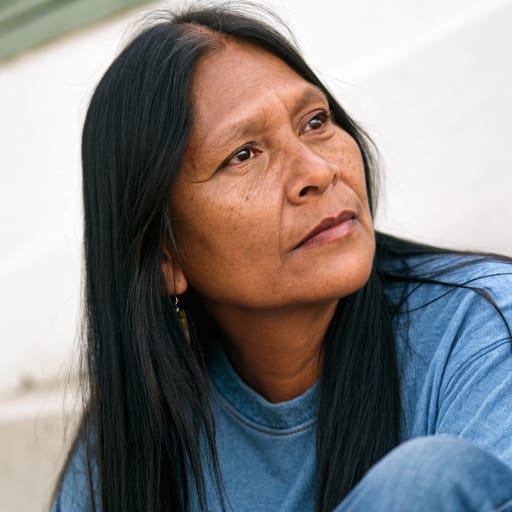
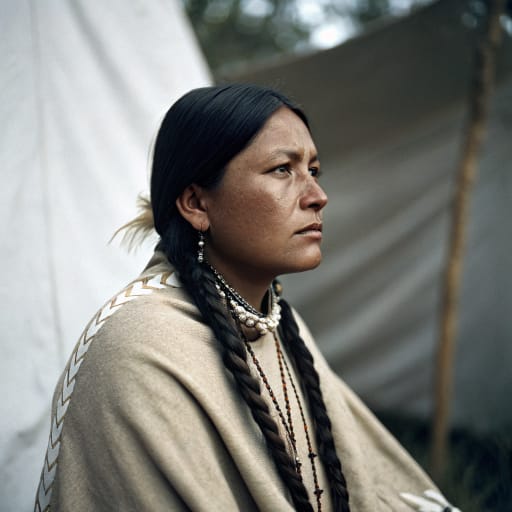
Typical Iñupiat Phenotypes
Reference for AI generation: hair, eyes, skin, facial structure, build
Iñupiat Body & Anatomy Reference
Per-feature anatomical profile for AI nude generation: Indigenous Northern American / Algonquian-Iroquoian phenotype
Iñupiat Boobs & Breasts
Bust reference for Iñupiat women: medium cup, moderate projection, which is typical of Indigenous Northern American / Algonquian-Iroquoian ancestry. Areolas measure about 30-44mm across, with medium-brown pigmentation. Body type (mesomorph, broader frame in northern Indigenous populations) shapes the bust as well, so Iñupiat tits are usually full and moderate projection. In AI imagery, keep the forward-set shape rather than drifting toward the smaller East Asian bust.
Iñupiat Ass & Hips
The Iñupiat ass is typically medium, moderate-to-full projection, which sets it apart from the slim East Asian narrow-hip profile. Underneath, the pelvis shows medium iliac crests, part of the Indigenous Northern American / Algonquian-Iroquoian skeletal pattern. For Iñupiat butt pics and AI renders, match that silhouette and the overall build (mesomorph, broader frame in northern Indigenous populations).
Iñupiat Vagina & Pussy
Iñupiat pussy and vulvar anatomy presents medium-brown labial pigmentation, consistent with the Indigenous Northern American / Algonquian-Iroquoian phenotype's pigmentation pattern. Iñupiat pubic hair is typically straight medium-coarse texture, in the inverted-triangle pattern. For anatomically accurate Iñupiat pussy renders the labial coloration should match the surrounding copper to medium-brown skin tone with a continuous gradient, and the hair should keep its straight medium-coarse texture.
Iñupiat Dicks & Penis
Iñupiat dicks follow the Indigenous Northern American / Algonquian-Iroquoian reference data: regional mean ~13cm erect; moderate girth; medium-brown shaft pigmentation. Shaft color should track the copper to medium-brown skin tone with a smooth change toward the glans, and Iñupiat pubic hair keeps its straight medium-coarse texture.
Iñupiat Body, Curves & Build
Iñupiat body type and overall build presents as mesomorph, broader frame in northern Indigenous populations, with mean adult female BMI 25-28: the characteristic Indigenous Northern American / Algonquian-Iroquoian habitus. Iñupiat curves and proportions should keep the regional skeletal frame (height, shoulder-to-hip ratio, limb proportions) rather than a generic mesomorph default.
Iñupiat Skin Tone & Hair Texture
Iñupiat skin sits in the copper to medium-brown (Fitzpatrick III-V) band. Hair is typically straight 1A, dark-brown to black, often thick and dense, in keeping with the Indigenous Northern American / Algonquian-Iroquoian phenotype. In nude renders the skin should stay one even tone from face to body, and body, pubic and head hair should match.
Explore phenotype categories
Structured taxonomy with peer-reviewed scales · 22 anatomical categories
Erotic Poses & Sex Positions
From the pose catalog: 219 named positions with reference skeletons
Frequently asked questions about Iñupiat people
Where is the Iñupiat homeland?
The Iñupiat homeland is Northern and northwestern Alaska, United States: the Seward Peninsula and Bering Strait islands, Kotzebue Sound and the Kobuk and Noatak rivers, the Arctic coast from Point Hope to the Canadian border, and the inland Brooks Range. in North America.
What language do Iñupiat people speak?
Iñupiat people primarily speak Iñupiaq (Eskaleut, Inuit branch), in North Slope, Malimiutun, Qawiaraq, and Bering Strait dialects; English is now dominant in daily use.
What religion do Iñupiat people practice?
The predominant religion among Iñupiat people is Predominantly Christian (Presbyterian, Friends, Episcopal, Catholic, Lutheran, Covenant by region), with traditional beliefs about animal spirits surviving in whaling ritual and hunting ethics.






Make your own Iñupiat images
Five a day, free, no credits to buy. The studio starts from this group's phenotype data, so you can set body type, pose and style and keep the traits accurate.
Start with Iñupiat