Help us get this right
Does this portrait look right for Biloxi?
Nobody has judged this one yet. You would be the first.
Biloxi Erotic
Originally the Gulf Coast of present-day Mississippi, around Biloxi Bay and the lower Pascagoula River; today central and southern Louisiana, chiefly Avoyelles Parish near Marksville, United States.
Biloxi (Siouan, Ohio Valley or Southeastern branch), no longer spoken as a first language; English and Louisiana French today.
Christian, predominantly Catholic in the French Louisiana setting, alongside participation in pan-tribal ceremonial life.
Ohio Valley (Southeastern) Siouan, with the Ofo and Tutelo; today enrolled mainly in the Tunica-Biloxi Tribe of Louisiana, with Biloxi descent also among the coastal Biloxi-Chitimacha bands.
About Biloxi People
The Biloxi call themselves Taneks aya, the first people, and what has always marked them off from their neighbors is the language. Biloxi is Siouan. The peoples around them on the Gulf Coast, Choctaw, Chickasaw, Pascagoula, spoke Muskogean, and the bulk of Siouan speech lay far to the north and west, on the plains and the upper Mississippi. The nearest relatives were the Ofo, a small people upriver, and the Tutelo of the Virginia piedmont, which is to say the nearest relatives were not near. That pattern is the residue of an older Siouan presence in the Southeast, broken apart by disease, slave raiding and displacement before anyone thought to write it down. What did get written down came late. James Owen Dorsey worked with Biloxi speakers in Louisiana in the 1890s, and the dictionary and texts he assembled were published after his death, in 1912. A generation later a linguist found one woman, Emma Jackson, remembered as the last person fluent in it. The language is a record now rather than a conversation, though the record is thorough enough that words can still be pulled back out of it.
When Iberville threw up Fort Maurepas on the coast in 1699, the Biloxi were living inland along the lower Pascagoula. The bay took their name and then the city did, and even that name arrived secondhand, filtered through Choctaw speakers and French ears rather than offered by the Taneks themselves. What followed was two centuries of shrinking and moving west. Epidemics did the first of it. The French alliance did not outlast the French, and after 1763 Biloxi families moved through Louisiana in small parties, a few as far as Texas, most settling in the end along the Red River near Marksville beside the Tunica, who had been through the same thing. The two peoples became one tribe, federally recognized in 1981 as the Tunica-Biloxi, on a small reservation in Avoyelles Parish, Catholic in the way rural French Louisiana is Catholic. The tribe runs a casino resort and keeps a museum and conservation lab in Marksville, built around burial goods it won back in court. Other Biloxi descendants went south into the bayous and are counted among the coastal bands there, including the Isle de Jean Charles community, which is watching the Gulf take its island and has had to move.
Related ethnic groups
Groups that share Biloxi's homeland, region, language, or religious tradition. These are likely candidates for comparative phenotype reference.
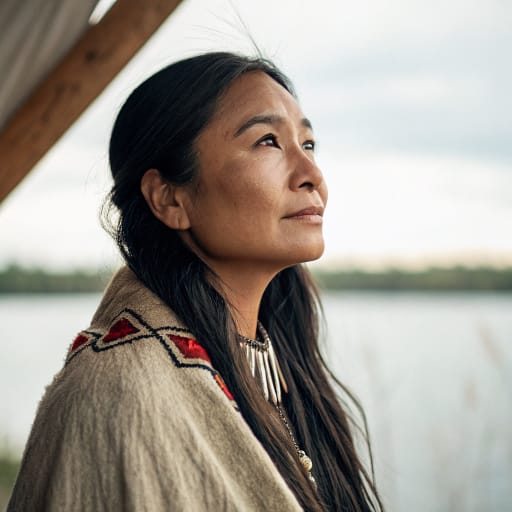
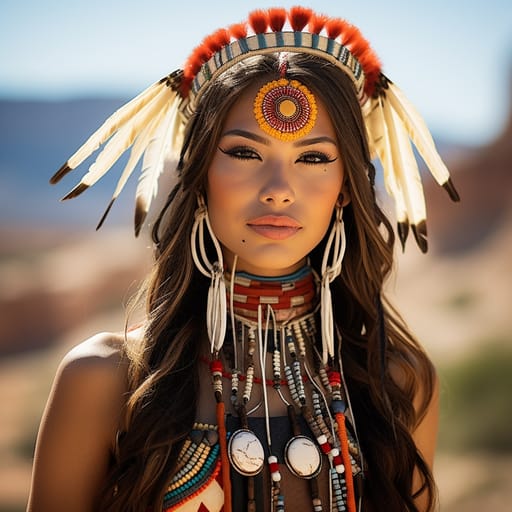
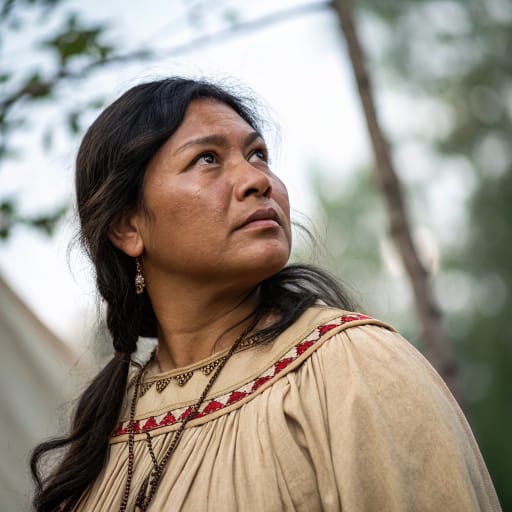
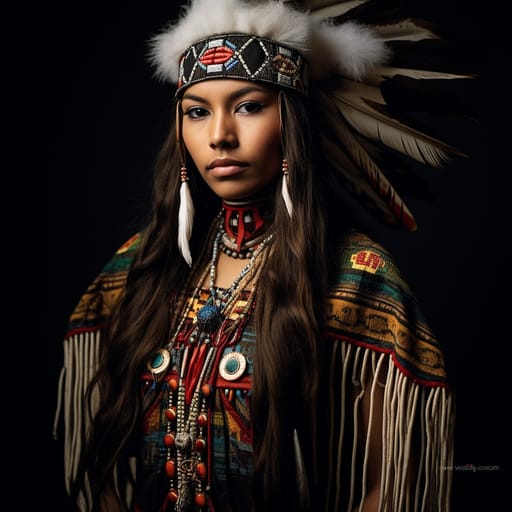
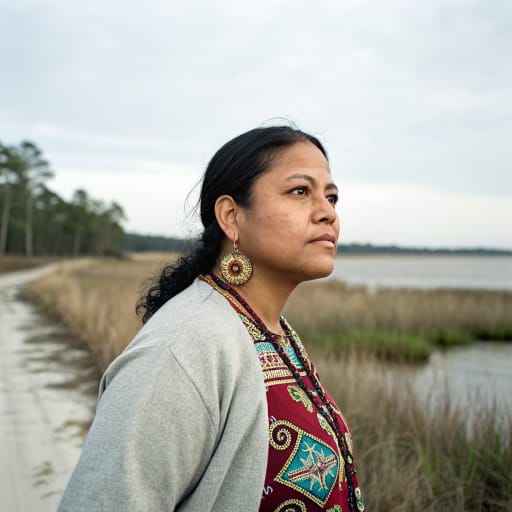
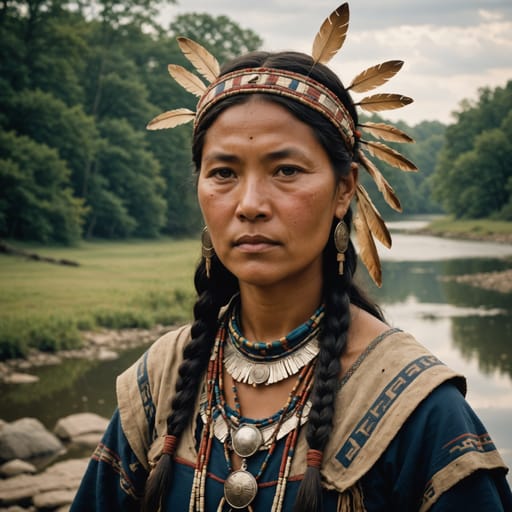
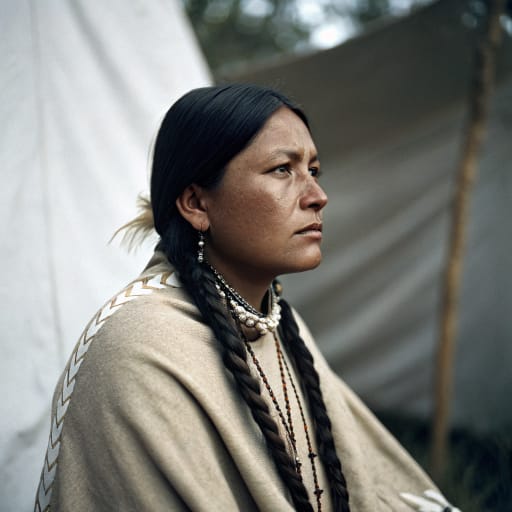
Typical Biloxi Phenotypes
Reference for AI generation: hair, eyes, skin, facial structure, build
Biloxi Body & Anatomy Reference
Per-feature anatomical profile for AI nude generation: Indigenous Northern American / Algonquian-Iroquoian phenotype
Biloxi Boobs & Breasts
The typical Biloxi bust is medium cup, moderate projection, in line with the wider Indigenous Northern American / Algonquian-Iroquoian pattern. Areolas usually fall in the 30-44mm range, with medium-brown areolar pigmentation against the copper-to-medium-brown skin tone. Compared with the smaller East Asian bust, Biloxi breasts sit forward and are generally full and moderate projection. A faithful AI render of Biloxi tits keeps that shape and areola size.
Biloxi Ass & Hips
Butt shape among Biloxi women: medium, moderate-to-full projection, over medium iliac crests. This follows Indigenous Northern American / Algonquian-Iroquoian ancestry and looks quite unlike the slim East Asian narrow-hip profile. An accurate Biloxi ass in adult AI imagery keeps both the silhouette and the overall build (mesomorph, broader frame in northern Indigenous populations) instead of a generic average.
Biloxi Vagina & Pussy
Vulvar anatomy among Biloxi women: medium-brown labial pigmentation. Pubic hair tends to be straight medium-coarse texture, in the usual inverted-triangle pattern. Both follow Indigenous Northern American / Algonquian-Iroquoian pigmentation, which is why Biloxi pussy renders should not fall back on a pale, sparse Western template.
Biloxi Dicks & Penis
The Biloxi cock profile, from Indigenous Northern American / Algonquian-Iroquoian anthropometric data: regional mean ~13cm erect; moderate girth; medium-brown shaft pigmentation. Pubic hair has a straight medium-coarse texture and forms the usual inverted-V pattern. Whether Biloxi men are circumcised follows religious and cultural practice rather than phenotype.
Biloxi Body, Curves & Build
Build and curves among Biloxi women follow the Indigenous Northern American / Algonquian-Iroquoian pattern: mesomorph, broader frame in northern Indigenous populations, mean adult female BMI 25-28. Proportions matter as much as skin tone, so Biloxi figures should keep their regional height and limb ratios.
Biloxi Skin Tone & Hair Texture
The Biloxi skin range is copper to medium-brown (Fitzpatrick III-V), and hair tends to be straight 1A, dark-brown to black, often thick and dense. That combination marks the Indigenous Northern American / Algonquian-Iroquoian phenotype, and skin tone is the trait AI generators most often get wrong for Biloxi women.
Explore phenotype categories
Structured taxonomy with peer-reviewed scales · 22 anatomical categories
Erotic Poses & Sex Positions
From the pose catalog: 219 named positions with reference skeletons
Frequently asked questions about Biloxi people
Where is the Biloxi homeland?
The Biloxi homeland is Originally the Gulf Coast of present-day Mississippi, around Biloxi Bay and the lower Pascagoula River; today central and southern Louisiana, chiefly Avoyelles Parish near Marksville, United States. in North America.
What language do Biloxi people speak?
Biloxi people primarily speak Biloxi (Siouan, Ohio Valley or Southeastern branch), no longer spoken as a first language; English and Louisiana French today..
What religion do Biloxi people practice?
The predominant religion among Biloxi people is Christian, predominantly Catholic in the French Louisiana setting, alongside participation in pan-tribal ceremonial life..






Make your own Biloxi images
Five a day, free, no credits to buy. The studio starts from this group's phenotype data, so you can set body type, pose and style and keep the traits accurate.
Start with Biloxi