No portrait yet
Saponi Erotic
Virginia and North Carolina Piedmont, United States; descendant communities today in Halifax, Warren, Person and Alamance counties, North Carolina, and Halifax County, Virginia
Saponi, a dialect of or close relative to Tutelo (Siouan, Ohio Valley branch), no longer spoken; English today
Mostly Protestant Christian today, with churches central to community life; historically traditional Piedmont Siouan beliefs
Closely allied with the Tutelo and Occaneechi among the Piedmont Siouan peoples; descendant tribes are the Haliwa-Saponi, the Sappony and the Occaneechi Band of the Saponi Nation, plus Tutelo-Saponi descendants at Six Nations, Ontario
About Saponi People
The Saponi were a Siouan people living where most of their neighbors spoke other languages. Algonquian languages were spoken along the Virginia coast. The Tuscarora, Nottoway and Meherrin to the east and the Cherokee in the mountains spoke Iroquoian ones. Between them, the Saponi held the Piedmont with the closely allied Tutelo and Occaneechi. Their language is usually treated as a dialect of Tutelo, part of the small Ohio Valley branch of the Siouan family. Their history keeps returning to two things: that separate language, and a long habit of moving, merging and regrouping with those same allies.
English explorers pushing west from Virginia met them in the early 1670s, and in 1701 John Lawson found a Saponi town on the Yadkin River in North Carolina. Colonial expansion and Iroquois war parties pushed them back toward the Virginia frontier. In 1714 Governor Alexander Spotswood built Fort Christanna on the Meherrin River to serve the Saponi and several related bands as a trading post, a buffer settlement and a school. The experiment lasted only a few years. In 1728 a Saponi hunter named Ned Bearskin hunted for William Byrd II's boundary survey party. He described his people's beliefs about the afterlife, and Byrd wrote them down, giving one of the few firsthand looks at Saponi religion.
After that the people split. In the 1740s many moved north into Pennsylvania and New York, where the Tutelo were formally adopted by the Cayuga, and after the American Revolution those families settled at Six Nations of the Grand River in Ontario. Much of what survives of the language was recorded from Tutelo speakers there in the nineteenth century. Other families never left the Carolina and Virginia borderlands. Through the segregation era they held together around kinship, churches and schools of their own, often against officials who wanted to sort everyone into a two-race system.
Today those descendants make up three tribes recognized by North Carolina. The Haliwa-Saponi of Halifax and Warren counties take their name from the two counties and hold a long-running spring powwow in Hollister. The Sappony live in the High Plains settlement, which straddles the state line between Person County, North Carolina and Halifax County, Virginia. The Occaneechi Band of the Saponi Nation is centered in Alamance County. None of the three has federal recognition. For all of them, Saponi is a working identity, not a historical footnote. It lives on through tribal councils, youth programs and dance regalia, and through a stubborn insistence on being counted.
Related ethnic groups
Groups that share Saponi's homeland, region, language, or religious tradition. These are likely candidates for comparative phenotype reference.
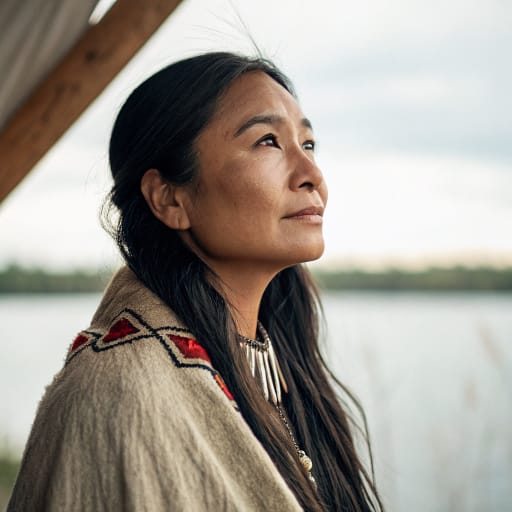
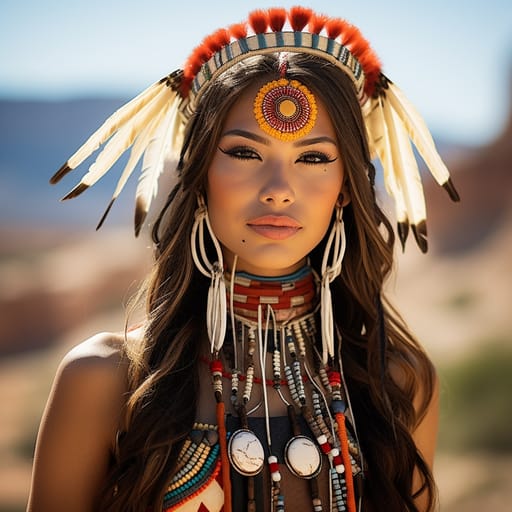
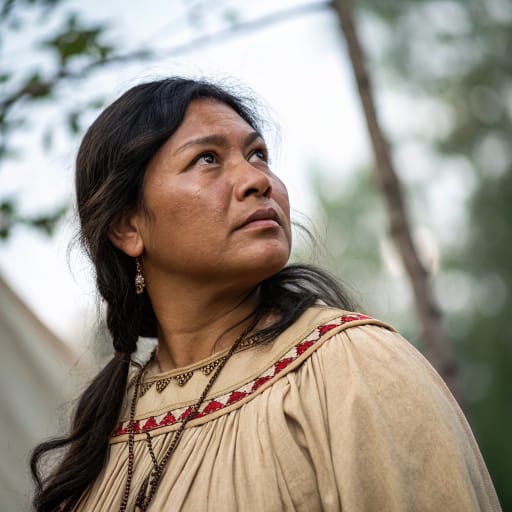
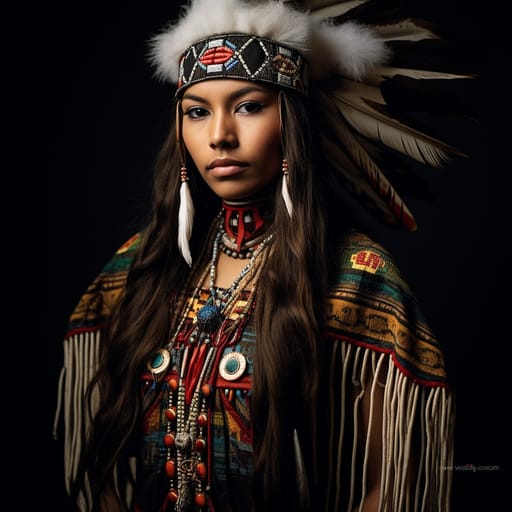
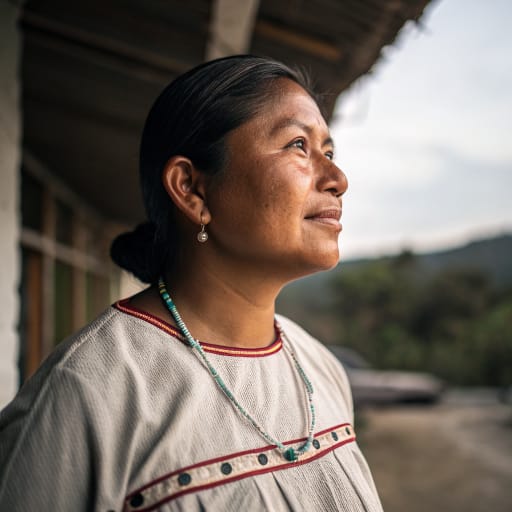
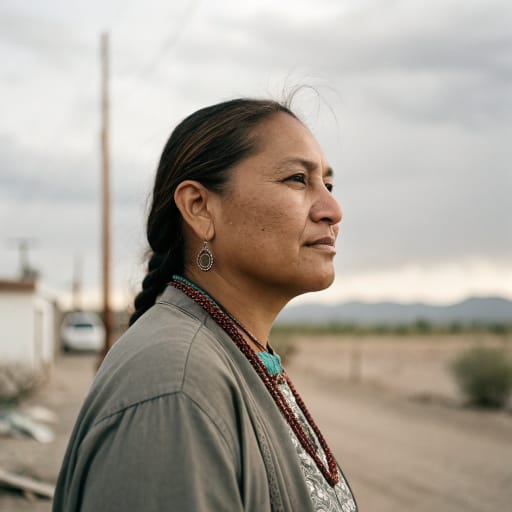
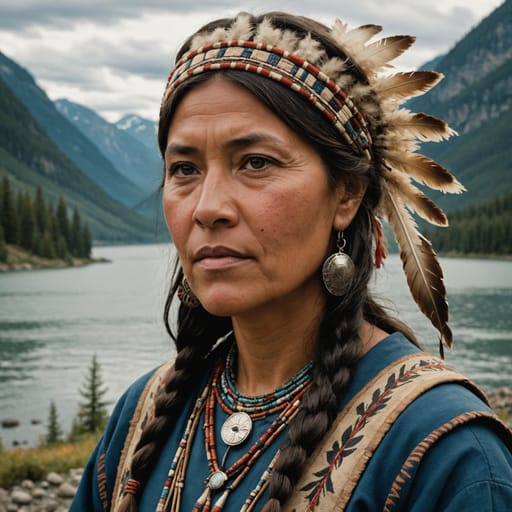
Typical Saponi Phenotypes
Reference for AI generation: hair, eyes, skin, facial structure, build
Saponi Body & Anatomy Reference
Per-feature anatomical profile for AI nude generation: Indigenous Northern American / Algonquian-Iroquoian phenotype
Saponi Boobs & Breasts
Saponi boobs follow the Indigenous Northern American / Algonquian-Iroquoian profile: medium cup, moderate projection. Areolar diameter is usually 30-44mm, and the coloring is medium-brown areolar pigmentation against the copper-to-medium-brown skin tone. Breast shape tracks body composition (mesomorph, broader frame in northern Indigenous populations, mean adult female BMI 25-28), so Saponi breasts tend to be full and moderate projection. Expect a forward-set shape, not the smaller East Asian bust.
Saponi Ass & Hips
Saponi ass and hip morphology presents as medium, moderate-to-full projection, distinctly different from the slim East Asian narrow-hip profile. The Saponi pelvic profile shows medium iliac crests, anchored in the Indigenous Northern American / Algonquian-Iroquoian skeletal pattern. Saponi butt shots in adult AI imagery should render the medium, moderate-to-full projection silhouette with the overall build (mesomorph, broader frame in northern Indigenous populations) and the fat distribution typical of the Indigenous Northern American / Algonquian-Iroquoian phenotype.
Saponi Vagina & Pussy
Saponi pussy anatomy typically shows medium-brown labial pigmentation. Pubic hair is usually straight medium-coarse texture. In AI-generated Saponi nudes, labial color should blend into the copper to medium-brown skin with a gradual transition, and the hair should keep its straight medium-coarse texture.
Saponi Dicks & Penis
Penis reference for Saponi men: regional mean ~13cm erect, moderate girth. Coloring: medium-brown shaft pigmentation. An accurate Saponi cock in AI imagery matches the surrounding copper to medium-brown skin rather than a generic porn default. Circumcision depends on religion and custom, not ancestry.
Saponi Body, Curves & Build
The Saponi figure is generally mesomorph, broader frame in northern Indigenous populations, with mean adult female BMI 25-28, characteristic of Indigenous Northern American / Algonquian-Iroquoian ancestry. AI image tools tend to flatten regional body types into a few stock shapes; here the Saponi build is kept as its own reference.
Saponi Skin Tone & Hair Texture
Skin: copper to medium-brown (Fitzpatrick III-V). Hair: straight 1A, dark-brown to black, often thick and dense. Both are typical of Indigenous Northern American / Algonquian-Iroquoian ancestry. The most common mistake in AI nudes of Saponi women is a body rendered lighter than the face.
Explore phenotype categories
Structured taxonomy with peer-reviewed scales · 22 anatomical categories
Erotic Poses & Sex Positions
From the pose catalog: 219 named positions with reference skeletons
Frequently asked questions about Saponi people
Where is the Saponi homeland?
The Saponi homeland is Virginia and North Carolina Piedmont, United States; descendant communities today in Halifax, Warren, Person and Alamance counties, North Carolina, and Halifax County, Virginia in North America.
What language do Saponi people speak?
Saponi people primarily speak Saponi, a dialect of or close relative to Tutelo (Siouan, Ohio Valley branch), no longer spoken; English today.
What religion do Saponi people practice?
The predominant religion among Saponi people is Mostly Protestant Christian today, with churches central to community life; historically traditional Piedmont Siouan beliefs.






Make your own Saponi images
Five a day, free, no credits to buy. The studio starts from this group's phenotype data, so you can set body type, pose and style and keep the traits accurate.
Start with Saponi