No portrait yet
Sinkaietk Erotic
The lower Okanogan River valley in north-central Washington, United States, from the Canadian border south to the Columbia River; today largely the Colville Reservation.
Okanagan (Nsyilxcən), also called Colville-Okanagan (Interior Salish, Salishan family)
Roman Catholic, alongside traditional Plateau spirituality centered on guardian spirits, winter dances and first foods ceremonies
Southern division of the Okanagan (Syilx) people; one of the twelve bands of the Confederated Tribes of the Colville Reservation
About Sinkaietk People
The Sinkaietk are the Okanagan people of the lower Okanogan River, the dry valley that runs south from the Canadian border to meet the Columbia in north-central Washington. Sinkaietk is the name anthropologists settled on, most lastingly in the 1938 ethnography edited by Leslie Spier. On the reservation today, people are more likely to say Okanogan, or Syilx for the whole nation. Their northern relatives live farther up the same valley in British Columbia, and what separates them is politics, not culture. The 1846 Oregon Treaty ran a border through one people, and the two countries never agreed on a spelling: Okanogan to the south, Okanagan to the north.
Their language, Nsyilxcən, belongs to the Interior branch of the Salishan family. Linguists often call it Colville-Okanagan because the neighboring Sanpoil, Colville and Lakes peoples speak dialects of the same language. The Methow and Moses-Columbia peoples to the south speak a closely related Salish language. The Sahaptin languages farther south, such as Yakama, come from a different family altogether. Few fluent elders remain, and the language now lives on through classes and immersion programs on both sides of the border.
Life followed the seasons. Salmon runs on the Okanogan and Columbia shaped the year. Digging bitterroot in spring, picking berries in summer and hunting deer in autumn filled in the rest. People spent the winter in partly underground pit houses or in lodges covered with mats. Young people went alone into the hills to seek a guardian spirit, and the power they gained might not show itself until years later, at the winter dances. Syilx tradition tells of four food chiefs, Black Bear, Chinook Salmon, Bitterroot and Saskatoon Berry, who agreed to give themselves up so that people could live. That story still shapes how many Syilx talk about their duties to land and water.
Outsiders came early. Fur traders built Fort Okanogan at the river's mouth in 1811. Jesuit missionaries followed, and Catholicism took hold alongside older beliefs. In 1872 much of the land east of the river became part of the Colville Reservation, whose western edge is the Okanogan River itself. Sinkaietk descendants are counted today among the twelve bands of the Confederated Tribes of the Colville Reservation. Dams built in the twentieth century cut off the Columbia's upper salmon runs, and the tribes have spent the decades since working to bring fish back to the Okanogan.
Related ethnic groups
Groups that share Sinkaietk's homeland, region, language, or religious tradition. These are likely candidates for comparative phenotype reference.
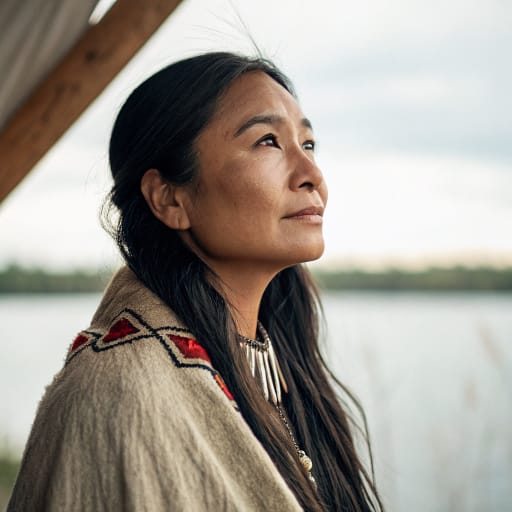
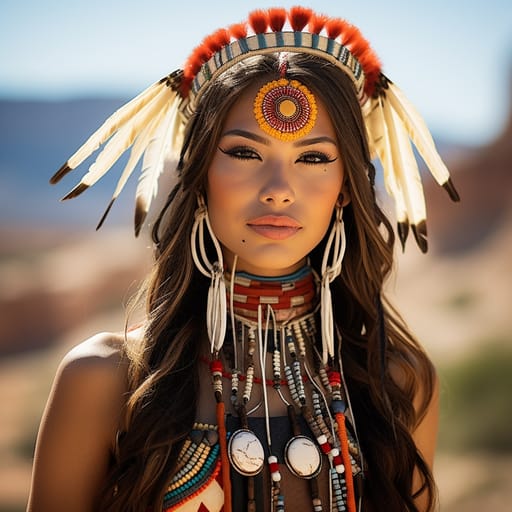
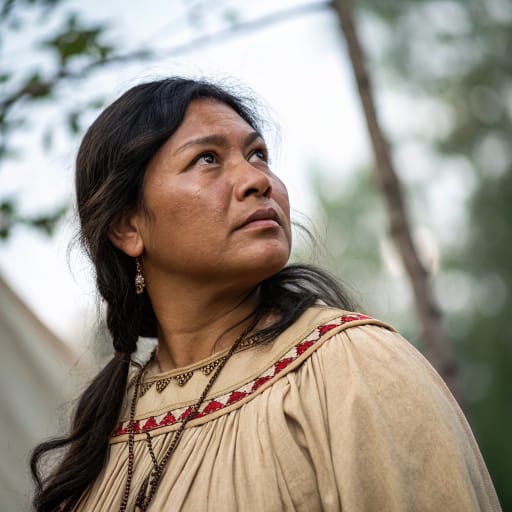
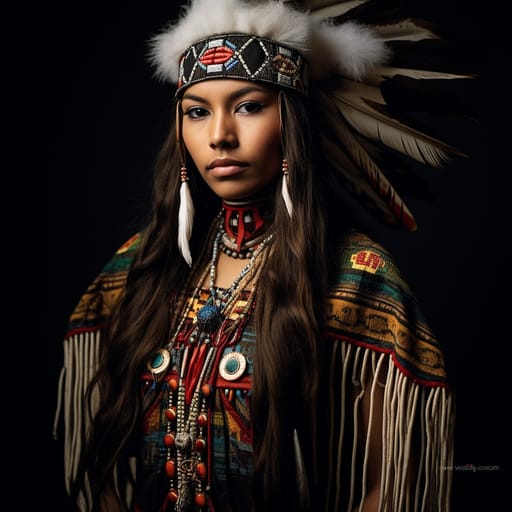
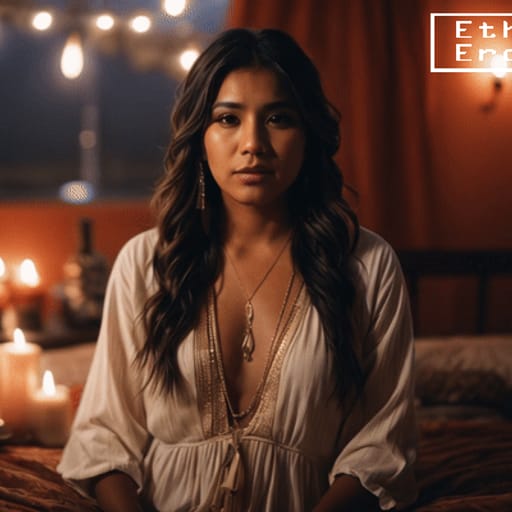
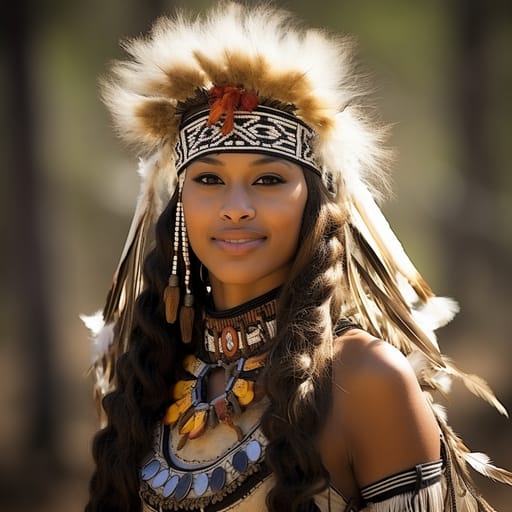
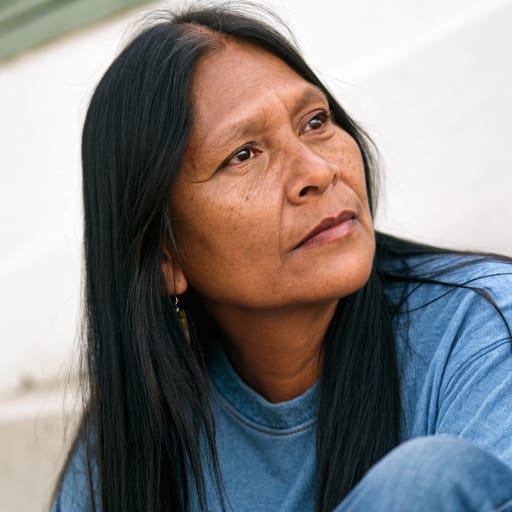
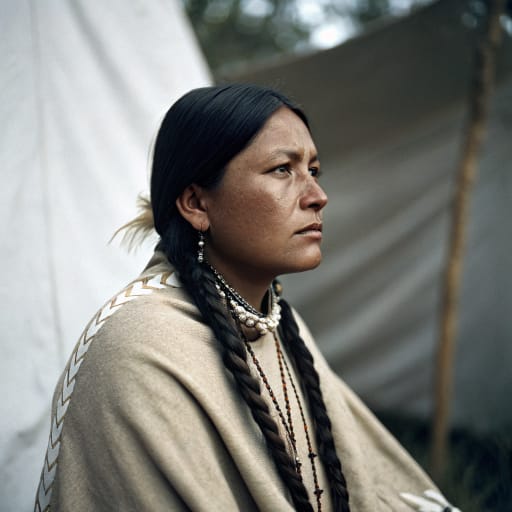
Typical Sinkaietk Phenotypes
Reference for AI generation: hair, eyes, skin, facial structure, build
Sinkaietk Body & Anatomy Reference
Per-feature anatomical profile for AI nude generation: Indigenous Northern American / Algonquian-Iroquoian phenotype
Sinkaietk Boobs & Breasts
The typical Sinkaietk bust is medium cup, moderate projection, in line with the wider Indigenous Northern American / Algonquian-Iroquoian pattern. Areolas usually fall in the 30-44mm range, with medium-brown areolar pigmentation against the copper-to-medium-brown skin tone. Compared with the smaller East Asian bust, Sinkaietk breasts sit forward and are generally full and moderate projection. A faithful AI render of Sinkaietk tits keeps that shape and areola size.
Sinkaietk Ass & Hips
Butt shape among Sinkaietk women: medium, moderate-to-full projection, over medium iliac crests. This follows Indigenous Northern American / Algonquian-Iroquoian ancestry and looks quite unlike the slim East Asian narrow-hip profile. An accurate Sinkaietk ass in adult AI imagery keeps both the silhouette and the overall build (mesomorph, broader frame in northern Indigenous populations) instead of a generic average.
Sinkaietk Vagina & Pussy
Vulvar anatomy among Sinkaietk women: medium-brown labial pigmentation. Pubic hair tends to be straight medium-coarse texture, in the usual inverted-triangle pattern. Both follow Indigenous Northern American / Algonquian-Iroquoian pigmentation, which is why Sinkaietk pussy renders should not fall back on a pale, sparse Western template.
Sinkaietk Dicks & Penis
The Sinkaietk cock profile, from Indigenous Northern American / Algonquian-Iroquoian anthropometric data: regional mean ~13cm erect; moderate girth; medium-brown shaft pigmentation. Pubic hair has a straight medium-coarse texture and forms the usual inverted-V pattern. Whether Sinkaietk men are circumcised follows religious and cultural practice rather than phenotype.
Sinkaietk Body, Curves & Build
Build and curves among Sinkaietk women follow the Indigenous Northern American / Algonquian-Iroquoian pattern: mesomorph, broader frame in northern Indigenous populations, mean adult female BMI 25-28. Proportions matter as much as skin tone, so Sinkaietk figures should keep their regional height and limb ratios.
Sinkaietk Skin Tone & Hair Texture
The Sinkaietk skin range is copper to medium-brown (Fitzpatrick III-V), and hair tends to be straight 1A, dark-brown to black, often thick and dense. That combination marks the Indigenous Northern American / Algonquian-Iroquoian phenotype, and skin tone is the trait AI generators most often get wrong for Sinkaietk women.
Explore phenotype categories
Structured taxonomy with peer-reviewed scales · 22 anatomical categories
Erotic Poses & Sex Positions
From the pose catalog: 219 named positions with reference skeletons
Frequently asked questions about Sinkaietk people
Where is the Sinkaietk homeland?
The Sinkaietk homeland is The lower Okanogan River valley in north-central Washington, United States, from the Canadian border south to the Columbia River; today largely the Colville Reservation. in North America.
What language do Sinkaietk people speak?
Sinkaietk people primarily speak Okanagan (Nsyilxcən), also called Colville-Okanagan (Interior Salish, Salishan family).
What religion do Sinkaietk people practice?
The predominant religion among Sinkaietk people is Roman Catholic, alongside traditional Plateau spirituality centered on guardian spirits, winter dances and first foods ceremonies.






Make your own Sinkaietk images
Five a day, free, no credits to buy. The studio starts from this group's phenotype data, so you can set body type, pose and style and keep the traits accurate.
Start with Sinkaietk