Help us get this right
Does this portrait look right for Chowanoke?
Nobody has judged this one yet. You would be the first.
Chowanoke Erotic
The Chowan River valley and Albemarle Sound country of northeastern North Carolina, United States, centered on present Gates, Hertford and Chowan counties.
Carolina Algonquian, extinct since the eighteenth century (Eastern Algonquian, Algic family)
Traditional Algonquian religion, with temple houses, a priesthood and the plural deities Harriot called mantoac; descendants are Christian.
One of the Carolina Algonquian nations of the Albemarle, alongside the Roanoke, Secotan, Weapemeoc and Moratoc, within the wider Eastern Algonquian world.
About Chowanoke People
The Chowanoke were the dominant Algonquian nation of the Albemarle country, on the Chowan River in what is now northeastern North Carolina, and they were already the strongest polity in that region when the first English ships arrived in the 1580s. Ralph Lane, who went upriver from Roanoke in 1586, reckoned their chief Menatonon could put seven hundred fighting men in the field, more than any neighbor. Their descendants are still in Gates and Hertford counties, but the Chowanoke as a nation of palisaded river towns under a paramount weroance did not survive the eighteenth century.
Their language was Carolina Algonquian, the same Eastern Algonquian speech as the Roanoke, Secotan and Weapemeoc around them, and cousin to the Powhatan tongues north of the sound. It is gone, surviving only in the short word lists Thomas Harriot compiled and in place names: Chowan itself, usually glossed as something close to "people of the south." They farmed corn, beans and squash on the river terraces and worked the spring runs of herring and sturgeon with weirs and dugouts. Rank was visible on the body: copper and shell at the throat, and tattooed marks on the arms and shoulders that told a stranger which town and which chief a person answered to. Priests kept the dead of the leading families in a temple house, and Harriot recorded that the gods, plural, were called mantoac.
Contact went badly in the usual way, but slowly. Lane seized Menatonon in 1586 and held his son Skiko hostage, and the Chowanoke spent the next ninety years managing traders and colonists rather than fighting them. That ended in 1675, when they went to war with the Albemarle settlers and lost. In 1677 they were confined to a tract on Bennett's Creek in present Gates County, one of the earliest reservations in what became the United States, and it was cut down within a generation. They fought alongside the colonists in the Tuscarora War anyway. A 1755 colonial count found seven Chowanoke, a number that says more about who the counters were willing to see than about who was living, since many had already married into Tuscarora, Meherrin and neighboring free Black and white families. The last of the reservation land passed out of their hands in the 1820s. In this century, descendants organized as the Chowanoke Indian Nation and reacquired part of the old Bennett's Creek tract, now an archaeological site they help excavate.
Related ethnic groups
Groups that share Chowanoke's homeland, region, language, or religious tradition. These are likely candidates for comparative phenotype reference.
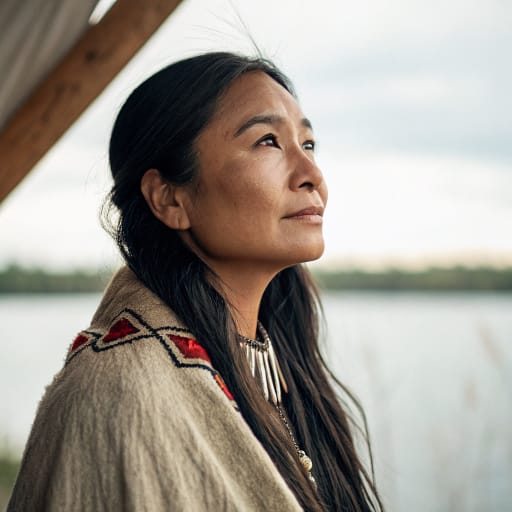
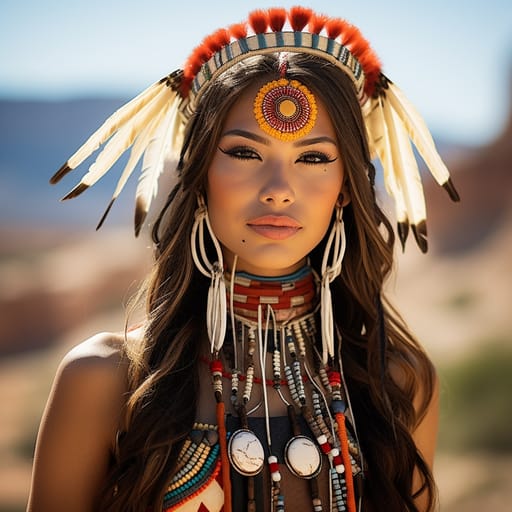
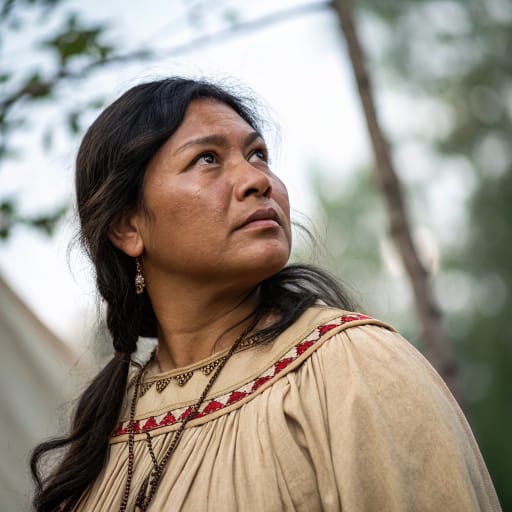
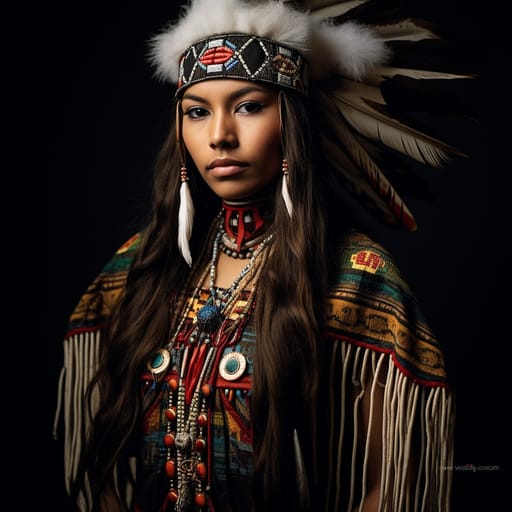
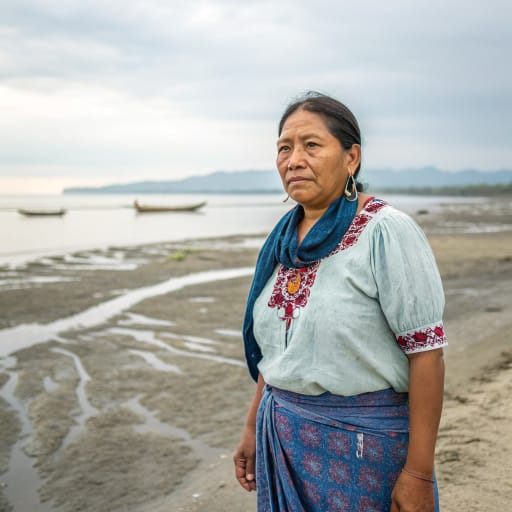
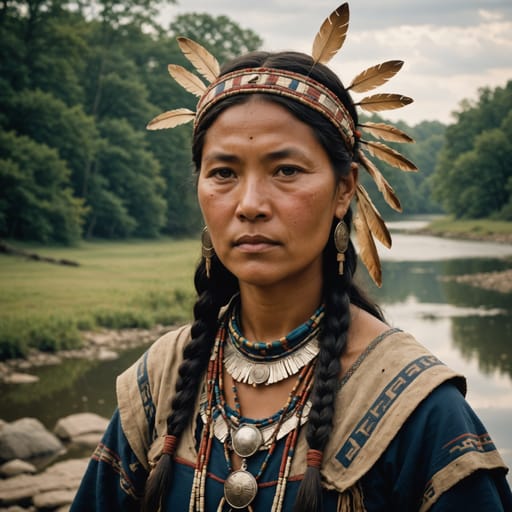
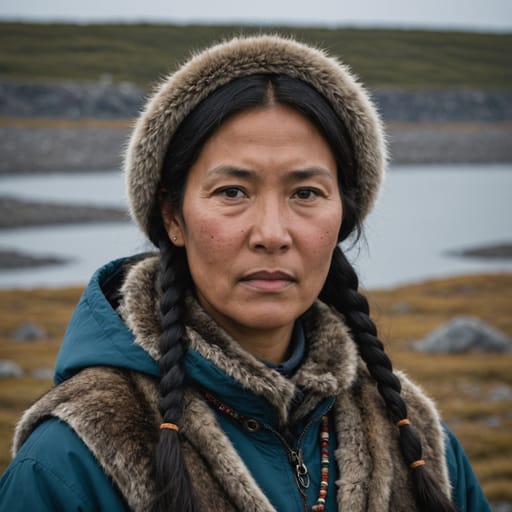
Typical Chowanoke Phenotypes
Reference for AI generation: hair, eyes, skin, facial structure, build
Chowanoke Body & Anatomy Reference
Per-feature anatomical profile for AI nude generation: Indigenous Northern American / Algonquian-Iroquoian phenotype
Chowanoke Boobs & Breasts
Bust reference for Chowanoke women: medium cup, moderate projection, which is typical of Indigenous Northern American / Algonquian-Iroquoian ancestry. Areolas measure about 30-44mm across, with medium-brown pigmentation. Body type (mesomorph, broader frame in northern Indigenous populations) shapes the bust as well, so Chowanoke tits are usually full and moderate projection. In AI imagery, keep the forward-set shape rather than drifting toward the smaller East Asian bust.
Chowanoke Ass & Hips
The Chowanoke ass is typically medium, moderate-to-full projection, which sets it apart from the slim East Asian narrow-hip profile. Underneath, the pelvis shows medium iliac crests, part of the Indigenous Northern American / Algonquian-Iroquoian skeletal pattern. For Chowanoke butt pics and AI renders, match that silhouette and the overall build (mesomorph, broader frame in northern Indigenous populations).
Chowanoke Vagina & Pussy
Chowanoke pussy and vulvar anatomy presents medium-brown labial pigmentation, consistent with the Indigenous Northern American / Algonquian-Iroquoian phenotype's pigmentation pattern. Chowanoke pubic hair is typically straight medium-coarse texture, in the inverted-triangle pattern. For anatomically accurate Chowanoke pussy renders the labial coloration should match the surrounding copper to medium-brown skin tone with a continuous gradient, and the hair should keep its straight medium-coarse texture.
Chowanoke Dicks & Penis
Chowanoke dicks follow the Indigenous Northern American / Algonquian-Iroquoian reference data: regional mean ~13cm erect; moderate girth; medium-brown shaft pigmentation. Shaft color should track the copper to medium-brown skin tone with a smooth change toward the glans, and Chowanoke pubic hair keeps its straight medium-coarse texture.
Chowanoke Body, Curves & Build
Chowanoke body type and overall build presents as mesomorph, broader frame in northern Indigenous populations, with mean adult female BMI 25-28: the characteristic Indigenous Northern American / Algonquian-Iroquoian habitus. Chowanoke curves and proportions should keep the regional skeletal frame (height, shoulder-to-hip ratio, limb proportions) rather than a generic mesomorph default.
Chowanoke Skin Tone & Hair Texture
Chowanoke skin sits in the copper to medium-brown (Fitzpatrick III-V) band. Hair is typically straight 1A, dark-brown to black, often thick and dense, in keeping with the Indigenous Northern American / Algonquian-Iroquoian phenotype. In nude renders the skin should stay one even tone from face to body, and body, pubic and head hair should match.
Explore phenotype categories
Structured taxonomy with peer-reviewed scales · 22 anatomical categories
Erotic Poses & Sex Positions
From the pose catalog: 219 named positions with reference skeletons
Frequently asked questions about Chowanoke people
Where is the Chowanoke homeland?
The Chowanoke homeland is The Chowan River valley and Albemarle Sound country of northeastern North Carolina, United States, centered on present Gates, Hertford and Chowan counties. in North America.
What language do Chowanoke people speak?
Chowanoke people primarily speak Carolina Algonquian, extinct since the eighteenth century (Eastern Algonquian, Algic family).
What religion do Chowanoke people practice?
The predominant religion among Chowanoke people is Traditional Algonquian religion, with temple houses, a priesthood and the plural deities Harriot called mantoac; descendants are Christian..






Make your own Chowanoke images
Five a day, free, no credits to buy. The studio starts from this group's phenotype data, so you can set body type, pose and style and keep the traits accurate.
Start with Chowanoke