No portrait yet
Tohome Erotic
Lower Tombigbee River north of Mobile Bay, in present-day southwestern Alabama, United States
Tohome language, poorly documented, probably close to Mobile and Choctaw (Muskogean)
Traditional Southeastern Native American religion, little recorded; some exposure to French Catholicism at colonial Mobile
Muskogean Gulf Coast people closely linked with the Mobile and Naniaba; later absorbed into the Choctaw and other neighboring nations
About Tohome People
The Tohome were a small Muskogean-speaking people of the lower Tombigbee River, north of Mobile Bay in what is now southwestern Alabama. They are known mainly from French records of the early 1700s, and they later merged into larger neighbors, most likely the Choctaw. They were never numerous. What made them a people was a place and a set of close ties: they were one of a handful of river communities, alongside the Mobile and the Naniaba, living where the Tombigbee and Alabama river systems drain toward the Gulf. That position put them in the path of anyone moving between the coast and the interior Southeast.
Their own language is barely documented. French observers treated the Tohome and the Mobile as close relatives, and scholars have generally placed their speech near Choctaw within the Muskogean family. The language most associated with the area today is something else: Mobilian Jargon, a Muskogean-based trade tongue named for their Mobile neighbors. It carried trade and diplomacy across the Gulf coast and the lower Mississippi valley. The French wrote down almost nothing about Tohome religion and ceremony. Whatever circulates about it is usually taken from better-documented peoples nearby.
The arrival of the French was the turning point. Pierre Le Moyne d'Iberville and his brother Bienville reached the Mobile Bay region around 1700, and in 1702 the colony built its first Mobile settlement upriver, within reach of Mobile and Tohome towns. The Tohome became allies and trading partners at a time when French Louisiana was poorly supplied and relied heavily on its Native neighbors to survive. In the following decades, peoples uprooted from Florida and elsewhere settled around Mobile, and the Tohome became one small community among many in the French orbit.
That arrangement ended in 1763, when France gave up its territory east of the Mississippi to Britain at the close of the Seven Years' War. Several of the small allied peoples near Mobile moved west rather than live under British rule. In the later eighteenth century the Tohome, already few, stopped appearing as a distinct group in the colonial record, and their descendants were absorbed into the larger nations of the region. No community carries the Tohome name today.
What remains is a name in French colonial letters and a part in the founding story of Mobile. The Tohome are also a useful correction to the old image of the Gulf coast in 1700 as empty frontier. It was a crowded map of towns, languages and alliances, and the Tohome were on it.
Related ethnic groups
Groups that share Tohome's homeland, region, language, or religious tradition. These are likely candidates for comparative phenotype reference.
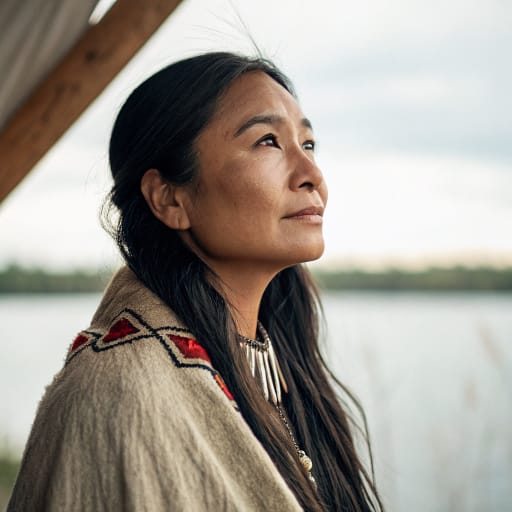
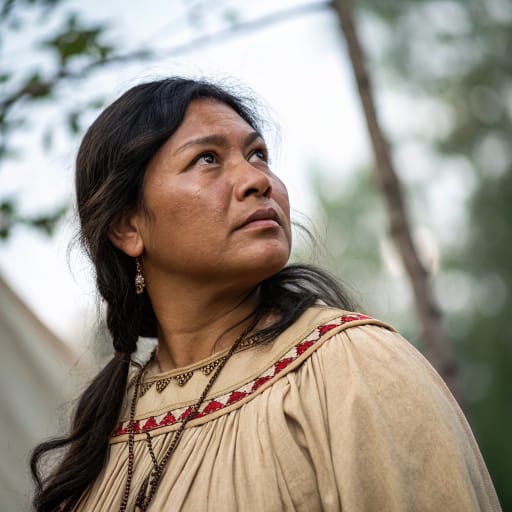
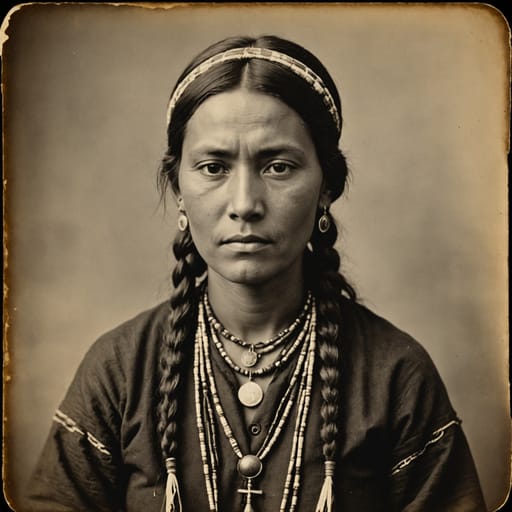
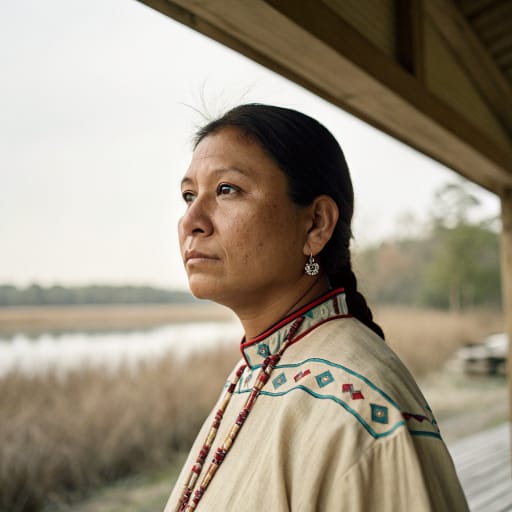
Typical Tohome Phenotypes
Reference for AI generation: hair, eyes, skin, facial structure, build
Tohome Body & Anatomy Reference
Anatomy by feature, Indigenous Northern American / Algonquian-Iroquoian phenotype
Tohome Boobs & Breasts
Tohome tits and boobs run medium cup, moderate projection, the classic Indigenous Northern American / Algonquian-Iroquoian bust profile. Tohome nipples and areolas show medium-brown areolar pigmentation against the copper-to-medium-brown skin tone, with areolar diameter typically in the 30-44mm range and forward-set positioning rather than the smaller East Asian bust. Tohome breasts trend full and moderate projection, a function of the mesomorph, broader frame in northern Indigenous populations body habitus and the mean adult female BMI 25-28. For anatomically accurate AI-generated Tohome nudes the render preserves the medium cup, moderate projection shape, 30-44mm areolas with medium-brown pigmentation, and the torso proportions of the Indigenous Northern American / Algonquian-Iroquoian phenotype.
Tohome Ass & Hips
Tohome hips and butt usually read as medium, moderate-to-full projection. The skeletal base is medium iliac crests, the Indigenous Northern American / Algonquian-Iroquoian pattern. Set against the slim East Asian narrow-hip profile, the difference is easy to see, and the hip-to-waist ratio is often what identifies Tohome women in photos.
Tohome Vagina & Pussy
Expect medium-brown labial pigmentation on Tohome women, in keeping with Indigenous Northern American / Algonquian-Iroquoian ancestry. The pubic hair is straight medium-coarse texture. Coloring should run evenly from the copper to medium-brown skin of the thighs to the labia, and Tohome nude imagery should keep the hair's straight medium-coarse texture.
Tohome Dicks & Penis
Tohome dick and penile anatomy in adult AI generation should anchor on the regional reference data: regional mean ~13cm erect, moderate girth, and medium-brown shaft pigmentation. The Tohome cock profile reflects the Indigenous Northern American / Algonquian-Iroquoian population's anthropometric measurements. The shaft pigmentation should track the surrounding copper to medium-brown skin tone, and the pubic hair should keep its straight medium-coarse texture in the typical inverted-V escutcheon.
Tohome Body, Curves & Build
Tohome body type: mesomorph, broader frame in northern Indigenous populations, with mean adult female BMI 25-28. This is the typical Indigenous Northern American / Algonquian-Iroquoian build. Height range, shoulder-to-hip ratio and fat distribution all follow from it, which is what an accurate Tohome nude body should show.
Tohome Skin Tone & Hair Texture
Tohome skin tone falls in the copper to medium-brown (Fitzpatrick III-V) band, the surface signal most often miscalibrated by generic AI nude generators. Tohome hair texture is typically straight 1A, dark-brown to black, often thick and dense, characteristic of the Indigenous Northern American / Algonquian-Iroquoian phenotype. In Tohome nude renders the skin should hold that band consistently across the body.
Explore phenotype categories
Structured taxonomy with peer-reviewed scales · 22 anatomical categories
Erotic Poses & Sex Positions
From the pose catalog: 219 named positions with reference skeletons
Frequently asked questions about Tohome people
Where is the Tohome homeland?
The Tohome homeland is Lower Tombigbee River north of Mobile Bay, in present-day southwestern Alabama, United States in North America.
What language do Tohome people speak?
Tohome people primarily speak Tohome language, poorly documented, probably close to Mobile and Choctaw (Muskogean).
What religion do Tohome people practice?
The predominant religion among Tohome people is Traditional Southeastern Native American religion, little recorded; some exposure to French Catholicism at colonial Mobile.






Make your own Tohome images
Five a day, free, no credits to buy. The studio starts from this group's phenotype data, so you can set body type, pose and style and keep the traits accurate.
Start with Tohome