Help us get this right
Does this portrait look right for Lumbee?
Nobody has judged this one yet. You would be the first.
Lumbee Erotic
Robeson County and the Lumber River basin of southeastern North Carolina, United States, with a long-standing urban community in East Baltimore, Maryland.
English, including the distinct Lumbee English dialect (Indo-European, Germanic). The ancestral language, probably an Eastern Siouan tongue (Siouan-Catawban), did not survive.
Protestant Christian, predominantly Baptist, Methodist and Holiness.
Organized by community rather than clan: Prospect, Saddletree, Union Chapel, Deep Branch, Fairmont, Brooks Settlement and others. Descent is generally traced to Cheraw and other Siouan-speaking peoples of the Carolina piedmont, with Algonquian and Iroquoi
About Lumbee People
The Lumbee are the largest Native American people east of the Mississippi, roughly 55,000 strong, and nearly all of them trace to the same stretch of southeastern North Carolina: Robeson County and the blackwater swamp country along the Lumber River, which older people still call the Lumbee. There is no reservation. There never was. What holds the tribe together is not a boundary line but kinship, church and place. One Lumbee meeting another asks who's your people, and the answer, a surname and a community, settles it. Locklear, Oxendine, Chavis, Lowry, Brayboy, Revels. Prospect, Saddletree, Union Chapel, Deep Branch. People say they live on the swamp, meaning their neighborhood. Every July, Homecoming pulls the ones who left, including the big Baltimore families, back to Pembroke for a week.
They lost their ancestral language, most likely a Siouan tongue of the Carolina piedmont, and what replaced it is not plain southern English. Lumbee English has its own vocabulary and grammar, documented by linguists for decades: ellick for coffee, juvember for a slingshot, gaum for a mess, and an invariant bes where other dialects put is. Speaking it marks you as a Lum about as reliably as a surname does. Religion is Protestant and thick on the ground, Baptist and Methodist and Holiness, with some of the largest Native congregations in the country doing as much civic work as spiritual.
Two events set the terms for how the Lumbee understand themselves. In 1865 the Confederate Home Guard executed Henry Berry Lowry's father and brother. Lowry spent the next seven years raiding across Robeson County with a mixed band of Indian, Black and white men, then disappeared in 1872 with no body ever produced. In 1958 the Ku Klux Klan called a night rally near Maxton to frighten the tribe, and several hundred armed Lumbee men shot out the lights and ran the Klansmen off into the dark. The recognition fight has been slower and is unfinished. North Carolina has recognized the tribe since 1885 under a series of different names, and the federal Lumbee Act of 1956 acknowledged them as Indians while denying them, in the same document, everything that acknowledgment normally carries. They have been arguing it back ever since, meanwhile running their own institutions, among them the university at Pembroke, founded by Lumbee families in 1887 to school their own children and still the only historically Indian university in the United States.
Related ethnic groups
Groups that share Lumbee's homeland, region, language, or religious tradition. These are likely candidates for comparative phenotype reference.
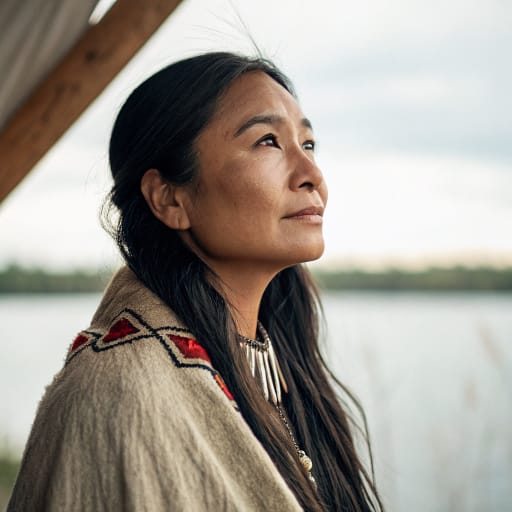
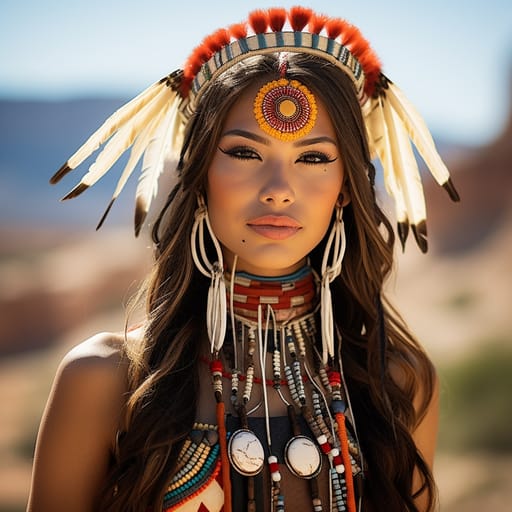
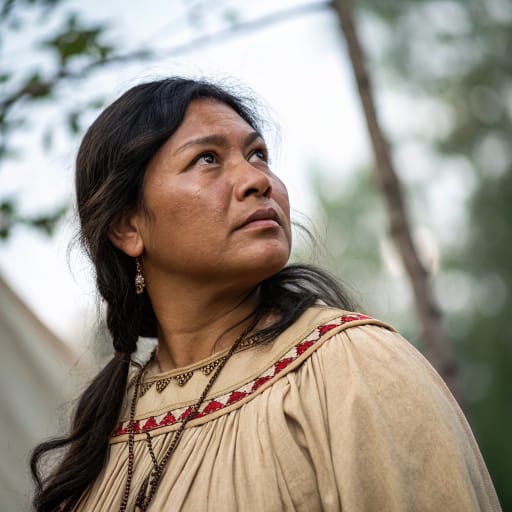
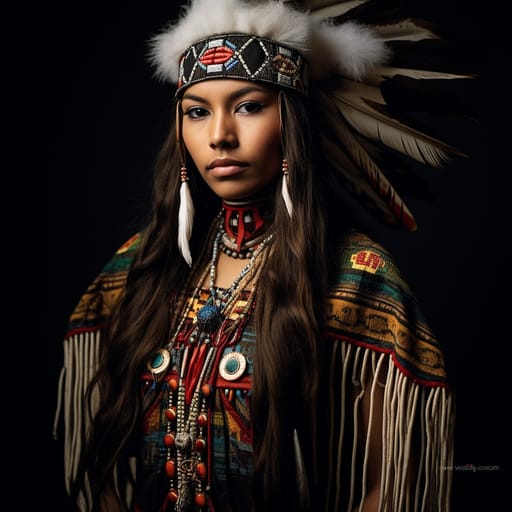
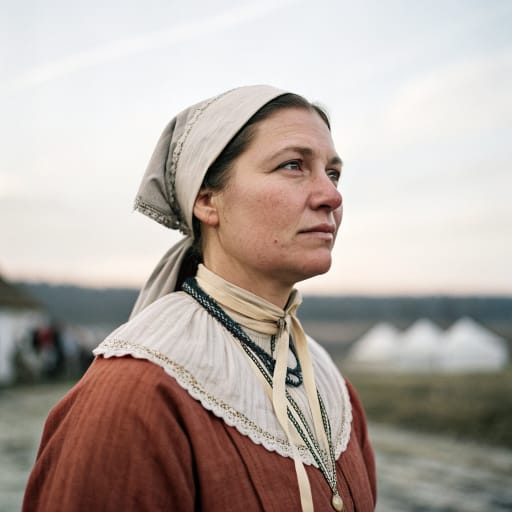
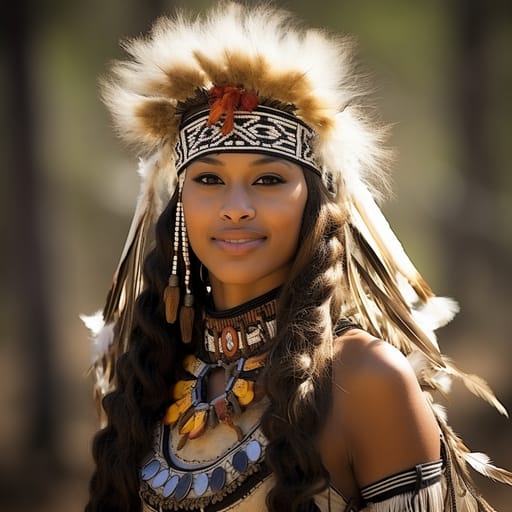
Typical Lumbee Phenotypes
Reference for AI generation: hair, eyes, skin, facial structure, build
Lumbee Body & Anatomy Reference
Anatomy by feature, Indigenous Northern American / Algonquian-Iroquoian phenotype
Lumbee Boobs & Breasts
Lumbee tits and boobs run medium cup, moderate projection, the classic Indigenous Northern American / Algonquian-Iroquoian bust profile. Lumbee nipples and areolas show medium-brown areolar pigmentation against the copper-to-medium-brown skin tone, with areolar diameter typically in the 30-44mm range and forward-set positioning rather than the smaller East Asian bust. Lumbee breasts trend full and moderate projection, a function of the mesomorph, broader frame in northern Indigenous populations body habitus and the mean adult female BMI 25-28. For anatomically accurate AI-generated Lumbee nudes the render preserves the medium cup, moderate projection shape, 30-44mm areolas with medium-brown pigmentation, and the torso proportions of the Indigenous Northern American / Algonquian-Iroquoian phenotype.
Lumbee Ass & Hips
Lumbee hips and butt usually read as medium, moderate-to-full projection. The skeletal base is medium iliac crests, the Indigenous Northern American / Algonquian-Iroquoian pattern. Set against the slim East Asian narrow-hip profile, the difference is easy to see, and the hip-to-waist ratio is often what identifies Lumbee women in photos.
Lumbee Vagina & Pussy
Expect medium-brown labial pigmentation on Lumbee women, in keeping with Indigenous Northern American / Algonquian-Iroquoian ancestry. The pubic hair is straight medium-coarse texture. Coloring should run evenly from the copper to medium-brown skin of the thighs to the labia, and Lumbee nude imagery should keep the hair's straight medium-coarse texture.
Lumbee Dicks & Penis
Lumbee dick and penile anatomy in adult AI generation should anchor on the regional reference data: regional mean ~13cm erect, moderate girth, and medium-brown shaft pigmentation. The Lumbee cock profile reflects the Indigenous Northern American / Algonquian-Iroquoian population's anthropometric measurements. The shaft pigmentation should track the surrounding copper to medium-brown skin tone, and the pubic hair should keep its straight medium-coarse texture in the typical inverted-V escutcheon.
Lumbee Body, Curves & Build
Lumbee body type: mesomorph, broader frame in northern Indigenous populations, with mean adult female BMI 25-28. This is the typical Indigenous Northern American / Algonquian-Iroquoian build. Height range, shoulder-to-hip ratio and fat distribution all follow from it, which is what an accurate Lumbee nude body should show.
Lumbee Skin Tone & Hair Texture
Lumbee skin tone falls in the copper to medium-brown (Fitzpatrick III-V) band, the surface signal most often miscalibrated by generic AI nude generators. Lumbee hair texture is typically straight 1A, dark-brown to black, often thick and dense, characteristic of the Indigenous Northern American / Algonquian-Iroquoian phenotype. In Lumbee nude renders the skin should hold that band consistently across the body.
Explore phenotype categories
Structured taxonomy with peer-reviewed scales · 22 anatomical categories
Erotic Poses & Sex Positions
From the pose catalog: 219 named positions with reference skeletons
Frequently asked questions about Lumbee people
Where is the Lumbee homeland?
The Lumbee homeland is Robeson County and the Lumber River basin of southeastern North Carolina, United States, with a long-standing urban community in East Baltimore, Maryland. in North America.
What language do Lumbee people speak?
Lumbee people primarily speak English, including the distinct Lumbee English dialect (Indo-European, Germanic). The ancestral language, probably an Eastern Siouan tongue (Siouan-Catawban), did not survive..
What religion do Lumbee people practice?
The predominant religion among Lumbee people is Protestant Christian, predominantly Baptist, Methodist and Holiness..






Make your own Lumbee images
Five a day, free, no credits to buy. The studio starts from this group's phenotype data, so you can set body type, pose and style and keep the traits accurate.
Start with Lumbee