No portrait yet
Tunumiit Erotic
East Greenland, mainly the Ammassalik district around Tasiilaq and the Ittoqqortoormiit area on Scoresby Sound, Greenland (Kingdom of Denmark)
Tunumiisut, or East Greenlandic (Eskaleut, Inuit branch); West Greenlandic and Danish are widely used in school and government
Lutheran Christianity, brought by the Danish mission founded at Tasiilaq in 1894; stories and carving still carry memories of the older shamanic tradition of the angakkoq
One of Greenland's three Inuit peoples, with the Kalaallit and Inughuit; local communities in the Ammassalik district and at Ittoqqortoormiit
About Tunumiit People
To people on Greenland's west coast, the east is Tunu, the back of the island, and the people who live there are the Tunumiit. The name fits. The inland ice on one side and a coast jammed with drift ice on the other kept East Greenland apart long after Danish trade and missions had spread through the west. When Gustav Holm's expedition reached the Ammassalik district by umiak in 1884, it found a few hundred people living almost entirely outside colonial contact. A trading station and Lutheran mission followed in 1894 at the place now called Tasiilaq, and over the next few decades most people became Christian.
Their language, Tunumiisut, is an Inuit language in the Eskaleut family and a close relative of Kalaallisut, the West Greenlandic standard. It is not close enough for easy understanding, though. The sounds differ enough that West Greenlanders often can't follow it, and much of the vocabulary is completely different. One well-known reason is an old naming taboo: after a death, no one could say the dead person's name, and everyday words that sounded like it were replaced, so the vocabulary kept changing. Schools, broadcasting and government use West Greenlandic and Danish, so many Tunumiit move between three languages, and the status of their own language is still an open question.
Most Tunumiit live in Tasiilaq and in small settlements nearby such as Kulusuk, Kuummiit, Tiniteqilaaq and Sermiligaaq. The airstrip at Kulusuk was built in the 1950s for a US radar station, and it is now the main way into the region. A second community lives far to the north at Ittoqqortoormiit, founded in 1925 mostly by families moved there from the Ammassalik district. Hunting still shapes the year more than it does in the west: seal, narwhal and polar bear, dog sleds on the winter ice, and boats once the ice breaks up.
Some of what outsiders know about East Greenland comes from things that were never meant for them. The tupilak was once a secret and harmful creature that a shaman put together from bone, skin and scraps and sent against an enemy. When Europeans asked to see one, carvers began making small figures from bone, sperm whale tooth and narwhal tusk, and those requests grew into a craft Tasiilaq is now known for. People once settled disputes with drum song duels, in which two rivals mocked each other in verse in front of an audience. The small wooden coastline maps carved by a man named Kunit, which Holm's expedition brought back, are still some of the best-known examples of Inuit mapmaking.
Related ethnic groups
Groups that share Tunumiit's homeland, region, language, or religious tradition. These are likely candidates for comparative phenotype reference.
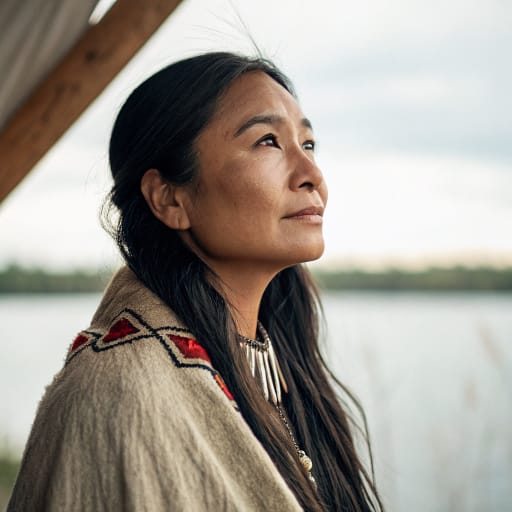
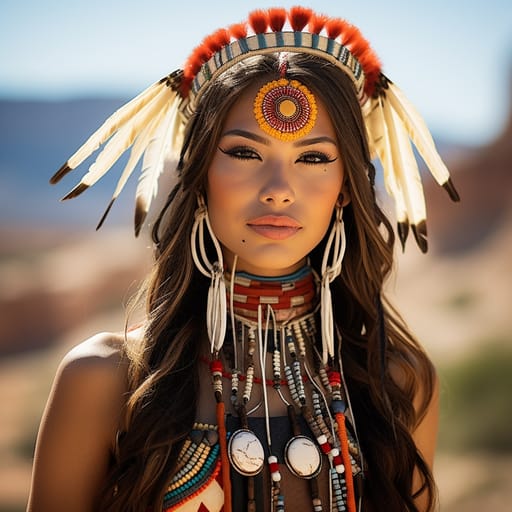
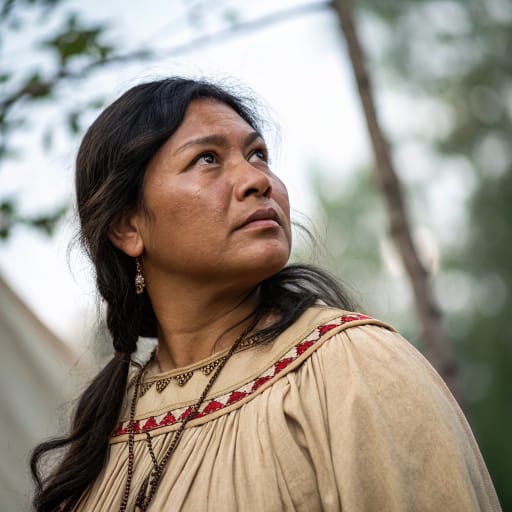
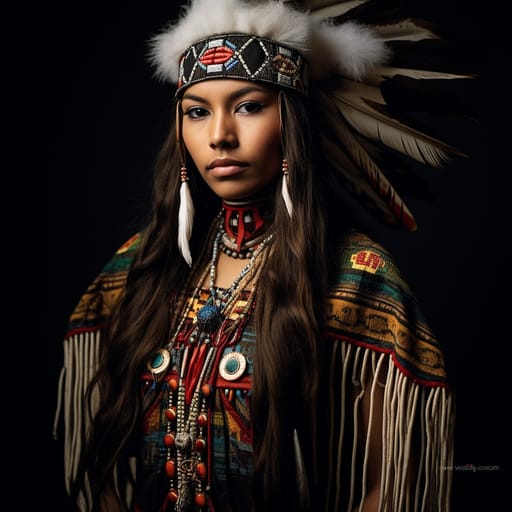
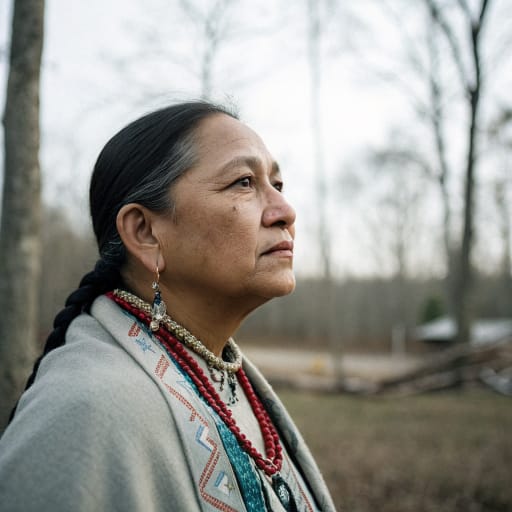
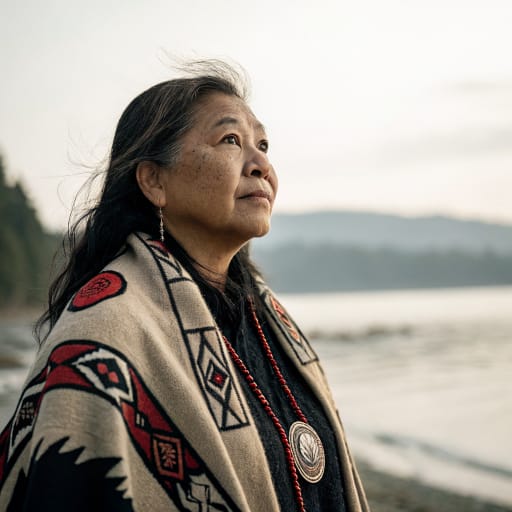
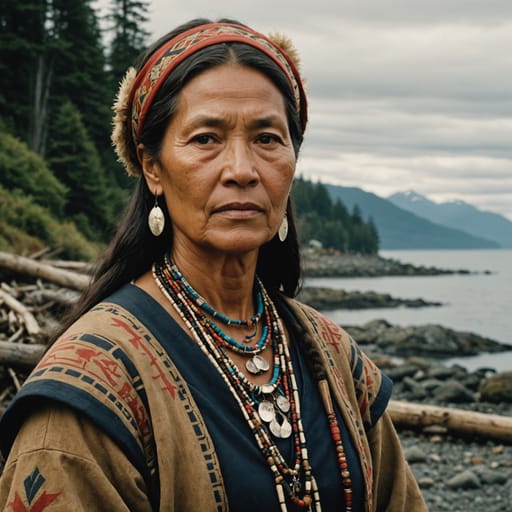
Typical Tunumiit Phenotypes
Reference for AI generation: hair, eyes, skin, facial structure, build
Tunumiit Body & Anatomy Reference
Anatomy by feature, Indigenous Northern American / Algonquian-Iroquoian phenotype
Tunumiit Boobs & Breasts
Bust reference for Tunumiit women: medium cup, moderate projection, which is typical of Indigenous Northern American / Algonquian-Iroquoian ancestry. Areolas measure about 30-44mm across, with medium-brown pigmentation. Body type (mesomorph, broader frame in northern Indigenous populations) shapes the bust as well, so Tunumiit tits are usually full and moderate projection. In AI imagery, keep the forward-set shape rather than drifting toward the smaller East Asian bust.
Tunumiit Ass & Hips
The Tunumiit ass is typically medium, moderate-to-full projection, which sets it apart from the slim East Asian narrow-hip profile. Underneath, the pelvis shows medium iliac crests, part of the Indigenous Northern American / Algonquian-Iroquoian skeletal pattern. For Tunumiit butt pics and AI renders, match that silhouette and the overall build (mesomorph, broader frame in northern Indigenous populations).
Tunumiit Vagina & Pussy
Tunumiit pussy and vulvar anatomy presents medium-brown labial pigmentation, consistent with the Indigenous Northern American / Algonquian-Iroquoian phenotype's pigmentation pattern. Tunumiit pubic hair is typically straight medium-coarse texture, in the inverted-triangle pattern. For anatomically accurate Tunumiit pussy renders the labial coloration should match the surrounding copper to medium-brown skin tone with a continuous gradient, and the hair should keep its straight medium-coarse texture.
Tunumiit Dicks & Penis
Tunumiit dicks follow the Indigenous Northern American / Algonquian-Iroquoian reference data: regional mean ~13cm erect; moderate girth; medium-brown shaft pigmentation. Shaft color should track the copper to medium-brown skin tone with a smooth change toward the glans, and Tunumiit pubic hair keeps its straight medium-coarse texture.
Tunumiit Body, Curves & Build
Tunumiit body type and overall build presents as mesomorph, broader frame in northern Indigenous populations, with mean adult female BMI 25-28: the characteristic Indigenous Northern American / Algonquian-Iroquoian habitus. Tunumiit curves and proportions should keep the regional skeletal frame (height, shoulder-to-hip ratio, limb proportions) rather than a generic mesomorph default.
Tunumiit Skin Tone & Hair Texture
Tunumiit skin sits in the copper to medium-brown (Fitzpatrick III-V) band. Hair is typically straight 1A, dark-brown to black, often thick and dense, in keeping with the Indigenous Northern American / Algonquian-Iroquoian phenotype. In nude renders the skin should stay one even tone from face to body, and body, pubic and head hair should match.
Explore phenotype categories
Structured taxonomy with peer-reviewed scales · 22 anatomical categories
Erotic Poses & Sex Positions
From the pose catalog: 219 named positions with reference skeletons
Frequently asked questions about Tunumiit people
Where is the Tunumiit homeland?
The Tunumiit homeland is East Greenland, mainly the Ammassalik district around Tasiilaq and the Ittoqqortoormiit area on Scoresby Sound, Greenland (Kingdom of Denmark) in North America.
What language do Tunumiit people speak?
Tunumiit people primarily speak Tunumiisut, or East Greenlandic (Eskaleut, Inuit branch); West Greenlandic and Danish are widely used in school and government.
What religion do Tunumiit people practice?
The predominant religion among Tunumiit people is Lutheran Christianity, brought by the Danish mission founded at Tasiilaq in 1894; stories and carving still carry memories of the older shamanic tradition of the angakkoq.






Make your own Tunumiit images
Five a day, free, no credits to buy. The studio starts from this group's phenotype data, so you can set body type, pose and style and keep the traits accurate.
Start with Tunumiit