Help us get this right
Does this portrait look right for Mattaponi?
Nobody has judged this one yet. You would be the first.
Mattaponi Erotic
Reservation land along the Mattaponi River in King William County, Virginia, United States
English; historically Virginia Algonquian, also called Powhatan (Eastern Algonquian, Algic), now dormant
Christian, predominantly Baptist, alongside retained traditional practice
An Algonquian tribe of the Powhatan paramount chiefdom (Tsenacommacah), closely tied to the Pamunkey and distinct from the separately recognized Upper Mattaponi
About Mattaponi People
Two tribes in Virginia still hold reservation land granted before the United States existed, and the Mattaponi are one of them. Their ground is a narrow few hundred acres in King William County, bending along the river that carries their name above its meeting with the Pamunkey at West Point. The claim rests on treaties made with the English colony in 1646 and confirmed at Middle Plantation in 1677, when the surviving Powhatan tribes accepted tributary status under the Crown. Because that arrangement is older than the federal government, the Mattaponi answer to Richmond rather than to Washington: they are recognized by the Commonwealth and not by the United States, unlike several neighbors, including the separate Upper Mattaponi tribe upriver, who gained federal recognition in 2018. The old obligation is still performed. Every year before Thanksgiving, tribal leaders carry deer, turkey and fish to the governor as tribute in place of taxes, a transaction that has outlasted the Crown, the colony and the Confederacy.
The language went quiet early. Virginia Algonquian, an Eastern Algonquian tongue related to the speech of Delaware and coastal Carolina peoples, survives mainly in word lists compiled by John Smith and William Strachey, and English has been the community's language for well over two centuries. Religious life runs through a Baptist church on the reservation that doubles as the center of community business, a pattern across Virginia Indian communities that reflects a long habit of building tribal institutions inside acceptable Protestant forms. The river remains the practical center of identity. The tribe has run a shad hatchery on the reservation for decades, taking eggs from American shad and releasing fry back into the Mattaponi, and it was the shad that drove the long fight against a proposed reservoir meant to draw river water for Newport News. The tribe argued the withdrawal would ruin spawning conditions and violate the 1677 treaty, and after roughly fifteen years of permit battles the project died. The harder injury was on paper. Under the Racial Integrity Act of 1924, Virginia registrar Walter Plecker ordered Indians reclassified as colored on birth and marriage records, erasing in a filing cabinet what the tribe had held through three centuries of settlement. Rebuilding that documentation has occupied much of the last fifty years.
Related ethnic groups
Groups that share Mattaponi's homeland, region, language, or religious tradition. These are likely candidates for comparative phenotype reference.
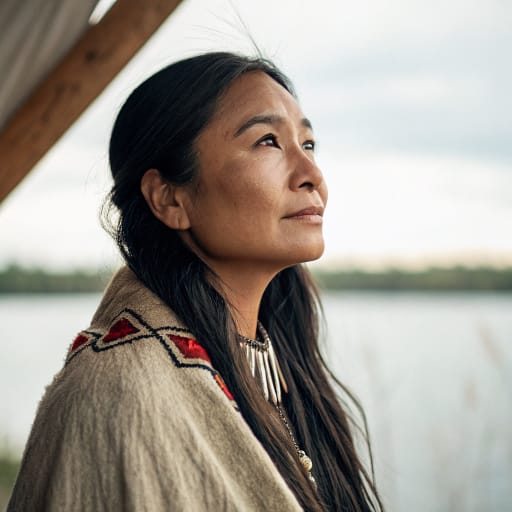
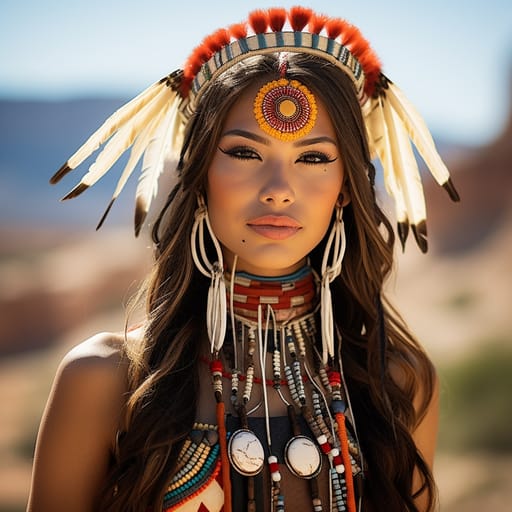
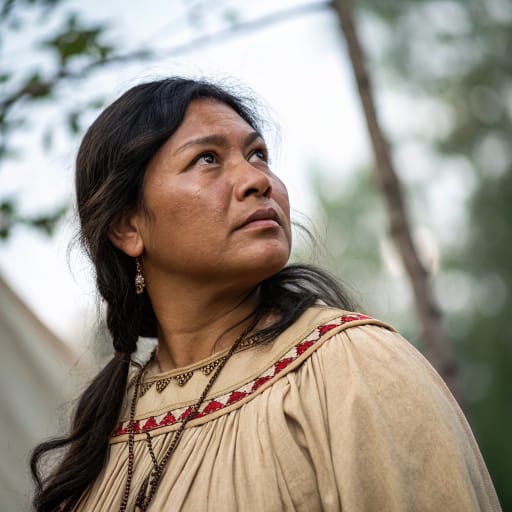
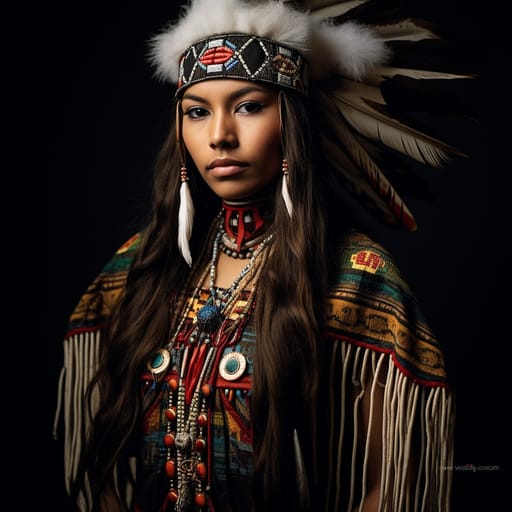
Typical Mattaponi Phenotypes
Reference for AI generation: hair, eyes, skin, facial structure, build
Mattaponi Body & Anatomy Reference
Indigenous Northern American / Algonquian-Iroquoian phenotype: anatomy reference for AI nude generation
Mattaponi Boobs & Breasts
The typical Mattaponi bust is medium cup, moderate projection, in line with the wider Indigenous Northern American / Algonquian-Iroquoian pattern. Areolas usually fall in the 30-44mm range, with medium-brown areolar pigmentation against the copper-to-medium-brown skin tone. Compared with the smaller East Asian bust, Mattaponi breasts sit forward and are generally full and moderate projection. A faithful AI render of Mattaponi tits keeps that shape and areola size.
Mattaponi Ass & Hips
Butt shape among Mattaponi women: medium, moderate-to-full projection, over medium iliac crests. This follows Indigenous Northern American / Algonquian-Iroquoian ancestry and looks quite unlike the slim East Asian narrow-hip profile. An accurate Mattaponi ass in adult AI imagery keeps both the silhouette and the overall build (mesomorph, broader frame in northern Indigenous populations) instead of a generic average.
Mattaponi Vagina & Pussy
Vulvar anatomy among Mattaponi women: medium-brown labial pigmentation. Pubic hair tends to be straight medium-coarse texture, in the usual inverted-triangle pattern. Both follow Indigenous Northern American / Algonquian-Iroquoian pigmentation, which is why Mattaponi pussy renders should not fall back on a pale, sparse Western template.
Mattaponi Dicks & Penis
The Mattaponi cock profile, from Indigenous Northern American / Algonquian-Iroquoian anthropometric data: regional mean ~13cm erect; moderate girth; medium-brown shaft pigmentation. Pubic hair has a straight medium-coarse texture and forms the usual inverted-V pattern. Whether Mattaponi men are circumcised follows religious and cultural practice rather than phenotype.
Mattaponi Body, Curves & Build
Build and curves among Mattaponi women follow the Indigenous Northern American / Algonquian-Iroquoian pattern: mesomorph, broader frame in northern Indigenous populations, mean adult female BMI 25-28. Proportions matter as much as skin tone, so Mattaponi figures should keep their regional height and limb ratios.
Mattaponi Skin Tone & Hair Texture
The Mattaponi skin range is copper to medium-brown (Fitzpatrick III-V), and hair tends to be straight 1A, dark-brown to black, often thick and dense. That combination marks the Indigenous Northern American / Algonquian-Iroquoian phenotype, and skin tone is the trait AI generators most often get wrong for Mattaponi women.
Explore phenotype categories
Structured taxonomy with peer-reviewed scales · 22 anatomical categories
Erotic Poses & Sex Positions
From the pose catalog: 219 named positions with reference skeletons
Frequently asked questions about Mattaponi people
Where is the Mattaponi homeland?
The Mattaponi homeland is Reservation land along the Mattaponi River in King William County, Virginia, United States in North America.
What language do Mattaponi people speak?
Mattaponi people primarily speak English; historically Virginia Algonquian, also called Powhatan (Eastern Algonquian, Algic), now dormant.
What religion do Mattaponi people practice?
The predominant religion among Mattaponi people is Christian, predominantly Baptist, alongside retained traditional practice.






Make your own Mattaponi images
Five a day, free, no credits to buy. The studio starts from this group's phenotype data, so you can set body type, pose and style and keep the traits accurate.
Start with Mattaponi