No portrait yet
Sadlermiut Erotic
Southampton Island (Salliq), Coats Island and Walrus Island, northern Hudson Bay, Nunavut, Canada.
Sadlermiut dialect of Inuktitut (Eskimo-Aleut), reported as difficult for neighboring Inuit to follow; little of it was recorded before it went silent.
Traditional Inuit belief, shamanic practice centered on sea mammals and hunting observance; never missionized.
Inuit, Thule descended; counted among the Canadian Central Inuit, with island settlements on Southampton, Coats and Walrus, and the Aivilingmiut as nearest neighbors.
About Sadlermiut People
The Sadlermiut were an Inuit people of northern Hudson Bay who stopped existing as a people over about six weeks in the fall of 1902. They lived on Southampton Island and the smaller islands beside it, in what is now Nunavut, Canada, with their main settlement at Native Point on the island's southeast coast. A sickness came ashore that season from a Scottish whaling ship and went through them almost completely: of the fifty or sixty still alive, one woman and a few children survived. Those survivors were taken in by Aivilingmiut from the mainland, who resettled the island over the following decades. The town of Coral Harbour sits there now, and its people descend from those newcomers. The island's Inuktitut name, Salliq, is the root of the Sadlermiut's own name for themselves: Sallirmiut, the people of Salliq.
What had made them worth remarking on long before the epidemic was how far they had drifted from everyone around them. Whalers and mainland Inuit alike found their speech hard going, a dialect that had gone its own way over centuries of near isolation. Their material life was off pattern too: they wintered in low houses of stone, sod and whale bone rather than snow houses, kept few dogs, made little use of the kayak, and took walrus at the floe edge and along the shore instead of ranging far. They dressed in what the islands gave them, polar bear hide and the skins of eider ducks and other seabirds, where their neighbors dressed in caribou. Their religious life was the older Inuit one, with sea mammals understood as beings holding claims on the living and shamans working that relationship. Missionaries never reached them. The strangeness fed a long theory that they were the last of the Tuniit, the Dorset people who held the Arctic before the Thule expansion. Ancient DNA has largely closed that argument the other way: the Sadlermiut group with Thule descended Inuit, and their oddities look like what isolation does to a small population over a long time. What remains of them is a large archaeological site, excavated in the 1950s, and a set of photographs and plaster life casts made by an American whaling captain a few years before the end. Which is to say that nearly everything known about them was collected by outsiders, some of it after they were already gone.
Related ethnic groups
Groups that share Sadlermiut's homeland, region, language, or religious tradition. These are likely candidates for comparative phenotype reference.
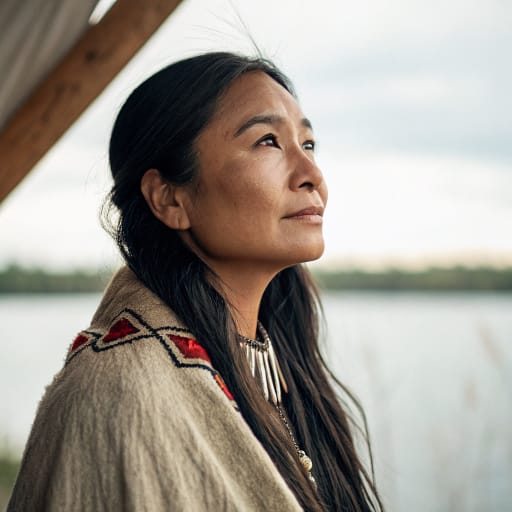
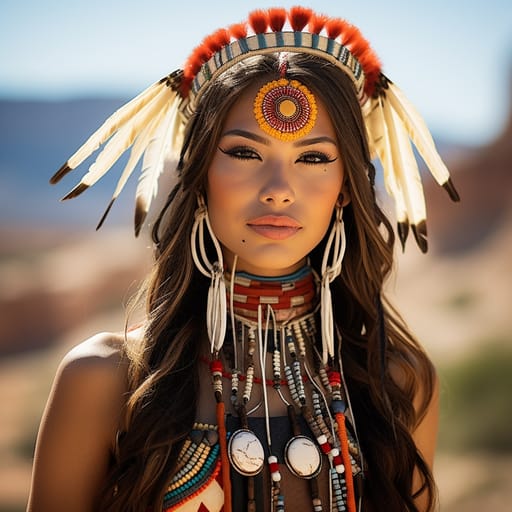
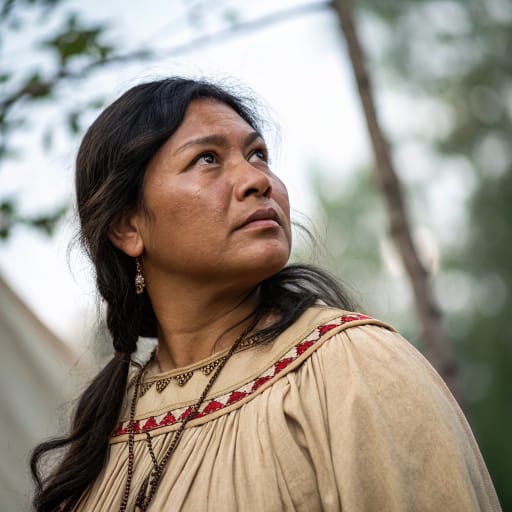
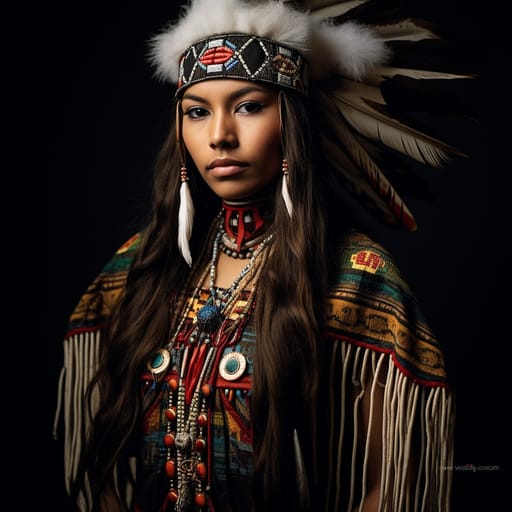
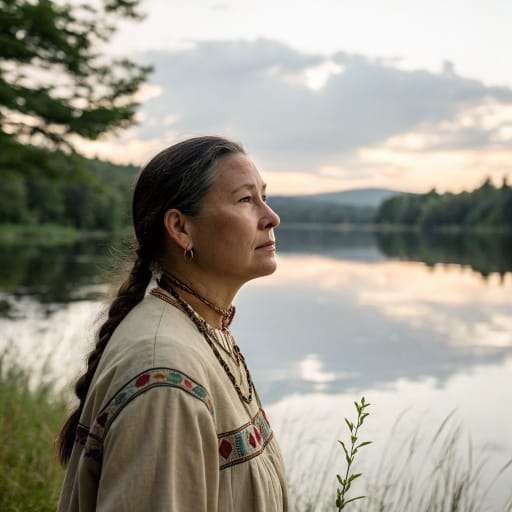
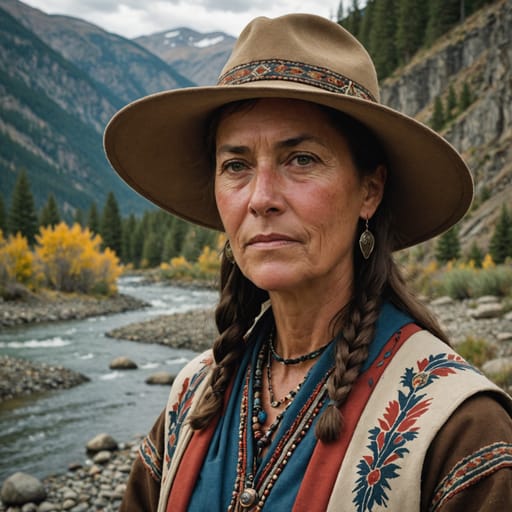
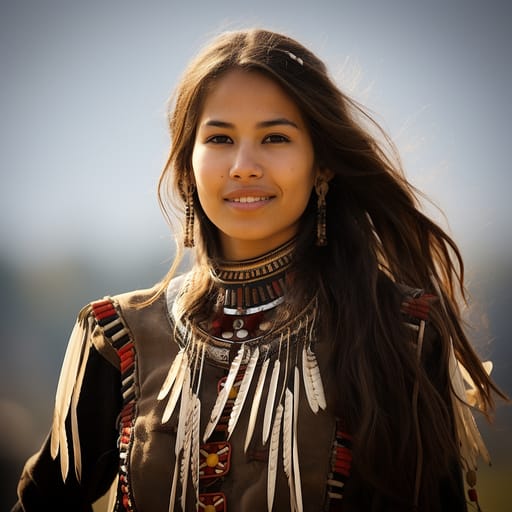
Typical Sadlermiut Phenotypes
Reference for AI generation: hair, eyes, skin, facial structure, build
Sadlermiut Body & Anatomy Reference
Indigenous Northern American / Algonquian-Iroquoian phenotype: anatomy reference for AI nude generation
Sadlermiut Boobs & Breasts
Sadlermiut boobs follow the Indigenous Northern American / Algonquian-Iroquoian profile: medium cup, moderate projection. Areolar diameter is usually 30-44mm, and the coloring is medium-brown areolar pigmentation against the copper-to-medium-brown skin tone. Breast shape tracks body composition (mesomorph, broader frame in northern Indigenous populations, mean adult female BMI 25-28), so Sadlermiut breasts tend to be full and moderate projection. Expect a forward-set shape, not the smaller East Asian bust.
Sadlermiut Ass & Hips
Sadlermiut ass and hip morphology presents as medium, moderate-to-full projection, distinctly different from the slim East Asian narrow-hip profile. The Sadlermiut pelvic profile shows medium iliac crests, anchored in the Indigenous Northern American / Algonquian-Iroquoian skeletal pattern. Sadlermiut butt shots in adult AI imagery should render the medium, moderate-to-full projection silhouette with the overall build (mesomorph, broader frame in northern Indigenous populations) and the fat distribution typical of the Indigenous Northern American / Algonquian-Iroquoian phenotype.
Sadlermiut Vagina & Pussy
Sadlermiut pussy anatomy typically shows medium-brown labial pigmentation. Pubic hair is usually straight medium-coarse texture. In AI-generated Sadlermiut nudes, labial color should blend into the copper to medium-brown skin with a gradual transition, and the hair should keep its straight medium-coarse texture.
Sadlermiut Dicks & Penis
Penis reference for Sadlermiut men: regional mean ~13cm erect, moderate girth. Coloring: medium-brown shaft pigmentation. An accurate Sadlermiut cock in AI imagery matches the surrounding copper to medium-brown skin rather than a generic porn default. Circumcision depends on religion and custom, not ancestry.
Sadlermiut Body, Curves & Build
The Sadlermiut figure is generally mesomorph, broader frame in northern Indigenous populations, with mean adult female BMI 25-28, characteristic of Indigenous Northern American / Algonquian-Iroquoian ancestry. AI image tools tend to flatten regional body types into a few stock shapes; here the Sadlermiut build is kept as its own reference.
Sadlermiut Skin Tone & Hair Texture
Skin: copper to medium-brown (Fitzpatrick III-V). Hair: straight 1A, dark-brown to black, often thick and dense. Both are typical of Indigenous Northern American / Algonquian-Iroquoian ancestry. The most common mistake in AI nudes of Sadlermiut women is a body rendered lighter than the face.
Explore phenotype categories
Structured taxonomy with peer-reviewed scales · 22 anatomical categories
Erotic Poses & Sex Positions
From the pose catalog: 219 named positions with reference skeletons
Frequently asked questions about Sadlermiut people
Where is the Sadlermiut homeland?
The Sadlermiut homeland is Southampton Island (Salliq), Coats Island and Walrus Island, northern Hudson Bay, Nunavut, Canada. in North America.
What language do Sadlermiut people speak?
Sadlermiut people primarily speak Sadlermiut dialect of Inuktitut (Eskimo-Aleut), reported as difficult for neighboring Inuit to follow; little of it was recorded before it went silent..
What religion do Sadlermiut people practice?
The predominant religion among Sadlermiut people is Traditional Inuit belief, shamanic practice centered on sea mammals and hunting observance; never missionized..






Make your own Sadlermiut images
Five a day, free, no credits to buy. The studio starts from this group's phenotype data, so you can set body type, pose and style and keep the traits accurate.
Start with Sadlermiut