Help us get this right
Does this portrait look right for Cowasuck?
Nobody has judged this one yet. You would be the first.
Cowasuck Erotic
Upper Connecticut River valley around the Coos meadows of Newbury, Vermont and Haverhill, New Hampshire, United States; many later moved to Odanak, Quebec, Canada
Western Abenaki (Algonquian, Eastern Algonquian branch); now kept alive through revitalization work, with English in daily use
Traditional Abenaki spiritual practice; Roman Catholicism through the Quebec missions from the eighteenth century
Western Abenaki band of the Wabanaki peoples, alongside the Sokoki and Missisquoi; modern organizations include the Cowasuck Band of the Pennacook-Abenaki People and a Vermont Koasek band
About Cowasuck People
The Cowasuck take their name from a place: the wide oxbow meadows of the upper Connecticut River, where Newbury, Vermont and Haverhill, New Hampshire now face each other across the water. Abenaki speakers called it Koasek. The word is usually translated as the place of pines, though some trace it to the river's crooked bends. The people who lived there were one of several Western Abenaki river bands. With the Sokoki downstream and the Missisquoi near Lake Champlain, they made up the western edge of the Wabanaki world. Spring floods renewed the soil for corn, beans and squash, and salmon runs and hunting in the hills filled out the rest of the year. Those same open meadows drew English settlers upriver in the 1760s.
Their language was Western Abenaki, an Eastern Algonquian language they shared with those neighboring bands. Its last fluent native speakers lived at Odanak in Quebec. Today it survives through dictionaries, recordings and classroom teaching, not everyday talk at home. The seventeenth century brought epidemics, followed by the refugees and reprisals of King Philip's War. Coos became a stop on the war trail between the French missions of the Saint Lawrence valley and the English frontier towns. During the eighteenth century most Cowasuck families moved north to the mission of Saint-François, today called Odanak. There Catholicism took hold alongside older stories of the culture hero Gluskabe. In the century that followed, Odanak families came south each summer to sell ash-splint and sweetgrass baskets at White Mountain resorts, a short trip from the old Coos meadows. Historians still disagree about how many Cowasuck never went north at all.
That disagreement is why the name is disputed today. Several New England organizations identify as Cowasuck or Koasek. They include the Cowasuck Band of the Pennacook-Abenaki People, active in New Hampshire's Native cultural life, and a Koasek band that Vermont recognizes at the state level. None has federal recognition, and Odanak First Nation has publicly questioned whether several of these groups are Indigenous. An honest account of the Cowasuck has to include both sides: a well-documented river people of the colonial frontier, and a modern identity whose link to them is still argued over in public.
Related ethnic groups
Groups that share Cowasuck's homeland, region, language, or religious tradition. These are likely candidates for comparative phenotype reference.
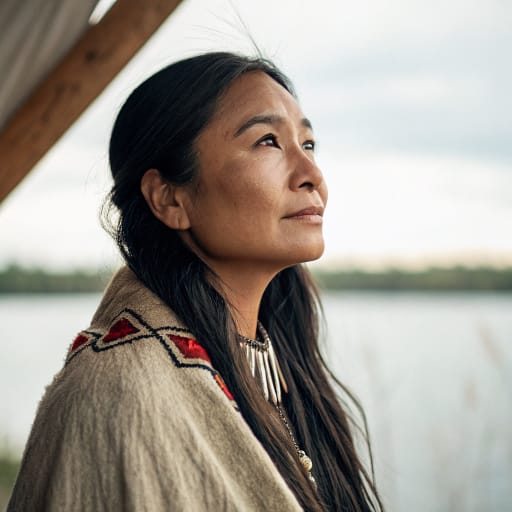
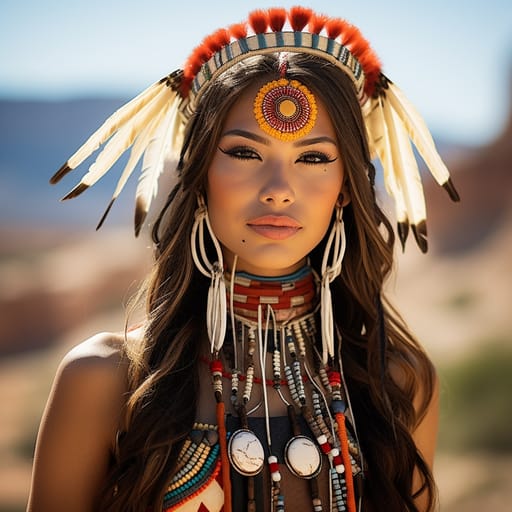
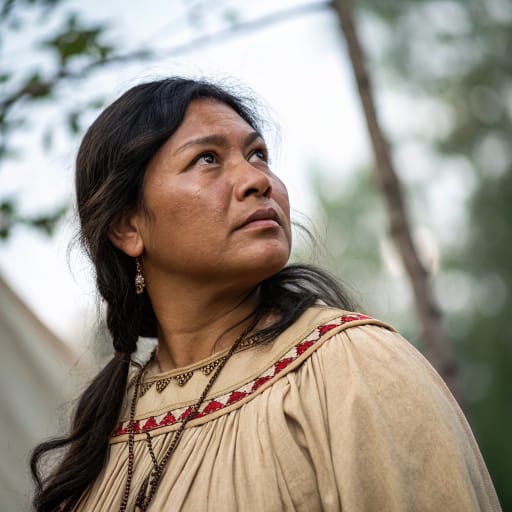
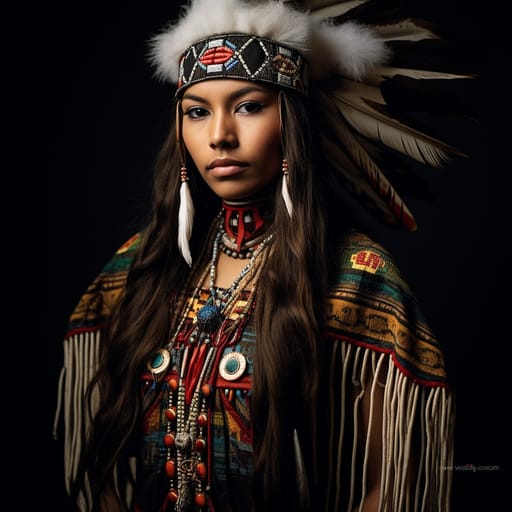
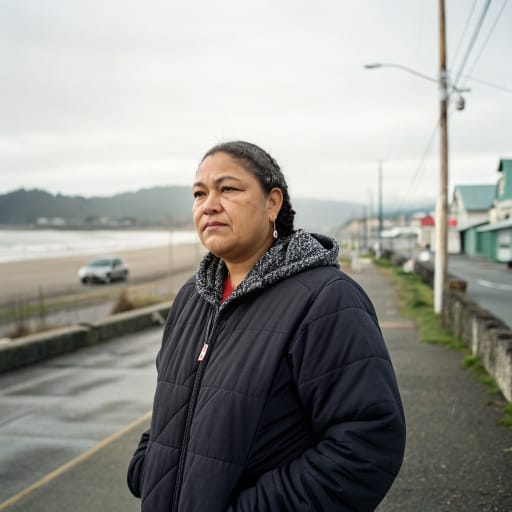
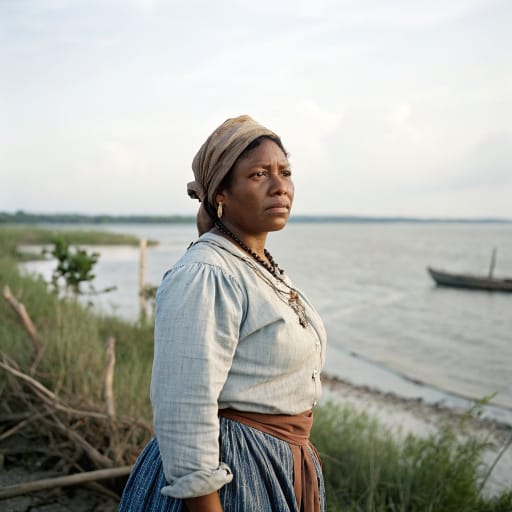
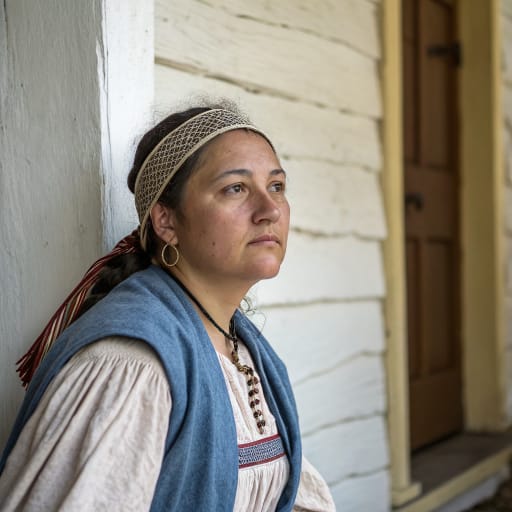
Typical Cowasuck Phenotypes
Reference for AI generation: hair, eyes, skin, facial structure, build
Cowasuck Body & Anatomy Reference
Indigenous Northern American / Algonquian-Iroquoian phenotype: anatomy reference for AI nude generation
Cowasuck Boobs & Breasts
Cowasuck boobs follow the Indigenous Northern American / Algonquian-Iroquoian profile: medium cup, moderate projection. Areolar diameter is usually 30-44mm, and the coloring is medium-brown areolar pigmentation against the copper-to-medium-brown skin tone. Breast shape tracks body composition (mesomorph, broader frame in northern Indigenous populations, mean adult female BMI 25-28), so Cowasuck breasts tend to be full and moderate projection. Expect a forward-set shape, not the smaller East Asian bust.
Cowasuck Ass & Hips
Cowasuck ass and hip morphology presents as medium, moderate-to-full projection, distinctly different from the slim East Asian narrow-hip profile. The Cowasuck pelvic profile shows medium iliac crests, anchored in the Indigenous Northern American / Algonquian-Iroquoian skeletal pattern. Cowasuck butt shots in adult AI imagery should render the medium, moderate-to-full projection silhouette with the overall build (mesomorph, broader frame in northern Indigenous populations) and the fat distribution typical of the Indigenous Northern American / Algonquian-Iroquoian phenotype.
Cowasuck Vagina & Pussy
Cowasuck pussy anatomy typically shows medium-brown labial pigmentation. Pubic hair is usually straight medium-coarse texture. In AI-generated Cowasuck nudes, labial color should blend into the copper to medium-brown skin with a gradual transition, and the hair should keep its straight medium-coarse texture.
Cowasuck Dicks & Penis
Penis reference for Cowasuck men: regional mean ~13cm erect, moderate girth. Coloring: medium-brown shaft pigmentation. An accurate Cowasuck cock in AI imagery matches the surrounding copper to medium-brown skin rather than a generic porn default. Circumcision depends on religion and custom, not ancestry.
Cowasuck Body, Curves & Build
The Cowasuck figure is generally mesomorph, broader frame in northern Indigenous populations, with mean adult female BMI 25-28, characteristic of Indigenous Northern American / Algonquian-Iroquoian ancestry. AI image tools tend to flatten regional body types into a few stock shapes; here the Cowasuck build is kept as its own reference.
Cowasuck Skin Tone & Hair Texture
Skin: copper to medium-brown (Fitzpatrick III-V). Hair: straight 1A, dark-brown to black, often thick and dense. Both are typical of Indigenous Northern American / Algonquian-Iroquoian ancestry. The most common mistake in AI nudes of Cowasuck women is a body rendered lighter than the face.
Explore phenotype categories
Structured taxonomy with peer-reviewed scales · 22 anatomical categories
Erotic Poses & Sex Positions
From the pose catalog: 219 named positions with reference skeletons
Frequently asked questions about Cowasuck people
Where is the Cowasuck homeland?
The Cowasuck homeland is Upper Connecticut River valley around the Coos meadows of Newbury, Vermont and Haverhill, New Hampshire, United States; many later moved to Odanak, Quebec, Canada in North America.
What language do Cowasuck people speak?
Cowasuck people primarily speak Western Abenaki (Algonquian, Eastern Algonquian branch); now kept alive through revitalization work, with English in daily use.
What religion do Cowasuck people practice?
The predominant religion among Cowasuck people is Traditional Abenaki spiritual practice; Roman Catholicism through the Quebec missions from the eighteenth century.






Make your own Cowasuck images
Five a day, free, no credits to buy. The studio starts from this group's phenotype data, so you can set body type, pose and style and keep the traits accurate.
Start with Cowasuck