No portrait yet
Oneida Erotic
Central New York around Oneida Lake, United States; today also near Green Bay, Wisconsin, near Verona, New York, and on the Thames River near London, Ontario, Canada.
Oneida (Iroquoian, Northern Iroquoian branch); English
Christianity (Methodist, Episcopal, Presbyterian) and the Haudenosaunee Longhouse religion (Code of Handsome Lake)
One of the Six Nations of the Haudenosaunee (Iroquois Confederacy); three modern nations: Oneida Nation (Wisconsin), Oneida Indian Nation (New York), Oneida Nation of the Thames (Ontario); Wolf, Turtle and Bear clans
About Oneida People
The Oneida call themselves Onyota'a:ka, the People of the Standing Stone, after a boulder said to have followed them from village to village and marked wherever they settled. They are one of the five founding nations of the Haudenosaunee, the Iroquois Confederacy, and their original country was the stretch of central New York around Oneida Lake and Oneida Creek, between the Mohawk to the east and the Onondaga to the west. In confederacy council they sit with the Cayuga as the younger brothers, a ranking that governs the order of debate rather than prestige. Society runs through the mother's line: the three clans, Wolf, Turtle and Bear, pass from mother to child, and clan mothers hold the power to name chiefs and to remove them.
The Oneida language is Northern Iroquoian and close kin to Mohawk. It is also among the most endangered languages in the confederacy. The remaining fluent first-language speakers are elderly and mostly live in Ontario, while immersion schools and adult classes in Wisconsin and New York work to raise a new generation of speakers.
The defining rupture came in the American Revolution. While most of the confederacy sided with Britain, the Oneida and Tuscarora fought with the colonists, bled at Oriskany in 1777, and carried corn to Washington's starving army at Valley Forge. The reward was slow dispossession. New York State pushed through a series of treaties that stripped nearly all Oneida land in defiance of federal law, and by the 1840s the nation had split three ways: one large body to Wisconsin near Green Bay, another to the Thames River in Ontario, and a remnant holding on in New York on a few dozen acres. Those three communities are today the Oneida Nation in Wisconsin, the Oneida Nation of the Thames and the Oneida Indian Nation of New York, each self-governing under the shared name. A 1985 Supreme Court ruling affirmed the New York Oneida's right to sue over the old treaties, and the casino economy that followed has remade the nation's fortunes around Verona.
Religion is genuinely divided. The Presbyterian missionary Samuel Kirkland converted many Oneida in the 1760s and 1770s, and Methodist and Episcopal congregations traveled with the migrants west and north. Alongside them the Longhouse tradition, shaped by the Seneca prophet Handsome Lake, keeps the ceremonial year of Midwinter, Green Corn and the Strawberry festival. At socials and Longhouse gatherings the feathered gustoweh cap still announces nation: an Oneida man's carries two feathers upright and one trailing down. The unrelated Oneida Community, the nineteenth-century utopian commune that became a silverware company, simply borrowed the name from the land.
Related ethnic groups
Groups that share Oneida's homeland, region, language, or religious tradition. These are likely candidates for comparative phenotype reference.
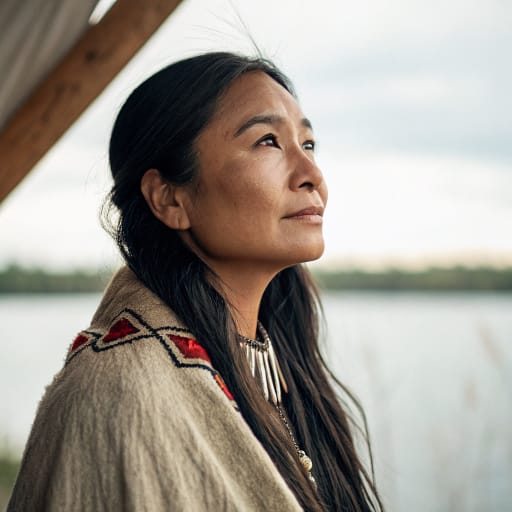
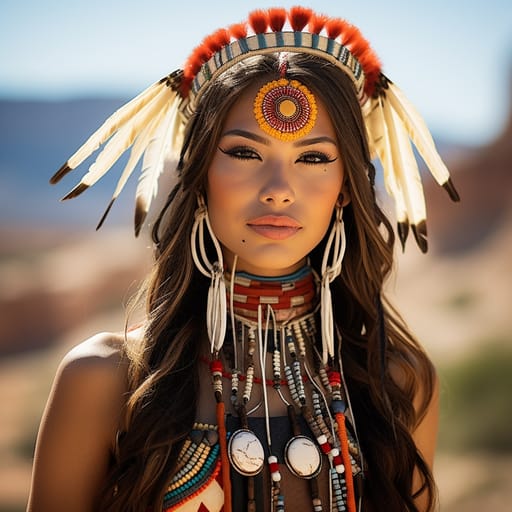
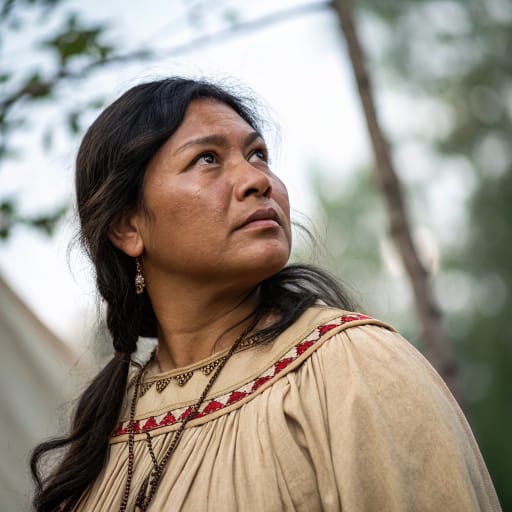
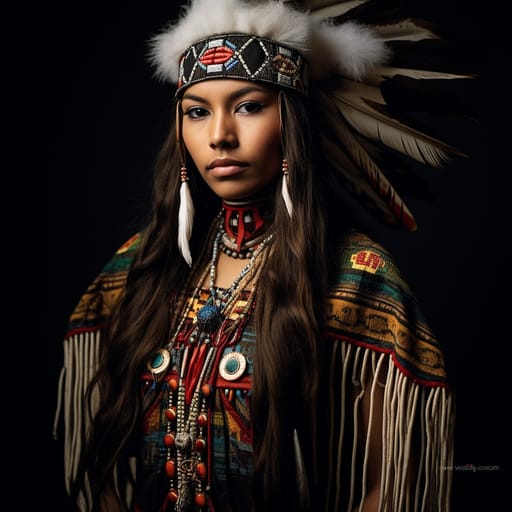
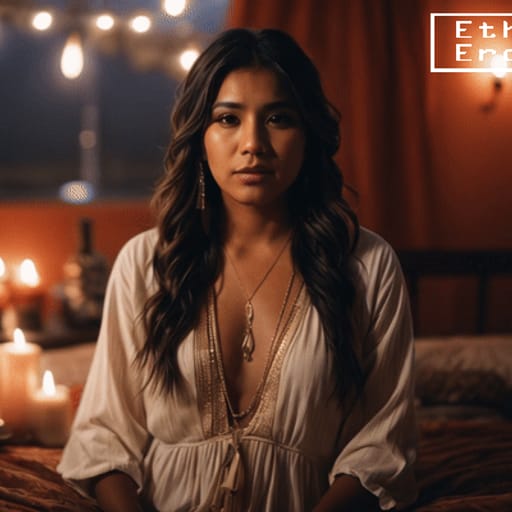
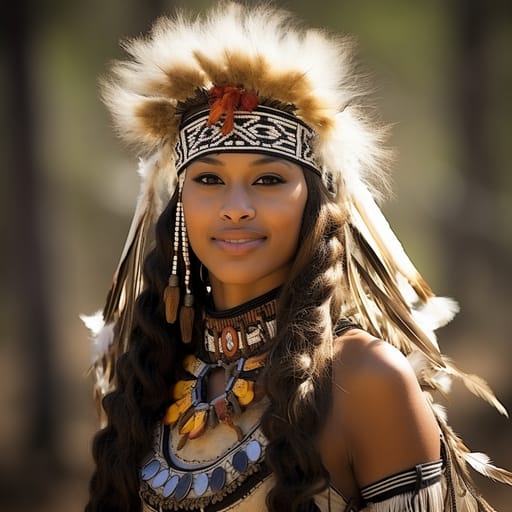
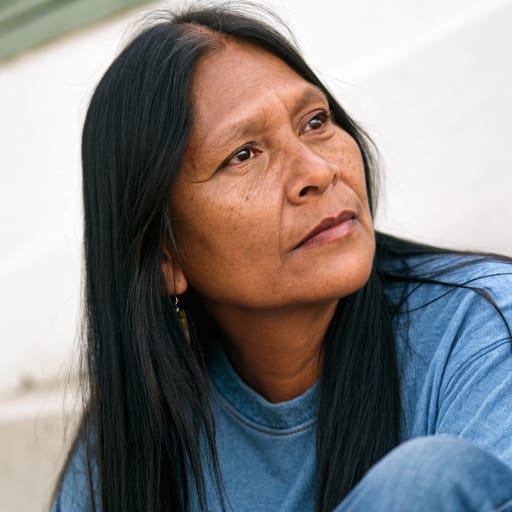
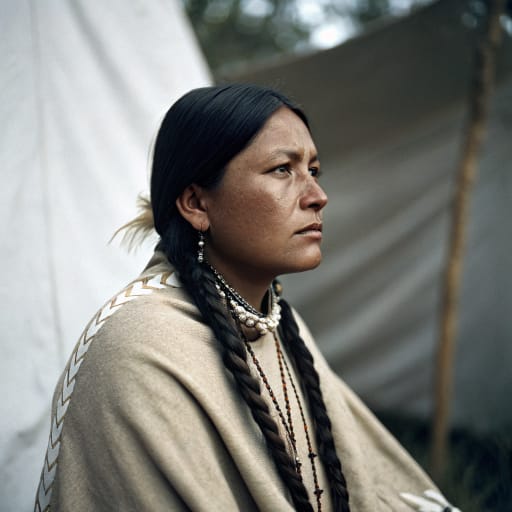
Typical Oneida Phenotypes
Reference for AI generation: hair, eyes, skin, facial structure, build
Oneida Body & Anatomy Reference
Anatomy by feature, Indigenous Northern American / Algonquian-Iroquoian phenotype
Oneida Boobs & Breasts
Oneida boobs follow the Indigenous Northern American / Algonquian-Iroquoian profile: medium cup, moderate projection. Areolar diameter is usually 30-44mm, and the coloring is medium-brown areolar pigmentation against the copper-to-medium-brown skin tone. Breast shape tracks body composition (mesomorph, broader frame in northern Indigenous populations, mean adult female BMI 25-28), so Oneida breasts tend to be full and moderate projection. Expect a forward-set shape, not the smaller East Asian bust.
Oneida Ass & Hips
Oneida ass and hip morphology presents as medium, moderate-to-full projection, distinctly different from the slim East Asian narrow-hip profile. The Oneida pelvic profile shows medium iliac crests, anchored in the Indigenous Northern American / Algonquian-Iroquoian skeletal pattern. Oneida butt shots in adult AI imagery should render the medium, moderate-to-full projection silhouette with the overall build (mesomorph, broader frame in northern Indigenous populations) and the fat distribution typical of the Indigenous Northern American / Algonquian-Iroquoian phenotype.
Oneida Vagina & Pussy
Oneida pussy anatomy typically shows medium-brown labial pigmentation. Pubic hair is usually straight medium-coarse texture. In AI-generated Oneida nudes, labial color should blend into the copper to medium-brown skin with a gradual transition, and the hair should keep its straight medium-coarse texture.
Oneida Dicks & Penis
Penis reference for Oneida men: regional mean ~13cm erect, moderate girth. Coloring: medium-brown shaft pigmentation. An accurate Oneida cock in AI imagery matches the surrounding copper to medium-brown skin rather than a generic porn default. Circumcision depends on religion and custom, not ancestry.
Oneida Body, Curves & Build
The Oneida figure is generally mesomorph, broader frame in northern Indigenous populations, with mean adult female BMI 25-28, characteristic of Indigenous Northern American / Algonquian-Iroquoian ancestry. AI image tools tend to flatten regional body types into a few stock shapes; here the Oneida build is kept as its own reference.
Oneida Skin Tone & Hair Texture
Skin: copper to medium-brown (Fitzpatrick III-V). Hair: straight 1A, dark-brown to black, often thick and dense. Both are typical of Indigenous Northern American / Algonquian-Iroquoian ancestry. The most common mistake in AI nudes of Oneida women is a body rendered lighter than the face.
Explore phenotype categories
Structured taxonomy with peer-reviewed scales · 22 anatomical categories
Erotic Poses & Sex Positions
From the pose catalog: 219 named positions with reference skeletons
Frequently asked questions about Oneida people
Where is the Oneida homeland?
The Oneida homeland is Central New York around Oneida Lake, United States; today also near Green Bay, Wisconsin, near Verona, New York, and on the Thames River near London, Ontario, Canada. in North America.
What language do Oneida people speak?
Oneida people primarily speak Oneida (Iroquoian, Northern Iroquoian branch); English.
What religion do Oneida people practice?
The predominant religion among Oneida people is Christianity (Methodist, Episcopal, Presbyterian) and the Haudenosaunee Longhouse religion (Code of Handsome Lake).






Make your own Oneida images
Five a day, free, no credits to buy. The studio starts from this group's phenotype data, so you can set body type, pose and style and keep the traits accurate.
Start with Oneida