No portrait yet
Ponca Erotic
The lower Niobrara River valley where it meets the Missouri, in northern Nebraska and southern South Dakota, and Kay County in north central Oklahoma after the 1877 removal.
Omaha-Ponca, critically endangered (Siouan, Dhegiha branch); English in daily use.
Native American Church peyotism, Methodist, Baptist and Catholic Christianity, and continuing ceremonial practice, often held together in the same families.
Northern Ponca (Ponca Tribe of Nebraska) and Southern Ponca (Ponca Tribe of Indians of Oklahoma); one of the five Dhegiha Siouan nations with the Omaha, Osage, Kaw and Quapaw.
About Ponca People
The Ponca are a Dhegiha Siouan people of the lower Niobrara River in what is now northern Nebraska, and they are among the very few nations whose name attaches to a specific sentence in American law. In 1879 a federal judge in Omaha ruled, in Standing Bear's case, that an Indian is a person within the meaning of the law and can therefore petition for a writ of habeas corpus. Standing Bear had walked roughly five hundred miles north from Indian Territory carrying the remains of his son, who had asked to be buried in the Niobrara valley, and he was arrested for leaving a reservation he had never agreed to live on. The ruling is the Ponca's most public inheritance. It is not the whole of them.
They separated from the Omaha during the migration that carried the Dhegiha speakers up the Missouri, and the two languages stayed close enough that linguists file them as one: Omaha-Ponca, now down to a very small number of fluent speakers and the object of hard classroom work in both Nebraska and Oklahoma. Life on the Niobrara ran on two clocks. Corn, beans and squash in the bottomland around earth lodge villages, then tipis and the buffalo hunt out west. The 1868 Fort Laramie treaty handed the Ponca homeland to the Lakota, apparently through clerical carelessness, and in 1877 the army removed the Ponca south to Indian Territory, where close to a third of them died within a few years. Some walked back. That is why there are two Ponca tribes today, the Ponca Tribe of Nebraska and the Ponca Tribe of Indians of Oklahoma, and why the Nebraska tribe holds almost no land: Congress terminated it in 1966 and restored it in 1990, leaving a nation defined by a service area across parts of Nebraska, Iowa and South Dakota rather than by a reservation. The Hethushka, the men's warrior dance society, is the other Ponca export. Southern Plains straight dance regalia, roach and otter trailer and ribbonwork and no feather bustle, traces back to them, and the society still meets. In 2017 the Oklahoma tribe adopted a rights of nature statute aimed at the fracking wastewater and the earthquakes that came with it, and Ponca families planted heirloom corn in the path of the Keystone XL route where it crossed the trail of their own removal.
Related ethnic groups
Groups that share Ponca's homeland, region, language, or religious tradition. These are likely candidates for comparative phenotype reference.
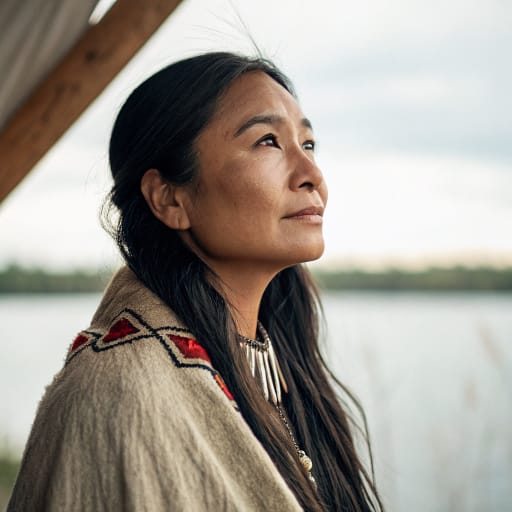
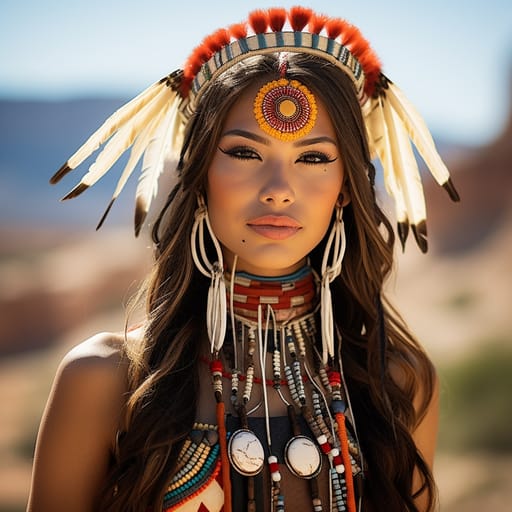
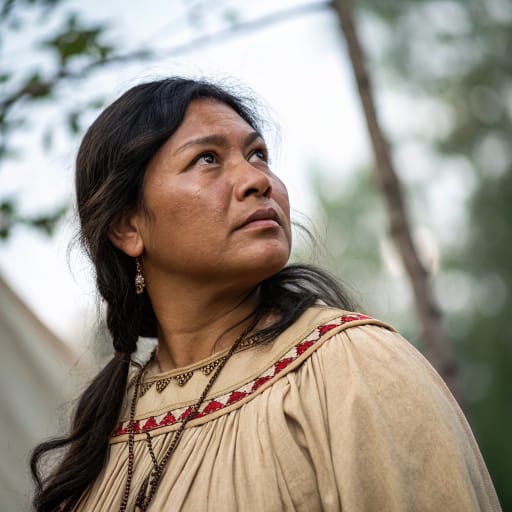
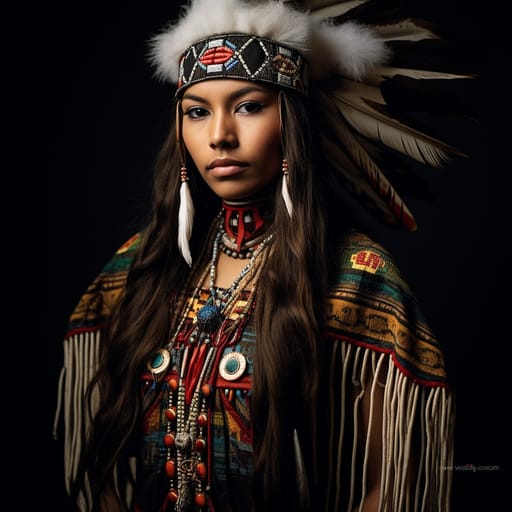
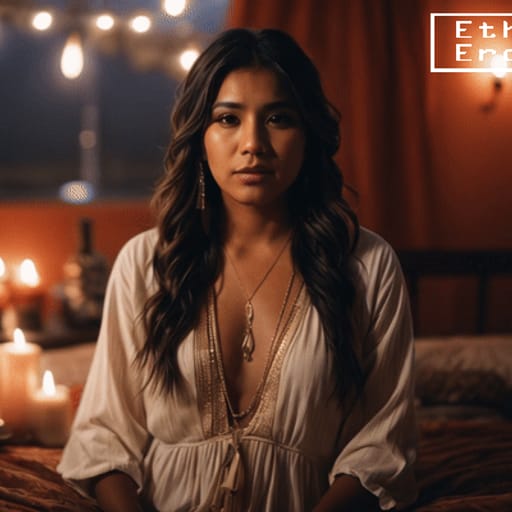
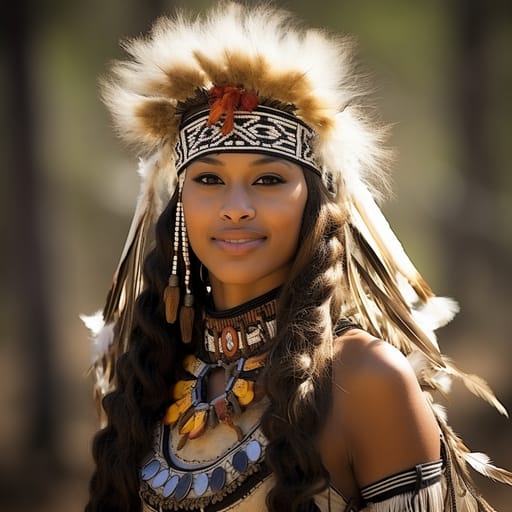
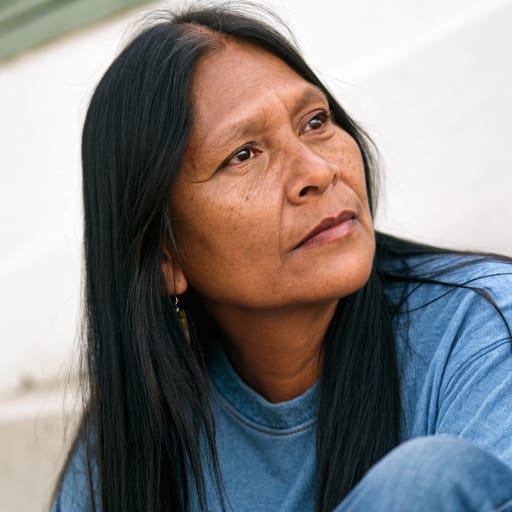
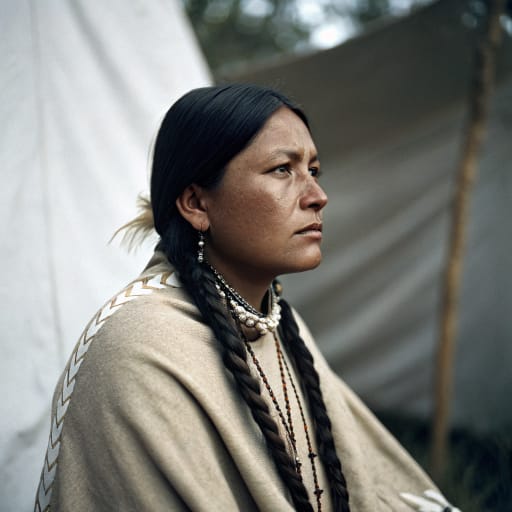
Typical Ponca Phenotypes
Reference for AI generation: hair, eyes, skin, facial structure, build
Ponca Body & Anatomy Reference
Per-feature anatomical profile for AI nude generation: Indigenous Northern American / Algonquian-Iroquoian phenotype
Ponca Boobs & Breasts
The typical Ponca bust is medium cup, moderate projection, in line with the wider Indigenous Northern American / Algonquian-Iroquoian pattern. Areolas usually fall in the 30-44mm range, with medium-brown areolar pigmentation against the copper-to-medium-brown skin tone. Compared with the smaller East Asian bust, Ponca breasts sit forward and are generally full and moderate projection. A faithful AI render of Ponca tits keeps that shape and areola size.
Ponca Ass & Hips
Butt shape among Ponca women: medium, moderate-to-full projection, over medium iliac crests. This follows Indigenous Northern American / Algonquian-Iroquoian ancestry and looks quite unlike the slim East Asian narrow-hip profile. An accurate Ponca ass in adult AI imagery keeps both the silhouette and the overall build (mesomorph, broader frame in northern Indigenous populations) instead of a generic average.
Ponca Vagina & Pussy
Vulvar anatomy among Ponca women: medium-brown labial pigmentation. Pubic hair tends to be straight medium-coarse texture, in the usual inverted-triangle pattern. Both follow Indigenous Northern American / Algonquian-Iroquoian pigmentation, which is why Ponca pussy renders should not fall back on a pale, sparse Western template.
Ponca Dicks & Penis
The Ponca cock profile, from Indigenous Northern American / Algonquian-Iroquoian anthropometric data: regional mean ~13cm erect; moderate girth; medium-brown shaft pigmentation. Pubic hair has a straight medium-coarse texture and forms the usual inverted-V pattern. Whether Ponca men are circumcised follows religious and cultural practice rather than phenotype.
Ponca Body, Curves & Build
Build and curves among Ponca women follow the Indigenous Northern American / Algonquian-Iroquoian pattern: mesomorph, broader frame in northern Indigenous populations, mean adult female BMI 25-28. Proportions matter as much as skin tone, so Ponca figures should keep their regional height and limb ratios.
Ponca Skin Tone & Hair Texture
The Ponca skin range is copper to medium-brown (Fitzpatrick III-V), and hair tends to be straight 1A, dark-brown to black, often thick and dense. That combination marks the Indigenous Northern American / Algonquian-Iroquoian phenotype, and skin tone is the trait AI generators most often get wrong for Ponca women.
Explore phenotype categories
Structured taxonomy with peer-reviewed scales · 22 anatomical categories
Erotic Poses & Sex Positions
From the pose catalog: 219 named positions with reference skeletons
Frequently asked questions about Ponca people
Where is the Ponca homeland?
The Ponca homeland is The lower Niobrara River valley where it meets the Missouri, in northern Nebraska and southern South Dakota, and Kay County in north central Oklahoma after the 1877 removal. in North America.
What language do Ponca people speak?
Ponca people primarily speak Omaha-Ponca, critically endangered (Siouan, Dhegiha branch); English in daily use..
What religion do Ponca people practice?
The predominant religion among Ponca people is Native American Church peyotism, Methodist, Baptist and Catholic Christianity, and continuing ceremonial practice, often held together in the same families..






Make your own Ponca images
Five a day, free, no credits to buy. The studio starts from this group's phenotype data, so you can set body type, pose and style and keep the traits accurate.
Start with Ponca