No portrait yet
Pamlico Erotic
The lower Tar-Pamlico River and the north shore of Pamlico Sound, in present-day eastern North Carolina, United States.
Carolina Algonquian, the variety recorded as Pamlico (Eastern Algonquian, Algic); extinct, preserved mainly in a 1709 word list.
Indigenous Algonquian belief and ceremony, centered on town temples and the corn year; no record of the nation converting before it ended.
One of the Carolina Algonquian nations of the North Carolina sounds, alongside the Secotan, Machapunga, Chowanoke, and Weapemeoc.
About Pamlico People
The Pamlico were an Algonquian people of the North Carolina coast, and they ceased to exist as a nation by about 1715, roughly a century and a half after Europeans first reached their shore. Their country was the lower Tar River, which takes the name Pamlico once the water turns brackish, and the northern edge of the wide, shallow sound behind the Outer Banks. English voyagers of the 1580s wrote them down as the Pomouik; later colonial clerks wrote Pampticough, and the modern spelling descends from that. The land was estuary rather than farmland: marsh, pocosin, cypress, oyster beds, and a sound so shoal-ridden and so guarded by shifting inlets that ocean ships could not easily get into it. They planted corn on the better ground and took much of the rest of their living from the water. They spoke Carolina Algonquian, the southernmost member of a language family that ran the length of the Atlantic seaboard into what is now Canada. That placement is the useful fact about them: their nearest kin in speech and habit were the small sound-country nations, the Secotan and the Machapunga among them, while the far larger Tuscarora just inland spoke an Iroquoian language and were, in linguistic terms, foreigners.
What survives of the language is almost entirely a short vocabulary the surveyor John Lawson took down around 1709, one of the very few direct records of any Carolina Algonquian speech. Lawson also recorded the scale of the collapse. A smallpox epidemic in 1696 tore through the sound country, and by the time he counted them the Pamlico held a single town and something on the order of fifteen fighting men. In 1711 the survivors joined the Tuscarora in the war against the North Carolina colony, on the reasonable calculation that they had little left to lose. They lost anyway. By the terms the colony imposed at the end of it, what remained of the Pamlico was to be destroyed or sold into slavery, and after 1715 they leave the record as a people, absorbed into neighboring nations or scattered into servitude. No modern tribe carries the name. What is left in plain view is the map: Pamlico Sound, the Pamlico River, Pamlico County, an entire stretch of North Carolina named for a people that the making of that map erased.
Related ethnic groups
Groups that share Pamlico's homeland, region, language, or religious tradition. These are likely candidates for comparative phenotype reference.
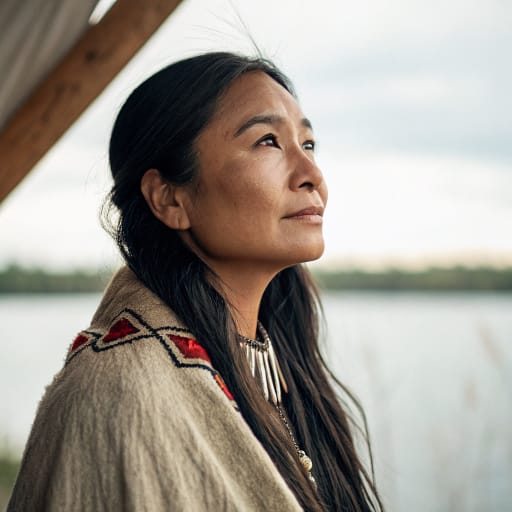
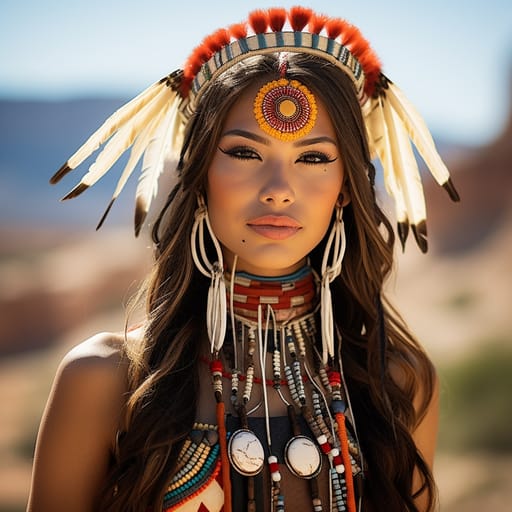
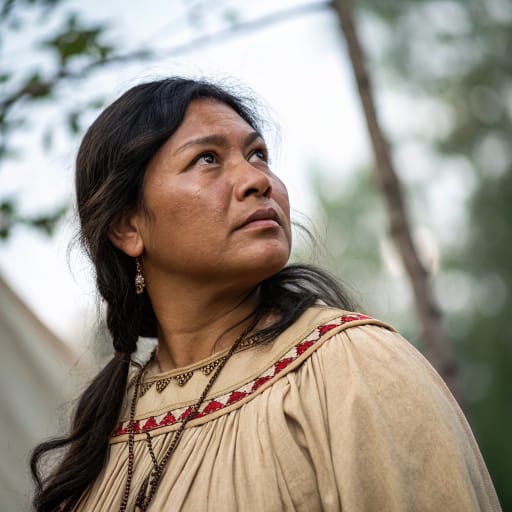
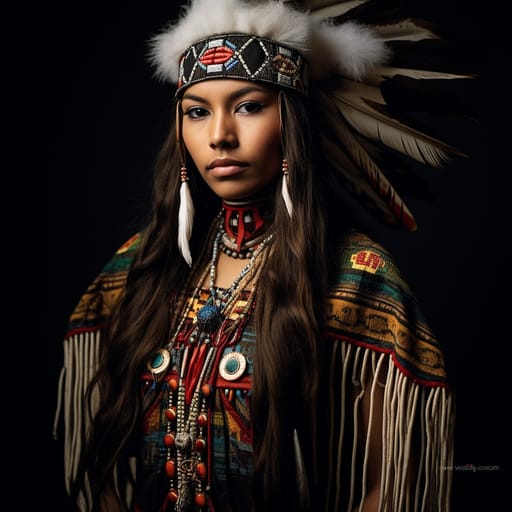
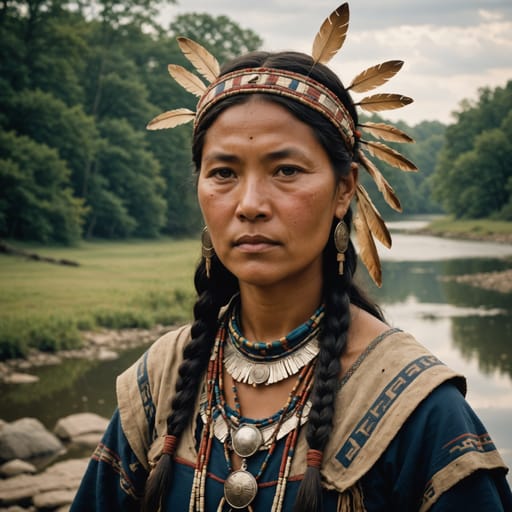
Typical Pamlico Phenotypes
Reference for AI generation: hair, eyes, skin, facial structure, build
Pamlico Body & Anatomy Reference
Anatomy by feature, Indigenous Northern American / Algonquian-Iroquoian phenotype
Pamlico Boobs & Breasts
Bust reference for Pamlico women: medium cup, moderate projection, which is typical of Indigenous Northern American / Algonquian-Iroquoian ancestry. Areolas measure about 30-44mm across, with medium-brown pigmentation. Body type (mesomorph, broader frame in northern Indigenous populations) shapes the bust as well, so Pamlico tits are usually full and moderate projection. In AI imagery, keep the forward-set shape rather than drifting toward the smaller East Asian bust.
Pamlico Ass & Hips
The Pamlico ass is typically medium, moderate-to-full projection, which sets it apart from the slim East Asian narrow-hip profile. Underneath, the pelvis shows medium iliac crests, part of the Indigenous Northern American / Algonquian-Iroquoian skeletal pattern. For Pamlico butt pics and AI renders, match that silhouette and the overall build (mesomorph, broader frame in northern Indigenous populations).
Pamlico Vagina & Pussy
Pamlico pussy and vulvar anatomy presents medium-brown labial pigmentation, consistent with the Indigenous Northern American / Algonquian-Iroquoian phenotype's pigmentation pattern. Pamlico pubic hair is typically straight medium-coarse texture, in the inverted-triangle pattern. For anatomically accurate Pamlico pussy renders the labial coloration should match the surrounding copper to medium-brown skin tone with a continuous gradient, and the hair should keep its straight medium-coarse texture.
Pamlico Dicks & Penis
Pamlico dicks follow the Indigenous Northern American / Algonquian-Iroquoian reference data: regional mean ~13cm erect; moderate girth; medium-brown shaft pigmentation. Shaft color should track the copper to medium-brown skin tone with a smooth change toward the glans, and Pamlico pubic hair keeps its straight medium-coarse texture.
Pamlico Body, Curves & Build
Pamlico body type and overall build presents as mesomorph, broader frame in northern Indigenous populations, with mean adult female BMI 25-28: the characteristic Indigenous Northern American / Algonquian-Iroquoian habitus. Pamlico curves and proportions should keep the regional skeletal frame (height, shoulder-to-hip ratio, limb proportions) rather than a generic mesomorph default.
Pamlico Skin Tone & Hair Texture
Pamlico skin sits in the copper to medium-brown (Fitzpatrick III-V) band. Hair is typically straight 1A, dark-brown to black, often thick and dense, in keeping with the Indigenous Northern American / Algonquian-Iroquoian phenotype. In nude renders the skin should stay one even tone from face to body, and body, pubic and head hair should match.
Explore phenotype categories
Structured taxonomy with peer-reviewed scales · 22 anatomical categories
Erotic Poses & Sex Positions
From the pose catalog: 219 named positions with reference skeletons
Frequently asked questions about Pamlico people
Where is the Pamlico homeland?
The Pamlico homeland is The lower Tar-Pamlico River and the north shore of Pamlico Sound, in present-day eastern North Carolina, United States. in North America.
What language do Pamlico people speak?
Pamlico people primarily speak Carolina Algonquian, the variety recorded as Pamlico (Eastern Algonquian, Algic); extinct, preserved mainly in a 1709 word list..
What religion do Pamlico people practice?
The predominant religion among Pamlico people is Indigenous Algonquian belief and ceremony, centered on town temples and the corn year; no record of the nation converting before it ended..






Make your own Pamlico images
Five a day, free, no credits to buy. The studio starts from this group's phenotype data, so you can set body type, pose and style and keep the traits accurate.
Start with Pamlico