No portrait yet
Wahpeton Erotic
Historically the Minnesota River valley, Minnesota, US; today Lake Traverse and Spirit Lake reservations in South and North Dakota, the Upper Sioux Community in Minnesota, and Dakota reserves in Manitoba and Saskatchewan, Canada
Dakota, Santee-Sisseton dialect (Siouan); English in daily use
Christianity, notably Presbyterian and Catholic, alongside traditional Dakota spirituality and ceremonies such as the sweat lodge
One of the four Santee (Eastern Dakota) bands with the Mdewakanton, Wahpekute and Sisseton, within the Očhéthi Šakówiŋ (Seven Council Fires); today part of the Sisseton Wahpeton Oyate, Spirit Lake Tribe and Canadian Dakota nations
About Wahpeton People
The Wahpeton are named for the country they lived in: Waȟpéthuŋwaŋ, usually rendered as "dwellers among the leaves," a name that points to the wooded lake belt of present-day Minnesota. They are one of the four Eastern Dakota, or Santee, bands, with the Mdewakanton, Wahpekute and Sisseton, and so belong to the Seven Council Fires that outsiders call the Sioux. They are closest to the Sisseton, so close that for more than a century the two names have traveled as a pair: on treaties, on tribal rolls and in the name of a modern tribal government. Ojibwe expansion in the eighteenth century pushed the Eastern Dakota south and west, and the Wahpeton settled along the Minnesota River, with their best-known villages around Lac qui Parle. Their year followed the Eastern Dakota round of deer hunts, fishing, wild rice, maple sugaring and small corn gardens, a woodland life at the edge of the prairie. They speak Dakota, a Siouan language, in the eastern dialect shared with the other Santee bands. Lakota speakers farther west can follow it, though the sound differences are plain to any ear.
Lac qui Parle is also where Presbyterian missionaries settled in 1835 and, working beside the fur trader Joseph Renville, began putting Dakota into writing. Hymns translated in that era are still sung in Dakota in reservation churches. Christianity took deep root, but kinship obligations, naming customs and ceremonies such as the sweat lodge never went away. The turning point came in 1862. Treaties in 1851 and 1858 had already squeezed the Sisseton and Wahpeton onto a narrow strip along the upper Minnesota River. When war broke out that August over late annuity payments and hunger, many Wahpeton refused to join it, and some sheltered captives or guided settlers to safety. It spared them little. Congress annulled the Dakota treaties, and families were driven west into Dakota Territory and north into British territory. That scattering drew the present map. An 1867 treaty created the Lake Traverse Reservation, which straddles the line between South Dakota and North Dakota and is governed today by the Sisseton Wahpeton Oyate. The same treaty set aside the reservation at Spirit Lake in North Dakota, shared with Sisseton and Yanktonai. In Canada, Wahpeton descendants live on Dakota reserves in Manitoba and Saskatchewan, among them the Wahpeton Dakota Nation near Prince Albert. Canadian Dakota were long regarded as refugees from the United States and are not party to the numbered treaties. Others made their way back to Minnesota, where the Upper Sioux Community sits near the old agency grounds.
Related ethnic groups
Groups that share Wahpeton's homeland, region, language, or religious tradition. These are likely candidates for comparative phenotype reference.
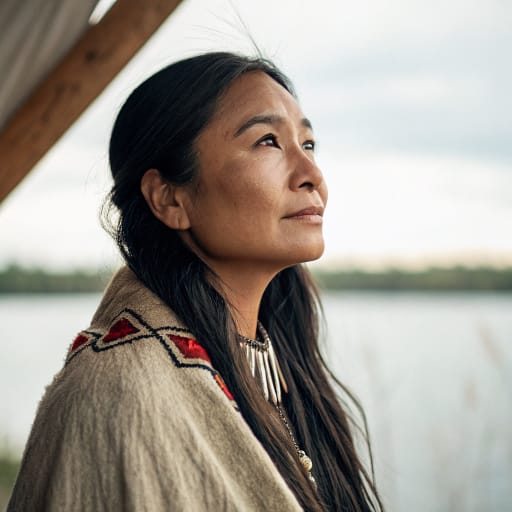
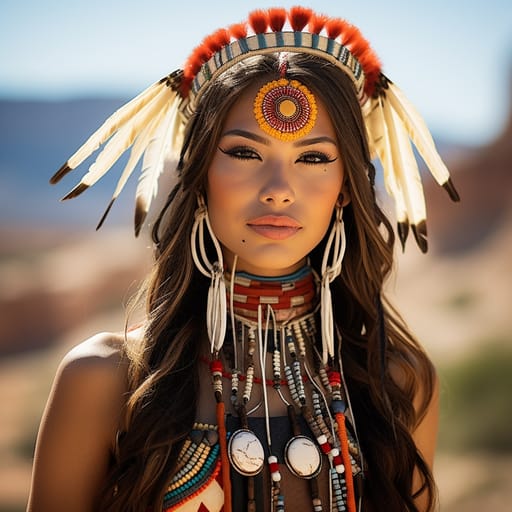
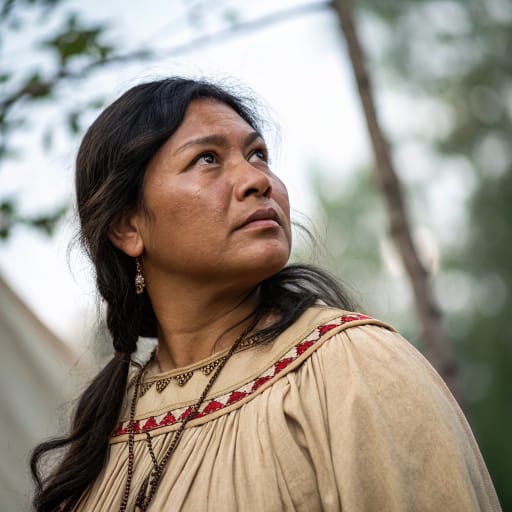
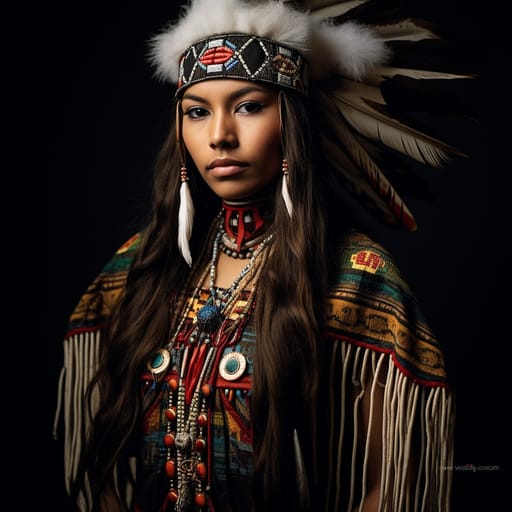
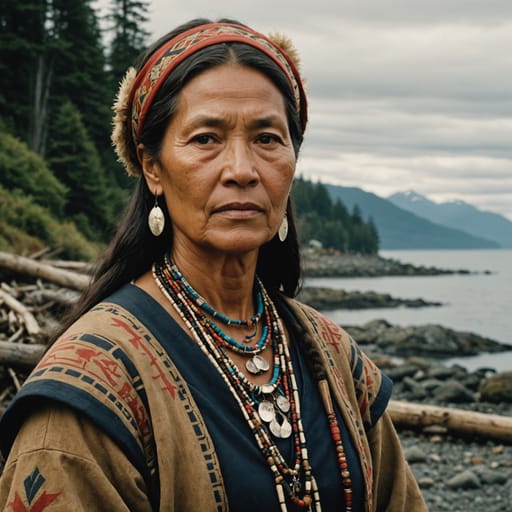
Typical Wahpeton Phenotypes
Reference for AI generation: hair, eyes, skin, facial structure, build
Wahpeton Body & Anatomy Reference
Per-feature anatomical profile for AI nude generation: Indigenous Northern American / Algonquian-Iroquoian phenotype
Wahpeton Boobs & Breasts
Wahpeton boobs follow the Indigenous Northern American / Algonquian-Iroquoian profile: medium cup, moderate projection. Areolar diameter is usually 30-44mm, and the coloring is medium-brown areolar pigmentation against the copper-to-medium-brown skin tone. Breast shape tracks body composition (mesomorph, broader frame in northern Indigenous populations, mean adult female BMI 25-28), so Wahpeton breasts tend to be full and moderate projection. Expect a forward-set shape, not the smaller East Asian bust.
Wahpeton Ass & Hips
Wahpeton ass and hip morphology presents as medium, moderate-to-full projection, distinctly different from the slim East Asian narrow-hip profile. The Wahpeton pelvic profile shows medium iliac crests, anchored in the Indigenous Northern American / Algonquian-Iroquoian skeletal pattern. Wahpeton butt shots in adult AI imagery should render the medium, moderate-to-full projection silhouette with the overall build (mesomorph, broader frame in northern Indigenous populations) and the fat distribution typical of the Indigenous Northern American / Algonquian-Iroquoian phenotype.
Wahpeton Vagina & Pussy
Wahpeton pussy anatomy typically shows medium-brown labial pigmentation. Pubic hair is usually straight medium-coarse texture. In AI-generated Wahpeton nudes, labial color should blend into the copper to medium-brown skin with a gradual transition, and the hair should keep its straight medium-coarse texture.
Wahpeton Dicks & Penis
Penis reference for Wahpeton men: regional mean ~13cm erect, moderate girth. Coloring: medium-brown shaft pigmentation. An accurate Wahpeton cock in AI imagery matches the surrounding copper to medium-brown skin rather than a generic porn default. Circumcision depends on religion and custom, not ancestry.
Wahpeton Body, Curves & Build
The Wahpeton figure is generally mesomorph, broader frame in northern Indigenous populations, with mean adult female BMI 25-28, characteristic of Indigenous Northern American / Algonquian-Iroquoian ancestry. AI image tools tend to flatten regional body types into a few stock shapes; here the Wahpeton build is kept as its own reference.
Wahpeton Skin Tone & Hair Texture
Skin: copper to medium-brown (Fitzpatrick III-V). Hair: straight 1A, dark-brown to black, often thick and dense. Both are typical of Indigenous Northern American / Algonquian-Iroquoian ancestry. The most common mistake in AI nudes of Wahpeton women is a body rendered lighter than the face.
Explore phenotype categories
Structured taxonomy with peer-reviewed scales · 22 anatomical categories
Erotic Poses & Sex Positions
From the pose catalog: 219 named positions with reference skeletons
Frequently asked questions about Wahpeton people
Where is the Wahpeton homeland?
The Wahpeton homeland is Historically the Minnesota River valley, Minnesota, US; today Lake Traverse and Spirit Lake reservations in South and North Dakota, the Upper Sioux Community in Minnesota, and Dakota reserves in Manitoba and Saskatchewan, Canada in North America.
What language do Wahpeton people speak?
Wahpeton people primarily speak Dakota, Santee-Sisseton dialect (Siouan); English in daily use.
What religion do Wahpeton people practice?
The predominant religion among Wahpeton people is Christianity, notably Presbyterian and Catholic, alongside traditional Dakota spirituality and ceremonies such as the sweat lodge.






Make your own Wahpeton images
Five a day, free, no credits to buy. The studio starts from this group's phenotype data, so you can set body type, pose and style and keep the traits accurate.
Start with Wahpeton