No portrait yet
Serrano Erotic
San Bernardino Mountains and Valley, San Gorgonio Pass, and the western Mojave Desert, southern California, United States; reservations at San Manuel (Highland) and Morongo (Banning)
Serrano (Uto-Aztecan, Takic branch), closely related to Kitanemuk; no remaining first-language speakers, under revitalization; English in daily use
Christianity (Catholic and Protestant) alongside traditional ceremonial practice, including mourning ceremonies and bird songs
Clan-based: Yuhaaviatam (San Bernardino Mountains and valley), Maara'yam (Twentynine Palms oasis), Vanyume or Desert Serrano (Mojave River); Wildcat and Coyote moieties; Takic-speaking peoples of Southern California
About Serrano People
The Serrano are the mountain people of Southern California's Inland Empire. Spanish colonists named them for the villages they found in the pine and oak country of the San Bernardino Mountains, and the word simply means highlanders. The name undersells how far the people ranged, though. Their territory ran down into the San Bernardino Valley, east through the San Gorgonio Pass, and out across the western Mojave Desert along the Mojave River to the oasis at Twentynine Palms. The names they used for themselves were clan names. The Yuhaaviatam, the people of the pines, held the mountains and the valley below them. The Maara'yam lived at the desert oasis. Food followed elevation and season: acorns and pinyon nuts in the high country, mesquite beans and yucca lower down, and deer, rabbits and bighorn sheep hunted across the whole range.
Serrano is a Takic language in the Uto-Aztecan family. Its closest relative is Kitanemuk, and it is a more distant cousin of Cahuilla and Luiseño, spoken by neighbors to the south. Dorothy Ramon is remembered as the last fluent first-language speaker. She spent years recording the language with the linguist Eric Elliott before her death in 2002, and her record now underpins revitalization classes. Society was built on patrilineal clans, and each clan belonged to one of two halves, Wildcat or Coyote. People married into the other half. A hereditary clan leader oversaw ceremonial life, and the most important event of the year was the mourning ceremony, when belongings of the recently dead were burned. Bird songs are long cycles sung to gourd rattles that carry stories of creation and early travels. They are still performed at gatherings, often alongside Cahuilla singers.
Contact came hard. In the early 1800s Mission San Gabriel pulled many valley and desert Serrano into its labor system. In the 1860s settler militias waged a campaign against the mountain villages, and Santos Manuel led the survivors down to the valley floor. The reservation set aside there in 1891 carries his name. Today the Yuhaaviatam of San Manuel Nation, near Highland, is a major economic and political force in the region. Other Serrano families are enrolled at Morongo, near Banning, a reservation named for a Serrano clan and shared with Cahuilla and Cupeño people. Christian worship and traditional ceremony exist side by side in community life.
Related ethnic groups
Groups that share Serrano's homeland, region, language, or religious tradition. These are likely candidates for comparative phenotype reference.
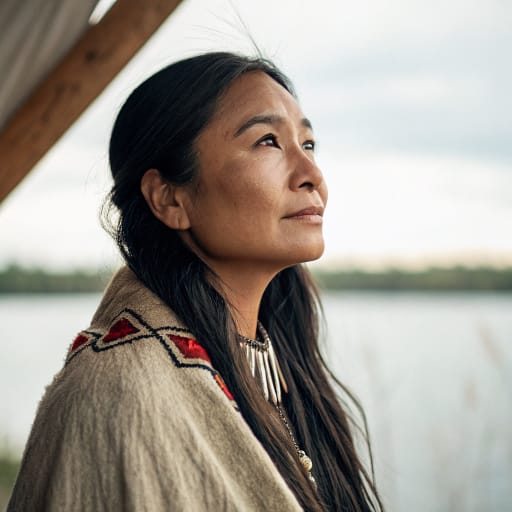
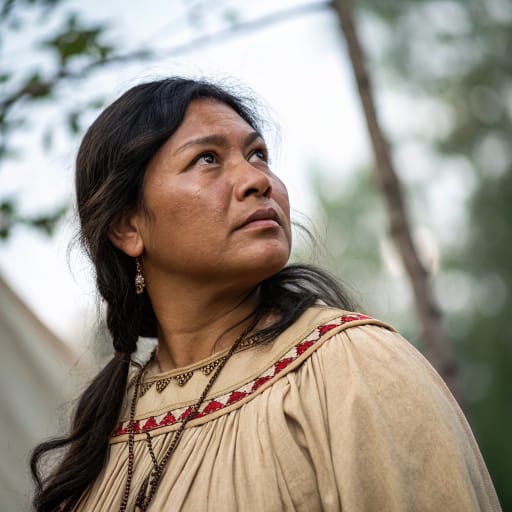
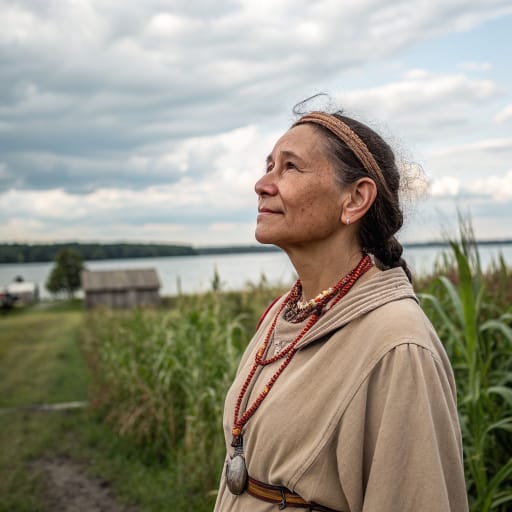
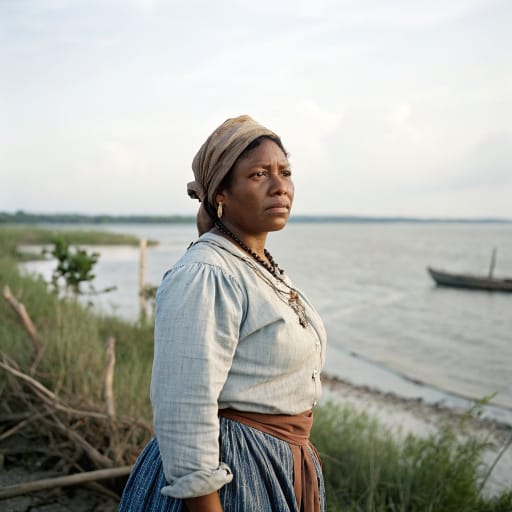
Typical Serrano Phenotypes
Reference for AI generation: hair, eyes, skin, facial structure, build
Serrano Body & Anatomy Reference
Per-feature anatomical profile for AI nude generation: Indigenous Northern American / Algonquian-Iroquoian phenotype
Serrano Boobs & Breasts
Serrano tits and boobs run medium cup, moderate projection, the classic Indigenous Northern American / Algonquian-Iroquoian bust profile. Serrano nipples and areolas show medium-brown areolar pigmentation against the copper-to-medium-brown skin tone, with areolar diameter typically in the 30-44mm range and forward-set positioning rather than the smaller East Asian bust. Serrano breasts trend full and moderate projection, a function of the mesomorph, broader frame in northern Indigenous populations body habitus and the mean adult female BMI 25-28. For anatomically accurate AI-generated Serrano nudes the render preserves the medium cup, moderate projection shape, 30-44mm areolas with medium-brown pigmentation, and the torso proportions of the Indigenous Northern American / Algonquian-Iroquoian phenotype.
Serrano Ass & Hips
Serrano hips and butt usually read as medium, moderate-to-full projection. The skeletal base is medium iliac crests, the Indigenous Northern American / Algonquian-Iroquoian pattern. Set against the slim East Asian narrow-hip profile, the difference is easy to see, and the hip-to-waist ratio is often what identifies Serrano women in photos.
Serrano Vagina & Pussy
Expect medium-brown labial pigmentation on Serrano women, in keeping with Indigenous Northern American / Algonquian-Iroquoian ancestry. The pubic hair is straight medium-coarse texture. Coloring should run evenly from the copper to medium-brown skin of the thighs to the labia, and Serrano nude imagery should keep the hair's straight medium-coarse texture.
Serrano Dicks & Penis
Serrano dick and penile anatomy in adult AI generation should anchor on the regional reference data: regional mean ~13cm erect, moderate girth, and medium-brown shaft pigmentation. The Serrano cock profile reflects the Indigenous Northern American / Algonquian-Iroquoian population's anthropometric measurements. The shaft pigmentation should track the surrounding copper to medium-brown skin tone, and the pubic hair should keep its straight medium-coarse texture in the typical inverted-V escutcheon.
Serrano Body, Curves & Build
Serrano body type: mesomorph, broader frame in northern Indigenous populations, with mean adult female BMI 25-28. This is the typical Indigenous Northern American / Algonquian-Iroquoian build. Height range, shoulder-to-hip ratio and fat distribution all follow from it, which is what an accurate Serrano nude body should show.
Serrano Skin Tone & Hair Texture
Serrano skin tone falls in the copper to medium-brown (Fitzpatrick III-V) band, the surface signal most often miscalibrated by generic AI nude generators. Serrano hair texture is typically straight 1A, dark-brown to black, often thick and dense, characteristic of the Indigenous Northern American / Algonquian-Iroquoian phenotype. In Serrano nude renders the skin should hold that band consistently across the body.
Explore phenotype categories
Structured taxonomy with peer-reviewed scales · 22 anatomical categories
Erotic Poses & Sex Positions
From the pose catalog: 219 named positions with reference skeletons
Frequently asked questions about Serrano people
Where is the Serrano homeland?
The Serrano homeland is San Bernardino Mountains and Valley, San Gorgonio Pass, and the western Mojave Desert, southern California, United States; reservations at San Manuel (Highland) and Morongo (Banning) in North America.
What language do Serrano people speak?
Serrano people primarily speak Serrano (Uto-Aztecan, Takic branch), closely related to Kitanemuk; no remaining first-language speakers, under revitalization; English in daily use.
What religion do Serrano people practice?
The predominant religion among Serrano people is Christianity (Catholic and Protestant) alongside traditional ceremonial practice, including mourning ceremonies and bird songs.






Make your own Serrano images
Five a day, free, no credits to buy. The studio starts from this group's phenotype data, so you can set body type, pose and style and keep the traits accurate.
Start with Serrano