No portrait yet
Yamasee Erotic
Coastal plain and sea islands of present-day South Carolina and Georgia, centered on Port Royal Sound, and later the area around St. Augustine, Florida, United States
Yamasee (unclassified and poorly attested; proposed links to Guale and to Muskogean), with more than one language probably in use among the towns
Indigenous Southeastern ceremonial practice, overlaid by Spanish Catholic baptism during the mission years and Anglican missionary work in Carolina
A coalescent confederation of Upper towns (Pocotaligo, Huspah, Sadketche, Tomatley) and Lower towns (Altamaha, Chechessee, Euhaw, Okatee, Pocosabo); survivors absorbed into the Creek Confederacy, the Seminole, and the Catawba
About Yamasee People
The Yamasee were a Southeastern people who held together for roughly a century, from the 1660s to the middle of the eighteenth century, along the coast and coastal plain of what is now Georgia and South Carolina. They were not an ancient nation with a single origin story. They were assembled: survivors of the Mississippian chiefdoms of interior Georgia, families out of the Spanish mission provinces of Guale and Mocama, and others whose towns had been broken by epidemic disease and slave raiding, all of them taking a shared name because a shared name was worth something. Their descendants are inside the Muscogee (Creek) Nation and the Seminole nations today, and the name holds on the map at Yemassee, South Carolina.
Their towns clustered around Port Royal Sound after they moved north out of Spanish Florida in the 1680s, roughly ten of them, sorted into Upper towns such as Pocotaligo and Huspah and Lower towns such as Altamaha, Chechessee, and Euhaw. Altamaha usually supplied the head chief, but this was a confederation and not a state, and towns decided for themselves. Language followed the same pattern: the fragments that survive point to more than one tongue in use among them, with proposed links to Guale and to the Muskogean languages spoken around them, and the record is too thin to claim more than that. Franciscans had baptized many of them in Florida and Anglican missionaries worked among them in Carolina, but neither displaced the ceremonial life of the town square ground.
What made them notorious was the slave trade. Yamasee warriors raided the Florida missions for captives to sell at Charles Town, and their part in the destruction of the Apalachee towns in 1704 emptied a province. The trade ran on credit, and by 1715 the debts owed to Carolina traders had outrun any quantity of deerskins, with traders seizing Yamasee women and children against the balance. On Good Friday, April 15, 1715, at Pocotaligo, they killed the colony's Indian agent Thomas Nairne and the traders lodged in their towns, and the war that followed came close to ending South Carolina. It broke when the Cherokee chose the colony's side, and by 1717 it was over.
The survivors went back to Florida, settled near St. Augustine as Spanish allies, and spent the next forty years being hunted by Carolina's Creek and Yuchi allies. What was left of them thinned into other nations, and a last remnant sailed for Cuba with the Spanish evacuation of Florida in 1763.
Related ethnic groups
Groups that share Yamasee's homeland, region, language, or religious tradition. These are likely candidates for comparative phenotype reference.
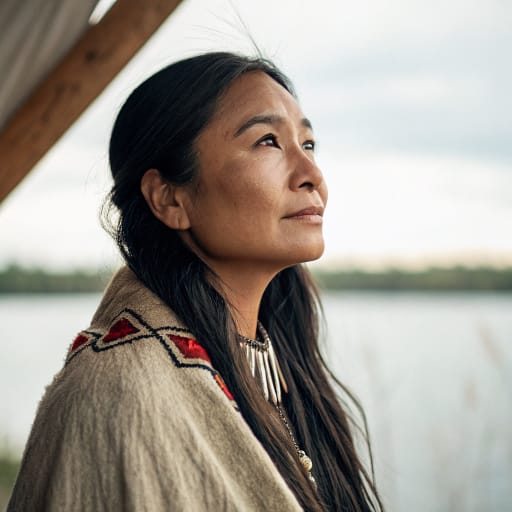
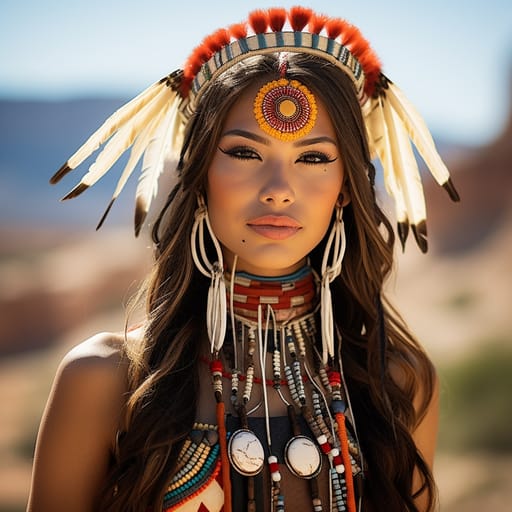
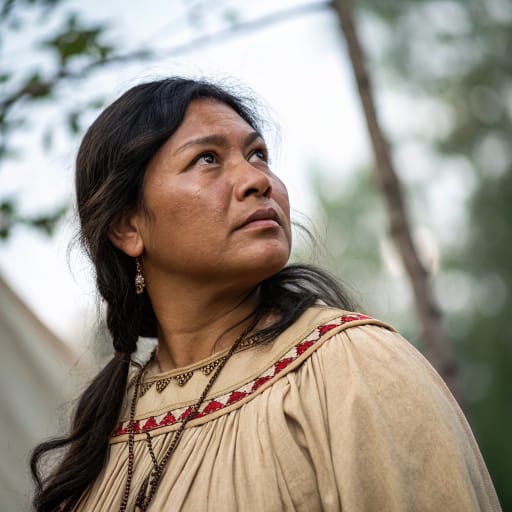
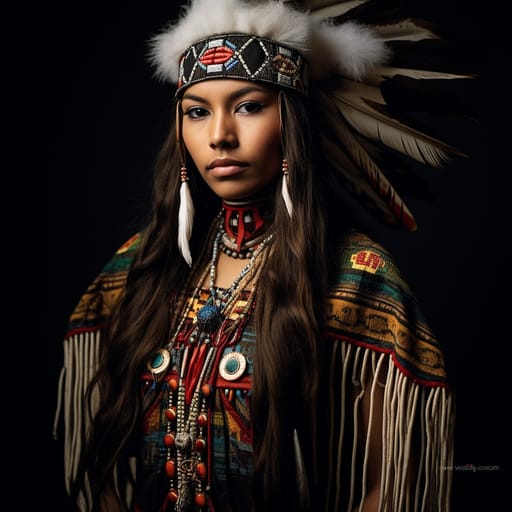
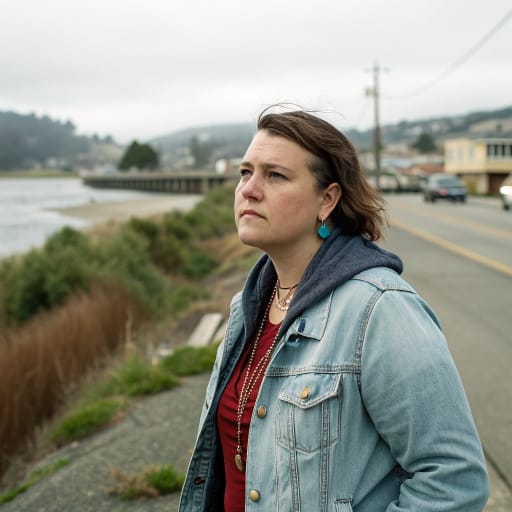
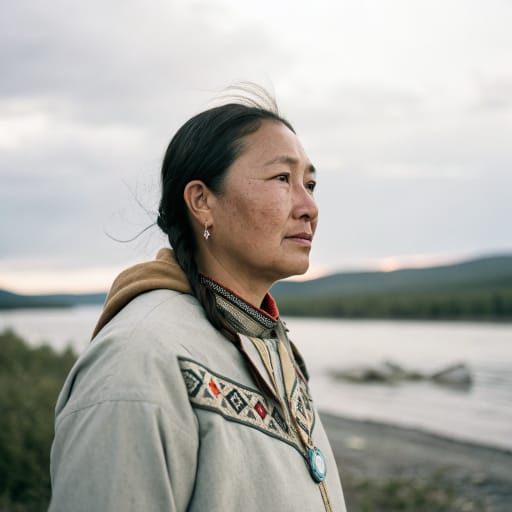
Typical Yamasee Phenotypes
Reference for AI generation: hair, eyes, skin, facial structure, build
Yamasee Body & Anatomy Reference
Anatomy by feature, Indigenous Northern American / Algonquian-Iroquoian phenotype
Yamasee Boobs & Breasts
Bust reference for Yamasee women: medium cup, moderate projection, which is typical of Indigenous Northern American / Algonquian-Iroquoian ancestry. Areolas measure about 30-44mm across, with medium-brown pigmentation. Body type (mesomorph, broader frame in northern Indigenous populations) shapes the bust as well, so Yamasee tits are usually full and moderate projection. In AI imagery, keep the forward-set shape rather than drifting toward the smaller East Asian bust.
Yamasee Ass & Hips
The Yamasee ass is typically medium, moderate-to-full projection, which sets it apart from the slim East Asian narrow-hip profile. Underneath, the pelvis shows medium iliac crests, part of the Indigenous Northern American / Algonquian-Iroquoian skeletal pattern. For Yamasee butt pics and AI renders, match that silhouette and the overall build (mesomorph, broader frame in northern Indigenous populations).
Yamasee Vagina & Pussy
Yamasee pussy and vulvar anatomy presents medium-brown labial pigmentation, consistent with the Indigenous Northern American / Algonquian-Iroquoian phenotype's pigmentation pattern. Yamasee pubic hair is typically straight medium-coarse texture, in the inverted-triangle pattern. For anatomically accurate Yamasee pussy renders the labial coloration should match the surrounding copper to medium-brown skin tone with a continuous gradient, and the hair should keep its straight medium-coarse texture.
Yamasee Dicks & Penis
Yamasee dicks follow the Indigenous Northern American / Algonquian-Iroquoian reference data: regional mean ~13cm erect; moderate girth; medium-brown shaft pigmentation. Shaft color should track the copper to medium-brown skin tone with a smooth change toward the glans, and Yamasee pubic hair keeps its straight medium-coarse texture.
Yamasee Body, Curves & Build
Yamasee body type and overall build presents as mesomorph, broader frame in northern Indigenous populations, with mean adult female BMI 25-28: the characteristic Indigenous Northern American / Algonquian-Iroquoian habitus. Yamasee curves and proportions should keep the regional skeletal frame (height, shoulder-to-hip ratio, limb proportions) rather than a generic mesomorph default.
Yamasee Skin Tone & Hair Texture
Yamasee skin sits in the copper to medium-brown (Fitzpatrick III-V) band. Hair is typically straight 1A, dark-brown to black, often thick and dense, in keeping with the Indigenous Northern American / Algonquian-Iroquoian phenotype. In nude renders the skin should stay one even tone from face to body, and body, pubic and head hair should match.
Explore phenotype categories
Structured taxonomy with peer-reviewed scales · 22 anatomical categories
Erotic Poses & Sex Positions
From the pose catalog: 219 named positions with reference skeletons
Frequently asked questions about Yamasee people
Where is the Yamasee homeland?
The Yamasee homeland is Coastal plain and sea islands of present-day South Carolina and Georgia, centered on Port Royal Sound, and later the area around St. Augustine, Florida, United States in North America.
What language do Yamasee people speak?
Yamasee people primarily speak Yamasee (unclassified and poorly attested; proposed links to Guale and to Muskogean), with more than one language probably in use among the towns.
What religion do Yamasee people practice?
The predominant religion among Yamasee people is Indigenous Southeastern ceremonial practice, overlaid by Spanish Catholic baptism during the mission years and Anglican missionary work in Carolina.






Make your own Yamasee images
Five a day, free, no credits to buy. The studio starts from this group's phenotype data, so you can set body type, pose and style and keep the traits accurate.
Start with Yamasee