No portrait yet
Potawatomi Erotic
Western Great Lakes: southern Michigan, northern Indiana and Illinois, Wisconsin; today also Kansas, Oklahoma, and southern Ontario (United States, Canada)
Potawatomi, Bodwéwadmimwen (Algonquian, Central Algonquian, closely related to Ojibwe); English
Catholicism and Protestant denominations, Drum Dance (Big Drum) religion, Native American Church, Midewiwin
Anishinaabe peoples, Council of Three Fires with Ojibwe and Odawa; bands include Citizen Potawatomi Nation, Prairie Band, Forest County, Pokagon Band, Hannahville, Nottawaseppi Huron, Gun Lake (Match-e-be-nash-she-wish), and Ontario First Nations such as
About Potawatomi People
The Potawatomi are the people who keep the fire. That is the traditional reading of Bodéwadmi, their name inside the Council of Three Fires, the long alliance with the Ojibwe and Odawa in which the Potawatomi are the youngest brother and tend the council hearth. They call themselves Neshnabé, the same word the Ojibwe say as Anishinaabe, and the kinship runs deep: Potawatomi is a Central Algonquian language so close to Ojibwe that early traders often lumped the two together, though its habit of dropping short vowels gives it a clipped sound of its own. It is now among the most endangered languages on the continent, with only a handful of first-language speakers left, and the bands run immersion classes and online courses to pull it back.
At first contact with the French their country was the lower peninsula of Michigan. Iroquois raids in the 1600s pushed them around the lake to Green Bay, and by the eighteenth century they had spread back south and east across northern Illinois and Indiana, southern Michigan and Wisconsin. Chicago sits on Potawatomi ground, and the 1833 Treaty of Chicago signed most of it away. Removal followed. In 1838 an Indiana band was marched under armed escort to Kansas on what the Potawatomi still call the Trail of Death; more than forty people died on the road, most of them children. Others slipped north into the Wisconsin forests or across the lakes into Ontario, where Potawatomi families are part of First Nations such as Walpole Island. Leopold Pokagon bargained to keep his band in Michigan, partly by pointing to their Catholic baptisms, and their descendants are the Pokagon Band today.
The result is one people in seven federally recognized bands in the United States and several First Nations in Canada. The Citizen Potawatomi Nation in Oklahoma, named for members who took allotments and US citizenship in the 1860s, is the largest and owns its own bank. The Prairie Band in Kansas refused allotment in that same split and remains a stronghold of the Drum Dance religion, which sits alongside Catholicism, the Native American Church, and the older Midewiwin lodge. Since 1994 the bands have met each summer at the Gathering of Potawatomi Nations, a deliberate act of putting a scattered nation back in one room. The material culture is Great Lakes woodland: black ash baskets, mirrored silk ribbonwork on wool skirts and leggings, floral beadwork, and the otter-fur turban that marks a man in the old portraits.
Related ethnic groups
Groups that share Potawatomi's homeland, region, language, or religious tradition. These are likely candidates for comparative phenotype reference.
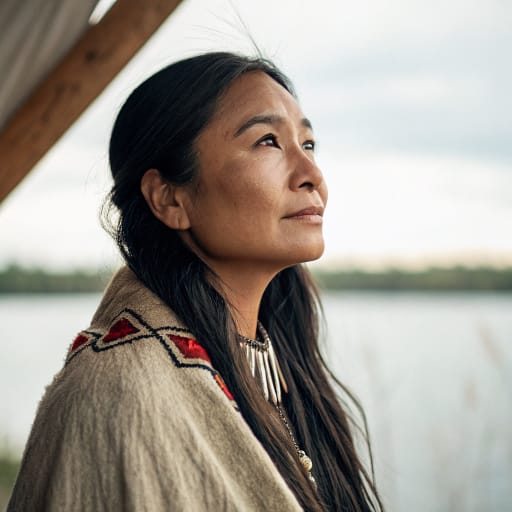
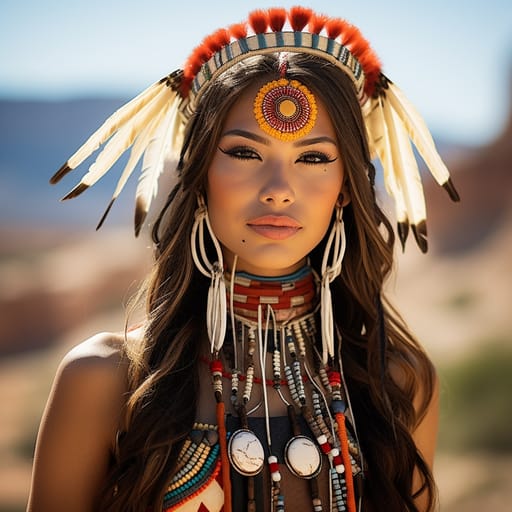
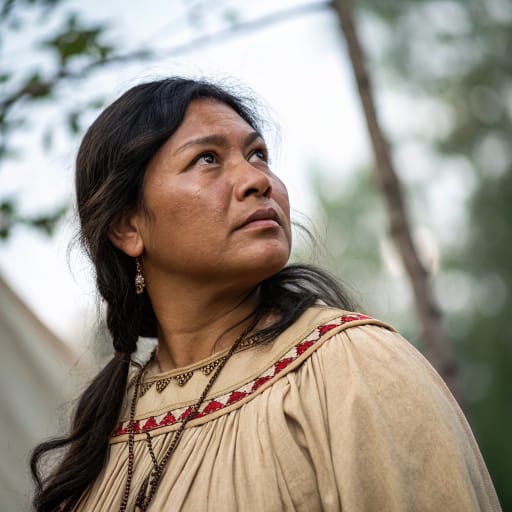
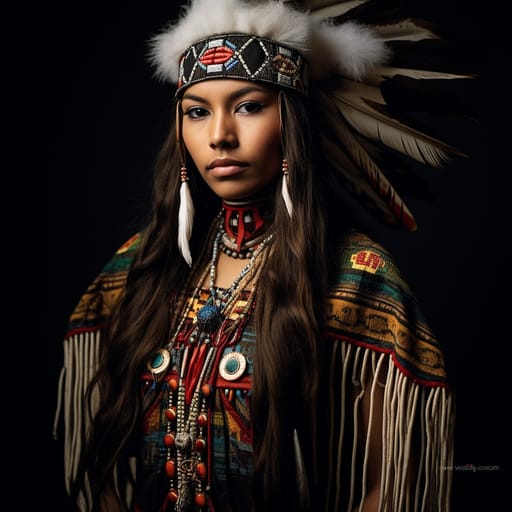

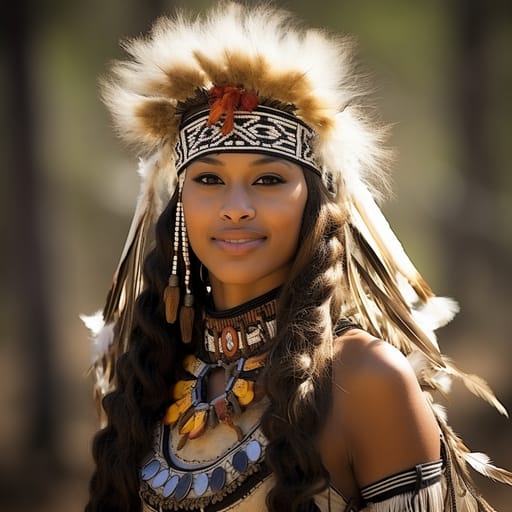
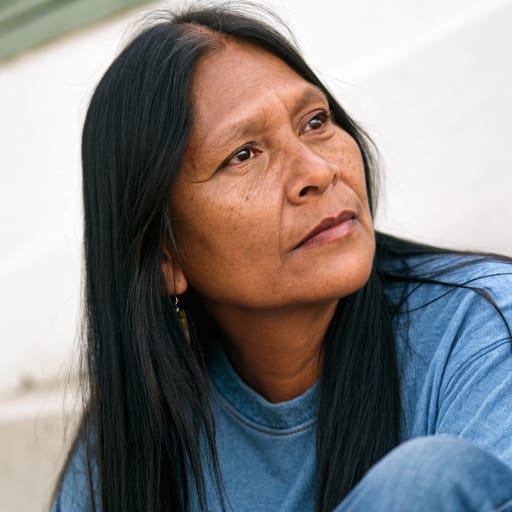
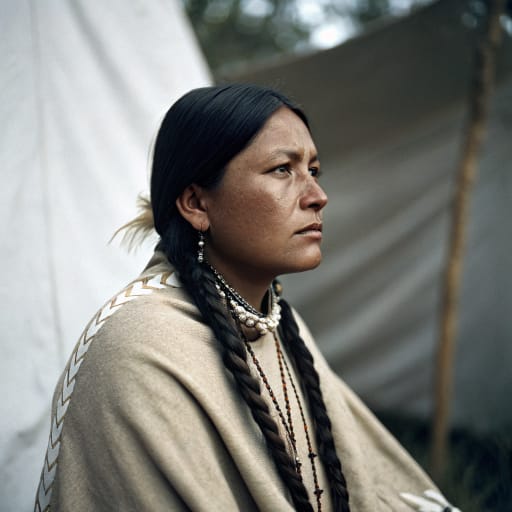
Typical Potawatomi Phenotypes
Reference for AI generation: hair, eyes, skin, facial structure, build
Potawatomi Body & Anatomy Reference
Anatomy by feature, Indigenous Northern American / Algonquian-Iroquoian phenotype
Potawatomi Boobs & Breasts
Bust reference for Potawatomi women: medium cup, moderate projection, which is typical of Indigenous Northern American / Algonquian-Iroquoian ancestry. Areolas measure about 30-44mm across, with medium-brown pigmentation. Body type (mesomorph, broader frame in northern Indigenous populations) shapes the bust as well, so Potawatomi tits are usually full and moderate projection. In AI imagery, keep the forward-set shape rather than drifting toward the smaller East Asian bust.
Potawatomi Ass & Hips
The Potawatomi ass is typically medium, moderate-to-full projection, which sets it apart from the slim East Asian narrow-hip profile. Underneath, the pelvis shows medium iliac crests, part of the Indigenous Northern American / Algonquian-Iroquoian skeletal pattern. For Potawatomi butt pics and AI renders, match that silhouette and the overall build (mesomorph, broader frame in northern Indigenous populations).
Potawatomi Vagina & Pussy
Potawatomi pussy and vulvar anatomy presents medium-brown labial pigmentation, consistent with the Indigenous Northern American / Algonquian-Iroquoian phenotype's pigmentation pattern. Potawatomi pubic hair is typically straight medium-coarse texture, in the inverted-triangle pattern. For anatomically accurate Potawatomi pussy renders the labial coloration should match the surrounding copper to medium-brown skin tone with a continuous gradient, and the hair should keep its straight medium-coarse texture.
Potawatomi Dicks & Penis
Potawatomi dicks follow the Indigenous Northern American / Algonquian-Iroquoian reference data: regional mean ~13cm erect; moderate girth; medium-brown shaft pigmentation. Shaft color should track the copper to medium-brown skin tone with a smooth change toward the glans, and Potawatomi pubic hair keeps its straight medium-coarse texture.
Potawatomi Body, Curves & Build
Potawatomi body type and overall build presents as mesomorph, broader frame in northern Indigenous populations, with mean adult female BMI 25-28: the characteristic Indigenous Northern American / Algonquian-Iroquoian habitus. Potawatomi curves and proportions should keep the regional skeletal frame (height, shoulder-to-hip ratio, limb proportions) rather than a generic mesomorph default.
Potawatomi Skin Tone & Hair Texture
Potawatomi skin sits in the copper to medium-brown (Fitzpatrick III-V) band. Hair is typically straight 1A, dark-brown to black, often thick and dense, in keeping with the Indigenous Northern American / Algonquian-Iroquoian phenotype. In nude renders the skin should stay one even tone from face to body, and body, pubic and head hair should match.
Explore phenotype categories
Structured taxonomy with peer-reviewed scales · 22 anatomical categories
Erotic Poses & Sex Positions
From the pose catalog: 219 named positions with reference skeletons
Frequently asked questions about Potawatomi people
Where is the Potawatomi homeland?
The Potawatomi homeland is Western Great Lakes: southern Michigan, northern Indiana and Illinois, Wisconsin; today also Kansas, Oklahoma, and southern Ontario (United States, Canada) in North America.
What language do Potawatomi people speak?
Potawatomi people primarily speak Potawatomi, Bodwéwadmimwen (Algonquian, Central Algonquian, closely related to Ojibwe); English.
What religion do Potawatomi people practice?
The predominant religion among Potawatomi people is Catholicism and Protestant denominations, Drum Dance (Big Drum) religion, Native American Church, Midewiwin.






Make your own Potawatomi images
Five a day, free, no credits to buy. The studio starts from this group's phenotype data, so you can set body type, pose and style and keep the traits accurate.
Start with Potawatomi