No portrait yet
Sutaio Erotic
Historically the northern Great Plains, from the Missouri River country of the Dakotas west toward Montana and Wyoming; descendants live mainly in southeastern Montana and western Oklahoma, United States.
Sutaio, a dialect or close relative of Cheyenne (Algonquian, Algic); descendants speak Cheyenne and English.
Traditional Cheyenne religion centered on the Sacred Buffalo Hat and the Sun Dance; many descendants also follow the Native American Church or Christianity.
Merged with the Tsitsistas to form the Cheyenne; survives as the Só'taeo'o band, with descendants among both the Northern and Southern Cheyenne.
About Sutaio People
The Sutaio no longer exist as a separate people, but they have never really disappeared. They spoke an Algonquian language very close to Cheyenne, and during the 1700s and early 1800s they joined the Tsitsistas, the core Cheyenne, on the northern Great Plains. The merger was so complete that most outsiders have never heard the name. Among the Cheyenne it still matters. The Só'taeo'o live on as one of the traditional bands, and two of the most important parts of Cheyenne religious life are credited to them.
Cheyenne tradition says the first meeting was hostile, until each side realized it could understand the other's speech. The two ways of speaking were close but not the same, and elders long knew certain words and sounds as Sutaio. As the Cheyenne moved out of the river and woodland country of the upper Midwest and onto the open grasslands, the Sutaio moved with them. For a time they camped as a separate group, then took their place in the larger camp circle as a band.
Two covenants
Cheyenne sacred history rests on two gifts brought by two culture heroes. Sweet Medicine, a Tsitsistas prophet, brought the four Sacred Arrows. Erect Horns, the Sutaio hero, brought Is'siwun, the Sacred Buffalo Hat. He also brought the Sun Dance, the great renewal ceremony known as the New Life Lodge. The pairing is not decoration. The Arrows and the Hat are seen as twin sources of the people's protection and wellbeing, and the Hat has its own line of keepers and strict rules about who may approach or handle it. Much of Cheyenne ceremonial life still runs through what the Sutaio brought.
The reservation era split the Cheyenne into northern and southern divisions, and the sacred objects were split along the same line. The Arrows are kept among the Southern Cheyenne in Oklahoma. The Buffalo Hat stays with the Northern Cheyenne in southeastern Montana, and both divisions still pledge and hold the Sun Dance. Descendants are citizens of the Northern Cheyenne Tribe and of the Cheyenne and Arapaho Tribes. Many attend Christian churches or the Native American Church alongside the older ceremonies. The Sutaio stopped being a separate tribe more than a century and a half ago. As a family line, a band name and a set of sacred duties, they are still part of everyday life.
Related ethnic groups
Groups that share Sutaio's homeland, region, language, or religious tradition. These are likely candidates for comparative phenotype reference.
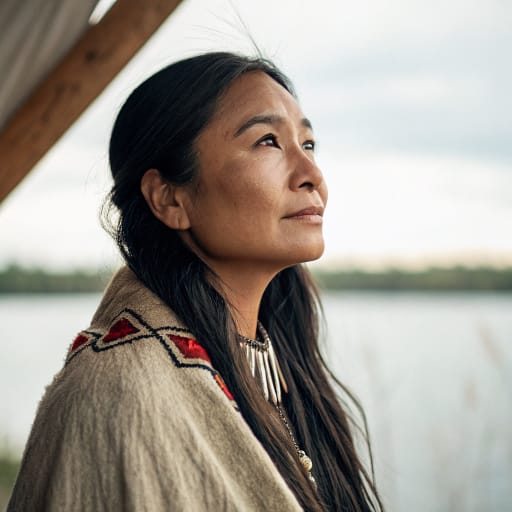
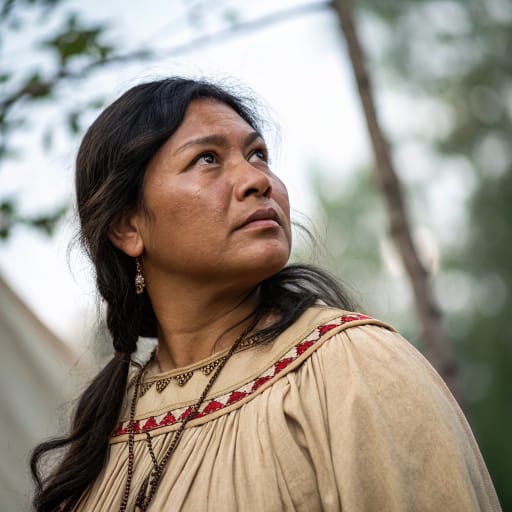
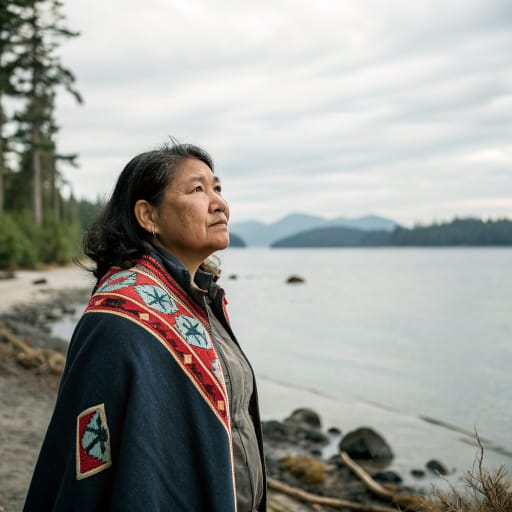
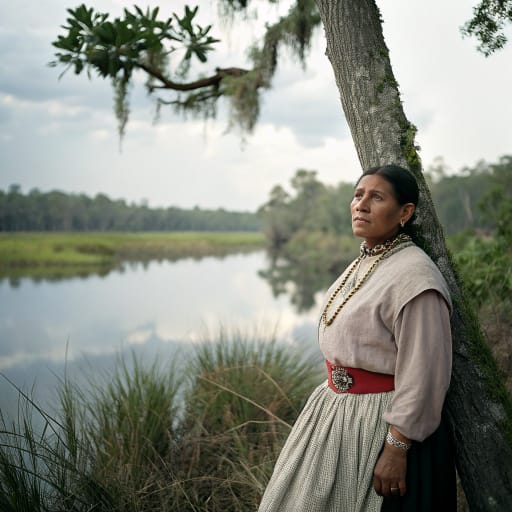
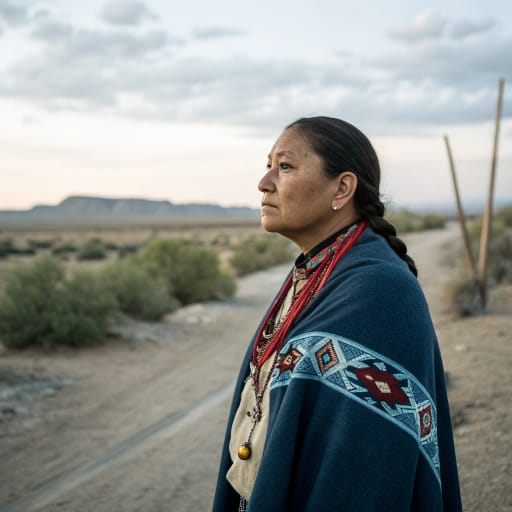
Typical Sutaio Phenotypes
Reference for AI generation: hair, eyes, skin, facial structure, build
Sutaio Body & Anatomy Reference
Indigenous Northern American / Algonquian-Iroquoian phenotype: anatomy reference for AI nude generation
Sutaio Boobs & Breasts
The typical Sutaio bust is medium cup, moderate projection, in line with the wider Indigenous Northern American / Algonquian-Iroquoian pattern. Areolas usually fall in the 30-44mm range, with medium-brown areolar pigmentation against the copper-to-medium-brown skin tone. Compared with the smaller East Asian bust, Sutaio breasts sit forward and are generally full and moderate projection. A faithful AI render of Sutaio tits keeps that shape and areola size.
Sutaio Ass & Hips
Butt shape among Sutaio women: medium, moderate-to-full projection, over medium iliac crests. This follows Indigenous Northern American / Algonquian-Iroquoian ancestry and looks quite unlike the slim East Asian narrow-hip profile. An accurate Sutaio ass in adult AI imagery keeps both the silhouette and the overall build (mesomorph, broader frame in northern Indigenous populations) instead of a generic average.
Sutaio Vagina & Pussy
Vulvar anatomy among Sutaio women: medium-brown labial pigmentation. Pubic hair tends to be straight medium-coarse texture, in the usual inverted-triangle pattern. Both follow Indigenous Northern American / Algonquian-Iroquoian pigmentation, which is why Sutaio pussy renders should not fall back on a pale, sparse Western template.
Sutaio Dicks & Penis
The Sutaio cock profile, from Indigenous Northern American / Algonquian-Iroquoian anthropometric data: regional mean ~13cm erect; moderate girth; medium-brown shaft pigmentation. Pubic hair has a straight medium-coarse texture and forms the usual inverted-V pattern. Whether Sutaio men are circumcised follows religious and cultural practice rather than phenotype.
Sutaio Body, Curves & Build
Build and curves among Sutaio women follow the Indigenous Northern American / Algonquian-Iroquoian pattern: mesomorph, broader frame in northern Indigenous populations, mean adult female BMI 25-28. Proportions matter as much as skin tone, so Sutaio figures should keep their regional height and limb ratios.
Sutaio Skin Tone & Hair Texture
The Sutaio skin range is copper to medium-brown (Fitzpatrick III-V), and hair tends to be straight 1A, dark-brown to black, often thick and dense. That combination marks the Indigenous Northern American / Algonquian-Iroquoian phenotype, and skin tone is the trait AI generators most often get wrong for Sutaio women.
Explore phenotype categories
Structured taxonomy with peer-reviewed scales · 22 anatomical categories
Erotic Poses & Sex Positions
From the pose catalog: 219 named positions with reference skeletons
Frequently asked questions about Sutaio people
Where is the Sutaio homeland?
The Sutaio homeland is Historically the northern Great Plains, from the Missouri River country of the Dakotas west toward Montana and Wyoming; descendants live mainly in southeastern Montana and western Oklahoma, United States. in North America.
What language do Sutaio people speak?
Sutaio people primarily speak Sutaio, a dialect or close relative of Cheyenne (Algonquian, Algic); descendants speak Cheyenne and English..
What religion do Sutaio people practice?
The predominant religion among Sutaio people is Traditional Cheyenne religion centered on the Sacred Buffalo Hat and the Sun Dance; many descendants also follow the Native American Church or Christianity..






Make your own Sutaio images
Five a day, free, no credits to buy. The studio starts from this group's phenotype data, so you can set body type, pose and style and keep the traits accurate.
Start with Sutaio